Table of Contents >> Show >> Hide
- Why Bathroom Organization Matters More Than You Think
- Hack 1: Think Vertically Before You Think Bigger
- Hack 2: Turn Cabinet Doors Into Hidden Storage
- Hack 3: Divide Drawers Like You Mean It
- Hack 4: Make the Under-Sink Area Work Around the Pipes
- Hack 5: Create a Countertop “Landing Zone” Without Clutter
- Bonus Tips for Small Bathroom Storage
- Common Bathroom Organizing Mistakes to Avoid
- Real-Life Experiences: What Actually Works in a Busy Bathroom
- Conclusion
Your bathroom may be the smallest room in the house, but somehow it attracts more clutter than a junk drawer with plumbing. Toothpaste, towels, skincare, razors, hair tools, cotton swabs, cleaning sprays, half-empty shampoo bottles, mystery samples from 2019everyone checks in, and no one checks out.
The good news? You do not need a full remodel, a custom vanity, or a bathroom the size of a spa in Scottsdale to get organized. You need a smart system that uses the space you already have: walls, cabinet doors, corners, drawers, the back of the door, and that weird under-sink zone where bottles go to lean dramatically against pipes.
This guide breaks down five practical bathroom organizing hacks to maximize every inch of space. These ideas work for powder rooms, apartment bathrooms, shared family bathrooms, guest baths, and tiny primary bathrooms that require advanced yoga just to open a drawer. The goal is simple: make your bathroom easier to use, faster to clean, and calmer to walk into every morning.
Why Bathroom Organization Matters More Than You Think
A well-organized bathroom is not just about making your shelves look pretty for a photo. It saves time, reduces duplicate purchases, helps products last longer, and makes cleaning less of a wrestling match. When everything has a home, you are less likely to buy a third bottle of conditioner because the first two are hiding behind the toilet paper tower.
Bathrooms are also high-moisture spaces, which means organization needs to be practical. Items should be easy to wipe down, towels need airflow, and products that do not belong in heat and humidityespecially many medicinesshould be stored somewhere cooler and drier. In other words, your organizing system should be cute, but it also needs common sense and a little backbone.
Hack 1: Think Vertically Before You Think Bigger
When floor space is limited, the walls become your best friend. Most bathrooms have unused vertical space above the toilet, above towel bars, beside the mirror, behind the door, or in narrow wall gaps. Instead of wishing for a larger vanity, look up. Your storage may be floating three feet above your head, waiting for a shelf and a purpose.
Use Floating Shelves for Daily Essentials
Floating shelves are one of the easiest small bathroom storage ideas because they add function without eating up floor space. Use them for rolled washcloths, extra toilet paper, a small basket of skincare, or a few attractive containers. The trick is to avoid turning shelves into a product parade. Keep only the items you use often or want guests to access easily.
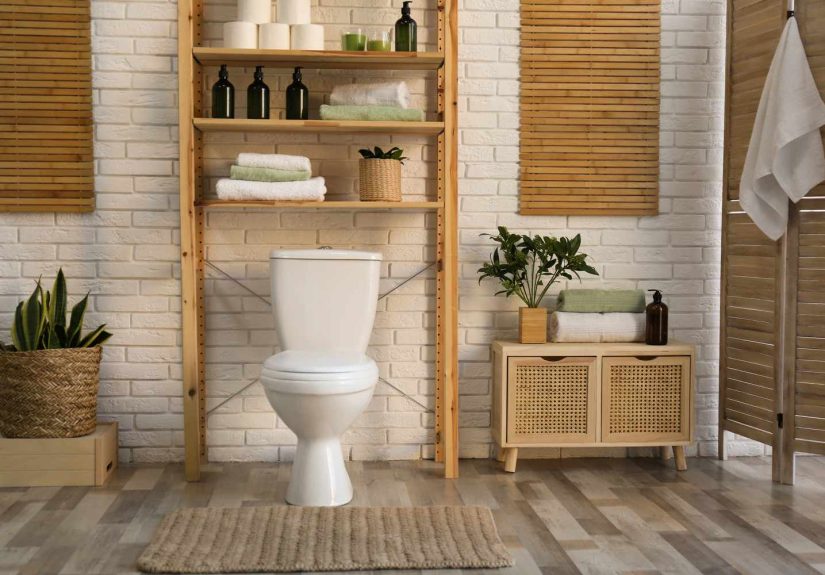
For example, install two or three slim shelves above the toilet. Place toilet paper in a basket on the lowest shelf, hand towels on the second, and a small plant or candle on the top shelf. Suddenly, the wall above the toilet is not awkward dead spaceit is doing actual work, like a tiny unpaid intern.
Add Over-the-Toilet Storage
An over-the-toilet cabinet or shelving unit is ideal for bathrooms without a linen closet. Choose a slim design with a mix of open and closed storage. Open shelves are great for items that look tidy, such as towels or baskets. Closed cabinets are better for less glamorous things, like extra soap bars, razors, or the toilet cleaner that does not need to star in your decor story.
If your bathroom is extremely narrow, measure carefully before buying. Check width, depth, and the height of your toilet tank. A storage unit should help the room, not make you enter sideways like you are sneaking into a secret club.
Use Hooks Instead of Bulky Towel Bars
Towel bars look clean, but hooks often work better in small bathrooms and shared spaces. They take up less wall space and make it easier for family members to hang towels quickly. Use labeled hooks for kids or roommates so everyone knows where their towel belongs. This small change can prevent the classic bathroom mystery: “Whose damp towel is this, and why is it on the floor again?”
Hack 2: Turn Cabinet Doors Into Hidden Storage
The inside of a vanity door is valuable real estate. It is flat, hidden, and usually ignored. With the right organizers, cabinet doors can hold hair tools, cleaning gloves, brushes, small bottles, or backup toiletries.
Install Adhesive Bins or Slim Racks
Use adhesive bins, screw-mounted baskets, or slim cabinet-door racks to store lightweight items. A small bin can hold toothpaste, floss, or face wash. A taller rack can hold cleaning sprays or hair products. Just make sure the organizer does not hit the plumbing or shelves when the door closes.
Before installing anything, do the “door swing test.” Hold the organizer in place, slowly close the door, and check for collisions. This prevents a very annoying situation where your new organizer works beautifullyuntil the cabinet refuses to close and judges you silently.
Mount Hair Tools Safely
Hair dryers, curling irons, and straighteners are oddly shaped and excellent at tangling cords. A heat-safe holder mounted inside a cabinet or on a wall can keep tools upright and contained. Let hot tools cool before putting them away unless the holder is specifically designed for heat. Wrap cords loosely or use cord clips to prevent a spaghetti situation under the sink.
Use the Door for Cleaning Supplies
Bathroom cleaning supplies should be easy to reach but not scattered. A door-mounted caddy can hold disinfecting wipes, a small spray bottle, gloves, and scrub pads. Keep heavier bottles on the cabinet floor or a pullout shelf rather than overloading the door. Storage should be helpful, not a cabinet avalanche with lemon-scented consequences.
Hack 3: Divide Drawers Like You Mean It
Bathroom drawers are where organization dreams often go to faint. Without dividers, everything slides around: lip balm, tweezers, sunscreen, combs, cotton rounds, travel toothpaste, and that one bobby pin that apparently pays rent.
Drawer dividers create boundaries, and boundaries are beautiful. Use acrylic trays, bamboo organizers, modular bins, or adjustable dividers to separate items by category. The best bathroom drawer organization system is not fancyit is easy to maintain when you are tired, late, and holding a toothbrush.
Create Zones by Routine
Instead of organizing only by product type, organize by how you use the bathroom. Try these zones:
- Morning routine: toothbrush, toothpaste, deodorant, sunscreen, hairbrush.
- Skincare: cleanser, moisturizer, serum, cotton rounds, facial tools.
- Grooming: razors, nail clippers, tweezers, combs, shaving cream.
- Makeup: daily makeup, brushes, sponges, remover pads.
- Backup items: extra floss, toothbrush heads, soap, replacement blades.
This routine-based approach makes your bathroom faster to use. You are not digging through a drawer like an archaeologist discovering the Lost Civilization of Hotel Shampoo.
Use Clear Containers for Small Items
Clear organizers make it easier to see what you own. This is especially useful for small bathroom products that disappear easily: hair ties, clips, cotton swabs, sample bottles, contact lens cases, and makeup minis. Clear bins also prevent overbuying because your inventory is visible at a glance.
For deep drawers, stackable containers can help. Put daily-use items on top and occasional items underneath. If you use lidded boxes, label them. A label may feel unnecessary until you open five identical containers looking for nail clippers and start questioning your life choices.
Declutter Before Buying Organizers
Never buy organizers before decluttering. That is how you end up carefully organizing things you should have thrown away. First, remove everything from the drawer. Toss expired products, dried-out makeup, stretched hair ties, rusty razors, and anything you do not use. Then group what remains and measure your drawer before buying bins.
The golden rule: containers should fit your stuff, not the fantasy version of your stuff where you own exactly three elegant bottles and never lose a lip balm.
Hack 4: Make the Under-Sink Area Work Around the Pipes
The cabinet under the sink is tricky because plumbing steals the best space. But with the right layout, you can turn the pipe maze into a useful storage zone. The key is to use stackable, pullout, and U-shaped organizers that work around obstructions.
Add Pullout Drawers or Sliding Baskets
Pullout drawers are a game changer because they bring items to you. Instead of crouching and reaching into the dark unknown, you slide the basket forward and see everything. Use one pullout for cleaning supplies and another for backup toiletries. If your cabinet is narrow, choose a two-tier sliding organizer that fits beside the plumbing.
Measure the cabinet width, depth, height, and pipe placement before buying. Under-sink organizers are not one-size-fits-all, and plumbing has a dramatic way of being exactly where you planned to put a shelf.
Use Bins by Category
Bins prevent under-sink chaos. Create separate containers for hair care, cleaning supplies, first aid, extra toiletries, feminine care products, or guest items. Choose plastic or washable bins because bathrooms are moisture-prone. Woven baskets look lovely, but they may not be the best choice if the cabinet gets damp or stores leaky products.
Try a Lazy Susan for Bottles
A turntable, also called a lazy Susan, is perfect for round bottles, jars, and sprays. Place one under the sink for skincare extras, hair products, or cleaning supplies. Instead of knocking over three bottles to reach the one in the back, you spin the tray. It is simple, satisfying, and just dramatic enough to make cleaning products feel like they are on a tiny stage.
Keep Moisture in Mind
Bathrooms are naturally humid, so be selective about what you store under the sink. Avoid keeping items that can be damaged by heat and moisture, especially many medicines. Store medicines in a cool, dry place outside the bathroom unless the label says otherwise. Under the sink is better for washable containers, cleaning products, extra toilet paper in protective packaging, and backup toiletries.
Hack 5: Create a Countertop “Landing Zone” Without Clutter
Bathroom counters can become clutter magnets because they are convenient. The solution is not to keep everything off the counter foreverthat usually fails by Tuesday. Instead, create a controlled landing zone for the few things you use every day.
Use a Tray to Set Limits
A small tray gives countertop items a boundary. Place your soap, daily moisturizer, perfume, or toothbrush cup on the tray. When the tray is full, the counter is full. This visual limit keeps one bottle from turning into twelve.
Choose a tray that is easy to clean. Resin, metal, ceramic, or sealed wood can work well. Avoid anything that traps water unless you enjoy discovering mysterious rings and sticky patches during your Saturday cleaning session.
Use Matching Containers Carefully
Matching containers can make a bathroom look calmer, but do not decant everything just for the aesthetic. Cotton swabs, cotton balls, bath salts, and floss picks are good candidates for jars. Products with instructions, expiration dates, or active ingredients should usually stay in their original packaging.
A beautiful bathroom still needs to be practical. Nobody wants to guess whether the mystery white cream is moisturizer, sunscreen, or something that belongs in the first-aid kit.
Limit the Counter to Daily Items
Ask one question: “Do I use this every day?” If the answer is no, it probably does not need to live on the counter. Store weekly masks, backup products, travel items, and special-occasion makeup in drawers or bins. The counter should support your daily routine, not display your entire personal-care biography.
Bonus Tips for Small Bathroom Storage
Use the Back of the Door
An over-the-door organizer can hold hair tools, towels, robes, cleaning supplies, or backup toiletries. Clear pockets are especially helpful because you can see everything. This is a smart solution for renters because many options require no drilling.
Choose Slim Rolling Carts
If you have a narrow gap between the vanity and toilet or beside the tub, a slim rolling cart can add flexible storage. Use it for skincare, extra towels, bath toys, or cleaning supplies. The best part is that you can roll it out when cleaning, which makes it feel less like furniture and more like a helpful little bathroom assistant.
Use Shower Space Wisely
A good shower caddy prevents bottles from gathering on the tub edge. Choose rust-resistant materials and avoid overcrowding. Keep only current-use products in the shower. If six shampoos are lined up like contestants on a reality show, it is time to edit.
Label Shared Storage
In a family or roommate bathroom, labels reduce confusion. Give each person a bin, drawer, hook, or shelf. Labels also make it easier for kids to put items back where they belong. Will they always do it? No. But at least the bathroom will have a fighting chance.
Common Bathroom Organizing Mistakes to Avoid
Mistake 1: Keeping Too Many Backups
Buying in bulk can save money, but a tiny bathroom should not become a warehouse club annex. Keep a reasonable number of backups and store overflow elsewhere if possible. One extra toothpaste is useful. Twelve extra toothpastes are a dental-themed real estate problem.
Mistake 2: Ignoring Expiration Dates
Skincare, sunscreen, makeup, and medicine can expire. Check dates regularly and toss anything that smells strange, changes texture, separates, dries out, or has been open far too long. Organizing expired products is just clutter with better posture.
Mistake 3: Using Pretty Storage That Does Not Function
A basket may look beautiful, but if it is too deep, too heavy, or hard to clean, it will not help. Bathroom organizers should be easy to wipe, easy to access, and sized for the items inside. Function first, beauty second, matching labels third if you are feeling fancy.
Mistake 4: Filling Every Empty Space
Maximizing space does not mean cramming every inch. Leave breathing room so items are easy to remove and replace. A slightly open shelf looks cleaner than a jam-packed shelf where one cotton ball causes a landslide.
Real-Life Experiences: What Actually Works in a Busy Bathroom
Here is the honest truth about bathroom organizing: the best system is the one you will maintain when life is messy. A bathroom can look perfect for one afternoon after a decluttering session, but the real test comes on a rushed Monday morning when someone is brushing their teeth, someone else is hunting for deodorant, and the hair dryer cord has formed a legally binding relationship with the curling iron.
In small bathrooms, I have found that the biggest improvement usually comes from removing items before adding organizers. Most people do not have a storage shortage at first; they have a decision shortage. The drawer is full because it contains old samples, expired sunscreen, broken hair clips, dull razors, almost-empty bottles, and products bought during an optimistic “new routine” era. Once those items are gone, the bathroom instantly feels larger without buying a single shelf.
One practical experience-based strategy is the “one-week counter test.” For seven days, keep only the items you use daily on the counter. Everything else goes into a temporary bin nearby. At the end of the week, review what you actually reached for. Those items deserve prime storage. The rest can move to a drawer, cabinet, closet, or donation bag if unopened and appropriate. This test is surprisingly revealing. Many products we think are daily essentials are really “maybe someday” clutter wearing a moisturizer label.
Another lesson: shared bathrooms need assigned zones. In a bathroom used by more than one person, general storage quickly becomes no one’s responsibility. Give each person a labeled bin, drawer divider, or shelf. Even a small basket can create accountability. When everyone has a defined zone, the bathroom becomes less of a product free-for-all. It also reduces arguments about missing razors, vanished hair gel, and the eternal question of who used the last cotton round.
For families with kids, hooks beat towel bars almost every time. Children may not fold a towel neatly over a bar, but they can usually manage a hook. Place hooks at kid-friendly height and label them by name or color. This one change can reduce damp towels on the floor, which helps the bathroom stay cleaner and fresher. It also keeps parents from delivering the same towel speech every evening like a tired Broadway monologue.
Under-sink storage works best when it is not overcomplicated. A pullout drawer for cleaning supplies, a bin for backups, and a small container for daily extras are usually enough. Avoid stacking too many bins because the moment storage becomes annoying to access, people stop using it properly. A good bathroom system should take seconds, not strategy.
Finally, the most underrated bathroom organizing habit is the monthly reset. Set a reminder once a month to spend ten minutes checking the counter, drawers, shower, and under-sink cabinet. Toss empties, combine duplicates, wipe bins, restock essentials, and return misplaced items. Ten minutes a month prevents the dreaded annual bathroom excavation, where you discover three expired sunscreens, five hotel lotions, and a shampoo bottle that has seen things.
Conclusion
Maximizing bathroom space is not about having a bigger room. It is about making every inch earn its keep. Use vertical storage, turn cabinet doors into hidden organizers, divide drawers into routine-based zones, make the under-sink area work around plumbing, and create a controlled countertop landing zone. These five bathroom organizing hacks can transform a cramped, cluttered space into a bathroom that feels cleaner, calmer, and easier to use.
The secret is to combine smart storage with honest editing. Keep what you use, remove what you do not, and choose organizers that match your real habits. A well-organized bathroom should not feel like a showroom. It should feel like your life got easier by at least 23%, which is a very scientific number based mostly on the joy of finding tweezers in under three seconds.