Table of Contents >> Show >> Hide
- Why Floating Shelves Work (Even When Your Closet Doesn’t)
- Floating Shelf Basics: Safety, Placement, and Not Waking Up to a Crash
- How to Style Floating Shelves Without Making Them Look Like a Waiting Room
- 28 Stylish Floating Shelf Ideas (Room-by-Room Inspiration)
- 1) The “Welcome Home” Entry Shelf Ledge
- 2) A Two-Shelf Entryway Stack for Small Spaces
- 3) Living Room “Picture Ledge” Gallery Shelf
- 4) Floating Shelves Flanking the TV
- 5) Corner Floating Shelves to Use “Dead” Space
- 6) Staggered Living Room Shelves for Modern Movement
- 7) Thick “Statement” Shelves in a Minimal Room
- 8) Shelf + Sconce Combo for Cozy Layered Lighting
- 9) Fireplace Mantel-Style Floating Shelf
- 10) Kitchen Floating Shelves Instead of Upper Cabinets (The Bold Move)
- 11) Over-the-Coffee-Station Shelf Setup
- 12) Kitchen Shelves with a Metal Rail or Lip
- 13) Floating Shelves in a Pantry Nook
- 14) “Between-Cabinets” Spice and Oil Shelves
- 15) Dining Room Floating Shelf as a Buffet Alternative
- 16) A Home Bar Glass Shelf Moment
- 17) Bathroom Floating Shelves Above the Toilet
- 18) Bathroom Corner Shelves in the Shower (Done Right)
- 19) Bathroom “Hotel Shelf” with Rolled Towels
- 20) Bedroom Nightstand Replacement Shelf
- 21) Bedroom Shelf “Headboard” Wall
- 22) Closet Floating Shelves for Shoes and Bags
- 23) Nursery Shelves for Books (Front-Facing Ledges)
- 24) Kids’ Room Display Shelves for LEGO and Art
- 25) Home Office Floating Shelves for Vertical Storage
- 26) Laundry Room Shelves for Detergent, Baskets, and Sanity
- 27) Hallway “Mini Library” Shelves
- 28) Garage or Mudroom Heavy-Duty Utility Shelves
- Common Mistakes (So You Don’t “Learn the Hard Way”)
- Real-Life Shelf Notes: of “I’ve Been There” Experience
- Conclusion
Floating shelves are the home design equivalent of good eyebrows: subtle, powerful, and somehow they make everything look more expensive.
They add storage without the visual “bulk” of cabinets, they can flex into almost any style (farmhouse, modern, coastal, chaotic gremlin chic),
and they’re one of the fastest ways to make a wall look intentionally decorated instead of “we ran out of furniture.”
In this guide, you’ll get 28 room-by-room floating shelf ideasplus real-world installation and styling tricks so your shelves look curated
(not like a yard sale had a baby with a spice rack). Whether you’re working with a tiny apartment, a busy family kitchen, or a bathroom the size
of a postage stamp, there’s a shelf move here that fits.
Why Floating Shelves Work (Even When Your Closet Doesn’t)
Designers love floating shelves because they create “open” storage: easy access, lighter visual weight, and a chance to show off the good-looking
stuff you already own. They’re especially handy in small spaces because they use vertical wall area without stealing floor space. If a room feels
cramped, floating shelves can feel like you gained square footagewithout negotiating with your landlord or building an addition.
Floating Shelf Basics: Safety, Placement, and Not Waking Up to a Crash
Before we get to the fun ideas, a quick reality check: shelves must be mounted correctly. Most step-by-step guides agree on the big rules:
find studs when you can, use the right anchors when you can’t, pre-mark your placement, and level everything like your reputation depends on it.
Because it does.
Quick install checklist (a.k.a. “Measure twice, patch drywall zero times”)
- Locate studs with a stud finder and plan shelf placement accordingly.
- Get at least one fastener into a stud when possible, and use proper anchors when studs aren’t available.
- Mark lightly in pencil, then double-check alignment with a level before drilling.
- Use pilot holes to reduce splitting and improve screw bite (especially for heavier shelves).
- Match the shelf to the job: “display shelf” and “book shelf” are not always the same beast.
Multiple DIY and retailer guides emphasize stud attachment for strength, plus careful leveling and marking before installation. If you’re hanging
anything heavy (books, cast iron, your vintage bowling ball collection), treat wall anchors like backup singershelpful, but not the lead.
How to Style Floating Shelves Without Making Them Look Like a Waiting Room
Styling shelves is part math, part vibes. The most reliable formulas from designers and editors boil down to: vary height, repeat a few materials,
and leave negative space so your eyes can breathe. Use odd groupings (three objects tends to look better than two), and try the “rule of thirds”
approach to avoid lining everything up like a nervous marching band.
A simple shelf styling recipe
- Start with anchors: 1–2 larger items (a framed print, tall vase, or stack of books).
- Add mid-size pieces: bowls, small art, candleholders, canisters.
- Finish with life: a plant, branches, or a sculptural object with texture.
- Edit ruthlessly: open shelves look best when they’re curated, not used as a “temporary” dumping zone.
One more truth: open shelving comes with maintenance. If you don’t want to dust, consider fewer shelves, deeper shelves that hide clutter better,
or a mix of open and closed storage. Some design advice even recommends being honest about whether you’re an “open shelving person” before you
commit to the lifestyle.
28 Stylish Floating Shelf Ideas (Room-by-Room Inspiration)
1) The “Welcome Home” Entry Shelf Ledge
Add a slim floating shelf near the front door as a landing zone for keys, sunglasses, and mailthen keep it pretty with a small tray and a plant.
Pair it with hooks below for bags so the shelf doesn’t become Key Mountain.
2) A Two-Shelf Entryway Stack for Small Spaces
If your entry is basically a hallway with feelings, stack two short shelves vertically. Top shelf for decor, bottom for everyday grab-and-go
itemsfunctional and stylish without screaming “storage.”
3) Living Room “Picture Ledge” Gallery Shelf
Use a shallow floating ledge to layer framed art and photos instead of committing to a million nail holes. It’s flexible, easy to refresh, and
looks intentional even if you rearrange it at 11:47 p.m.
4) Floating Shelves Flanking the TV
Place matching shelves on either side of the TV to balance the wall and hide the “big black rectangle” effect. Keep decor minimal and low-profile,
and consider leaving a shelf or two open for a soundbar-friendly layout.
5) Corner Floating Shelves to Use “Dead” Space
Corners are the forgotten vegetables of interior designgood for you, rarely chosen. Corner shelves turn awkward angles into display space for
plants, books, or small sculptures.
6) Staggered Living Room Shelves for Modern Movement
Instead of perfectly aligned shelves, stagger them. It adds energy and makes the wall feel architectural. Keep finishes consistent so the shape
is the statement.
7) Thick “Statement” Shelves in a Minimal Room
A chunky wood shelf reads more like furniture than an accessorygreat for modern, Scandinavian, or warm minimal homes. Style it with fewer, larger
pieces so it doesn’t feel crowded.
8) Shelf + Sconce Combo for Cozy Layered Lighting
Install wall sconces above or beside floating shelves to create a built-in look. The glow makes styling feel more intentionaland your shelves
will look good even when the rest of the room is in “laundry day chaos.”
9) Fireplace Mantel-Style Floating Shelf
A long, substantial floating shelf can mimic a mantel and anchor a room. Keep decor low and wide (candles, framed art, a mirror) for a calm,
classic profile.
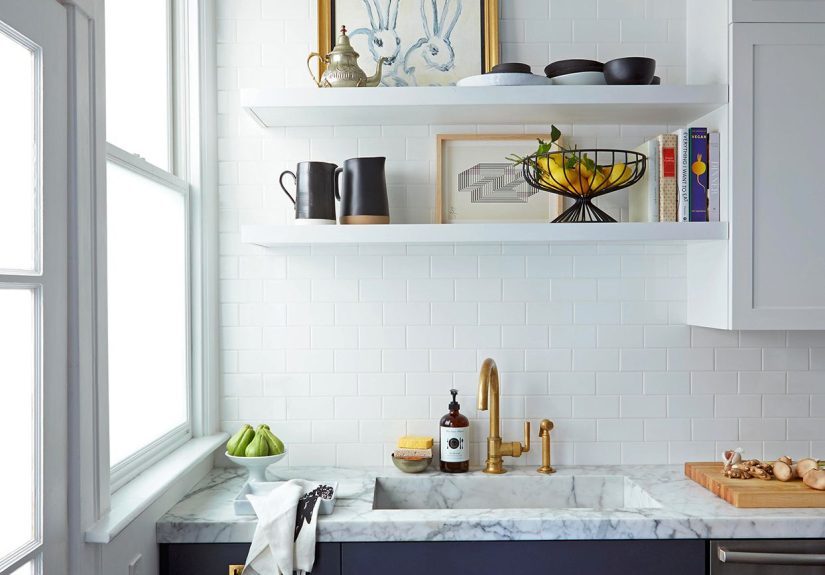
10) Kitchen Floating Shelves Instead of Upper Cabinets (The Bold Move)
Replace some upper cabinets with open shelves to lighten the kitchen. Display your everyday plates and bowlsjust be honest about whether you’ll
keep it tidy. Open shelving can look like functional art when color and materials are coordinated.
11) Over-the-Coffee-Station Shelf Setup
Put floating shelves above a coffee bar or countertop: mugs on the bottom shelf, beans and canisters above, and a small piece of art for
“I have my life together” energy.
12) Kitchen Shelves with a Metal Rail or Lip
Add a shelf with a subtle edge (or install a rail) to keep jars and small items from sliding. It’s especially helpful near busy prep zones where
elbows, pets, and gravity are constantly plotting.
13) Floating Shelves in a Pantry Nook
Use floating shelves to create a mini pantry wall. Decant dry goods into matching jars for a cleaner look, and use bins for snacks. You’ll spend
less time hunting for pasta and more time pretending you love cooking.
14) “Between-Cabinets” Spice and Oil Shelves
Add narrow shelves near the stove for oils, salt, and frequently used spices. Keep it curatedopen shelves don’t love clutter, and neither do you
when you’re cleaning grease.
15) Dining Room Floating Shelf as a Buffet Alternative
No room for a sideboard? Add two longer shelves for serving platters, barware, and linens in baskets. Top with a mirror to bounce light and make
the wall feel finished.
16) A Home Bar Glass Shelf Moment
Floating shelves above a bar cart instantly upgrade the vibe. Use glassware sparingly and mix in a few sculptural bottles or a small framed print.
Bonus points for under-shelf lighting that makes everything sparkle.
17) Bathroom Floating Shelves Above the Toilet
The classic bathroom space-saver: install 2–3 shelves above the toilet for towels, extra TP, and a candle that claims you’re relaxed.
Use baskets to keep necessities looking calm and contained.
18) Bathroom Corner Shelves in the Shower (Done Right)
For showers, pick moisture-friendly materials and secure mounting appropriate for your wall type. The goal is to get bottles off the tub ledge and
stop playing “which one is the conditioner” every morning.
19) Bathroom “Hotel Shelf” with Rolled Towels
Add one shelf at shoulder height and style it like a boutique hotel: rolled towels, a small plant, and matching containers. It’s an easy way to
make a basic bathroom feel upgraded.
20) Bedroom Nightstand Replacement Shelf
In a tight bedroom, a floating shelf can replace a bulky nightstand. Add a small lamp, book stack, and a dish for jewelry. It’s minimalist and
makes vacuuming feel like you’ve unlocked a life hack.
21) Bedroom Shelf “Headboard” Wall
Mount a long shelf above the bed instead of an art cluster. Layer framed prints and a trailing plant. Keep it secure and avoid heavy items directly
over where you sleepbecause peace matters.
22) Closet Floating Shelves for Shoes and Bags
Use floating shelves to add vertical storage for handbags, hats, or folded sweaters. It’s a clean, built-in look and helps you stop stacking
shoes like they’re playing Jenga.
23) Nursery Shelves for Books (Front-Facing Ledges)
Install shallow ledges to display children’s books cover-forward. It looks adorable, makes books easier to pick, and turns story time into a tiny
library moment.
24) Kids’ Room Display Shelves for LEGO and Art
A few shelves can showcase favorite builds, trophies, and rotating artwork. Add labeled bins on lower shelves for easier cleanupbecause “put it
away” works better when there’s actually a place to put it.
25) Home Office Floating Shelves for Vertical Storage
Place shelves above your desk for files in matching boxes, books, and a couple of decor pieces. It clears desk clutter and makes your video calls
look like you might own a planner.
26) Laundry Room Shelves for Detergent, Baskets, and Sanity
Laundry rooms love shelves. Use them for supplies, jars of clothespins, and baskets for sorting. Keep frequently used items low and reserve top
shelves for backstock and “I’ll deal with this later.”
27) Hallway “Mini Library” Shelves
A long hallway wall can handle slim shelves for books and framed photos. Keep depth shallow so people don’t shoulder-check your shelves on the way
to the bathroom at 2 a.m.
28) Garage or Mudroom Heavy-Duty Utility Shelves
Floating shelves aren’t just for pretty stuff. In a mudroom or garage, use sturdy brackets and proper fasteners for gear, bins, and tools.
Label containers and keep weight limits in mindfunction first, then style.
Common Mistakes (So You Don’t “Learn the Hard Way”)
- Overloading shelves without planning proper support or hardware.
- Ignoring studs when you’re mounting long or heavy shelves.
- Over-decorating until the shelf looks cluttered instead of curated.
- Putting dust magnets on open shelves in high-traffic areas without a cleaning plan.
- Storing the wrong things on open shelving (especially items that look messy or are hard to keep tidy).
Real-Life Shelf Notes: of “I’ve Been There” Experience
Let’s talk about the part no inspiration photo mentions: floating shelves are a confidence exercise.
The first time you hold a shelf up to the wall, you feel like a capable adult. The first time you drill into drywall,
you suddenly remember every life decision that led you to this moment.
My biggest lesson: shelves don’t fail dramatically because you bought the “wrong” wood tone. They fail because of the boring stuffhardware,
placement, and physics. Every reputable how-to guide pushes the same core habit: find studs and use the correct anchors when studs aren’t available.
Once I finally treated “stud finder” as a household essential (not a gadget I lose in the junk drawer), my shelves stopped behaving like they wanted
to become floor decor.
The second lesson is spacing. I used to eyeball shelf height like a person who thinks rulers are optional.
Then I installed a shelf too low above a countertop and discovered a fun game called “slam the blender into the underside every morning.”
Now I plan around real objects: tall olive oil bottles, cereal canisters, mixing bowlswhatever actually needs to live there.
If it’s a display shelf, I give myself breathing room so the styling feels intentional instead of cramped.
Styling is the third lesson, and it’s where your shelves become either “designer moment” or “miscellaneous museum.”
The trick that changed everything for me was committing to a limited cast of materialswood + ceramic + a little metalthen repeating them.
I’ll do a stack of books, a bowl, and a plant, and I stop before the shelf starts looking like it’s hosting a garage sale.
If I’m tempted to add one more thing, I remove two. It’s not minimalism; it’s shelf self-defense.
Dust is the fourth lesson. Open shelves are beautiful, but they’re also honest.
A closed cabinet can hide chaos. A floating shelf will display your chaos under perfect lighting.
In the kitchen, I learned to keep the most-used dishes on the lowest open shelf (easy to grab, easy to wipe),
and to avoid putting “random packaging” up there unless it’s decanted into matching containers.
In the bathroom, baskets became my best friendsame storage, less visual noise.
Finally: don’t let shelves become a dumping ground. A shelf that starts as “temporary” becomes permanent faster than leftovers turn into science.
If you want an easy rule, try this: every shelf needs at least one blank spot. Negative space is what makes your objects look curated.
And if someone asks how you made it look so good, you can smile and say, “Oh, you know… shelf things,”
instead of admitting you spent 45 minutes moving one candle back and forth like it owed you money.
Conclusion
The best floating shelf ideas combine two things: smart placement (so the shelf earns its keep) and intentional styling
(so it looks like a design choice, not an accident). Start with one wall you see every daykitchen, bathroom, entrychoose a shelf style that matches
the room, mount it safely, and decorate with restraint. If you do it right, floating shelves won’t just hold your stuff. They’ll upgrade your entire
space, one clean line at a time.