Table of Contents >> Show >> Hide
- 1. North Sentinel Island, India
- 2. Ilha da Queimada Grande, Brazil
- 3. Surtsey, Iceland
- 4. North Brother Island, New York City
- 5. South Brother Island, New York City
- 6. Poveglia, Italy
- 7. Bikini Atoll, Marshall Islands
- 8. Diego Garcia, Indian Ocean
- 9. Iwo Jima, Japan
- 10. Discovery Island, Florida
- 11. Plum Tree Island, Virginia
- 12. Plum Island, New York
- 13. Palmyra Atoll, Pacific Ocean
- 14. Heard and McDonald Islands, Australia
- 15. Sable Island, Canada
- Why Forbidden Islands Fascinate Us in the First Place
- What the Experience of Getting Close to Places Like These Feels Like
- Final Thoughts
Some islands promise turquoise water, gentle breezes, and a cute drink with a paper umbrella. The islands on this list offer none of that. What they do offer is a spectacular mix of quarantine ruins, military secrecy, venomous wildlife, ghost stories, abandoned amusement parks, disease history, and the unmistakable feeling that if you get too close, somebody somewhere will tell you to turn the boat around immediately.
That, honestly, is part of the fascination. Forbidden islands sit right at the intersection of history, danger, and human curiosity. Some are closed because the ecosystem is too fragile. Some are sealed off because the past left behind a mess no one wants to casually stroll through. Some are restricted for reasons that sound like a thriller writer got a little carried away and then, inconveniently, real life said, “No, no, keep going.”
Below are 15 of the creepiest islands on Earth that ordinary travelers cannot just wander onto. A few are protected by law, a few by common sense, and a few by the sort of atmosphere that makes your spine sit up straight before your brain has fully caught up.
1. North Sentinel Island, India
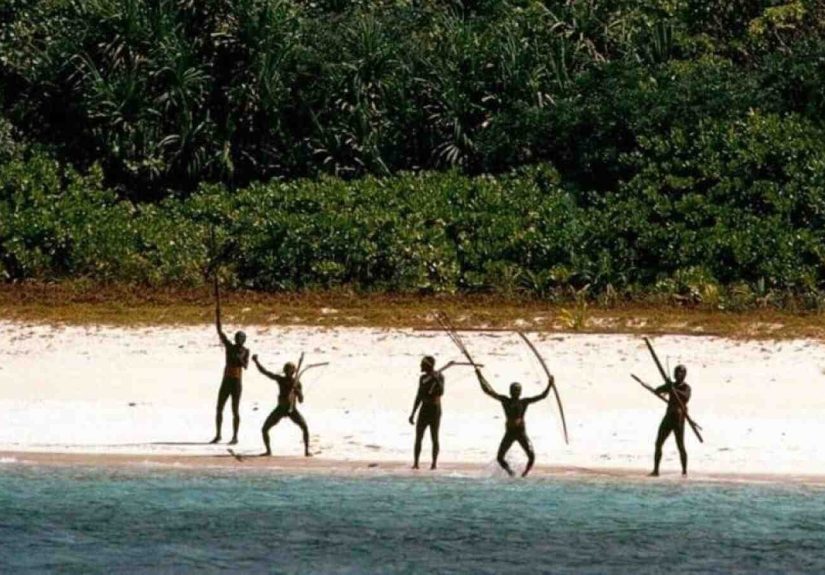
North Sentinel Island is the kind of place that shuts down modern assumptions fast. It is home to the Sentinelese, an Indigenous people who have remained in voluntary isolation and fiercely reject outside contact. The creepy part is not the people themselves, but the absolute hard boundary the island represents. In a world of satellites, cruise ships, and travel influencers who will apparently fly anywhere for views, North Sentinel remains a place where the modern world hits the reef line and stops.
The island’s reputation only grew darker after repeated illegal approaches ended badly. That history, combined with the legal exclusion zone and the real risk of introducing disease, makes North Sentinel one of the clearest examples of a place the outside world should simply leave alone. This is not a spooky destination in the haunted-house sense. It is eerie because it reminds us that not every place is ours to enter.
2. Ilha da Queimada Grande, Brazil
Most islands market themselves with beaches. Snake Island went with snakes. Specifically, thousands of golden lancehead vipers, a highly venomous species found nowhere else in the wild. That alone would be enough for a horror-movie pitch, but the island’s isolation made things even stranger by turning it into a real-world evolutionary pressure cooker.
What makes the island so creepy is the contrast. It looks gorgeous from a distance: green, rocky, dramatic, almost cinematic. Then you remember that public access is prohibited because the landscape is effectively a venom delivery system with vegetation. Scientists may get controlled access, but casual visitors absolutely do not. This is paradise with a very clear “do not disturb” sign and, frankly, the sign seems wise.
3. Surtsey, Iceland
Surtsey sounds like a villain in a fantasy novel, and the island itself does not exactly calm that impression. Born from volcanic eruptions between 1963 and 1967, Surtsey is one of the youngest islands on the planet. Instead of turning it into an adventure stop, authorities protected it as a natural laboratory where scientists can observe how life colonizes fresh land.
Its creepiness is subtle. There are no plague masks, abandoned wards, or monkeys glaring at you from the trees. The eerie part is the pristine silence of a place humans intentionally stepped back from. Surtsey is off-limits precisely because researchers want to see what happens when nature gets a rare chance to write the story without tourists stomping through it with hiking poles and snack wrappers.
4. North Brother Island, New York City
It feels unfair that one of America’s creepiest forbidden islands is sitting right in New York City, basically within sight of regular life. North Brother Island once housed quarantine hospitals and later fell into ruin. Today, it is largely abandoned, structurally dangerous, and closed to the public. If “forbidden urban ghost island” sounds made up, North Brother would like a word.
The island’s decaying hospital buildings, overgrown paths, and long medical history give it a uniquely unsettling vibe. It is not just abandoned; it feels like it was left behind in a hurry by history itself. The fact that it now functions as protected bird habitat only adds to the mood. Human voices left, nature moved in, and the result is a place that feels like a fever dream drifting in the East River.
5. South Brother Island, New York City
North Brother gets the headlines, but South Brother is its quieter, weirder sibling. It is also off-limits to the public, and its story is no less odd. Over the years, it served various roles, including a dumping ground, before becoming protected wildlife habitat. If North Brother feels like a decayed medical nightmare, South Brother feels like the forgotten footnote that somehow got even stranger with age.
What makes South Brother creepy is its total erasure from everyday awareness. It sits near one of the busiest cities in the world and still manages to feel almost mythological. No theme park, no tourist dock, no glossy reinvention. Just birds, silence, and the knowledge that one of the largest urban centers on Earth has a little patch of off-limits wilderness with a deeply weird past floating beside it.
6. Poveglia, Italy
Poveglia has the full spooky package: plague history, asylum lore, ruined buildings, and a reputation that has been marinating in dread for generations. Public tours are not available, and illegal visits have only helped deepen the island’s status as one of Europe’s most notorious no-go spots. Even people who do not believe in ghosts tend to look at Poveglia and think, “You know what, maybe let’s not.”
The island’s atmosphere does a lot of the work. Brick ruins, empty shoreline, medical history, and the sense of collective memory clinging to a small piece of land in the Venetian Lagoon make it feel like a location designed by somebody who wanted to win a contest called Most Unsettling Place You Should Absolutely Not Picnic. It is creepy because history itself seems to linger there like damp fog.
7. Bikini Atoll, Marshall Islands
Bikini Atoll is one of those places where the beauty feels almost rude. The water is dazzling. The setting looks postcard-perfect. And then you remember it was the site of nuclear testing that permanently transformed the place in both environmental and historical terms. Even decades later, Bikini’s name is tied to fallout, displacement, and radioactive legacy rather than beach towels and leisure.
Its creepiness comes from that surreal mismatch between appearance and memory. Places that look beautiful but carry invisible danger are always more unsettling than places that look obviously hostile. Bikini Atoll is not your standard tourist destination, and for good reason. It feels haunted not by ghosts in sheets, but by the twentieth century’s talent for turning paradise into a laboratory.
8. Diego Garcia, Indian Ocean
Diego Garcia is eerie in a very different way. There are no urban legends required when an island is heavily restricted because it functions as a military installation. Access is limited to official visitors and mission-essential personnel, which gives the place the sort of locked-down mystique thrillers love and ordinary travelers never get to test in person.
The unsettling element here is secrecy. Military islands do not need cobwebbed hospitals or tales of plague doctors to feel creepy. The knowledge that a tropical island exists largely outside public access, wrapped in official clearances and strategic importance, is spooky all by itself. It is the kind of place that makes even a map look like it is withholding information.
9. Iwo Jima, Japan
Iwo Jima carries the weight of war in a way few places do. Best known for one of the most iconic images of World War II, the island is not a casual travel stop. Access is tightly restricted, and civilian visits are rare and highly controlled. That limited access preserves more than terrain; it preserves a battlefield atmosphere that has never entirely faded.
The island is creepy because it is less a destination than a scar. Its black sand, volcanic character, and military significance give it a quiet heaviness that no amount of sunny weather could really erase. Some places seem frozen in time because they are charming. Iwo Jima feels frozen in time because history hit it so hard that it never fully relaxed afterward.
10. Discovery Island, Florida
Disney is supposed to be the opposite of creepy, which is exactly why Discovery Island is so unnerving. Once an attraction in Walt Disney World, the island closed in 1999 and has remained guarded and off-limits. That means an entire abandoned Disney island is out there quietly decaying while families line up nearby for churros and fireworks. Reality is weird.
The creepiness here is pure contrast. A shuttered amusement space in the middle of the happiest-brand-on-Earth ecosystem feels wrong in a deliciously unsettling way. Nature has crept back in, structures have deteriorated, and the whole place has become one of those rare abandoned sites that sounds fake until you realize it is very, very real. Mickey may not haunt it, but the vibe definitely does.
11. Plum Tree Island, Virginia
Plum Tree Island National Wildlife Refuge is closed to the public because of fragile habitat and safety concerns tied to its former use as a bombing range. In other words, it combines ecological protection with old military danger signs. That is an extremely efficient way to make an island sound creepy in a single sentence.
Even without dramatic ghost stories, a place becomes eerie when the reasons for staying out include unexploded danger, law enforcement patrols, and federal warnings. Plum Tree Island feels like the kind of place where the wind would somehow sound like a cautionary lecture. It is a reminder that sometimes the scariest islands are the ones whose warning signs are completely serious.
12. Plum Island, New York
Plum Island has long occupied a special place in the American imagination because it blends government ownership, disease research history, restricted access, and just enough mystery to encourage endless speculation. Even when the conversation becomes practical, focusing on hazards, biodiversity, or future management, the island keeps its eerie edge.
Part of that is branding by accident. Tell people there is a government-controlled island associated with animal disease research and they will fill in the rest with conspiracy-theory jazz hands before you finish the sentence. But even stripped of rumors, Plum Island remains unsettling. Restricted places with scientific history always feel one storm away from a very expensive problem.
13. Palmyra Atoll, Pacific Ocean
Palmyra Atoll is stunning, remote, and heavily controlled in practice. Public access is possible only under narrow rules and serious logistical constraints, which means the average person is not casually dropping by. That practical inaccessibility makes the atoll feel almost mythical, like a place that exists more in documentaries than in anyone’s vacation calendar.
Its creepiness is elegant rather than grim. Palmyra is beautiful in the same way deep water is beautiful: gorgeous, yes, but also faintly unnerving because you know it does not care whether you are comfortable. Add isolation, sharks, difficult access, and the sense that only researchers, officials, and very determined people ever really get there, and you have an island that feels both heavenly and suspicious.
14. Heard and McDonald Islands, Australia
These sub-Antarctic islands sound like they were generated by a machine designed to create “places humans should not casually visit.” They are remote, storm-lashed, volcanically active, and generally accessible only with permission and serious planning, usually for scientific purposes. You do not just wander onto Heard and McDonald because your weekend opened up.
The islands are creepy because they are so aggressively indifferent to human presence. Ice, volcanic terrain, brutal remoteness, seals, penguins, and almost no sign of ordinary human life give them a cold, outer-edge-of-the-map quality. They are less haunted house and more ancient planet. Which, depending on your preferences, may actually be scarier.
15. Sable Island, Canada
Sable Island is famous for wild horses, shipwreck history, and dunes that look dreamlike until you remember how many sailors once learned the hard way that beautiful sandbars can be excellent at wrecking lives. Visitors need permission before going, and the island is managed with strict rules designed to protect its fragile environment.
Its creepiness comes from atmosphere. Sable is all wind, shifting sand, remoteness, and maritime memory. It feels like the sort of place where you could stand still for one minute and feel the weather rewriting the whole scene around you. Add in the island’s long shipwreck reputation and you get a place that is haunting without needing to invent a single ghost.
Why Forbidden Islands Fascinate Us in the First Place
The strange power of forbidden islands is not just that we cannot easily go there. It is that each one feels like a sealed chapter of the human story. Some protect people from outsiders. Some protect outsiders from the place itself. Some protect ecosystems so delicate that a careless footprint could become scientific vandalism. Others are cordoned off because history left behind ruins, contamination, military restrictions, or memories too heavy for casual sightseeing.
That is why these places linger in the imagination. They are not simply unreachable vacation spots. They are reminders that the world still contains edges. Not every shoreline exists for us to step onto, review online, and rank against some other beach. A forbidden island says no in a culture obsessed with access, and there is something weirdly magnetic about that.
What the Experience of Getting Close to Places Like These Feels Like
Even when you cannot legally set foot on them, islands like these still create an experience all their own. In some cases, that experience begins from a boat deck, where the island appears first as a dark smudge on the horizon and then slowly sharpens into a real place with cliffs, trees, ruins, or strange silence. The distance matters. It creates tension. You are close enough to imagine details, but not close enough to settle them. And that gap is where the creepiness lives.
Part of the feeling comes from how normal everything looks at first. Water is water. Shoreline is shoreline. Trees are trees. Then the story arrives. Maybe this was the island where quarantine patients were sent. Maybe this was the place where military experiments happened. Maybe this is the island where snakes outnumber good ideas. Suddenly the landscape changes without physically changing at all. The beach stops being a beach and becomes a warning. The trees stop looking peaceful and start looking like they know something you do not.
There is also a psychological thrill in being near a place that resists tourism. Modern travel trains us to assume that if something is beautiful or famous, it is basically available for a fee, a reservation, and a half-decent pair of shoes. Forbidden islands break that script. They remind you that the world is not one giant attraction queue. Some places still belong to science, secrecy, history, wildlife, or communities that want no part of your itinerary.
That is what makes glimpsing them so memorable. You do not just “see an island.” You feel the perimeter around it. You feel the law, the danger, the history, or the ethics of staying back. There is a strange intensity in knowing that the correct experience is not conquest but restraint. In a very backward way, being denied access can make a place feel bigger, deeper, and more alive than destinations you can roam freely.
And then there is the sensory side of it. The hum of a boat engine dropping lower as people stare. Salt air. Wind. The occasional camera zooming in as if optics can substitute for permission. That little nervous laugh people do when they are both fascinated and mildly unnerved. The moment someone says, “Imagine being stranded there,” and everyone goes quiet for a beat too long. Forbidden islands are powerful because they turn imagination into the main activity. Since you cannot wander through them, your mind does the wandering for you.
That might be why these places stick with people long after the trip, documentary, or article ends. They feel unfinished, not because the island lacks a story, but because you are not allowed to finish it for yourself. You do not get closure. You get a silhouette, a rumor, a rule, and a horizon line. Honestly, that is often much creepier than a guided tour ever could be.
Final Thoughts
The creepiest islands on Earth are not always the most dangerous-looking ones. Often they are the ones that appear calm, green, and beautiful while carrying a hidden reason you absolutely should not stroll ashore. Some are forbidden because humans have already done enough damage. Others are forbidden because humans would be in danger the moment they arrived. Either way, these islands prove that the world still has places where curiosity must stop at the shoreline.
And maybe that is for the best. Not every mystery needs a selfie.