Table of Contents >> Show >> Hide
- 1. Acadia Was the First National Park East of the Mississippi River
- 2. Acadia Was Created Through Private Land Donations
- 3. Acadia Is Part of the Wabanaki Homeland
- 4. Cadillac Mountain Is the Highest Point on the U.S. Atlantic Coast
- 5. Cadillac Summit Road Requires Seasonal Vehicle Reservations
- 6. Acadia Has 45 Miles of Historic Carriage Roads
- 7. Park Loop Road Is a 27-Mile Scenic Classic
- 8. Acadia Offers More Than 150 Miles of Hiking Trails
- 9. Acadia’s Tide Pools Are Tiny Ocean Worlds
- 10. Acadia Is a Birding Hotspot With Hundreds of Recorded Species
- 11. Acadia Is More Than Mount Desert Island
- Why Acadia National Park Remains So Popular
- Visitor Experiences: What Acadia Feels Like in Real Life
- Conclusion
- SEO Tags
Acadia National Park is the kind of place that makes visitors speak in scenic adjectives: rugged, salty, granite-studded, sunrise-soaked, and occasionally “where did I park?” Located on the coast of Maine, Acadia blends mountains, forests, lakes, carriage roads, tide pools, historic landscapes, and Atlantic Ocean drama into one unforgettable national park experience.
But Acadia is more than a pretty postcard with lobster nearby. It has a deep cultural history, a rare conservation origin story, and some of the most recognizable natural landmarks in the northeastern United States. Below are 11 facts about Acadia National Park that explain why this coastal gem continues to fascinate hikers, photographers, families, birders, cyclists, history lovers, and anyone who enjoys standing on a mountain while the ocean sparkles below like it is auditioning for a travel brochure.
1. Acadia Was the First National Park East of the Mississippi River
One of the most important Acadia National Park facts is also one of the easiest to overlook: Acadia became the first national park east of the Mississippi River. Before the eastern United States had many large national parks, citizens and conservationists in Maine worked to protect the forests, mountains, and shorelines of Mount Desert Island.
The park’s official story began in 1916, when it was established as Sieur de Monts National Monument. In 1919, it became Lafayette National Park, named in honor of the Marquis de Lafayette. In 1929, the park received the name people know today: Acadia National Park.
This layered naming history gives Acadia a special identity. It is not just a protected landscape; it is a monument to early American conservation, civic generosity, and the idea that the East Coast deserved wild public places just as much as the grand western parks.
2. Acadia Was Created Through Private Land Donations
Many national parks were created from federal land, but Acadia followed a different path. The park grew from private lands donated by people who wanted to preserve Maine’s coastal scenery from overdevelopment. That makes Acadia one of the great success stories of citizen-led conservation in the United States.
George B. Dorr, often called the “Father of Acadia National Park,” played a central role. He spent decades gathering support, encouraging land donations, and advocating for federal protection. The result was a park built not by one single act of government planning, but by years of persistence, philanthropy, and local commitment.
In plain English: Acadia exists because a lot of people looked at the mountains, ponds, forests, and coastline and said, “Maybe we should not turn all of this into summer cottages and carriage-house bragging rights.” Good call.
3. Acadia Is Part of the Wabanaki Homeland
Long before Acadia became a national park, the land was home to the Wabanaki people. The Wabanaki, often known as the “People of the Dawnland,” include the Maliseet, Mi’kmaq, Passamaquoddy, and Penobscot peoples in Maine. Their relationship with this region reaches back thousands of years.
Mount Desert Island was known to the Wabanaki as Pemetic, meaning “the sloping land.” Families traveled through the area by canoe, hunted, fished, gathered plants, harvested shellfish, and maintained cultural connections to the coast, forests, and waterways.
Understanding Acadia means recognizing that its story did not begin with European explorers or national park legislation. The landscape has a much older human history, and that history remains deeply connected to Wabanaki communities today.
4. Cadillac Mountain Is the Highest Point on the U.S. Atlantic Coast
Cadillac Mountain is Acadia’s celebrity peak, and unlike some celebrities, it actually deserves the attention. Rising 1,530 feet above sea level, it is the highest point along the U.S. Atlantic coast and one of the most popular destinations in the park.
The summit offers sweeping views of Frenchman Bay, the Porcupine Islands, surrounding mountains, forests, and the Atlantic Ocean. Visitors can drive to the top during the open season, hike up by trail, or simply stand at the summit and pretend they are in a nature documentary narrated by someone with a very calm voice.
Is Cadillac Mountain Always the First Sunrise in the United States?
Not always. A common travel myth says Cadillac Mountain is the first place in the United States to see the sunrise every day of the year. The more accurate fact is that Cadillac Mountain is among the first places to see sunrise in the country during certain times of year, especially from early October through early March. Either way, sunrise from Cadillac Mountain is spectacular enough that the technical correction does not ruin the magic.
5. Cadillac Summit Road Requires Seasonal Vehicle Reservations
Because Cadillac Mountain is so popular, Acadia uses a vehicle reservation system for Cadillac Summit Road during the busy season. For 2026, reservations are required from May 20 through October 25. Visitors still need a park entrance pass, and the Cadillac vehicle reservation is separate from that pass.
This system helps reduce congestion on the summit road and makes the experience more manageable. Translation: fewer traffic jams at the top of a mountain where everyone is trying to take the same sunrise photo before coffee.
If you plan to drive to Cadillac Mountain, check the official reservation window in advance. A smart Acadia trip starts before you arrive, especially during summer and fall foliage season when demand can climb faster than a hiker on the Beehive Trail.
6. Acadia Has 45 Miles of Historic Carriage Roads
One of Acadia’s most beloved features is its network of historic carriage roads. These crushed-stone routes were financed and guided by philanthropist John D. Rockefeller Jr., who wanted peaceful motor-free roads for horse-drawn carriages and quiet travel through the landscape.
Today, about 45 miles of carriage roads wind through forests, around lakes, over stone bridges, and past mountain views. They are popular for walking, biking, horseback riding, and carriage tours. Motor vehicles are not allowed, which means the loudest thing you may hear is a bicycle bell, a horse snort, or your own dramatic breathing on a hill.
The carriage roads are also admired for their craftsmanship. Their stone bridges, sweeping curves, and carefully designed viewpoints show how transportation can fit into a landscape instead of bulldozing its personality away.
7. Park Loop Road Is a 27-Mile Scenic Classic
Acadia’s Park Loop Road is a 27-mile scenic drive that connects many of the park’s most famous sights. It winds past forests, lakes, mountains, rocky shoreline, and major stops such as Sand Beach, Thunder Hole, Otter Point, Jordan Pond, and Cadillac Mountain access.
For first-time visitors, Park Loop Road is often the easiest way to understand Acadia’s variety. One minute you are looking at waves smashing against granite cliffs; the next, you are passing quiet ponds, wooded slopes, and trailheads that look suspiciously like invitations to cancel your dinner reservation and keep exploring.
During peak months, the road can get busy. Starting early, using the Island Explorer shuttle when available, and planning stops ahead of time can make the experience smoother.
8. Acadia Offers More Than 150 Miles of Hiking Trails
Acadia is a hiker’s playground with more than 150 miles of trails. The park’s hiking routes range from gentle coastal paths to steep iron-rung climbs, which means visitors can choose between “pleasant nature walk” and “why did I agree to this before breakfast?”
Popular hikes include Ocean Path, Jordan Pond Path, Gorham Mountain, Cadillac North Ridge Trail, the Beehive, and the Precipice Trail. Some routes are family-friendly and relatively flat, while others include exposed ledges, ladders, iron rungs, and serious heights.
Choose Trails Based on Comfort, Not Ego
The best Acadia hike is not necessarily the hardest one. If you dislike heights, skip the exposed ladder routes and enjoy trails with ocean views, forest shade, or lake scenery. Acadia rewards curiosity at every level, from casual walkers to experienced hikers with calves made of granite.
9. Acadia’s Tide Pools Are Tiny Ocean Worlds
At low tide, Acadia’s rocky shoreline reveals tide pools filled with marine life. These pools form when seawater gets trapped in depressions along the rocks as the tide recedes. Look carefully and you may see barnacles, periwinkles, mussels, seaweed, crabs, small fish, or other intertidal creatures.
Tide pooling is fun, but it requires a gentle approach. The animals living in these pools are adapted to a harsh environment, but they are still vulnerable to careless footsteps, poking fingers, and souvenir hunting. The best rule is simple: look closely, step carefully, and leave everything where it belongs.
Great tide-pool experiences feel like finding a secret aquarium designed by the Atlantic Ocean. No admission desk, no neon signs, just nature quietly doing something brilliant between waves.
10. Acadia Is a Birding Hotspot With Hundreds of Recorded Species
Acadia National Park is one of the premier bird-watching areas in the country. More than 300 bird species have been recorded in the park, thanks to its mix of coastal, forest, wetland, and mountain habitats.
Birders may look for warblers, hawks, owls, loons, ducks, shorebirds, woodpeckers, peregrine falcons, and bald eagles. Spring and fall migration can be especially exciting, when the park becomes a rest stop for feathered travelers moving along the Atlantic flyway.
The park is also home to a variety of mammals, including deer, squirrels, foxes, otters, porcupines, beavers, raccoons, bats, coyotes, snowshoe hares, and bobcats. Wildlife sightings are never guaranteed, of course. Animals did not sign a visitor-service contract. But patient, respectful observers have plenty to watch for.
11. Acadia Is More Than Mount Desert Island
Many visitors associate Acadia with Mount Desert Island and nearby Bar Harbor, but the park is larger and more varied than that. Acadia also includes the Schoodic Peninsula, Isle au Haut, and several smaller islands.
The Schoodic Peninsula is the only mainland section of the park. It offers dramatic granite headlands, wave-splashed views, quieter roads, and a more relaxed pace than some of the busier Mount Desert Island attractions. For visitors who want Acadia scenery without the heaviest crowds, Schoodic can feel like a well-kept secret hiding in plain sight.
Isle au Haut, reached by boat, offers a more remote experience with rugged trails, rocky shoreline, wooded uplands, marshes, bogs, and freshwater scenery. Visiting it takes more planning, but that is part of the appeal. It reminds travelers that Acadia is not just a checklist of famous stops; it is a coastal landscape with many moods.
Why Acadia National Park Remains So Popular
Acadia welcomes millions of visits each year, and its popularity is easy to understand. Few places in the United States combine mountain summits, ocean cliffs, historic roads, forest trails, wildlife habitat, charming nearby towns, and sunrise views in such a compact area.
The park also feels accessible. You do not need to be a wilderness expert to enjoy Jordan Pond, Ocean Path, Sand Beach, or scenic pullouts along Park Loop Road. At the same time, experienced adventurers can find challenging hikes, remote corners, and quieter landscapes if they are willing to plan beyond the busiest stops.
That balance is Acadia’s superpower. It can be easy, challenging, peaceful, crowded, polished, wild, historic, and deeply personalsometimes all in the same day.
Visitor Experiences: What Acadia Feels Like in Real Life
Reading facts about Acadia National Park is useful, but the park truly makes sense when you imagine moving through it over the course of a day. A classic Acadia morning might begin in the dark, with visitors driving carefully up Cadillac Summit Road or hiking under a sky that slowly turns from black to blue. People gather at the summit wrapped in jackets, clutching coffee cups like survival equipment, waiting for the first color to appear above the Atlantic. Then the horizon glows, the islands sharpen into view, and suddenly everyone becomes very quiet. Even the most dedicated phone photographers pause for a second because the real thing is better than the screen.
Later in the morning, the mood changes. Park Loop Road fills with families, hikers, cyclists, and road-trippers. At Sand Beach, visitors step from forested slopes onto a pocket of pale sand tucked between granite walls. The water is cold enough to make your ankles reconsider their life choices, but the setting is unforgettable. A walk along Ocean Path brings wave sounds, spruce fragrance, gull calls, and repeated excuses to stop for “just one more photo.”
By midday, Jordan Pond offers a different kind of Acadia experience. The water is clear, the rounded Bubbles rise in the distance, and the surrounding path gives hikers a peaceful loop with constant views. Nearby, the tradition of popovers at Jordan Pond House adds a civilized touch to an otherwise rugged day. It is hard to feel too wild when you are discussing jam, but Acadia has range.
For a quieter afternoon, the carriage roads are ideal. Biking beneath stone bridges and through shaded woods feels slower and more intimate than driving. The roads invite visitors to notice small details: moss on granite, filtered sunlight, the sound of tires on crushed stone, and the way lakes appear suddenly through the trees like scenic plot twists.
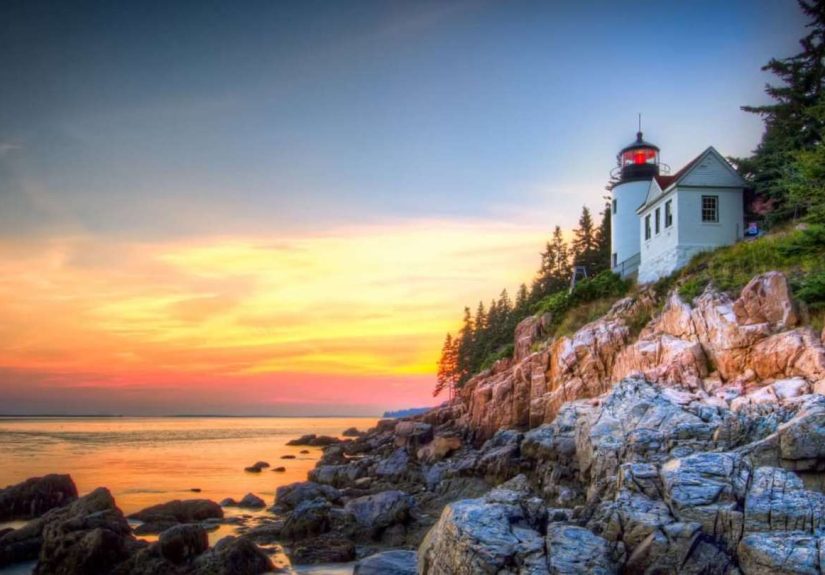
Evening brings another personality. Some visitors head to Bass Harbor Head Light for sunset, while others return to rocky overlooks or explore Bar Harbor after a full day outside. The best Acadia memories often come from this mix: one grand sunrise, one challenging trail, one quiet pond, one tide pool discovery, and one meal that tastes better because you earned it by walking farther than planned.
The practical lesson is simple. Do not treat Acadia like a race. Build a flexible itinerary, start early, respect fragile habitats, carry layers, and leave room for surprise. The park rewards people who slow down enough to listen to waves, watch clouds move over granite, and accept that sometimes the best view is not the famous oneit is the one you find when you stop rushing.
Conclusion
Acadia National Park may be compact compared with some western giants, but it is packed with natural beauty, cultural history, and outdoor adventure. Its granite peaks, Atlantic shoreline, carriage roads, wildlife, tide pools, and historic roots make it one of the most distinctive national parks in the United States.
Whether you come for Cadillac Mountain sunrise, a peaceful bike ride on the carriage roads, a family walk along Ocean Path, or a deeper appreciation of Wabanaki homeland and conservation history, Acadia offers far more than a pretty view. It tells a story about land, people, preservation, and the enduring power of wild places by the sea.