Table of Contents >> Show >> Hide
- What “Oral Cancer Screening” Actually Means (Spoiler: No Laser Light Show Required)
- Why the Dental Office Is the Best Place for This
- But Isn’t Oral Cancer Screening “Not Recommended”?
- Who Needs Oral Cancer Screening the Most?
- What a Proper Oral Cancer Screening Looks Like (Step-by-Step)
- What Should Trigger a “Hey, Can You Look at This?” Conversation
- If Something Looks Suspicious, What Happens Next?
- How to Make Sure Your Dentist Actually Screens You
- Prevention: What Actually Helps (No, “Positive Vibes” Is Not a Medical Strategy)
- Common Myths That Deserve to Be Retired
- of Real-World “This Is What It Looks Like” Experiences
- Experience #1: The “I Thought It Was Just a Pizza Burn” Moment
- Experience #2: The “Neck Check” That Makes People Realize It’s Not Just Teeth
- Experience #3: The “I Didn’t Want to Bother Anyone” Trap
- Experience #4: The “Good Offices Explain What They’re Doing” Difference
- Experience #5: The Best Outcome Is Often the Boring One
- Conclusion: Make Screening the Default, Not the Exception
You know that moment when you’re in the dental chair, wearing sunglasses like you’re on a red carpet,
and someone asks, “Any changes to your medical history?” You’re thinking, “I flossed twice this weekdoes that count?”
That’s also the perfect moment for something that’s quick, painless, and honestly underrated:
an oral cancer screening.
Here’s the headline: your dentist (and hygienist) should be screening for oral cancer as part of a routine dental exam.
Not as a “bonus upgrade,” not as an awkward add-on, but as a normal, responsible checklike taking your blood pressure at a physical.
Because oral cancers and related throat cancers can be subtle early on, and the mouth is one of the few places in the human body where a
trained professional can actually look at tissues directly, in real time, without a scanner, a lab, or a space suit.
What “Oral Cancer Screening” Actually Means (Spoiler: No Laser Light Show Required)
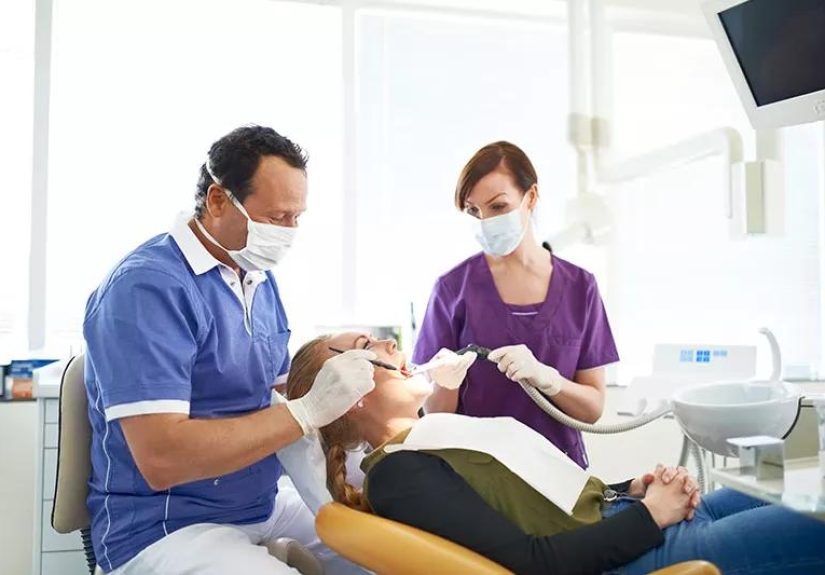
A proper oral cancer screening is mostly old-schoolin a good way. It’s a careful visual and hands-on exam of your mouth, tongue,
and surrounding areas. Your dentist is checking for things like:
- Red or white patches that don’t look like normal irritation
- Sores that aren’t healing
- Lumps, thickened areas, or unusual tissue changes
- Swelling or unusual firmness under the jaw or along the neck
- Areas that look “off” compared with the rest of your mouth
If you’ve ever wondered, “Wait… were they already doing this?”sometimes yes. Many dental offices include it as part of a standard exam.
But not all offices do it consistently, and not all patients realize they can (and should) ask for it plainly.
Why the Dental Office Is the Best Place for This
Think about your dentist’s unfair advantage:
they see your mouth in bright light, with mirrors, gloves, and training. They also tend to see you more regularly than your primary care provider
(especially if you’re good about cleanings). That makes routine dental visits an ideal checkpoint for noticing changes early.
Also important: oral cancer screening isn’t only about “mouth cancer” in the lips or tongue. Dentists are also watching for signs that could point
to cancers in nearby areaslike parts of the throatwhere symptoms can be easy to blame on allergies, reflux, or “I yelled at a football game once.”
But Isn’t Oral Cancer Screening “Not Recommended”?
You may have seen confusing headlines that say routine oral cancer screening “isn’t recommended.”
Here’s what’s going on: some medical guideline groups say the evidence is not strong enough to recommend population-wide screening
for symptom-free adults in primary care settings (like a general medical clinic).
That doesn’t mean oral cancers don’t exist, or that looking in the mouth is bad.
It means research hasn’t definitively proven that broad screening programs in those settings reduce deaths.
In dentistry, the reality is practical: dental professionals are already examining the mouth, and a careful visual-and-touch exam is low-risk,
fast, and can identify suspicious lesions that deserve follow-up. Many professional dental recommendations support a conventional
visual and tactile examination as part of routine care for adults.
The sensible takeaway is this: don’t treat screening like a magic shield, but also don’t treat it like a gimmick.
Treat it like what it isa smart, quick health check that can catch concerning changes early enough to investigate.
Who Needs Oral Cancer Screening the Most?
Everyone benefits from a routine look-around, but risk isn’t spread evenly. You should be especially proactive about screening if any of these apply:
1) Tobacco use (smoked or smokeless)
Tobacco remains one of the biggest risk factors for cancers in the mouth and throat. That includes cigarettes, cigars, pipes,
and smokeless products like chewing tobacco.
2) Alcohol useespecially combined with tobacco
Alcohol is also a major risk factor, and the combination of heavy drinking plus tobacco can multiply risk more than either alone.
If that’s you, you’re not “doomed”but you are someone who should not skip screenings.
3) HPV-related throat cancer risk
Some throat cancers (particularly in the oropharynxnear the tonsils and base of the tongue) are linked to HPV.
This is one reason public health messaging emphasizes HPV vaccination as cancer prevention.
The key point here is not panicit’s awareness.
4) Lots of sun exposure (lip cancer risk)
The lips are skin, and skin can get cancer. If you spend time outdoors, use lip balm with SPF like it’s part of your job description.
(Because the job is “keeping your face.”)
5) Age, previous lesions, or a personal history of head/neck cancers
Risk increases with age, and anyone with prior suspicious lesions or a history of head and neck cancers should be monitored carefully.
What a Proper Oral Cancer Screening Looks Like (Step-by-Step)
A good screening is not a vague glance that lasts two seconds while the dentist says, “Open.”
It’s a systematic exam of specific areas. In plain English, it often includes:
- Face, lips, and neck check: looking for swelling, asymmetry, or skin/lip changes
- Neck and jaw palpation: feeling under the jaw and along the neck for unusual lumps
- Cheeks and inner lips: inspecting and feeling tissues for patches or sores
- Tongue exam: looking at the top, sides, and underside (yes, the underside matters a lot)
- Floor and roof of the mouth: checking for abnormal texture, color, or tenderness
- Back of the throat: a look toward the oropharynx area when possible
If you wear dentures or partials, you may be asked to remove them so the tissue underneath can be examined.
If your provider uses gauze to gently move your tongue, that’s not them being dramaticit’s because certain areas are hard to see otherwise.
Real talk: If your “screening” never includes feeling your neck/jaw area or checking the sides/underside of your tongue,
you can politely ask for a more complete exam.
What Should Trigger a “Hey, Can You Look at This?” Conversation
Your mouth gets irritated sometimes. You bite your cheek. You eat lava-hot pizza. Life happens.
The goal is not to treat every canker sore like a Hollywood plot twist. The goal is to notice patterns that don’t resolve.
Bring it up if you notice any of the following lasting roughly two weeks or more:
- A sore on the lip or in the mouth that isn’t healing
- Red or white patches that weren’t there before
- A lump, thickening, or rough spot that persists
- Pain, numbness, or a “weird” sensation that sticks around
- Trouble chewing, swallowing, or moving the jaw/tongue normally
- Persistent hoarseness, sore throat, or a “something’s stuck” feeling
- A new lump in the neck
Important nuance: these symptoms can come from non-cancer causes too.
But they’re worth checking because the cost of asking is low, and the value of catching a serious issue early is high.
If Something Looks Suspicious, What Happens Next?
First: don’t accept the brush-off of “Let’s ignore it and see what happens in six months.”
If a lesion looks suspicious, standard best practice is to confirm what it isoften through biopsy or referral to a specialist
(such as an oral surgeon, ENT, or oral medicine specialist).
Second: be wary of offices that lean hard on “adjunct” gadget screenings as a substitute for proper evaluation.
Technology can sometimes help providers document or visualize tissue changes, but it should not replace the fundamentals:
a thorough exam and prompt biopsy/referral when something truly concerning is found.
Helpful questions to ask (without sounding like you brought a lawyer)
- “What are you seeing that concerns you?”
- “Is this something you want to recheck soon, or should we refer/biopsy now?”
- “If we’re monitoring it, what changes would make it urgent?”
- “Can you document it in my chart (location/size) so we’re tracking it clearly?”
A good clinician will explain the plan without making you feel dramatic for caring about your own face.
How to Make Sure Your Dentist Actually Screens You
Here’s the simplest script in the English language:
“Can you include an oral cancer screening in today’s exam?”
If you want to be extra clear (or you’ve never seen them do it), add:
“I mean the full visual and feeling examtongue, cheeks, and neck.”
And if you’re in a high-risk group (tobacco/alcohol use history, prior suspicious lesions, strong sun exposure, etc.),
it’s completely appropriate to say that out loud. Risk assessment helps providers decide how vigilant to be.
Prevention: What Actually Helps (No, “Positive Vibes” Is Not a Medical Strategy)
Quit tobacco (or don’t start)
If you use tobacco, quitting is one of the most impactful steps you can take for oral and overall health.
If you don’t use itcongratulations, you’ve already avoided a major risk factor.
Limit alcohol
Moderation matters. If you regularly drink heavily, consider reducingespecially if combined with tobacco use.
Get vaccinated for HPV (if eligible)
HPV vaccination is widely recommended as a way to prevent cancers caused by HPV, including many throat cancers.
If you’re not sure you’re up to date, ask your medical provider.
Protect your lips from sun
Use SPF lip balm. Reapply. Yes, even when it’s cloudy. Your future self would like to keep their lips, thanks.
Keep regular dental visits
Routine exams are when subtle changes are most likely to be noticedespecially when your dental team has a baseline for what “normal for you” looks like.
Common Myths That Deserve to Be Retired
Myth: “If it doesn’t hurt, it’s not serious.”
Some significant oral issues can be painless early on. Pain is a useful signal, but it isn’t a perfect security system.
Myth: “Only smokers get oral cancer.”
Tobacco is a major risk factor, but not the only one. HPV-related throat cancers, sun-related lip cancers,
and other factors mean screening is still relevant even for non-smokers.
Myth: “Screening means a gadget, a fee, and a scary sales pitch.”
A real screening is mainly a careful exam. If you’re unsure what’s being done, ask what the screening includes.
You’re allowed to understand your own healthcare.
of Real-World “This Is What It Looks Like” Experiences
(These are common, realistic scenarioscomposites, not stories about any one person.)
Experience #1: The “I Thought It Was Just a Pizza Burn” Moment
Someone comes in for a regular cleaning and casually mentions, “I’ve had this spot that keeps getting irritated.”
They’re not worried. It doesn’t hurt much. It’s just… there. The dental team takes a closer look, checks nearby tissue,
and documents exactly where it is. Maybe it’s a harmless irritation, maybe it’s something that needs follow-upbut the key is
that it stops being a mystery floating in the background of someone’s life. It becomes a tracked, evaluated finding with a plan.
Often, that plan is simple: remove the irritant, recheck sooner than the next routine visit, and escalate if it doesn’t improve.
The patient leaves thinking, “Wow, that took two minutes and reduced my anxiety by 80%.”
Experience #2: The “Neck Check” That Makes People Realize It’s Not Just Teeth
A lot of patients are surprised when the dentist feels under the jaw and along the neck.
It’s not a vibe check. It’s a lymph node check.
Most of the time it’s totally normal, and the patient forgets it happened by the time they reach the parking lot.
But occasionally, someone says, “Waitwhy are you doing that?” and the explanation flips a switch:
dentistry isn’t just enamel maintenance. It’s healthcare. The best reactions are the ones where patients realize
they’re being cared for as a whole person, not a mouth on a chair.
Experience #3: The “I Didn’t Want to Bother Anyone” Trap
This one’s common: a person notices a sore or patch, but they don’t bring it up because they don’t want to seem dramatic.
(Meanwhile, they have Googled it 17 times, which is basically emotional cardio.)
When they finally mention it during a visit, the dental team can look at it immediately.
Sometimes the reassurance is instant“That looks like trauma from biting; let’s treat the cause and recheck.”
Other times the response is calm but direct“This needs a specialist’s opinion.”
Either way, the patient gets something better than internet roulette: a real evaluation.
Experience #4: The “Good Offices Explain What They’re Doing” Difference
In offices that do screening well, patients hear little narrations like:
“I’m checking the sides of your tonguethis is an area we always want to see clearly,” or
“I’m feeling under your jaw for anything unusual.”
That simple commentary builds trust and encourages patients to speak up if they notice changes between visits.
It also helps patients understand that screening isn’t a mysterious procedure; it’s a normal part of good care.
Experience #5: The Best Outcome Is Often the Boring One
The truth is, most screenings end with: “Everything looks normal.”
That’s not anticlimacticthat’s the goal. Screening is like checking the smoke alarm.
You don’t do it because you’re hoping for a fire; you do it because you’d rather not discover a problem late,
when the solution is harder. And if you’re the kind of person who avoids the dentist until something hurts,
consider this your friendly reminder: preventive care is cheaper, easier, and way less stressful than emergency care.
Conclusion: Make Screening the Default, Not the Exception
Oral cancer screening should be a routine part of dental care: quick, systematic, and taken seriously.
It doesn’t require drama, fancy equipment, or a terrifying lecturejust a trained clinician doing a thorough exam and
making smart decisions about follow-up when something looks suspicious.
So at your next visit, don’t be shy. Ask for it. Confirm what it includes. And if you’ve had a sore, patch, lump, or
persistent throat/voice change that won’t quit, bring it upbecause “I didn’t want to bother anyone” is not a
medically recommended strategy.