Table of Contents >> Show >> Hide
- Xbox Series X Release Date and Launch Details
- Xbox Series X Specs: What Is Inside the Console?
- Performance: 4K, 120 FPS, and Faster Loading
- Xbox Series X Design: The Mini-Fridge That Means Business
- Xbox Wireless Controller: Familiar, Better, and More Comfortable
- Xbox Series X Games: What Can You Play?
- Xbox Series X vs Xbox Series S: Which One Is Better?
- Is the Xbox Series X Still Worth Buying?
- Real-World Experience: Living With the Xbox Series X
- Conclusion
The Xbox Series X did not arrive quietly. Microsoft introduced it like a black monolith from a sci-fi movie, promised “the fastest, most powerful Xbox ever,” and then backed that claim with a spec sheet that made PC gamers raise an eyebrow. Released as Microsoft’s flagship ninth-generation console, the Xbox Series X was built for 4K gaming, faster load times, smoother frame rates, backward compatibility, and a gaming ecosystem that stretches far beyond the box under your TV.
Years after launch, the console still matters because it is less of a one-and-done gadget and more of a long-term gaming platform. Between Xbox Game Pass, cloud saves, Smart Delivery, backward-compatible classics, and a growing list of optimized games, the Xbox Series X has become the “big comfy couch” option for players who want power without building a PC that sounds like a jet engine preparing for takeoff.
This guide breaks down the Xbox Series X specs, release date, controller features, best games, storage options, performance strengths, and real-world experience in clear, practical language. No marketing fog machine required.
Xbox Series X Release Date and Launch Details
The Xbox Series X officially launched on November 10, 2020, alongside the smaller and less expensive Xbox Series S. The timing placed Microsoft directly in the next-generation console battle with Sony’s PlayStation 5, which arrived the same month. At launch, the Xbox Series X was priced at $499 in the United States, positioning it as Microsoft’s premium console for players who wanted the strongest hardware, a disc drive, and full 4K-focused performance.
The original launch model came in Carbon Black with 1TB of internal SSD storage and an Ultra HD Blu-ray drive. Since then, Microsoft has expanded the Series X family with additional options, including an all-digital white 1TB model and a 2TB Galaxy Black Special Edition. The core idea remains the same: the Xbox Series X is the high-performance Xbox, while the Series S serves as the more affordable, digital-only entry point.
Xbox Series X Specs: What Is Inside the Console?
The Xbox Series X specs are the heart of the machine, and they explain why the console still holds up well. Microsoft designed the system around custom AMD hardware, a fast SSD, and a graphics processor capable of modern visual features such as hardware-accelerated ray tracing.
CPU: Custom AMD Zen 2 Power
The Xbox Series X uses an 8-core custom AMD Zen 2 CPU running at up to 3.8GHz, or 3.6GHz with simultaneous multithreading. In plain English, this gives the console much more breathing room than the Xbox One generation. Open-world games can handle denser cities, faster travel, better enemy behavior, and more complex physics without constantly begging the hardware for mercy.
That CPU upgrade is especially noticeable in games that target 60 frames per second or higher. Older consoles often had to choose between visual ambition and smooth gameplay. The Series X gives developers more room to offer performance modes, quality modes, and sometimes the glorious option of “why not both?”
GPU: 12 Teraflops and RDNA 2 Graphics
The GPU is one of the biggest selling points. The Xbox Series X features a custom AMD RDNA 2 GPU rated at 12 teraflops, with 52 compute units running at 1.825GHz. Teraflops are not magic beans, but they do signal serious graphics muscle. The console was designed to support true 4K gaming, high frame rates, richer lighting, and more detailed environments.
RDNA 2 also brings support for hardware-accelerated ray tracing. When developers use it well, ray tracing can improve reflections, shadows, and lighting so scenes feel more natural. It is not always enabled in every game, and it often comes with a performance trade-off, but it helps the Series X stay visually competitive in modern titles.
Memory: 16GB of GDDR6 RAM
The Xbox Series X includes 16GB of GDDR6 memory on a 320-bit bus. Microsoft splits that memory into faster and slower pools, with 10GB running at 560GB/s and 6GB running at 336GB/s. This setup helps feed the GPU quickly, which is important when a game is pushing 4K textures, advanced effects, and large worlds.
For players, the result is simple: games can load more visual detail, move faster between scenes, and maintain higher image quality than older Xbox hardware. You do not need to understand memory bandwidth to enjoy it. You just need to notice that the game looks sharp and does not spend half your evening staring at a loading screen.
Storage: 1TB Custom NVMe SSD
The standard Xbox Series X includes a 1TB custom NVMe SSD. Not all of that space is available for games because the operating system and system files take their share, but the jump from a mechanical hard drive to a custom SSD is one of the most important upgrades of the entire generation.
Fast storage powers shorter load times, Quick Resume, and the Xbox Velocity Architecture. This architecture combines the SSD, hardware decompression, and software tools to help games stream assets quickly. In practice, that means less waiting, faster fast travel, and fewer excuses to check your phone while a loading icon spins like it is training for the Olympics.
Expandable Storage and External Drives
The Xbox Series X supports official storage expansion cards designed to match the speed of the internal SSD. These cards slot neatly into the back of the console and allow Series X|S optimized games to run properly from expanded storage. Players can also use standard USB external drives for older Xbox One, Xbox 360, and original Xbox games, or for storing newer titles when they are not being played.
This matters because modern games are enormous. Install a few blockbusters, add a sports title, toss in a racing game, and suddenly your storage looks like a suitcase packed by someone who thinks “just one more hoodie” is a personality trait.
Performance: 4K, 120 FPS, and Faster Loading
The Xbox Series X targets 4K gaming at up to 60 frames per second in many titles, with support for up to 120 frames per second in select games. To enjoy 120 FPS, players need a compatible display with HDMI 2.1 or the right high-refresh-rate setup. When it works, the difference is especially noticeable in shooters, racing games, and competitive multiplayer titles where responsiveness matters.
The console also supports features such as Variable Refresh Rate, Auto Low Latency Mode, HDR, and Dolby Vision for gaming on supported displays. These features help reduce screen tearing, lower input lag, and improve image quality. In other words, the Series X does not just want games to look good; it wants them to feel good.
Xbox Series X Design: The Mini-Fridge That Means Business
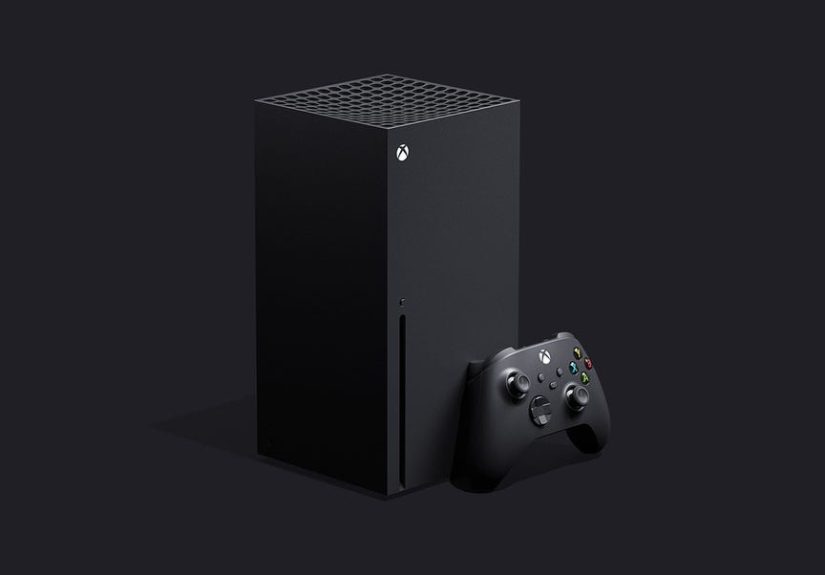
The Xbox Series X design is famously simple: a vertical black rectangle with a large vent at the top. The internet immediately compared it to a mini-fridge, and Microsoft eventually leaned into the joke by selling an actual Xbox mini-fridge. That is either excellent brand humor or proof that memes are now part of product strategy. Probably both.
Jokes aside, the design is practical. The tower shape helps airflow, and the console is surprisingly quiet under normal use. It can sit vertically or horizontally, though it looks most natural standing upright. The front includes the power button, disc slot on the standard model, eject button, pairing button, and USB port. Around the back, players get HDMI out, Ethernet, USB ports, storage expansion, and power input.
Xbox Wireless Controller: Familiar, Better, and More Comfortable
The Xbox Series X controller does not reinvent the gamepad, and that is mostly a good thing. Microsoft refined one of the most comfortable controller designs instead of replacing it with a spaceship dashboard. The result is familiar in the hands but noticeably improved.
Share Button and Better Grip
The most obvious addition is the dedicated Share button, which makes it easier to capture screenshots and video clips. The controller also has textured grips on the triggers, bumpers, and back case, making it easier to hold during long play sessions. This is useful when your palms enter “boss fight humidity mode.”
Improved D-Pad
The hybrid D-pad borrows inspiration from the Xbox Elite controller. It is more precise than the older Xbox One D-pad and works well for fighting games, platformers, menu navigation, and classic titles. It clicks with confidence, which is exactly what you want when trying to land a combo instead of accidentally crouching in shame.
Dynamic Latency Input
The controller also supports Dynamic Latency Input, a system designed to reduce input delay by sending controller information more efficiently to the console. Lower latency is not always something players can describe instantly, but it contributes to the overall feeling that games respond quickly and smoothly.
Batteries, USB-C, and Compatibility
The Xbox Wireless Controller still uses AA batteries by default, which remains a surprisingly heated debate. Some players love the flexibility of swapping batteries instantly; others would prefer a built-in rechargeable pack. Fortunately, rechargeable battery packs are available, and the controller supports USB-C wired play. It also works across Xbox Series X|S, Xbox One, Windows PCs, mobile devices, and cloud gaming setups.
Xbox Series X Games: What Can You Play?
The Xbox Series X game library has grown significantly since launch. Early criticism focused on the lack of a giant exclusive launch title, especially after Halo Infinite was delayed. Over time, however, the system became a strong home for first-party Xbox games, third-party blockbusters, indie gems, backward-compatible favorites, and Game Pass discoveries.
Major Xbox Series X Games
Some of the strongest Xbox Series X games include Halo Infinite, Forza Horizon 5, Microsoft Flight Simulator, Starfield, Forza Motorsport, Gears 5, Psychonauts 2, Sea of Thieves, Hi-Fi Rush, Senua’s Saga: Hellblade II, and Indiana Jones and the Great Circle. These games show different sides of the console, from open-world racing and cinematic action to sci-fi role-playing and technically ambitious simulation.
Forza Horizon 5 remains one of the best showcases for the hardware, thanks to its sharp visuals, smooth performance, colorful environments, and near-dangerous ability to make players say, “one more race” at 1:17 a.m. Microsoft Flight Simulator is another technical flex, turning the entire planet into a playground for patient pilots and chaotic beginners who learn very quickly that landing is not just “falling politely.”
Third-Party Blockbusters
The Series X is also excellent for major third-party games. Titles such as Elden Ring, Cyberpunk 2077, Alan Wake 2, Diablo IV, Resident Evil 4, Baldur’s Gate 3, Call of Duty, Assassin’s Creed Mirage, Hogwarts Legacy, Mortal Kombat 1, and Monster Hunter Wilds benefit from the console’s stronger CPU, GPU, SSD, and modern display features.
Many third-party games offer graphics and performance modes, allowing players to choose sharper visuals or smoother frame rates. That flexibility is one of the underrated pleasures of the generation. Sometimes you want cinematic lighting. Sometimes you want 60 FPS because your reflexes need every possible advantage and maybe a snack.
Backward Compatibility
Backward compatibility is one of the Xbox Series X’s biggest strengths. The console can play Xbox One games and a large selection of Xbox 360 and original Xbox titles. Many older games benefit from faster load times, more stable frame rates, Auto HDR, or resolution improvements. For players with a long Xbox history, the Series X feels less like starting over and more like moving into a bigger house with all your old furniture still intact.
Xbox Game Pass
Xbox Game Pass is a major reason many players choose the Series X. The subscription library changes over time, but it regularly includes a mix of first-party releases, indie games, EA Play titles with certain plans, and popular third-party games. For curious players, Game Pass turns the console into a buffet. You may arrive for Halo and leave three hours later obsessed with a strange indie game about unpacking boxes, managing cultists, or being emotionally destroyed by a walking simulator.
Xbox Series X vs Xbox Series S: Which One Is Better?
The Xbox Series X is the stronger console. It has a more powerful GPU, more memory, a disc drive on the standard and 2TB models, and is better suited for 4K gaming. The Xbox Series S is smaller, cheaper, and digital-only, but it targets lower resolutions and has more limited hardware.
For players with a 4K TV, a physical game collection, or a desire for the best Xbox performance, the Series X is the smarter choice. For casual players, younger gamers, or anyone mainly interested in Game Pass on a budget, the Series S can still be a great value. Think of the Series S as the efficient hatchback and the Series X as the full-size performance SUV. Both get you to the game, but one has more horsepower and room for snacks.
Is the Xbox Series X Still Worth Buying?
Yes, the Xbox Series X is still worth buying for many players, especially those who want strong performance, broad backward compatibility, Game Pass access, and a console that works well as the centerpiece of a living-room gaming setup. It is not the only good console on the market, and players who mainly care about specific PlayStation exclusives may lean elsewhere. But for power, convenience, and library value, the Series X remains a compelling machine.
The best reason to buy one is not just the spec sheet. It is the combination of fast loading, Quick Resume, controller comfort, cross-generation support, and a library that includes everything from nostalgic classics to brand-new releases. The console is at its best when you stop thinking about hardware and simply jump between games with minimal friction.
Real-World Experience: Living With the Xbox Series X
Using the Xbox Series X day to day feels less dramatic than its marketing might suggest, and that is actually one of its biggest strengths. The console disappears into the routine. You press the Xbox button, choose a game, and you are playing quickly. No ceremony. No long ritual. No sense that the console needs to warm up, stretch, and consult the moon phase before launching a title.
The first thing many players notice is speed. Coming from an Xbox One, the difference in load times can feel almost rude. Games that once gave you enough time to answer a text, check the fridge, and reconsider your life choices now load before you have found the perfect sitting position. Fast travel in open-world games feels more like actual fast travel and less like waiting at a fantasy bus station.
Quick Resume is one of those features that sounds small until it becomes part of your habits. Being able to suspend multiple games and jump back in later makes the console feel flexible. You can play a few races in Forza Horizon 5, switch to a single-player RPG, then return to a platformer without starting each game from scratch. It is not perfect for every online game, and multiplayer titles often need a fresh connection, but for single-player games it can feel like wizardry wearing a Microsoft badge.
The controller experience is also easy to appreciate over time. The shape is familiar, the texture helps grip, and the Share button is genuinely useful. Capturing a strange bug, a perfect goal, or a cinematic victory no longer requires a button combination that feels like entering a cheat code from 2003. The D-pad is better, the triggers feel reliable, and the controller remains one of the easiest gamepads to recommend for both console and PC use.
Storage, however, becomes the practical challenge. The internal SSD is fast, but modern games are massive. A few premium titles can eat space quickly, especially if you enjoy shooters, racing games, sports games, and RPGs at the same time. The official expansion cards are convenient but can be expensive, so many players end up using a mix of internal storage, expansion storage, and an external USB drive for older games. It is manageable, but it requires a little housekeeping unless you enjoy the thrilling mini-game known as “What Do I Delete Today?”
Visually, the Series X shines most on a good 4K HDR TV. Performance modes make games feel smoother, while quality modes show off lighting, detail, and image sharpness. If you have a 120Hz display, supported games can feel especially responsive. Even so, the console still performs well on regular 4K and 1080p TVs. You do not need a luxury home theater to enjoy it, but better display technology helps the hardware flex.
The biggest lifestyle advantage is the ecosystem. Cloud saves, Game Pass, backward compatibility, and cross-platform support make the Xbox Series X feel connected rather than isolated. You can revisit old favorites, try new releases, play online with friends, and discover smaller games you might never have purchased individually. That sense of low-friction discovery is where Xbox has built a strong identity.
Overall, the Xbox Series X experience is powerful but practical. It is not flashy in the way a wild new gadget sometimes is. Instead, it is fast, quiet, comfortable, and dependable. It turns the living room into a flexible game library where old favorites and new blockbusters sit side by side. And yes, it still looks a bit like a mini-fridge. But if this is a mini-fridge, it is one stocked with 4K dragons, race cars, space adventures, and enough Game Pass surprises to ruin your sleep schedule in the best possible way.
Conclusion
The Xbox Series X remains one of the most capable consoles Microsoft has ever made. Its custom AMD CPU and GPU, 12-teraflop graphics performance, fast NVMe SSD, 4K gaming focus, 120 FPS support, backward compatibility, and refined controller make it a strong choice for players who want power and convenience in one box. The release date may go back to November 10, 2020, but the console still feels modern thanks to ongoing game support, expanded hardware options, and the strength of the Xbox ecosystem.
For players who want the best Xbox experience, the Series X is still the console to beat. It is fast, quiet, flexible, and loaded with games from multiple generations. Whether you are racing through Mexico, exploring space, fighting demons, solving mysteries, replaying classics, or just browsing Game Pass with dangerous curiosity, the Xbox Series X delivers a premium gaming experience without making you build a gaming PC in your spare bedroom.