Table of Contents >> Show >> Hide
- What Exactly Is X-Men: Children of the Atom?
- How the Game Plays (Without Frame-Data Headaches)
- Rankings: From Top-Tier Mutants to Risky Picks
- How the Game Feels Today
- Legacy: Why Children of the Atom Still Matters
- Opinion Round-Up: Who Is This Game For in 2025 and Beyond?
- Experience Corner: Living With X-Men: Children of the Atom
- Conclusion
Long before Marvel vs. Capcom tournaments took over hotel ballrooms, there was a loud,
colorful arcade cabinet shouting “X-Power!” at anyone who walked by. X-Men:
Children of the Atom may look modest next to modern tag-team mayhem, but this
1994 Capcom fighter laid the DNA for Marvel’s entire crossover lineage. It mixed
Saturday-morning cartoon energy with competitive depth, gave us vertical arenas and
wild air combos, and turned X-Men fans into accidental fighting-game nerds overnight.
In this deep dive, we’ll break down what made Children of the Atom special, rank its
roster from terrifying to “fun but risky,” and share modern opinions and experiences
from players who still boot it up todaywhether via retro collections, emulation, or
lovingly maintained arcade boards.
What Exactly Is X-Men: Children of the Atom?
Released in arcades in late 1994, X-Men: Children of the Atom was Capcom’s
first licensed Marvel fighting game, built on the CPS-2 hardware that powered
heavy-hitters like Super Street Fighter II Turbo and Darkstalkers.
It featured a 10-character selectable roster plus bosses, dramatic supers, and
multi-tiered stages where you could literally knock someone through the floor and keep
fighting in a lower level.
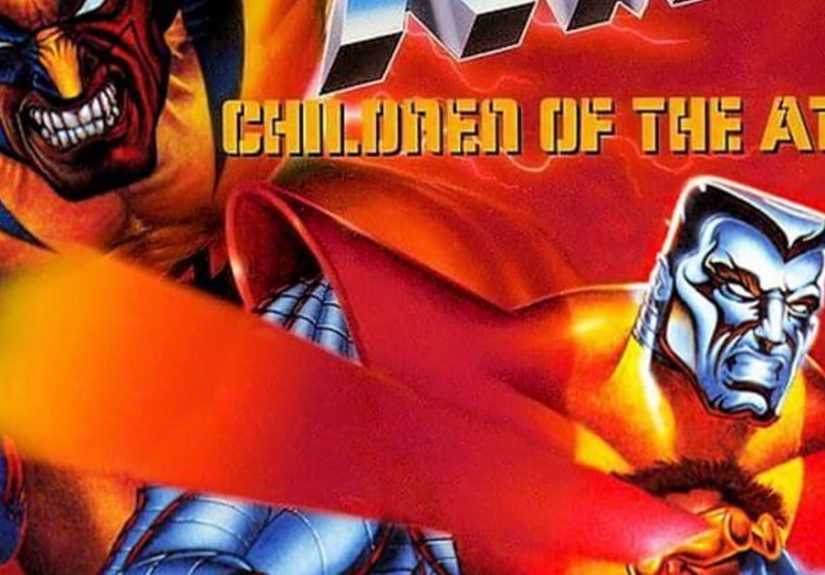
The game’s presentation was a love letter to the popular 90s X-Men animated series:
huge, comic-accurate sprites, expressive portraits, and voice actors from the show
reprising their roles. It felt like you were playing the cartoon, just with more
fireballs and fewer commercial breaks.
Platforms, Ports, and a Bit of Drama
Children of the Atom started in arcades, but it didn’t stay there. Capcom and its
partners brought it to the Sega Saturn, MS-DOS PCs, and later the PlayStation.
Saturn owners scored the best version, often described as nearly arcade-perfect in
graphics and feel, with strong animation and responsive controls.
PC players got a surprisingly faithful port for the time, with high-resolution
visuals but some missing features, especially around the game’s famous custom chain
combos. PlayStation fans, unfortunately, drew the short straw: significant slowdown,
trimmed animation, and a sense that the game had arrived late to the party, with
more advanced Marvel fighters already stealing the spotlight.
Decades later, Children of the Atom reappeared in modern retro compilations and
specialty arcade cabinets, giving both veterans and curious new players a way to
feel that early Capcom–Marvel magic without hunting down aging hardware.
How the Game Plays (Without Frame-Data Headaches)
Mechanically, Children of the Atom follows the classic Capcom six-button template:
three punches, three kicks, quarter-circle motions, dragon punchesthe usual
suspects if you’ve played any 2D fighter from the 90s. Under the hood, though,
it introduced systems that would become hallmarks of later Marvel titles.
The X-Power Gauge and Super Moves
As you attack or take damage, you fill up an X-Power gauge. Once
charged, it lets you throw out huge super movesCyclops’s screen-filling optic
blast, Wolverine’s raging slashes, Storm’s lightning storms, and more. These supers
weren’t just flashy; they were momentum shifters. A single well-timed super could
blow through a life bar and flip a match you were losing seconds earlier.
Compared with later Marvel vs. Capcom games, the supers in Children of the Atom are
a bit less chaotic and more deliberate. You still get huge damage and dramatic
animations, but the pace is closer to a souped-up Street Fighter than the airborne
fireworks factory Marvel vs. Capcom would become.
Verticality and Stage Transitions
One of the game’s big innovations was its love of vertical movement. Characters
could perform super jumps that rocketed them high into the air,
turning the fight into a mid-air duel. Some stages featured multiple levels;
smash your opponent hard enough and the floor gives way, dropping you both into a
new area while the fight continues without pause.
This vertical design made zoning and positioning more dynamic. Storm could take to
the skies comfortably, Sentinels could stalk from long range, and agile characters
like Wolverine used the extra space to weave in and out like hyperactive pinballs.
Chain Combos, Juggles, and “Marvel-Style” Offense
Children of the Atom experimented with the now-famous Marvel style of
chain combos: light moves naturally cancel into mediums, which
cancel into heavies, which cancel into specials and supers. With the right timing,
you can create long, satisfying strings both on the ground and in the air.
It’s not as freeform as later entries like Marvel vs. Capcom 2, but the
seeds are clearly there. Many veterans today look back at Children of the Atom as
the “bridge game” between more grounded Street Fighter fundamentals and the
explosive, gravity-defying Marvel style that would dominate arcades in the late 90s
and early 2000s.
Rankings: From Top-Tier Mutants to Risky Picks
Tier lists for old arcade fighters are always a mix of lab work, tournament
experience, and pure nostalgia-fueled arguments. Different regions and versions
(arcade vs. Saturn vs. PC) can shift things around, but certain patterns show up
again and again in community discussions and expert breakdowns.
Here’s a consensus-style ranking that blends community tier lists, veteran opinions,
and modern retrospective commentary, focusing mainly on the arcade version.
S-Tier: Match Dominators
-
Wolverine – Fast, hard-hitting, and small, Wolverine is the
poster child for aggressive play. He has strong rushdown tools, easy combos,
and a style that’s very forgiving to beginners but still terrifying in expert
hands. Once he’s in, it can feel like you’re stuck in a blender with claws. -
Sentinel – A huge hitbox usually spells trouble, but Sentinel
flips that expectation by controlling space with excellent normals, strong
zoning tools, and absurd damage. When Sentinel gets rolling, it can feel like
the screen belongs to the robot and you’re just paying rent.
A-Tier: Strong, Flexible, and Scary With Practice
-
Storm – Storm shines in a game built around vertical movement.
Her mobility, air control, and projectiles make her extremely slippery, and
she can convert stray hits into meaningful damage. She’s a nightmare for less
mobile characters and rewards players who can manage spacing and movement. -
Omega Red – With long-reaching tendrils, great pressure tools,
and strong pokes, Omega Red excels at mid-range harassment. He can frustrate
characters who need to get in close and can turn the match into a tug-of-war
they rarely win. -
Cyclops – Cyclops is a balanced, fundamentals-heavy character.
His optic blasts help control horizontal space, and his normals are solid across
the board. He doesn’t have the wild nonsense of some top-tier monsters, but in
the right hands he’s consistent, safe, and reliable.
B-Tier: Solid, Fun, but a Bit Limited
-
Psylocke – Fast, stylish, and equipped with good mix-up tools,
Psylocke can absolutely win, especially against players who aren’t ready for
her mobility. But she’s fragile and can struggle against big bodies and
heavy zoning if she can’t establish her offense early. -
Colossus – The classic slow powerhouse. When Colossus connects,
health bars melt. The problem is getting in. His large body makes him easy to
hit and juggle, and mobile characters love dancing around his slower buttons.
He’s satisfying but high-risk in serious play.
C-Tier: Niche Specialists and Style Picks
-
Silver Samurai – He has cool tricks, elemental stances, and some
fun combos, but he’s technical and not always rewarded for the effort. In the
right matchup, he can surprise people; in the wrong one, he spends the whole
round chasing and eating fireballs. -
Spiral – Spiral is a wild card. She has unique movement and
tricky setups, but using her well requires serious lab time and matchup
knowledge. For many players, she ends up as a “lab monster favorite” rather
than a tournament staple. -
Iceman – Great thematically, a bit underwhelming competitively.
His tools are usable but lack the explosive payoff of top characters. He can
still win, especially in casual play, but he’s rarely anyone’s pick when money
or tournament pride is on the line.
Boss and Secret Characters
-
Juggernaut – As a boss, Juggernaut is exactly what you’d
expect: huge damage, armor-like presence, and an overwhelming feeling of
“please stop hitting me so hard.” When he’s playable in certain versions,
he can feel unfair in casual play but more manageable at higher levels where
players know how to exploit his size and speed. -
Magneto – Magneto in Children of the Atom is a preview of the
monster he’d later become in Marvel vs. Capcom 2. He has powerful tools and
oppressive options but is less fully realized than his later incarnation. Still,
in any tier discussion, he earns respect. -
Akuma (Gouki) – The secret Street Fighter guest. As cool as it
is to play him, most community tier lists rank him surprisingly low in this
game. His toolkit doesn’t mesh perfectly with the more vertical, Marvel-style
engine, and he lacks the oppressive dominance he enjoys in pure Street Fighter
titles.
As always, your personal tier list may differand that’s part of the fun. If you
grew up bodying your friends with Iceman in the local arcade, no spreadsheet is
going to convince you he’s low-tier.
How the Game Feels Today
People who revisit Children of the Atom in compilations or via modern setups tend
to land in one of two camps: either they see it as a slightly clunky prototype
compared with later Marvel blowouts, or they fall in love with its “just right”
level of chaos. It’s wild and stylish, but not so explosive that you lose track of
what’s happening.
The presentation still holds up shockingly well. The sprites are large and
expressive, the backgrounds are packed with detail, and the sound design is peak
90s arcadebig hit sparks, loud supers, and character voices that stick in your
head. Even if you’ve never read a single X-Men comic, the cast’s personality
shines through.
The biggest adjustment for modern players is the difficulty.
Arcade AI in the 90s was designed to eat quarters, and Children of the Atom is no
exception. Bosses like Juggernaut and Magneto can feel downright cruel, reading
your inputs and punishing mistakes instantly. For many fans, though, that’s part
of the nostalgic charm: finally beating Magneto still feels like an accomplishment.
Legacy: Why Children of the Atom Still Matters
Children of the Atom didn’t just succeed as an X-Men gameit quietly rewired the
genre. Its ideas about air combat, super jumps, long chain combos, and explosive
supers were refined and expanded in Marvel Super Heroes, X-Men vs.
Street Fighter, and eventually Marvel vs. Capcom and its sequels.
It also helped prove that licensed games could be more than quick cash-grabs.
Capcom treated the X-Men license with genuine care, blending comic-style spectacle
with mechanically solid fighting gameplay. That respect for the source material is
a big reason why these games are still beloved decades later.
For fighting-game historians, Children of the Atom is a crucial stepping stone:
the moment when Capcom took everything it had learned from Street Fighter and
Darkstalkers and asked, “What if we turned the dial toward pure superhero
fantasy?” The answer was loud, fast, and extremely fun.
Opinion Round-Up: Who Is This Game For in 2025 and Beyond?
If you’re a hardcore tournament player looking for the most optimized, balanced
experience, Children of the Atom might feel a little old-school. The roster is
small, some matchups are lopsided, and later Marvel games offer more team options
and deeper meta-games.
But if you:
- love the 90s X-Men aesthetic,
- enjoy classic 2D sprite art,
- like learning “proto” versions of systems used in later games, or
- want a focused roster where every character is distinct,
then Children of the Atom is still absolutely worth your time. It’s also a great
teaching tool: once someone understands this game, transitioning into Marvel
vs. Capcom titles feels much less overwhelming.
Experience Corner: Living With X-Men: Children of the Atom
Beyond frame data and tier lists, Children of the Atom lives in people’s memories
as a very specific experience. Picture a crowded 90s arcade: the cabinet’s attract
mode cycling through Wolverine’s snarls, Storm’s lightning, and Magneto’s smug
entrance while you wait for someone to lose so you can put your quarter up.
For a lot of players, this was the first time a fighting game felt like a comic
book come to life. You didn’t just pick “a ninja” or “a karate guy”you picked
Cyclops, the X-Men’s field leader, or Sentinel, the mutant-hunting machine that
terrified you as a kid watching the cartoon. The character choice meant something
beyond hitboxes and damage values; it was a mini identity statement.
The game also taught many people how brutal arcade AI could be. Anyone who tried
to solo-run arcade mode remembers getting walled by Juggernaut or Magneto and
realizing that button-mashing wasn’t going to cut it anymore. That difficulty
spike pushed players to actually learn specials, understand spacing, and think
about when to spend meter. In a quiet way, Children of the Atom nudged a whole
generation a bit closer to “real” fighting-game fundamentals.
Fast forward to today, and the experience has shifted but not disappeared. Now
it’s common to see people rediscovering the game through retro collections, home
arcade setups, or online matchmaking. Some newcomers describe the game as “janky
but charming,” while veterans smile when they feel how similar certain motions
and combos are to the Marvel vs. Capcom games they grew up playing.
There’s also a specific joy in introducing Children of the Atom to modern
fighting-game fans who only know the Marvel series from its later, flashier
entries. They’re often surprised by how readable the game is. With only one
character on-screen per side, no assists, and fewer visual explosions, it’s easier
to see why you got hit and what you could have done differently. It feels like
studying an earlier draft of a favorite storysimpler in places, rougher in
others, but full of clues about what came next.
And then there’s the nostalgia. Even for players who’ve moved on to newer titles,
loading up Children of the Atom can be like opening an old comic box in the
closet. The music cues, the character quotes, the backgroundsthey all snap into
place and bring back memories of sticky arcade floors, borrowed strategy tips,
and friendly rivalries that lasted entire summers.
In the end, X-Men: Children of the Atom isn’t just a historical
curiosity. It’s a game that still has something to offer: a more focused, slightly
rawer version of the Marvel madness, wrapped in some of the most iconic 2D comic
art ever put into a fighting game. Whether you come for the rankings, the
mechanics, or just to hear Wolverine yell one more time, it’s a trip back in time
that still punches hard.
Conclusion
X-Men: Children of the Atom captured a specific moment when arcades, comic books,
and fighting games all collided. It took the tight structure of classic Capcom
fighters, injected it with mutant powers and vertical chaos, and set the stage for
one of the most beloved crossover series in gaming history.
As a competitive game, it’s imperfect but fascinating. As an experience, it’s
unforgettable. And as a piece of fighting-game history, it’s essential. Whether
you’re ranking Wolverine above Sentinel or arguing that Psylocke is secretly
underrated, the conversation around this game is very much aliveand that’s the
best proof that the Children of the Atom still have plenty of fight left in them.