Table of Contents >> Show >> Hide
- The old attribution problem was never just math
- Why SaaS attribution is easier now
- 1. Event-based analytics made the customer journey much more trackable
- 2. First-party data got stronger just as third-party certainty got weaker
- 3. Warehouse-native stacks lowered both cost and complexity
- 4. Identity resolution is no longer a black art practiced by expensive wizards
- 5. Server-side tracking improved accuracy where it matters most
- 6. Modern tools made basic attribution accessible to smaller teams
- Why SaaS attribution is cheaper now
- What a modern high-accuracy SaaS attribution model actually looks like
- Common mistakes that still make attribution harder than it needs to be
- The real reason this moment is different
- Experience from the field: what teams learn after building one
- Conclusion
If you worked on SaaS attribution even five years ago, you probably still flinch when somebody says, “Can we just see what’s driving pipeline?” Back then, that innocent question could trigger a small internal crisis: marketing blamed analytics, analytics blamed engineering, engineering blamed the CRM, and the CRM quietly blamed the moon.
Today, the good news is that building a high-accuracy SaaS attribution model is no longer a luxury reserved for giant companies with giant budgets and giant Slack channels full of giant opinions. It is dramatically easier, faster, and cheaper than it used to be. Not because attribution suddenly became simple. It did not. Customer journeys are still messy, multi-device, and gloriously rude about following neat rules. But the infrastructure around attribution has matured in exactly the right ways.
Modern SaaS teams now have event-based analytics, affordable product analytics, warehouse-native data stacks, better identity resolution, stronger server-side tracking, and practical AI assistance. In other words, the plumbing finally got good. And when the plumbing gets good, the insights stop smelling weird.
The old attribution problem was never just math
Most teams talk about attribution like it is a modeling problem. Choose first-touch, last-touch, linear, U-shaped, W-shaped, or time decay. Sprinkle in a few dashboards. Call it strategy. But the hard part was never picking a formula. The hard part was collecting clean, connected, trustworthy data from the beginning.
A typical SaaS buying journey now includes paid search, organic search, review sites, webinars, founder content on LinkedIn, product signups, email nurtures, in-app behavior, sales conversations, demo requests, free-trial activation, and the occasional prospect who somehow appears out of nowhere claiming they “just heard about you.” That last one is usually code for “good luck, detectives.”
Older attribution setups struggled because data lived in too many places. Web analytics sat in one tool, CRM records in another, ad spend in a third, product usage in a fourth, billing in a fifth, and offline events in some spreadsheet named Final_Final_ActuallyFinal_v7. Under those conditions, the attribution model was only as good as the duct tape holding the data together.
Why SaaS attribution is easier now
1. Event-based analytics made the customer journey much more trackable
The shift from session-based analytics to event-based analytics changed the game. Instead of treating a visit like one vague blob of activity, modern tools let teams track meaningful moments: signup started, pricing viewed, demo requested, workspace created, integration connected, invite sent, plan upgraded, and renewal completed.
That is a big deal for a SaaS attribution model because SaaS growth is rarely about one final conversion. It is about a chain of milestones. A click may start the journey, but product activation, sales engagement, and expansion behavior often explain the revenue. Event-based tracking gives attribution something far more valuable than volume: context.
In plain English, you no longer have to guess whether a channel drove “traffic.” You can ask whether it helped generate qualified signups, sales opportunities, paid conversions, or expansion revenue. That is a much better dinner guest than “traffic.”
2. First-party data got stronger just as third-party certainty got weaker
Privacy changes made lazy tracking harder. Oddly enough, that has helped serious teams build better attribution. When companies rely less on borrowed identifiers and more on their own first-party data, they gain more control over what they collect, how they join it, and how they govern it.
For SaaS businesses, this is ideal. You already own rich customer signals: email addresses, trial creation dates, product events, account IDs, billing activity, support interactions, lifecycle stages, and CRM history. That means the ingredients for a reliable attribution model are usually already inside your business. The challenge is stitching them together consistently, not hunting for magical data dust from outside vendors.
And because first-party data is native to your business, it tends to be more useful than generic outside signals. A “user invited three teammates and connected Salesforce” signal is wildly more valuable than “someone viewed two pages and bounced after 41 seconds.” One tells you something about revenue momentum. The other tells you the internet exists.
3. Warehouse-native stacks lowered both cost and complexity
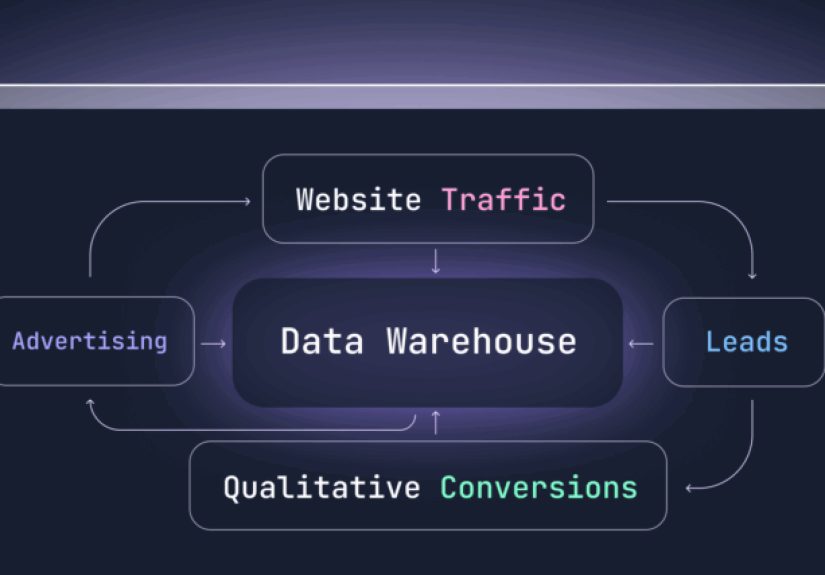
This may be the biggest reason attribution is cheaper now. A modern data warehouse gives SaaS teams a single place to combine marketing, sales, product, and finance data. Instead of buying one rigid platform that claims it can do everything while doing several things suspiciously, teams can connect best-of-breed tools to one shared source of truth.
That architecture matters. Once your ad data, CRM data, product events, subscription data, and revenue records land in the same warehouse, attribution becomes a modeling layer on top of unified data instead of a fragile patchwork spread across disconnected systems.
Even better, this approach is often cheaper over time. Cloud warehouses, managed connectors, and composable tools reduce custom engineering work. Teams can start simple, expand over time, and avoid paying enterprise-platform prices just to answer basic questions like which campaigns influenced pipeline or whether free-trial users from webinars convert better than paid social users.
4. Identity resolution is no longer a black art practiced by expensive wizards
One of the oldest attribution headaches is that the same buyer appears as multiple records: anonymous website visitor, newsletter subscriber, trial user, account admin, Salesforce contact, billing owner, and maybe three different people from the same company. If you cannot reconcile those identities, your attribution model turns into a hall of mirrors.
That is why modern identity resolution matters so much. Today’s tooling makes it easier to merge identifiers across systems using deterministic and rules-based logic. Email, account ID, domain, user ID, CRM contact, and billing profile can now be connected with much more transparency than in older black-box systems.
This is especially important in B2B SaaS, where attribution often needs to happen at more than one level. You may care about user-level actions, contact-level touches, account-level pipeline, and revenue-level outcomes all at once. Modern identity frameworks make that possible without forcing analysts to spend their entire week manually explaining why one opportunity seems to have six different “first touches.”
5. Server-side tracking improved accuracy where it matters most
Client-side tracking is still useful, especially for page views, content engagement, and UX analysis. But for business-critical SaaS events such as account creation, subscription start, plan upgrade, invoice paid, or contract signed, server-side tracking is often more reliable.
Why? Because browsers are increasingly hostile to messy tracking. Ad blockers, consent issues, script failures, and browser restrictions can all create blind spots. Server-side events give teams a sturdier source of truth for revenue-related milestones. The smartest setups now use a hybrid model: client-side where behavior detail is helpful, server-side where accuracy is non-negotiable.
That hybrid approach is a huge step forward. It lets attribution models preserve rich journey data while grounding revenue moments in systems your company controls. That is how you go from “close enough” reporting to something leadership can actually trust.
6. Modern tools made basic attribution accessible to smaller teams
Let’s say the quiet part out loud: attribution used to be expensive. Not theoretically expensive. Actually expensive. You needed analysts, engineers, implementation time, consulting hours, and often a fancy platform whose pricing made everyone sit down very carefully.
Now the floor is lower. Analytics products offer free or low-cost plans, faster setup, autocapture, prebuilt connectors, and out-of-the-box attribution reports. CRM platforms have stronger revenue reporting. Product analytics tools connect more naturally to growth workflows. Warehouse activation tools let marketers use modeled data without opening a support ticket that disappears into the void.
That does not mean every SaaS company needs a huge stack. In fact, many do better with a boring, sensible setup: web and product events, CRM lifecycle stages, campaign parameters, clean account mapping, and a warehouse table that links touches to milestones. Fancy comes later. Accuracy comes first.
Why SaaS attribution is cheaper now
Automation replaced a lot of manual work
Managed pipelines, reverse ETL, built-in dashboards, and AI-assisted analytics have reduced the amount of custom setup needed to get useful answers. Instead of manually exporting CSVs and writing one-off joins every week, teams can automate ingestion, standardize schemas, and push modeled outputs into the CRM or ad platforms.
That matters financially because the real cost of attribution is rarely the subscription bill alone. It is the labor cost of keeping the system alive. Anything that reduces maintenance cost makes attribution more affordable in the real world.
Composable systems age better than rigid all-in-one promises
Older stacks often became expensive because every change required either a vendor workaround or a reinvention project. Modern composable stacks are easier to evolve. Want to add product-qualified lead scoring? Add it. Want to switch BI tools? Fine. Want to test a new attribution model without rebuilding everything? Also fine.
That flexibility prevents “rip-and-replace” pain. In SaaS, where go-to-market motions evolve quickly, that is pure gold. Or at least gold-plated budget sanity.
Modern measurement thinking is smarter than attribution-only thinking
The best teams no longer expect attribution to answer every question by itself. They combine multi-touch attribution with incrementality tests, funnel analysis, and media mix modeling where appropriate. That blended approach makes attribution more practical and less ideological.
In other words, a high-accuracy SaaS attribution model today is not “perfect truth.” It is a reliable operational model sitting inside a broader measurement system. That is a healthier goal. It is also cheaper, because it keeps teams from endlessly chasing mythical precision with increasingly expensive tooling.
What a modern high-accuracy SaaS attribution model actually looks like
For most SaaS companies, the winning model is not a cinematic dashboard with seventeen colors and a suspicious amount of glow. It is a disciplined framework with a few core ingredients:
- Unified data: marketing, product, CRM, and revenue data connected in one warehouse.
- Clean identity logic: user, contact, account, and subscription records mapped consistently.
- Hybrid tracking: client-side for behavior, server-side for critical lifecycle and revenue events.
- Multiple attribution views: first-touch, last-touch, and multi-touch models for different decisions.
- Revenue alignment: attribution tied to pipeline, bookings, expansion, and retention where relevant.
- Governance: naming conventions, event definitions, QA checks, and ownership.
Notice what is not on that list: magic. A strong attribution model is mostly excellent data hygiene wearing a nice business jacket.
Common mistakes that still make attribution harder than it needs to be
Tracking everything and understanding nothing
More events do not automatically mean more insight. Many SaaS teams drown in noisy data because they track every click and forget to define the handful of milestones that actually move revenue.
Confusing lead attribution with revenue attribution
A channel that generates cheap signups is not automatically generating valuable customers. In SaaS, attribution needs to move beyond lead volume and connect to activation, opportunity creation, paid conversion, retention, and expansion.
Ignoring account-level reality in B2B
In B2B SaaS, multiple contacts influence one deal. If your model only thinks in terms of individual leads, it will misread how buying committees actually work.
Trusting dashboards more than definitions
If lifecycle stages, campaign names, or revenue events are inconsistent, the chart can look gorgeous while being deeply wrong. Garbage data has great self-esteem.
The real reason this moment is different
It is not just that tools are better. It is that the entire attribution ecosystem finally supports how SaaS companies actually grow. Product-led motions, sales-assisted conversions, self-serve upgrades, multi-touch journeys, and first-party data strategies all fit more naturally into today’s analytics infrastructure.
That means smaller teams can now build attribution systems that would have required a much larger budget a few years ago. You can start with a practical model, improve it quarter by quarter, and still get real business value early. That is the real win.
So yes, attribution is still messy. Humans still use multiple devices. Revenue still arrives fashionably late. And your CEO will still ask for a one-number answer to a question that deserves three charts and a caveat. But compared with the old days, building a high-accuracy SaaS attribution model now feels less like assembling a spaceship in a garage and more like building a solid machine from good parts that finally fit together.
Experience from the field: what teams learn after building one
Once teams actually build a modern SaaS attribution model, they usually discover that the biggest gains come from operational discipline, not from exotic modeling tricks. The first surprise is how much confidence improves when sales, marketing, product, and finance are all looking at the same core tables. Suddenly, the monthly debate shifts from “Whose report is right?” to “What should we do next?” That is a much healthier conversation, and it tends to make executives very happy because it replaces drama with decisions.
Another common experience is that the first useful attribution model is often embarrassingly simple. Teams expect to launch with a masterpiece worthy of a conference keynote. In reality, the early version that creates value is usually a clean first-touch, last-touch, and weighted multi-touch setup tied to a few milestones like qualified signup, opportunity creation, and closed-won revenue. Once that foundation exists, everyone becomes smarter about what to improve next. Complexity added too early usually creates confusion, not insight.
Teams also learn that naming conventions are not boring administrative chores. They are survival tools. If campaign names are inconsistent, UTMs are chaotic, and lifecycle stages are loosely defined, attribution becomes a comedy of errors. The companies that get the best results are the ones that standardize definitions early and treat data quality as a product, not a side quest. This sounds unglamorous because it is unglamorous. It is also wildly effective.
A third lesson is that product data changes the quality of attribution more than many marketers expect. When you connect marketing touches to in-app milestones, you stop rewarding channels simply for generating signups and start rewarding them for generating good-fit users who activate, invite teammates, and convert. That is often the moment when a team realizes half its favorite vanity metrics deserve a respectful funeral.
There is also a practical budgeting lesson. Teams that centralize data in the warehouse and activate modeled outputs into CRM, ads, or lifecycle tools usually spend less time exporting files, patching broken dashboards, and chasing engineering favors. The direct software savings matter, but the labor savings matter even more. An attribution model that takes ten hours a month to maintain is a very different financial animal from one that quietly eats two analysts and a data engineer for breakfast.
Finally, experienced teams stop treating attribution as a one-time project. The best ones treat it like a living operating system for growth. They review event coverage, test assumptions, compare models, and validate results against pipeline and finance numbers. They know attribution is not a crystal ball. It is a decision-support tool. When built with clean data, realistic expectations, and cross-functional ownership, it becomes one of the most useful systems in the SaaS stack. Not perfect. Not magical. Just genuinely useful, which is often better.
Conclusion
It has never been easier or cheaper to build a high-accuracy SaaS attribution model because the market finally has the right ingredients in the same kitchen. Event-based analytics gives you the journey. First-party data gives you control. Warehouse-native architecture gives you flexibility. Identity resolution gives you continuity. Hybrid tracking gives you accuracy. And lower-cost, automation-friendly tooling gives smaller teams a real shot at building something powerful.
The result is not perfect certainty. No honest attribution model can promise that. The result is something much better: a practical, trustworthy system that helps SaaS leaders understand what is actually driving pipeline, revenue, and growth without burning a crater in the budget. That is progress worth measuring.