Table of Contents >> Show >> Hide
- The Joke That Briefly Made SNL Feel Awake Again
- So Why Did SNL Drop It?
- This Problem Did Not Start in 2024
- What the Best Political SNL Sketches Actually Do
- Why Abandoning the Bit Actually Matters
- The Real Answer, in One Sentence
- Viewer Experience: What It Feels Like to Watch the Funny Version Vanish
- Conclusion
For years, Saturday Night Live has had a Donald Trump problem. Not a ratings problem. Not a makeup problem. Not even an impression problem. The show has had a joke problem. Specifically, it has struggled to answer one deceptively simple question: what is the funniest way to make fun of a man who already behaves like a parody of himself?
That question has haunted SNL since Trump became an unavoidable political and media force. Sometimes the show has landed solid punches. Sometimes it has settled for the comedy equivalent of drawing a mustache on a billboard and calling it a revolution. And then, briefly, gloriously, it found a better angle.
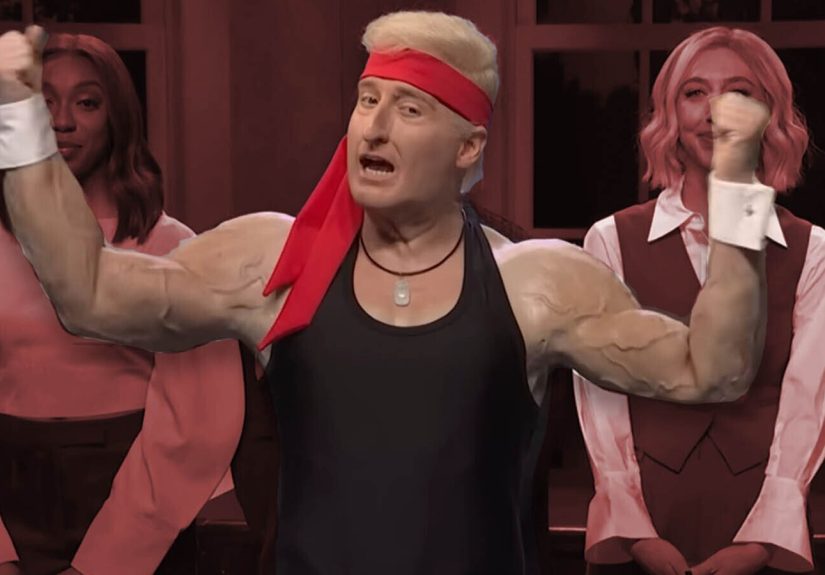
In the first post-election cold open after Trump’s 2024 victory, SNL introduced “Hot Jacked Trump,” a muscle-bound, absurdly flattering version of the future president played by James Austin Johnson. It was strange. It was pointed. It was actually saying something. And then the show more or less abandoned it, sprinting back to the safer terrain of weekly Trump impressions, topical reenactments, and familiar verbal tics.
So why did SNL ditch the one Trump joke that felt genuinely fresh? Because the joke that worked best was also the one that required the most nerve. It asked the writers to satirize Trump’s fantasy life instead of merely repeating his public behavior. That is harder, sharper, and far less convenient for a show built like a live-fire reaction machine.
The Joke That Briefly Made SNL Feel Awake Again
The brilliance of “Hot Jacked Trump” was not just that it looked ridiculous. Plenty of Trump comedy has looked ridiculous. The genius was in the angle. Instead of putting Trump in the usual orange face, long tie, and squinting pout and then having him ramble about whatever dominated cable news that week, the sketch did something smarter: it treated Trump not as he is, but as he seems to imagine himself.
That distinction matters. A lot.
Comedy gets stale when it simply mirrors the obvious. Trump talks in loops, brags compulsively, mangles syntax, and wanders off into bizarre tangents. Everybody knows that. Your uncle knows that. Your group chat knows that. Half the internet has a half-decent Trump impression at this point. Once a joke becomes common property, repeating it does not feel like satire anymore. It feels like karaoke with better lighting.
“Hot Jacked Trump” worked because it moved from imitation to interpretation. It turned Trump’s vanity into the premise itself. The bit suggested that Trump does not merely want to be respected; he wants to be adored as an invincible action hero, a kind of steroidal emperor wrapped in self-mythology, grievance, and applause. That is a real insight, not just a funny wig.
And good satire lives on insight.
The sketch also had the right amount of cruelty. It did not beg the audience to laugh at a dumb clown. It invited viewers to laugh at the delusion underneath the performance. That made it funnier and meaner in the best possible way. The joke was not, “Look at this buffoon.” The joke was, “Look at the heroic fan fiction this man is clearly writing about himself in his own head.” That is a much sharper blade.
Why It Felt New
Part of the thrill came from surprise. Trump comedy has been overfarmed for nearly a decade. Every late-night desk, every sketch show, every social platform impressionist has taken a swing. By the time 2024 rolled around, a lot of viewers had Trump-joke fatigue. Not because the subject had become less consequential, but because the comic framing had become painfully predictable.
Then SNL swerved. For a second, it stopped doing the standard “here is Trump saying Trump-y things” routine and instead built a joke around flattery, fantasy, and authoritarian vanity. It felt like someone in the writers’ room remembered that satire is supposed to distort reality in order to reveal it, not just photocopy it.
That is why the bit stood out. It was not merely funny “for SNL.” It was funny on its own terms.
So Why Did SNL Drop It?
Because SNL, for all its history and talent, is still SNL. It is a weekly institution with habits, anxieties, and a deep affection for the cold open as a fast-turnaround news-delivery device. The same traits that make the show culturally relevant can also make it comedically conservative.
1. The Show Is Built to React, Not to Commit
The modern SNL cold open is often less like a sketch and more like a live-action recap of the week’s headlines. A cabinet shake-up? Cold open. Debate fallout? Cold open. Press conference meltdown? Cold open. Another Trump rant that sounds like it was generated by a malfunctioning leaf blower? Definitely cold open.
That format rewards speed and recognition more than invention. The audience is expected to identify the news hook instantly, then settle in for a few topical references and a cameo or two. It is not the ideal habitat for a running conceptual joke like “Hot Jacked Trump,” which needs the show to keep choosing the bit over the headlines.
And that is the problem. “Hot Jacked Trump” was a premise. The standard Trump cold open is a template. Templates are easier to reuse.
2. James Austin Johnson Is Almost Too Good at Playing Trump
This is not a knock on James Austin Johnson. In pure impression terms, he is excellent. He captures the rhythm, the weave, the strange verbal cul-de-sacs, the fake confidence wobbling into insecurity. His Trump is technically impressive and often very funny in isolated moments.
But great mimicry can become a trap. When an impressionist is this accurate, the writing can get lazy. Instead of building a comic thesis, the sketch starts trusting the impression to do the heavy lifting. A few recognizable phrases, a couple of topical references, one or two surreal detours, and there you go: another serviceable Trump sketch.
Serviceable is the enemy of memorable.
“Hot Jacked Trump” forced the show to use Johnson differently. It made him play not just Trump’s voice, but Trump’s ego. That is where the satire got deeper. Unfortunately, once the show slid back into routine cold opens, Johnson returned to being a highly effective delivery system for material that was often less ambitious than his performance deserved.
3. Praise Can Cut Deeper Than Mockery, But It Is Harder to Sustain
The usual Trump joke is ridicule. He is foolish. He is vain. He is incoherent. He is chaotic. Those jokes are easy to understand, but they are also easy to flatten. After enough repetitions, the ridicule starts turning him into a lovable sitcom menace instead of a serious political figure with a talent for spectacle and grievance.
The better joke is counterfeit admiration.
That was the power of “Hot Jacked Trump.” By acting as though Trump should be portrayed more flatteringly, the sketch exposed the narcissism, fragility, and loyalty-demanding behavior at the center of his public image. The humor came from saying, in effect, “Fine, let’s depict him the way he’d probably order himself depicted.” That is satire with a thesis.
But keeping that up week after week would require discipline. It would mean resisting the temptation to go right back to easy lampooning and instead building a sustained comic worldview around Trump’s self-invention. That is possible. It is also much more work than tossing him into another fake press briefing.
4. SNL Often Prefers Familiar Political Theater to Biting Satire
This is the bigger truth, and it goes beyond one character. SNL has long been strongest when it turns politics into character comedy with a strong central idea. Think of political sketches that do more than recap events: the best ones identify an essence, then exaggerate it until the audience sees something newly true.
But when the show gets stuck in pure topical mode, it can start feeling like a televised impressions carousel. The audience recognizes the people, applauds the references, and leaves without the sketch having actually pierced anything. That is what happened with a lot of Trump-era comedy across television, and SNL has never been entirely immune to it.
In other words, the show did not abandon the joke because it failed. It abandoned the joke because its own institutional habits pulled it back toward a safer, more familiar form.
This Problem Did Not Start in 2024
If you want to understand why SNL walked away from its sharpest recent Trump joke, you have to go back further.
Long before “Hot Jacked Trump,” critics were already arguing that the show had trouble deciding whether Trump should be treated as a dangerous political figure, a ratings magnet, or a goofy pop-culture monster. That confusion has shaped nearly every phase of its Trump comedy.
When Trump hosted SNL in 2015, the episode drew criticism for being surprisingly toothless. The show acknowledged the controversy around him, but too often settled for making him seem like just another famous rascal wandering through Studio 8H. Even then, the tension was obvious: SNL wanted the cultural relevance of booking Trump without fully committing to a comic takedown.
Then came the Alec Baldwin era. Baldwin’s Trump gave the show a huge, instantly recognizable caricature, and audiences responded. But the criticism followed close behind. Yes, the impression hit the mark. No, it did not always go deep. Many sketches stayed on the surface, turning Trump into a broad absurdist figure rather than drilling into the machinery of his appeal or the darker dimensions of his politics.
That criticism never really disappeared. If anything, it hardened into a pattern: SNL would score a laugh, maybe even a viral moment, but still leave viewers with the feeling that it had described Trump rather than decoded him.
By the time James Austin Johnson took over the role, the show had a new performer but an old structural challenge. Johnson’s version was more precise, more verbal, more textural. Yet precision alone is not enough. You can imitate a man perfectly and still miss the deepest joke available.
What the Best Political SNL Sketches Actually Do
SNL has solved this problem before, which is why its backsliding feels so frustrating.
The classic political sketches people remember are rarely the ones that merely replayed a press conference. They are the ones that found a conceptual engine. Phil Hartman’s Ronald Reagan was famously genial in public and hyper-competent in private, a split-personality premise that said more in minutes than a pile of headline references could say in ten. Tina Fey’s Sarah Palin worked because it distilled a media persona into a comic idea that was instantly recognizable. Melissa McCarthy’s Sean Spicer became a furious, rolling embodiment of press-room aggression.
Those portrayals did not just mimic. They framed.
“Hot Jacked Trump” belonged in that tradition. It had a point of view. It translated a political persona into a comic metaphor. It showed, rather than announced, what was ridiculous about the man. That is why people noticed it. It felt like the beginning of a better version of Trump-era SNL.
And then the show blinked.
Why Abandoning the Bit Actually Matters
This is not just a complaint from comedy nerds who enjoy grading cold opens like Olympic judges. The kind of joke a show chooses matters, especially when the subject is someone who thrives on image, television logic, and public performance.
Bad satire can accidentally soften a figure it means to attack. If Trump is always portrayed as a buffoonish loudmouth, the audience may still laugh, but the joke can start to function like political bubble wrap. It absorbs the impact. He becomes the funny guy who says crazy stuff, not the ambitious and media-savvy operator who turns spectacle into power.
That is why the flattering joke mattered. It was not interested in making Trump merely silly. It was interested in exposing the mythology. It poked at the self-worship, the macho fantasy, the court politics, the desire to be seen as unbeatable. That is richer territory than “Look, he says ‘tremendous’ again.”
When SNL let that idea go, it did not just lose a funny costume. It gave up a more penetrating way to talk about Trump.
The Real Answer, in One Sentence
SNL abandoned the one Trump joke that was actually funny because the joke required the show to keep choosing satire over convenience, and convenience almost always wins on a weekly live show.
That is the whole sad, funny truth.
The sharper joke demanded continuity, confidence, and a willingness to resist the gravitational pull of headline reenactment. The safer joke demanded only a recognizable impression and a few news references. Guess which one a long-running institution is more likely to pick when the clock is ticking and the cold open needs to land by Saturday night.
Viewer Experience: What It Feels Like to Watch the Funny Version Vanish
If you are a regular SNL viewer, the experience of watching this happen is oddly familiar. It begins with surprise. You see a sketch like “Hot Jacked Trump” and think, “Oh, there it is. They found the angle.” Suddenly, the show feels less trapped. You can almost hear the gears clicking into place. Maybe this season will not just be another treadmill of political impressions. Maybe the writers have figured out that the funniest Trump joke is not about his vocabulary, or his makeup, or even his rambling sentence structure. Maybe it is about the giant heroic movie trailer playing in his own brain 24 hours a day.
And then the next week comes. Or the week after that. And the comedy starts behaving like it has already forgotten its own discovery.
That whiplash is part of the modern viewing experience. You do not just watch SNL anymore; you watch it while also imagining the clip economy that will swallow it. You can feel which sketches are designed to become screenshots, short videos, or next-morning recap fodder. The standard Trump impression fits that system perfectly. It is instantly legible. No setup required. No real risk. Viewers know the voice, the cadence, the verbal foghorn blast. You can drop into the middle of it and still get the joke.
But the more instantly legible the bit becomes, the flatter it feels. The laugh gets smaller. Not because Trump has become less absurd, but because the comedy surrounding him becomes more routine. The audience is no longer surprised; it is simply being serviced. Here is your weekly Trump riff. Here are your familiar hand gestures. Here is the detour into a bizarre cultural reference. Here is the applause cue. Enjoy your reheated leftovers.
That is why a genuinely fresh joke lands with such force. It reminds viewers that political comedy can still feel alive. It can still reveal something. It can still do more than summarize the week with wigs. When “Hot Jacked Trump” appeared, it briefly restored that feeling. It was the rare modern SNL political bit that made viewers lean forward instead of mentally checking a box.
There is also a deeper emotional layer to the experience. Trump-era comedy has often lived in the tense space between dread and exhaustion. Audiences do want relief, but they also want the joke to understand the stakes. A purely goofy portrait can feel too soft. A purely furious one can feel like homework. The best satire splits the difference: it gives you laughter without pretending the subject is harmless. That balance is hard to achieve, and when a sketch finds it, viewers notice immediately.
So when SNL abandoned the bit, the disappointment was not just, “Aw, they dropped a funny sketch.” It was, “Of course they did.” Of course the show found a smarter lens and then returned to the house style. Of course the institution chose the repeatable formula over the stronger thesis. For long-time viewers, that is almost part of the comedy too: watching SNL flirt with reinvention, then wander back to habit like a dog that has somehow found its way home from an art school.
That lingering frustration is precisely why the question sticks. People do not ask why SNL abandoned the joke because the bit was mildly amusing. They ask because, for one brief moment, the show seemed to understand exactly how to make Trump funny again, and then acted like it had never happened.
Conclusion
The mystery is not really why SNL stopped using “Hot Jacked Trump.” The mystery is why the show so often recognizes the better version of its political comedy and then retreats from it.
The answer, unfortunately, is baked into the show’s DNA. SNL wants to be immediate, topical, recognizable, and viral. Those goals are not inherently bad. They are part of what keeps the show relevant. But they can also flatten satire into reenactment. And when that happens, even a performer as strong as James Austin Johnson can get stuck delivering jokes that feel more competent than necessary.
“Hot Jacked Trump” was actually funny because it stopped chasing the obvious and found a sharper truth: Trump is funniest when comedy targets the fantasy he sells about himself, not just the words coming out of his mouth. SNL had that insight in its hands. Then it set it down and reached for the usual prop box.
That is why the joke vanished. Not because it failed, but because it succeeded in a way that asked the show to become more daring than it usually wants to be.