Table of Contents >> Show >> Hide
- Apple’s Smart Glasses: The Short Definition
- Has Apple Officially Announced Smart Glasses?
- Why Apple Smart Glasses Make Sense
- Expected Features of Apple’s Smart Glasses
- Will Apple Smart Glasses Have a Display?
- Apple Smart Glasses vs. Apple Vision Pro
- Possible Release Date and Price
- Privacy Concerns Apple Must Solve
- Who Would Use Apple Smart Glasses?
- Challenges Apple Faces
- What Apple Smart Glasses Could Mean for the Future
- Real-Life Experience: What Using Apple Smart Glasses Might Feel Like
- Conclusion
- SEO Tags
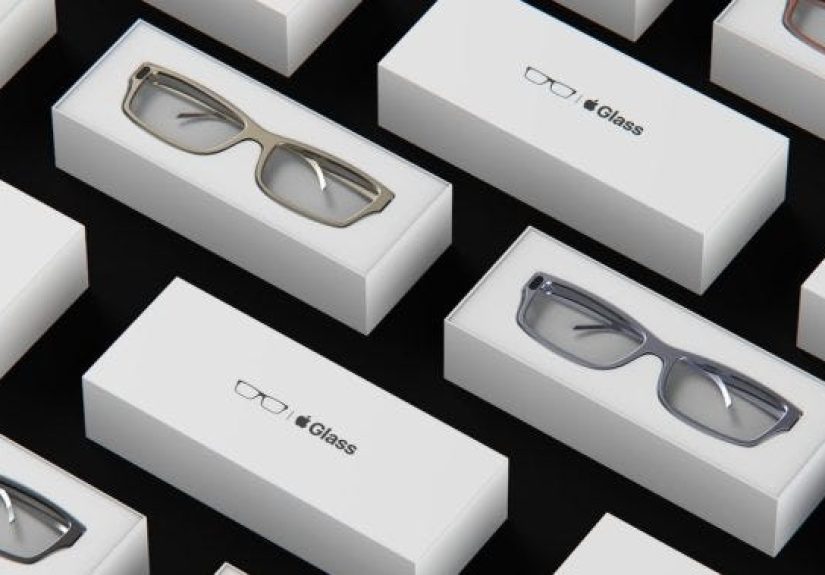
Apple’s smart glasses are one of the most talked-about products Apple has not officially announced yet. That sentence sounds like a tech industry riddle, but it is the honest starting point: as of April 2026, Apple does not sell a product called “Apple Smart Glasses,” “Apple Glass,” or “Apple AR Glasses.” What exists is a growing pile of credible reporting, patent activity, market clues, competitor moves, and Apple’s own heavy investment in spatial computing through the Apple Vision Pro.
In simple terms, Apple’s smart glasses are expected to be a future pair of connected eyewear that may combine cameras, microphones, speakers, artificial intelligence, Siri, iPhone integration, photo and video capture, calls, notifications, navigation, and possibly some form of augmented reality in later versions. Think of them as a bridge between AirPods, Apple Watch, iPhone, and Vision Probut hopefully without making you look like you are preparing to pilot a tiny spaceship.
The key question is not just “What are Apple’s smart glasses?” It is “What kind of smart glasses would Apple actually make?” Based on current reporting, Apple appears more likely to start with lightweight AI glasses than full-blown augmented reality glasses. That matters because the difference is huge. One is a wearable assistant on your face. The other is a futuristic computer screen floating in your field of vision. One can be built today. The other still wrestles with battery life, display technology, heat, weight, prescription lenses, privacy concerns, and the eternal human desire not to wear a toaster on the nose.
Apple’s Smart Glasses: The Short Definition
Apple’s smart glasses would likely be wearable glasses designed to connect with the iPhone and use sensors, cameras, audio, and AI to help users interact with the digital world while staying present in the physical one. They may let users take photos, record video, ask Siri questions, receive directions, translate conversations, answer calls, listen to music, identify objects, scan text, and get contextual help based on what the wearer is seeing.
Unlike Apple Vision Pro, which is a mixed-reality headset with advanced displays, eye tracking, hand tracking, and spatial computing features, smart glasses are expected to look much closer to everyday eyewear. The ideal Apple version would probably be comfortable enough for daily use, stylish enough to wear in public, and useful enough that people do not ask, “Wait, why did I buy sunglasses with a motherboard?”
Smart glasses vs. AR glasses
The terms are often mixed together, but they do not always mean the same thing. Smart glasses usually refer to connected eyewear with cameras, microphones, speakers, and AI features. They may not have a screen in the lens. AR glasses, or augmented reality glasses, add digital visuals on top of the real world. For example, AR glasses might show floating directions on the sidewalk, a recipe timer above your stove, or a message preview near your line of sight.
Current signs suggest Apple may first enter the market with display-free AI smart glasses, then move toward more advanced AR glasses later when the technology is ready. That would be a very Apple-like move: arrive late, polish the experience, and act as if the awkward first decade of the category was simply market research.
Has Apple Officially Announced Smart Glasses?
No. Apple has not officially announced Apple smart glasses. There is no confirmed release date, no official name, no published price, and no complete public spec sheet. Any article claiming the exact price, final design, or guaranteed launch day is probably doing a little too much crystal-ball yoga.
What we do have is a strong pattern. Apple launched the Vision Pro as its first major spatial computing device. Apple continues to update the Vision Pro platform. Reports from reliable technology journalists suggest the company has been exploring smart glasses as a more mainstream wearable category. Apple also owns many patents related to head-mounted displays, optical systems, sensors, eye tracking, comfort systems, and augmented reality interfaces.
So, while Apple smart glasses are not official, the idea is not random gossip floating through the internet like a lost AirTag. It fits Apple’s broader direction: wearable computing, health-aware devices, spatial interfaces, camera intelligence, AI assistants, and tighter integration across the Apple ecosystem.
Why Apple Smart Glasses Make Sense
Apple already has the ingredients. The iPhone is the pocket computer. Apple Watch is the wrist companion. AirPods are the audio layer. Vision Pro is the high-end spatial computing platform. Smart glasses could become the everyday visual and AI layerless immersive than Vision Pro, but far more wearable.
Apple wants computing to feel more natural
Every major Apple product has tried to reduce friction. The Mac made personal computing more visual. The iPhone made computing touch-based and mobile. Apple Watch put quick information on the wrist. AirPods made voice, calls, and audio feel invisible. Smart glasses could continue that evolution by letting users access help without constantly pulling out a phone.
Imagine walking through an airport and asking your glasses, “Where is Gate B17?” Instead of opening three apps and doing the boarding-pass shuffle, your glasses could provide a simple voice response or, eventually, visual guidance. Imagine looking at a restaurant menu in another language and getting a translation. Imagine repairing a bike while your glasses identify the part you are touching. These are the kinds of everyday moments that make smart glasses more than a gimmick.
The AI race needs better hardware
AI assistants are becoming more useful when they can see, hear, and understand context. A phone can do this, but it usually requires holding it up, unlocking it, opening an app, and looking like you are filming a documentary about your breakfast. Glasses are positioned naturally at eye level, which makes them a powerful form factor for visual AI.
For Apple, smart glasses could become a home for a more capable Siri. Instead of waiting for users to type or tap, the device could understand real-world context: what you are looking at, where you are, what task you are doing, and what information might help. The dream version is not a screen glued to your face. It is an assistant that quietly makes daily life easier.
Competitors are already moving
Meta’s Ray-Ban smart glasses helped prove that people may wear connected eyewear if it looks normal, captures good photos and videos, offers hands-free audio, and includes useful AI features. Google is also pushing Android XR and working with eyewear partners such as Warby Parker and Gentle Monster. Samsung is exploring smart glasses and XR products as well. The market is no longer a weird science fair corner; it is becoming a real consumer category.
Apple rarely likes to be first just for bragging rights. It prefers to enter when hardware, software, design, and customer expectations are ready enough for a polished product. Smart glasses may be approaching that moment.
Expected Features of Apple’s Smart Glasses
Because Apple has not announced the product, the following features are best understood as likely possibilities, not confirmed specifications. Still, based on current market trends and Apple’s ecosystem, several features make sense.
1. Camera-based visual intelligence
A camera would likely be central to Apple smart glasses. It could allow users to capture photos and videos hands-free, scan text, identify landmarks, recognize products, translate signs, or ask questions about what they are seeing. For example, a user could look at a plant and ask, “What is this, and why does it look like it has given up on life?” The glasses could identify the plant and suggest watering or sunlight tips.
Camera placement will be important. Apple would need to balance image quality, frame design, battery use, privacy indicators, and social comfort. Nobody wants to feel like every dinner table has become a press conference.
2. Siri and Apple Intelligence integration
Apple smart glasses would almost certainly rely on Siri and Apple Intelligence. The glasses could become a hands-free way to ask questions, summarize messages, create reminders, translate speech, describe surroundings, or control Apple devices.
The important part is context. A voice assistant on glasses can be more useful than a voice assistant in a speaker because it can potentially understand what the user sees. “Add this to my shopping list” becomes more powerful when the device knows you are looking at oat milk. “Remind me about this later” becomes smarter when it can attach the reminder to a place, object, message, or visual cue.
3. Open-ear audio
Most smart glasses use tiny speakers built into the temples of the frame. Apple could do something similar, possibly borrowing audio lessons from AirPods. Open-ear audio would let users take calls, hear navigation, listen to messages, and interact with Siri without fully blocking the outside world.
This feature is practical because it does not require a display. It also makes smart glasses useful while walking, cycling, cooking, commuting, or doing errands. The challenge is privacy: people nearby should not hear every notification, podcast, or questionable playlist choice.
4. Deep iPhone connection
Apple smart glasses would probably depend heavily on the iPhone, especially in early generations. The iPhone could handle processing, connectivity, settings, media storage, and AI tasks. This would help keep the glasses lighter and improve battery life.
This is similar to how Apple Watch originally leaned on the iPhone before becoming more independent. A first-generation Apple glasses product could begin as an iPhone accessory and gradually become more powerful over time.
5. Calls, messages, and notifications
One of the easiest smart glasses features to imagine is communication. Users could answer calls, hear messages, dictate replies, check calendar alerts, or receive quiet reminders. Apple would need to avoid turning the glasses into a notification cannon strapped to your eyebrows. The best version would be selective, calm, and context-aware.
6. Navigation and location help
Navigation could be a killer feature. Even without a built-in display, glasses could provide turn-by-turn audio directions. With a future display, Apple could add glanceable arrows, transit instructions, store entrances, or indoor navigation for airports and malls.
Apple Maps, Find My, Calendar, Wallet, and Messages could all work together. For example, the glasses could remind you that your meeting is on the fourth floor, your ride is arriving outside, and your coffee order is ready. Very helpful, unless it also reminds you that you are late. Again.
7. Health and accessibility features
Apple has a strong history in accessibility, and smart glasses could be extremely useful for people with low vision, hearing differences, memory challenges, or mobility needs. Potential features could include reading text aloud, describing objects, identifying doors, recognizing people with permission-based settings, captioning conversations, or providing safer navigation cues.
For many users, the most important benefit of smart glasses may not be entertainment. It may be independence.
Will Apple Smart Glasses Have a Display?
The first version may not. That may sound disappointing, but it could actually be the smarter move. Display technology is one of the hardest parts of true AR glasses. A good display must be bright enough for outdoor use, sharp enough for text, efficient enough for battery life, and small enough to fit into normal-looking frames. It also has to work with prescription lenses, different face shapes, and long wearing sessions.
Apple Vision Pro shows what Apple can do when it is not limited by the size of ordinary glasses. It has advanced micro-OLED displays, many cameras, eye tracking, spatial audio, and a powerful chip setup. But Vision Pro is a headset, not everyday eyewear. Shrinking that kind of experience into regular glasses is a major engineering challenge.
That is why an AI-first pair of smart glasses makes sense as a starting point. Apple could launch glasses focused on camera capture, audio, Siri, and iPhone integration, then add visual displays in later models when the technology improves. This would allow Apple to enter the market earlier without overpromising full augmented reality.
Apple Smart Glasses vs. Apple Vision Pro
Apple Vision Pro and Apple smart glasses would likely serve different purposes. Vision Pro is built for immersive spatial computing: workspaces, movies, 3D memories, apps, games, and mixed-reality experiences. It is powerful, expensive, and designed for moments when you intentionally step into a spatial computing environment.
Apple smart glasses would be more casual. They would likely be designed for everyday use: walking, commuting, shopping, traveling, calling, capturing moments, and getting quick AI help. Vision Pro is like sitting down at a futuristic workstation. Smart glasses would be more like having a discreet assistant riding along on your face.
The best comparison may be Mac and Apple Watch. A Mac is more powerful, but an Apple Watch is more convenient for quick, personal, glanceable tasks. In the same way, Vision Pro may remain the serious spatial computer while smart glasses handle daily micro-moments.
Possible Release Date and Price
There is no official release date for Apple smart glasses. Recent reporting has suggested Apple has been targeting a future launch window around late 2026 or 2027, but product timelines can change. Apple cancels, delays, redesigns, and rethinks products all the time before the public ever sees them.
Pricing is also unknown. If Apple begins with display-free AI glasses, the price could be closer to premium smart glasses from competitors rather than Vision Pro. If Apple releases true AR glasses with advanced displays, the price would likely be much higher. Apple also has to consider prescription lenses, frame styles, storage, battery accessories, and whether the glasses require an iPhone.
A realistic expectation is that Apple’s first smart glasses would not be cheap. This is Apple, after allthe company that can make a polishing cloth famous. But if the product is positioned as a mainstream wearable, Apple will need to keep it far more accessible than Vision Pro.
Privacy Concerns Apple Must Solve
Smart glasses raise obvious privacy questions. A camera on someone’s face is useful, but it can also make people uncomfortable. Apple would need clear recording indicators, strong privacy controls, local processing where possible, simple permission settings, and obvious ways to know when the glasses are capturing media.
Apple’s brand advantage is privacy. The company often markets itself as more privacy-focused than many competitors. Smart glasses would test that promise in a very public way. If people feel they are being recorded without consent, the product could face social resistance no matter how good the hardware is.
Apple also needs to avoid making users feel overwhelmed. The best smart glasses should not constantly interrupt life. They should help when needed, stay quiet when not, and never make the wearer feel like a walking notification billboard.
Who Would Use Apple Smart Glasses?
Apple smart glasses could appeal to several types of users. Travelers could use them for translation, navigation, hands-free photos, and quick information. Parents could capture moments without reaching for a phone every twelve seconds. Professionals could use them for calls, reminders, field work, checklists, and documentation. Fitness users could receive audio coaching and route guidance. People with accessibility needs could benefit from object recognition, text reading, and environmental descriptions.
The real test will be whether ordinary people want to wear them daily. Smart glasses cannot feel like a science project. They must look good, feel comfortable, last long enough, and solve real problems. A product that looks cool in a keynote but sits in a drawer next to abandoned fitness bands is not a win.
Challenges Apple Faces
Apple’s biggest challenge is not imagination. It is execution. Smart glasses need to be light, stylish, powerful, private, durable, and socially acceptable. They must handle heat, battery life, audio quality, camera quality, wireless connectivity, AI speed, prescription options, and all-day comfort. That is a lot to ask from something balanced on two ears and a nose.
Battery life may be especially difficult. A tiny frame can only hold so much battery. Cameras, microphones, wireless chips, and AI features all consume power. Apple may use the iPhone for heavy processing to reduce battery drain, but users will still expect the glasses to last through meaningful daily use.
Design is another challenge. Apple cannot release glasses that look clunky and expect people to wear them proudly. Eyewear is fashion, not just hardware. Frame styles, colors, lens options, face fit, and prescription support will matter as much as technical specs.
What Apple Smart Glasses Could Mean for the Future
If Apple gets smart glasses right, they could become the next major step in personal computing. Not because they replace the iPhone immediately, but because they reduce how often users need to pull it out. The future may not be one device replacing another. It may be a network of devices working together: iPhone in your pocket, Watch on your wrist, AirPods in your ears, glasses on your face, and AI connecting the dots.
Eventually, Apple smart glasses could support true augmented reality. That might include visual overlays for productivity, education, gaming, shopping, fitness, design, and communication. A student could see a 3D model of the solar system on a desk. A mechanic could see repair steps beside an engine. A tourist could see historical facts appear near a monument. A cook could see recipe instructions while chopping vegetables and pretending not to cry over onions.
But the first step is likely simpler: make glasses that are useful, wearable, and trustworthy. If Apple can do that, it may turn smart glasses from a niche gadget into a mainstream accessory.
Real-Life Experience: What Using Apple Smart Glasses Might Feel Like
Picture a normal Tuesday morning. You put on Apple smart glasses before leaving home, and they connect automatically to your iPhone. There is no dramatic startup screen, no sci-fi sound effect, no need to wave your hands like a wizard who forgot the spell. The glasses simply become part of your routine. As you walk to the train, you ask, “How long to the office?” Siri answers through the tiny speakers in the frame. You hear the route, the delay warning, and a reminder that your first meeting starts in 28 minutes. Slightly rude, but useful.
At the coffee shop, you glance at the menu and ask what has the least sugar. The glasses use the camera and AI to help summarize choices. You order, tap with Apple Pay on your iPhone or Watch, and receive a quiet notification when your drink is ready. No phone juggling. No awkward pocket digging. No pretending you were not just checking social media for the sixth time before 9 a.m.
Later, you are assembling a small bookshelf. The instruction sheet looks like it was designed by someone who believes humans are born understanding cam locks. You ask the glasses to read the next step. They identify the diagram and tell you which piece goes where. If Apple eventually adds visual AR, you might see a simple overlay pointing to the correct screw hole. Until then, audio guidance alone could still save you from building a bookshelf that leans with emotional intensity.
During a lunch walk, you see a building with interesting architecture. Instead of pulling out your phone, you ask, “What is that?” The glasses identify the landmark and provide a short explanation. You take a quick photo from eye level. A small recording light turns on so people nearby know the camera is active. That detail matters because smart glasses must earn trust in public spaces. The experience should feel helpful, not sneaky.
In the afternoon, the glasses help with messages. A text arrives from a coworker. Siri reads a short summary, and you dictate a reply. Apple’s challenge will be making this feel calm. Nobody wants every email, group chat, delivery alert, and app notification whispering into their skull all day. The best version would filter intelligently: urgent messages come through, noise stays away, and your brain gets to remain a brain instead of becoming an inbox with eyelashes.
In the evening, you use the glasses while cooking. You ask for the next recipe step, set a timer, and get a substitution suggestion when you realize you are out of parsley. The glasses might recognize ingredients, read labels, and help with measurements. For people with low vision, this kind of feature could be even more meaningful: reading packaging, identifying objects, describing surroundings, and offering spoken guidance.
The most impressive thing about Apple smart glasses may not be one flashy feature. It may be the small reduction of daily friction. Less phone pulling. Fewer missed moments. Faster answers. Better accessibility. Easier navigation. More natural photos and calls. The experience, if Apple nails it, would be less about living inside a digital world and more about letting technology quietly support the real one.
Of course, the first generation would not be perfect. Battery life might be limited. The camera may not replace an iPhone. AI may misunderstand things. Some people may dislike being around face cameras. The price may cause a dramatic pause. But that is how new categories begin. The first Apple Watch was not the Apple Watch Ultra. The first iPhone did not even have the App Store. Apple smart glasses could start modestly and become more capable over time.
The ideal experience is simple: you wear them because they look good, forget they are technology, and notice their value when they save time, answer questions, capture moments, or help you move through the world with less effort. That is the version Apple is probably chasing.
Conclusion
Apple’s smart glasses are not an official product yet, but they may become one of Apple’s most important future wearables. Based on current information, the first model is more likely to be lightweight AI glasses than full AR glasses with rich visual overlays. Expect the concept to center on iPhone integration, Siri, Apple Intelligence, cameras, open-ear audio, calls, messages, navigation, accessibility, and hands-free help.
The big promise is not replacing the iPhone overnight. It is making digital assistance more natural. If Apple can solve comfort, battery life, privacy, design, and real-world usefulness, smart glasses could become the next everyday device category. Until then, Apple’s smart glasses remain a fascinating “not yet”but one with enough smoke to make the tech world keep looking for fire.
SEO Tags
Note: This article is based on publicly available information, official Apple spatial computing details, current smart glasses market trends, and credible industry reporting available as of April 28, 2026. Apple has not officially announced a final smart glasses product, so rumored features, timing, and pricing may change.