Table of Contents >> Show >> Hide
- What Makes a Lemon Vinaigrette “Vegan” (and Why It Matters)
- The Smart Formula: Oil + Acid + Seasoning + “Glue”
- Vegan Lemon Vinaigrette Dressing Recipe
- Flavor Variations (All Vegan, All Delicious)
- How to Use Vegan Lemon Vinaigrette Beyond Salad
- Troubleshooting: Fixing Bitter, Too-Tart, or “Why Is It Separated?”
- Storage, Meal Prep, and Food Safety
- 7 Salad Ideas That Love Lemon Vinaigrette
- Kitchen Notes and Real-World Experiences with Vegan Lemon Vinaigrette
- Conclusion
If your salads have been tasting like “a responsible decision” instead of “I would like seconds,” this vegan lemon vinaigrette is about to
become your favorite kitchen shortcut. It’s bright, tangy, and silky when whisked rightlike sunshine wearing a tiny chef hat.
And unlike most store-bought dressings, this one doesn’t taste like it spent three months in a fluorescent-lit warehouse thinking about its choices.
We’re making a classic lemon vinaigrette that’s 100% vegan (no honey, no dairy, no mystery ingredients), plus a handful of smart variations so
you can keep your taste buds entertained all week. You’ll also get troubleshooting tips, storage guidance, and real-world ways to use it beyond
“sad desk salad.”
What Makes a Lemon Vinaigrette “Vegan” (and Why It Matters)
Traditional lemon vinaigrette is often accidentally veganuntil someone tosses in honey. (Honey is the usual culprit.)
A vegan lemon vinaigrette swaps honey for maple syrup, agave, or another plant-based sweetener (or skips sweetener entirely).
Everything else stays deliciously simple: lemon juice, oil, salt, pepper, and an emulsifier like Dijon mustard to help it cling to your greens
instead of sliding off like a raincoat.
The Smart Formula: Oil + Acid + Seasoning + “Glue”
The ratio (and why it’s not one-size-fits-all)
The classic vinaigrette training wheels are a 3:1 ratiothree parts oil to one part acid. It’s balanced, mellow, and easy to remember.
But lemon is a lively acid, and different lemons can swing from sweet to mouth-puckering. So think of ratios as a starting point, not a law.
- For tender greens (arugula, spring mix): aim more mellow (more oil).
- For hearty salads (kale, roasted veggies, grain bowls): you can go punchier (more lemon).
- For “I want my salad to wake me up” energy: increase acid and seasoning gradually.
The emulsifier: how to make it silky instead of split
Oil and lemon juice don’t naturally stay together. They separate like two coworkers forced into a team-building exercise.
Dijon mustard helps bind them into a smoother, thicker dressing. The result coats leaves evenly so every bite tastes seasoned,
not randomly sour.
Vegan Lemon Vinaigrette Dressing Recipe
Makes: about 1/2 cup (4–6 servings) • Time: 5 minutes • Tools: small bowl + whisk OR a jar with a lid
Ingredients
- 3 tablespoons fresh lemon juice (about 1 large lemon)
- 1 teaspoon lemon zest (optional, but highly recommended for bigger lemon flavor)
- 1 teaspoon Dijon mustard
- 1 small garlic clove, finely grated (optional; skip if you want longer storage)
- 1–2 teaspoons maple syrup or agave (optional; start with 1 teaspoon)
- 6 tablespoons extra-virgin olive oil (adjust to taste)
- 1/4 teaspoon fine sea salt (plus more to taste)
- Freshly ground black pepper (a few generous twists)
Instructions
-
Build the base: In a bowl (or jar), combine lemon juice, zest, Dijon, salt, pepper, and maple syrup (if using).
If adding garlic, add it here. -
Emulsify: While whisking constantly, drizzle in the olive oil in a thin stream. Keep whisking until the dressing looks
slightly thickened and glossy.
Jar method: Add everything to a jar, seal tightly, and shake like you’re trying to win a tiny arm workout contest. -
Taste and tune: If it’s too sharp, add a touch more oil. If it tastes flat, add a pinch more salt.
If it needs balance, add a few drops more maple syrup. - Use immediately or rest 10 minutes: A short rest helps flavors mingle and chill out together.
Quick “Chef-y” Notes (without the chef hat)
- Fresh lemon juice beats bottled for brightness and aroma.
- Zest = lemon perfume. It adds citrus flavor without making it more sour.
- Salt is the volume knob. Don’t be shyjust go gradually.
Flavor Variations (All Vegan, All Delicious)
1) Maple-Dijon Lemon Vinaigrette (classic crowd-pleaser)
Increase maple syrup to 2 teaspoons and add 1/2 teaspoon more Dijon. This version is fantastic on kale salads, roasted Brussels sprouts,
and anything involving chickpeas.
2) Shallot-Lemon Vinaigrette (salad bistro vibes)
Add 1 tablespoon finely minced shallot. Let it sit 10 minutes before adding oil so the shallot softens. Great with mixed greens, cucumber,
and toasted nuts.
3) Creamy Tahini Lemon Dressing (when you want comfort food energy)
Replace 2 tablespoons of olive oil with 1 tablespoon tahini + 1 tablespoon water. Whisk until creamy.
Add a pinch of cumin or smoked paprika if you want it to taste like it has a passport.
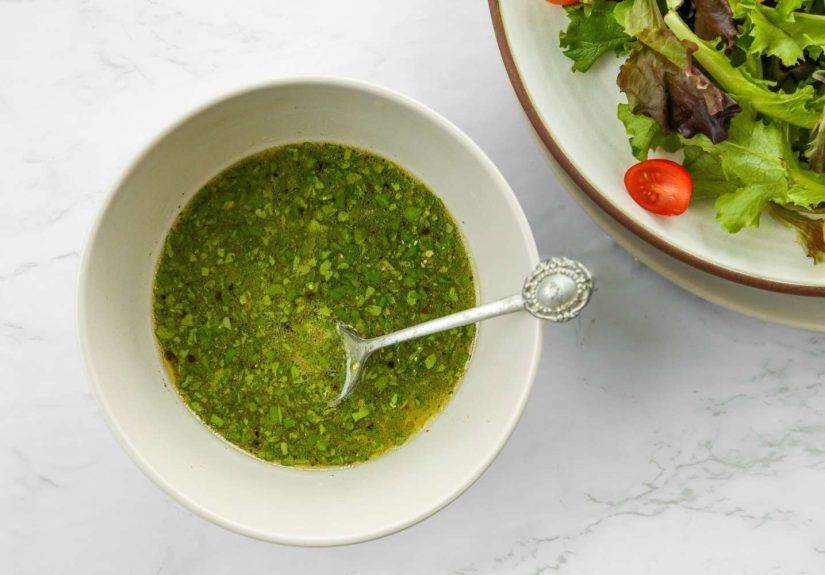
4) Herb-Lemon Vinaigrette (garden-mode)
Stir in 1 tablespoon chopped fresh herbs (parsley, dill, basil, or chives). If using fresh herbs, plan to use the dressing sooner
for best flavor and color.
5) Whole-Lemon “Blender” Vinaigrette (bold, modern, slightly fancy)
For a thicker, more complex dressing, blend lemon (peeled or partially peeled), olive oil, and a handful of tender herbs.
It tastes vibrant and texturedexcellent for grain bowls or drizzling over roasted vegetables.
How to Use Vegan Lemon Vinaigrette Beyond Salad
- Roasted vegetables: Toss roasted cauliflower, broccoli, carrots, or sweet potatoes with a spoonful right after they come out of the oven.
- Grain bowls: Drizzle over quinoa, farro, or brown rice with greens, avocado, and crunchy seeds.
- Bean salads: Wake up chickpeas, white beans, or lentils with lemon vinaigrette + chopped herbs.
- Quick marinade: Use on tofu or tempeh before baking (keep the acid moderate; too much can make tofu weep).
- Sandwich upgrade: Mix a teaspoon into mashed avocado for a bright spread.
Troubleshooting: Fixing Bitter, Too-Tart, or “Why Is It Separated?”
If it’s too tart
- Add 1–2 teaspoons more oil and whisk again.
- Add a tiny pinch of sweetener (maple/agave) to round the edges.
- Add zest for lemon flavor without extra acidity.
If it’s too oily or bland
- Add a squeeze of lemon (start with 1 teaspoon) and a pinch of salt.
- Add 1/4 teaspoon Dijon to boost flavor and help emulsify.
If it tastes bitter
- Avoid squeezing too aggressively if your juicer crushes bitter pith into the juice.
- Use zest lightlyonly the yellow part, not the white pith.
- Balance bitterness with a touch of maple syrup and enough salt.
If it separates
- Totally normal. Shake or whisk before using.
- For a more stable emulsion, add Dijon (or a small spoon of tahini).
- Drizzle oil slowly while whiskingrushing it is how you get “lemon oil soup.”
Storage, Meal Prep, and Food Safety
Store your vegan lemon vinaigrette in a sealed jar in the refrigerator. Olive oil can firm up when cold, so let it sit on the counter
for 5–10 minutes, then shake again.
- Best flavor window: 3–7 days (especially when using fresh lemon and garlic).
- Longer storage: If you skip fresh garlic and fresh herbs, it often keeps longer and tastes fresher over time.
- When to toss: If it smells off, tastes oddly bitter/sour beyond “lemony,” or shows strange bubbles or discoloration, don’t risk it.
Meal prep tip: make a double batch, keep it in a jar, and label it. A good vinaigrette turns “I guess I’ll eat greens” into “wait, this is actually good.”
7 Salad Ideas That Love Lemon Vinaigrette
1) The Crunchy Classic
Romaine + cucumber + cherry tomatoes + croutons (or chickpea croutons) + lemon vinaigrette.
2) Kale That Doesn’t Fight Back
Kale + roasted sweet potato + pumpkin seeds + dried cranberries. Massage kale with a little dressing first, then toss the rest.
3) Mediterranean-ish Bowl
Arugula + quinoa + chickpeas + olives + cucumber + herbs + extra black pepper.
4) Roasted Veggie Glow-Up
Roasted cauliflower + spinach + toasted almonds + lemon vinaigrette (add a touch of tahini if you want it creamy).
5) Apple + Walnut Brightener
Mixed greens + thin-sliced apple + walnuts + celery + lemon vinaigrette (maple version works great here).
6) “I Need Protein” Salad
Greens + lentils + roasted peppers + red onion + herbs. Toss with a slightly punchier lemon ratio.
7) Minimalist Lunch Saver
Whatever greens you have + a handful of nuts + a pinch of salt + lemon vinaigrette. Simple beats skipping lunch.
Kitchen Notes and Real-World Experiences with Vegan Lemon Vinaigrette
Here’s the funny thing about making lemon vinaigrette at home: the first batch usually teaches you more than any recipe card ever will.
Not because it’s hardit’s because it’s honest. A lemon vinaigrette is basically a mirror held up to your taste buds. If you like things bright
and punchy, you’ll push the lemon. If you prefer mellow and silky, you’ll drift toward more oil. Either way, your tongue becomes the boss
(and your measuring spoons become polite assistants).
One of the most common “oh!” moments happens when you taste the dressing before it hits the salad. Straight vinaigrette can taste intense
sharp, salty, and borderline dramatic. Then you pour it over greens and suddenly it makes sense. Salad leaves dilute and distribute flavor.
This is why under-seasoned dressing often makes salads boring: once it’s spread out, it disappears. The practical experience is simple:
you want the dressing to taste a touch louder than you think it should, because the salad will turn the volume down.
Another real-world lesson: temperature matters. Fresh lemon juice plus olive oil can go from smooth to stubbornly separated if it’s cold,
especially straight from the fridge. Home cooks quickly learn the “set it out for a minute, then shake” routine. It’s not a flawit’s just olive oil
being olive oil. If you keep the dressing in a jar, that little pre-salad shake becomes a tiny ritual, like a seasoning pep talk.
People also tend to discover their personal stance on garlic. Fresh grated garlic adds serious flavor, but it can get stronger (and sometimes harsher)
as it sits. If you’re meal-prepping dressing for multiple days, you may find that garlic turns from “wow” to “whoa” by day four.
A popular experience-based workaround is to make the base dressing without garlic, then add a little garlic or shallot to a single serving when you want it.
That way you get freshness without committing your entire jar to vampire protection.
Then there’s the “bitter lemon” surpriseusually traced back to overzealous zesting (scraping into the white pith) or rough squeezing that drags bitterness
into the juice. Once you notice it, you get gentler: zest only the bright yellow, and squeeze like you’re encouraging the lemon, not interrogating it.
The payoff is a cleaner, brighter vinaigrette that tastes like citrusnot like regret.
Finally, the best experience is how fast this dressing becomes a kitchen default. It’s not just for salads. People start drizzling it over roasted vegetables,
stirring it into beans, and using it to wake up leftover grains. The vinaigrette becomes a “finishing touch” habit: a small, bright thing that makes everyday food
taste intentional. And once you’ve had a homemade vegan lemon vinaigrette that actually clings, balances, and sings, it’s very hard to go back to bottled dressing
that tastes like it was formulated by a committee.
Conclusion
This vegan lemon vinaigrette is the kind of recipe that pays you back every time you make it: fast, flexible, and capable of turning basic ingredients into meals
you genuinely look forward to eating. Start with the classic version, then riffmaple-Dijon for sweetness, tahini for creaminess, herbs for freshness.
Once you’ve got the formula down, you don’t just have a dressing. You have a weeknight superpower in a jar.