Table of Contents >> Show >> Hide
- Why emotion identification matters (and why “use your words” isn’t enough)
- 1) Teach an emotions vocabularyon purpose, not by accident
- 2) Use a visual tool (emotion wheel, mood meter, or feelings chart) every day
- 3) Build a quick, routine emotional check-in (keep it short and normal)
- 4) Teach students to notice body cues (feelings have physical “tells”)
- 5) Model emotion language out loud (students learn what they hear)
- 6) Teach a simple “Name it to tame it” script for big moments
- 7) Use characters and historical figures as “emotion practice dummies”
- 8) Play low-prep emotion games (yes, learning can be sneaky)
- 9) Give students sentence stems for emotion talk (training wheels are allowed)
- 10) Create a calm-down corner (or a reset routine) that focuses on feelings first
- 11) Teach a shared “zones” language for emotional states
- 12) Normalize mixed emotions (because humans are complicatedand so is cafeteria pizza)
- How to support students who struggle to identify emotions
- Conclusion
- Bonus: of Real Classroom Experience (What It Looks Like in Practice)
- SEO Tags
If you’ve ever asked a student, “How are you feeling?” and gotten the classic response“Fine.”you’ve met the
emotional equivalent of a closed laptop: technically on, functionally unavailable.
The good news: identifying emotions is a skill, not a personality trait. Students can learn to notice what’s
happening inside, name it with better-than-“fine” words, and communicate it in ways that support learning and
relationships. In other words: emotional literacy is teachableand it pays off in calmer classrooms, clearer
communication, and fewer “mystery meltdowns” that appear out of nowhere (but actually had a whole backstory).
Below are 12 practical, classroom-ready strategiesplus specific examplesto help students identify their
emotions in the moment and build vocabulary for what they feel.
Why emotion identification matters (and why “use your words” isn’t enough)
Students can’t manage what they can’t name. When kids and teens learn to recognize and label emotions, they’re
more likely to pause before reacting, ask for what they need, and recover faster after stress. Emotion
identification also supports empathy: it’s hard to understand others if you don’t have language for your own
inner experience.
Think of emotion words as the “menu” of the mind. If students only know three optionshappy, sad, madthen every
feeling gets squeezed into one of those buckets. But “mad” can hide embarrassment, disappointment, jealousy,
overwhelm, or feeling left out. Expanding the menu doesn’t create more feelingsit simply helps students order
the right one.
1) Teach an emotions vocabularyon purpose, not by accident
Emotional vocabulary grows like reading vocabulary: through direct instruction and frequent, meaningful use.
Start with a small set of core emotions, then add nuanced words over time.
Classroom moves that work
- Create an “Emotion Word Wall” with student-friendly definitions (and examples).
- Introduce 1–2 new feeling words each week (e.g., “frustrated,” “relieved,” “uneasy,” “proud”).
- Do quick “word swaps”: Replace “mad” with a more precise word. (“I’m irritated, not furious.”)
Example: In a writing mini-lesson, challenge students to revise a sentence like “She was sad” into
something more exact: “She felt disappointed when the group ignored her idea.”
2) Use a visual tool (emotion wheel, mood meter, or feelings chart) every day
Visual tools reduce pressure and increase clarityespecially for students who struggle to find words quickly.
Pick one tool and use it consistently so it becomes familiar, not “that random poster we glanced at once in
September.”
Options to try
- Emotion wheel: helps students move from broad feelings to specific ones.
- Mood meter: supports check-ins and shows that emotions vary in energy and pleasantness.
- Feelings thermometer: helps students name intensity (mild → medium → intense).
Example: Start class with: “Point to the word that fits best today.” Then invite students to add a
short reason in a notebook: “I’m anxious because we have a quiz.”
3) Build a quick, routine emotional check-in (keep it short and normal)
Check-ins work best when they’re predictable and brief. You’re not hosting a daily therapy marathonyou’re
building emotional awareness as a classroom habit.
Fast check-in formats
- One-word check-in: students choose a feeling word from the board.
- Scale check-in: “0–5, how stressed are you right now?”
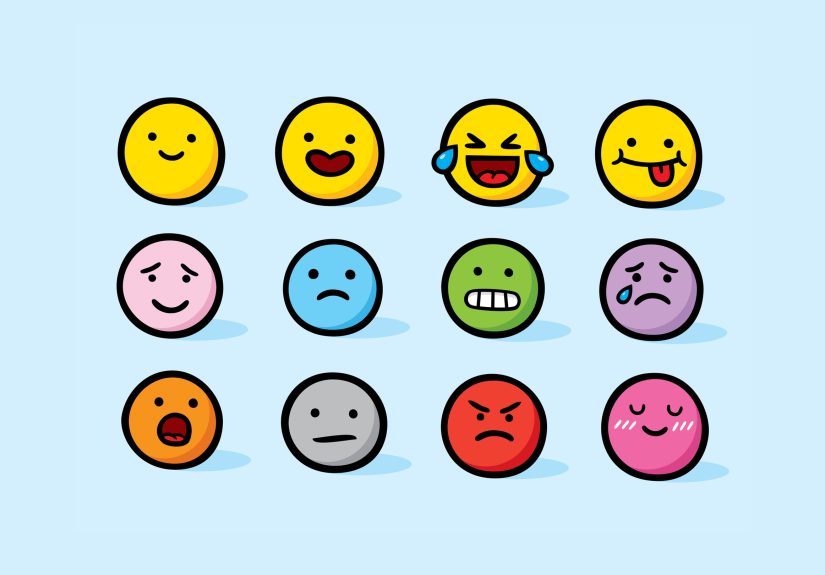
- Emoji check-in: students hold up a card or select a digital emoji.
- Weather report: “I’m partly sunny with a chance of irritation.” (Yes, it’s cheesy. That’s why it works.)
Example: If a student picks “overwhelmed,” you can respond with a simple script:
“Thanks for naming that. Would a two-minute reset help, or do you want to jump in and let the work distract you?”
4) Teach students to notice body cues (feelings have physical “tells”)
Many students recognize emotions through their bodies first: tight shoulders, a racing heart, shaky hands, a
warm face, stomach knots. Teaching body awareness helps students identify emotions earlierbefore the emotion
turns into a behavior.
Try a “body map” activity
- Ask students where they feel stress, excitement, anger, or worry in their bodies.
- Have them color an outline figure: red for tension, blue for calm, etc.
- Connect it to vocabulary: “When my chest feels tight, I might be anxious or pressured.”
Example: During a debrief: “When you said you were ‘fine,’ your foot was bouncing. What might that body
cue be telling you?”
5) Model emotion language out loud (students learn what they hear)
If adults only say “I’m good” or “I’m stressed,” students won’t magically develop a nuanced emotional lexicon.
Narrate your feelings in appropriate, classroom-safe ways.
What modeling can sound like
- “I’m feeling disappointed because we lost learning time, and I’m also hopeful we can reset.”
- “I’m nervous about the schedule change, so I’m going to take a slow breath and reread the plan.”
- “I’m proud of how you worked through that challenge.”
This helps students see that emotions are normal and manageablenot something you have to hide like a squeaky
chair in the library.
6) Teach a simple “Name it to tame it” script for big moments
In heated moments, students often jump straight from feeling → reaction. A short script creates a pause and
gives the brain time to shift into problem-solving mode.
A practical classroom script
- Name it: “I’m feeling ___.”
- Locate it: “I notice it in my ___.”
- Need it: “I need ___ (space, help, water, clarification, a break).”
- Next step: “I’m going to ___ (ask a question, use a tool, start with #1, take 60 seconds).”
Example: “I’m feeling frustrated. My jaw is tight. I need help understanding the directions. I’m going
to ask my partner to reread them with me.”
7) Use characters and historical figures as “emotion practice dummies”
It’s easier (and lower-stakes) to analyze emotions in someone else first. Literature, films, and history are
perfect training grounds for emotional identification.
Questions that sharpen emotion thinking
- “What is the character feeling right now? What evidence shows that?”
- “What emotion might be underneath the emotion they’re showing?”
- “If the character had better words, what might they say?”
Example: “He slammed the door. Is that anger, embarrassment, or feeling powerless? What clues do we have?”
8) Play low-prep emotion games (yes, learning can be sneaky)
Games build recognition and vocabulary without making students feel “put on the spot.” Keep it light, quick,
and optional for students who prefer not to perform.
Easy games to rotate
- Emotion Charades: act out “relieved,” “conflicted,” “hopeful,” “resentful.”
- Emotion Sorting: sort words by “high energy/low energy” or “pleasant/unpleasant.”
- Scenario Match: match a short scenario to the best-fit emotion word.
Example: Scenario: “You studied hard and still did poorly.” Students choose between “defeated,”
“confused,” “angry,” “discouraged,” and discuss which fits best and why.
9) Give students sentence stems for emotion talk (training wheels are allowed)
Many students know what they feel but don’t know how to say it. Sentence stems reduce the language load and
increase participation.
Useful stems for different ages
- “Right now I feel ___ because ___.”
- “When ___ happens, I tend to feel ___.”
- “A feeling I have in this class sometimes is ___.”
- “I’m not sure what I feel, but I notice ___ in my body.”
- “I need ___ to get back to learning.”
Example: After group work: “I felt left out when decisions were made without me.”
That’s a huge leap forward from “You guys are annoying.”
10) Create a calm-down corner (or a reset routine) that focuses on feelings first
“Take a break” works better when students know why they’re taking one and what emotion they’re trying
to ride out. A reset space is not a punishment zone; it’s a skills zone.
What to include
- An emotion chart or wheel
- A feelings thermometer
- Simple coping options: water, a short walk pass, breathing card, stretch routine
- A reflection card: “I feel ___ / I need ___ / I can try ___”
Example: A student points to “overstimulated,” then chooses a two-minute quiet reset. The goal is not
perfectionit’s awareness and a better next step.
11) Teach a shared “zones” language for emotional states
Some frameworks group feelings into “zones” or categories to make emotions easier to identify in real time.
Students learn that emotions vary in intensity and that each zone can have helpful tools.
How to make it classroom-friendly
- Teach that all zones are normal (the goal is not “always calm,” because humans are not robots).
- Practice identifying zones during neutral times, not only during conflict.
- Create a “tools menu” for each zone: movement, breathing, asking for help, sensory supports, etc.
Example: “I’m in a high-energy zoneexcited and distractedso I’m going to do a 30-second stretch
before we start.”
12) Normalize mixed emotions (because humans are complicatedand so is cafeteria pizza)
Students often think emotions come one at a time. In reality, we can feel proud and nervous, happy and guilty,
relieved and sad. Teaching mixed emotions helps students identify feelings more accurately and reduces shame.
Quick ways to teach it
- Use the phrase: “Two things can be true.”
- Ask: “What’s one feeling on top and one feeling underneath?”
- Have students practice “emotion combos”: “I feel ___ and ___ because ___.”
Example: “I’m excited about moving up a grade, and I’m nervous about new teachers.” That’s not
confusionit’s emotional accuracy.
How to support students who struggle to identify emotions
Some students need extra scaffolding. If a student routinely can’t name feelings, consider these supports:
- Offer choices: “Are you more frustrated, worried, or disappointed?”
- Use observation language: “I notice your fists are tight and your voice got louder.”
- Reduce audience pressure: private check-ins or written options.
- Connect emotions to needs: tired → need rest; overwhelmed → need clarity; anxious → need predictability.
If a student shows ongoing distress that interferes with learning, follow your school’s support process (counselor,
school psychologist, family communication) so they’re not trying to “tough it out” alone.
Conclusion
Helping students identify their emotions isn’t extra workit’s foundational work. When students can name what
they feel, they can ask for help sooner, collaborate more effectively, and spend more time learning instead of
battling invisible feelings with visible behaviors.
Start small: pick one visual tool, teach a few new emotion words, and build a quick daily check-in. Over time,
students develop the confidence to move beyond “fine” and into language that actually fits. And when that
happens, your classroom becomes a place where emotions aren’t a surprise attackthey’re information students
know how to use.
Bonus: of Real Classroom Experience (What It Looks Like in Practice)
In one classroom, the teacher started the year with a simple emotions wheel taped near the whiteboard. It wasn’t
fancyno glitter, no QR codes, no “Pinterest-perfect” borderbut it became one of the most-used tools in the
room. At first, students treated it like background decoration. Then the teacher began referencing it during
everyday moments: before a quiz (“Pick a word that fits your brain right now”), during group projects (“If your
team is stuck, check whether the feeling is frustration or confusionthose need different solutions”), and even
after recess (“Is this energy excited, restless, or annoyed?”).
The breakthrough wasn’t instant. For a few weeks, many students chose “happy” even when their faces said
otherwise. The teacher didn’t argue. Instead, she modeled curiosity: “Happycool. Is it more like proud-happy,
relieved-happy, or silly-happy?” Students started laughing at how many versions of “happy” exist, and that
laughter lowered the stakes. Nobody felt “bad” for not having perfect emotional insight on demand.
Later, during a writing unit, the class did “emotion upgrades.” Students revised bland sentences like “He was
mad” into “He felt betrayed when his friend shared the secret.” One student quietly said, “That’s how it feels
when people talk about you.” The teacher didn’t turn it into a public therapy moment. She simply responded,
“That wordbetrayedis powerful and specific. Thank you for naming it.” After that, students
began using more precise emotion words in peer feedback too: “I felt discouraged reading your intro because I
got lostcan you add a clearer claim?” Emotional language became academic language.
In another classroom, the teacher used a feelings thermometer for intensity. A student who frequently shut down
during math used to say “I hate this,” and push the paper away. With the thermometer, he could point to
“overwhelmed4 out of 5.” That single shift changed the adult response. Instead of “Stop being negative,” the
teacher could say, “Got it. Let’s bring it down to a 2. Do you need the directions reread, a smaller first
problem, or a two-minute reset?” The student didn’t suddenly love mathbut he regained a sense of control. And
when students feel some control, they’re more willing to try.
The most consistent lesson from real classrooms is this: emotional literacy grows through repetition in normal
moments, not just during crises. The check-in that takes 45 seconds on a calm day is what makes the “Name it to
tame it” script available on a hard day. The goal isn’t to eliminate big feelings. The goal is to help students
recognize them early, name them accurately, and choose a next step that keeps them connected to learning and to
each other.