Table of Contents >> Show >> Hide
- What You’ll Find Inside
- Why Dog Breeds Make Weirdly Good Design Inspiration
- The 4 “Dog-First” Design Rules That Save Furniture
- Breed-to-Style Matches (With Real-World Examples)
- Labrador Retriever → Modern Farmhouse (Warm, Casual, Built to Last) [10][3]
- Golden Retriever → Transitional Cozy (Classic Meets “Come On In”) [11]
- Siberian Husky → Scandinavian / Nordic (Airy, Minimal, Cozy on Purpose) [12][5]
- German Shepherd → Industrial Practical (Strong, Functional, Calmly Confident) [9]
- Shiba Inu (and other “independent zen” breeds) → Japandi (Minimal, Warm, Intentional) [2][14]
- Beagle → English Country / Cottage (Cozy Layers, Lived-In Charm) [8]
- Border Collie → Minimalist + Organized (Clear Zones, Smart Storage, Calm Brain) [1]
- Bonus Matches (Because Your Favorite Breed Might Be Different)
- Pet-Friendly Upgrades That Don’t Look Like a Kennel
- Mini Quiz: Find Your Style in 90 Seconds
- Experience Notes From Real Homes (The Stuff You Don’t See on Pinterest)
- Conclusion
If you’ve ever looked at a perfectly styled living room and thought, “Wow… my dog could destroy that in under 12 seconds,” congratulations: you’re already thinking like a designer. Because the best home design style isn’t just about what looks good on Pinterestit’s about what survives real life. And nothing tests “real life” quite like a dog who treats your sofa as a trampoline, your rug as a napkin, and your throw pillows as emotional support chew toys.
In this guide, we’ll match popular interior design styles to dog-breed vibesusing temperament, energy level, grooming realities, and a pinch of humorso you can build a home that looks intentional and functions like you actually live there. (Because you do. With a dog. Who has opinions.)
Why Dog Breeds Make Weirdly Good Design Inspiration
Designers talk about “lifestyle-led design.” Dog people talk about “why is there fur in my coffee.” Same concept: your day-to-day reality should shape your choices. Dog breeds come with patternsenergy, sociability, noise, grooming needsthat map surprisingly well to design preferences like open vs. cozy, minimalist vs. layered, delicate vs. durable.
Think of your favorite breed as a shortcut to your home’s personality: playful and friendly often translates to warm, social spaces; independent and calm leans toward clean lines and quiet palettes; busy-brain working dogs tend to thrive (and make you thrive) in organized, functional layouts.
And yes, you can absolutely love a Husky and still choose a white rug. Just know you’re signing up for a thrilling hobby called “vacuuming like it’s cardio.”
The 4 “Dog-First” Design Rules That Save Furniture
1) Choose surfaces that forgive joy
Dogs are enthusiastic. Some are basically happiness with legs. The best homes for dogs (and humans) use materials that handle moisture, muddy paws, and the occasional zoomie-induced drift turn. Translation: performance fabrics, washable rugs, sealed wood, and wipeable paint.
2) Design your traffic flow like a tiny racetrack
Many dogs naturally loop: door → couch → window → you → repeat. If furniture blocks that flow, your dog will “redecorate” using physics. Give them clear paths, especially in living rooms and hallways.
3) Build in “drop zones” for dog stuff
Leashes, treats, towels, boots, lint rollerspet life comes with accessories. Closed storage keeps your home calm without pretending your dog doesn’t exist. (Your dog exists. Loudly. Usually near snacks.)
4) Make enrichment part of the design
A bored dog is a creative dog. And you do not want your dog expressing creativity on a chair leg. Add puzzle-toy stations, a sniff-friendly basket, or a window perch for “neighborhood surveillance.”
Breed-to-Style Matches (With Real-World Examples)
Below are style pairings inspired by common breed traits and how they tend to live with humans. Use this as a starting pointnot a rulebook. Your dog is an individual. (And so are you. And so is your dog’s opinion about squirrels.)
| Dog Breed Vibe | Best-Fit Home Design Style | Why It Works | Signature Moves |
|---|---|---|---|
| Labrador Retriever | Modern Farmhouse | Friendly, high-energy, family-oriented = cozy + durable | Slipcovers, warm neutrals, sturdy wood, washable rugs |
| Golden Retriever | Transitional Cozy | Goofy, affectionate = welcoming classics with modern ease | Soft textures, timeless silhouettes, layered lighting |
| Siberian Husky | Scandinavian / Nordic | Endless energy + bold personality = airy, functional, easy-clean | Light woods, simple forms, “hygge” texture, smart storage |
| German Shepherd | Industrial Practical | Working-dog vibe = strong lines, purpose-built spaces | Metal + wood, exposed elements, tough materials |
| Shiba Inu (or “independent zen” breeds) | Japandi | Minimal-but-warm = calm home with intentional pieces | Natural materials, uncluttered zones, earthy neutrals |
| Beagle | English Country / Cottage | Curious, nose-led = layered comfort and lived-in charm | Patterns, cozy textiles, “curated clutter,” warm lighting |
| Poodle | Art Deco / Glam | Elegant, smart, “put together” = polish + playful drama | Geometry, statement lighting, luxe textures, bold accents |
| Border Collie | Minimalist + Organized | Busy brain = clean systems, clear zones, less visual chaos | Hidden storage, simple palette, functional furniture |
| French Bulldog (or compact comedians) | Eclectic Modern | Small but big personality = curated fun without clutter | Playful art, compact seating, bold color “pops” |
Labrador Retriever → Modern Farmhouse (Warm, Casual, Built to Last) [10][3]
Labs are famously friendly, outgoing, and high-spiritedwhich is a charming way of saying “your house is now a community center.” [10] A modern farmhouse look works because it’s relaxed, welcoming, and designed to feel comfortable rather than precious. [3]
- Floors: sealed hardwood or quality LVP that laughs at muddy pawprints.
- Sofas: slipcovered or performance fabric (because “fetch” doesn’t stop at the door).
- Palette: warm whites, greige, and soft blacks so the room feels cozy even when life is loud.
- Bonus move: a built-in bench by the entry for towels, leashes, and the “why are we wet?” moments.
Golden Retriever → Transitional Cozy (Classic Meets “Come On In”) [11]
Goldens are often described as friendly, enthusiastic, andlet’s be honestprofessionally goofy. [11] That pairs beautifully with transitional design: a mix of traditional comfort and modern simplicity, without going full museum.
- Furniture: timeless shapes (rolled arms, warm woods) but with clean, updated lines.
- Texture: chunky knits, woven baskets, and soft rugs you can actually sit on.
- Reality check: plan for fur. Choose fabrics that don’t trap hair like a clingy ex.
Siberian Husky → Scandinavian / Nordic (Airy, Minimal, Cozy on Purpose) [12][5]
Huskies are known for big energy and talkative personalities. [12] They thrive with structure and activityso your home should feel open and functional, not cramped and fragile. Scandinavian-inspired interiors lean on light woods, airy features, and minimalism that still feels cozy (hello, texture). [5]
- Layout: open paths for movement and play.
- Storage: closed cabinets to reduce visual clutter (and protect items from “helpful” dogs).
- Textiles: add warmth with throws and rugs, but keep them washable.
- Safety note: Huskies can be escape artistssecure gates and entry zones matter as much as the sofa. [15]
German Shepherd → Industrial Practical (Strong, Functional, Calmly Confident) [9]
Industrial style is a natural match for working-dog energy: it celebrates function, durability, and a little grit. Think metal, wood, strong silhouettes, and materials that can take a hit (emotionally and literally). House tours highlighting industrial spaces often feature exposed brick, metal railings, and warehouse-inspired elements. [9]
- Materials: leather (or vegan leather), sealed concrete, dark woods, sturdy textiles.
- Lighting: statement pendants and task lightingbecause Shepherd people love a system.
- Design trick: soften with one plush rug or boucle chair (just not in “chew reach”).
Shiba Inu (and other “independent zen” breeds) → Japandi (Minimal, Warm, Intentional) [2][14]
Japandi blends Japanese and Scandinavian aesthetics with simplicity, craftsmanship, natural materials, and a calm connection to nature. [2] It’s minimalist, but not coldmore “serene sanctuary” than “doctor’s waiting room.”
- Palette: soft neutrals, earthy tones, light woods.
- Decor rule: fewer pieces, but each one earns its keep (like your dog expects treats to earn theirs).
- Clutter control: hidden storage is your best friendthis style does not negotiate with chaos.
Beagle → English Country / Cottage (Cozy Layers, Lived-In Charm) [8]
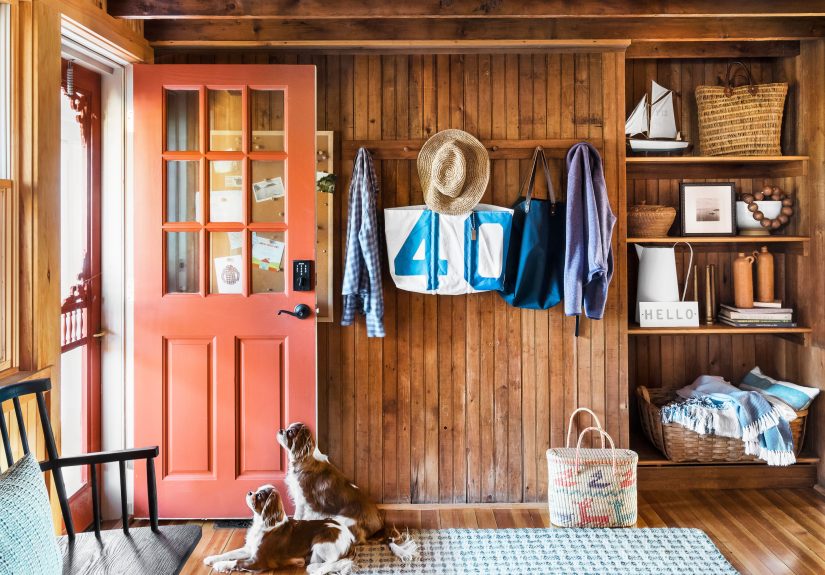
Beagles are curious and nose-driven, which pairs nicely with a home that feels warm, layered, and forgiving. Cottage and English country-inspired spaces lean on comfort: textiles, patterns, warm lighting, and a “collected over time” vibe. Cottage kitchens, for example, often lean into reclaimed pieces, warm light, patterned textiles, and charming, intentional clutter. [8]
- Color: creamy neutrals plus gentle greens, blues, and warm florals.
- Texture: quilts, checks, woven baskets, vintage wood.
- Pro tip: choose rugs that hide “mystery smudges.” Beagles respect no snack boundary.
Border Collie → Minimalist + Organized (Clear Zones, Smart Storage, Calm Brain) [1]
Border Collies are brilliant and busy. Your home should help you both focus. Minimalism emphasizes simplicity, functionality, and negative spacegreat for reducing visual noise. [1] The key is making it warm, not sterile: natural textures, soft lighting, and “put away” systems that actually work.
- Rule: if it doesn’t have a home (storage), it becomes a toy (to your dog) or clutter (to you).
- Best furniture: pieces with closed storageottomans, benches, credenzas.
- Bonus: a dedicated training/enrichment corner prevents “DIY remodeling” behaviors.
Bonus Matches (Because Your Favorite Breed Might Be Different)
- Great Dane → Contemporary Minimalism: fewer, larger pieces; wide walkways; scale matters so nobody knocks a lamp over with their tail.
- Dachshund → Mid-Century Modern: low silhouettes, warm wood tones, playful shapes (plus a ramp, because backs matter).
- Chihuahua → Maximalist Eclectic: small dog, huge opinionstry bold art, layered textiles, and a throne-like chair.
Pet-Friendly Upgrades That Don’t Look Like a Kennel
Floors: the “paws meet physics” zone
Prioritize sealed surfaces and easy-clean finishes. Add washable runners in high-traffic lanes and consider a doormat system that actually catches dirt (not one that politely watches dirt walk inside).
Fabrics: pick your battles
Performance fabrics and tightly woven textiles tend to handle claws and mess better than loose weaves. If you love velvet, choose durable versions and keep a throw nearby. Also: shedding varies by breed, season, and even indoor living conditionsso plan for maintenance, not miracles. [13]
Walls: yes, your dog can reach them
Use wipeable paint in entries and “shake zones.” If your dog does the post-walk full-body shimmy, that’s basically an art installationjust one you can clean.
Storage: hide the chaos, keep the joy
Add a closed cabinet or console near the door for leashes, wipes, and treats. Use baskets with lids for toys. Your home can be dog-friendly without looking like a pet store aisle.
Enrichment: design for a happier dog
Puzzle toys and enrichment activities help keep dogs mentally engagedespecially when you’re busy. [14] Build that into the room: a basket for puzzles, a chew-safe mat, and a “place” bed that looks like it belongs.
Mini Quiz: Find Your Style in 90 Seconds
Answer fast. Your first instinct is usually your real taste (before your brain starts worrying about what your in-laws think).
- Your dog enters a room. What happens?
A) Greets everyone like a celebrity on a press tour
B) Observes quietly, then chooses one perfect spot
C) Immediately locates something questionable and investigates - Your dream weekend at home is:
A) Friends over, snacks out, music on
B) Quiet coffee, clean counters, a good book
C) A creative project, plants, and rearranging furniture “just to see” - Your tolerance for clutter is:
A) Some clutter is “lived-in charm”
B) Clutter makes my eye twitch
C) Clutter is fine if it’s pretty - Your ideal color palette:
A) Warm neutrals and soft contrast
B) Light woods, whites, and earthy tones
C) Patterns, color, and personality - Your dog’s grooming reality:
A) Some shedding, manageable with routine
B) Seasonal shedding that could form a second dog
C) Minimal shedding, but maximum attitude
If you picked mostly A: Modern Farmhouse or Transitional Cozy.
If you picked mostly B: Scandinavian or Japandi.
If you picked mostly C: Boho/Eclectic or Cottage/Collected.
Experience Notes From Real Homes (The Stuff You Don’t See on Pinterest)
Let’s talk about what actually happens when design meets dog realitybecause the internet loves a pristine white couch, but your dog loves living their best life. Here are experience-based patterns designers and dog owners run into again and again, plus what tends to work long-term.
1) The “White Sofa Fantasy” vs. the “Happy Dog Physics”
A white sofa can be gorgeous. It can also become a daily character-building exercise if your dog is a mud magnet (Labs and Goldens, I’m looking at you). The homes that keep the look without the stress usually do one of three things: choose washable slipcovers, commit to performance fabric, or keep a rotation of throws that look intentional. The trick is not to fight your life. Style your home for the life you have, not the life you see in a photo shoot.
2) Entryways become the most important “room” you didn’t think about
People will spend weeks choosing pendant lights for the kitchen and then store leashes in a pile on the counter like raccoons did it. A smart entry setup is where real pet-friendly design shines: hooks at human height, a basket for leashes, a drawer for wipes, and a towel you can grab with one hand. The result is a calmer houseand fewer muddy pawprints migrating deeper into your living room like they’re on a mission.
3) Dogs teach you what you actually value
Many people think they want “minimalist” until they realize minimalism isn’t just fewer objectsit’s better systems. A dog makes that obvious fast. If everything is out in the open, your home looks busy and your dog has access to… everything. When homes finally feel peaceful, it’s usually because storage got upgraded: closed cabinets, credenzas, benches with compartments, and a dedicated spot for toys that doesn’t scream “daycare.”
4) The best rooms have a “dog perspective” pass
Here’s a simple test: sit on the floor and look around. That’s your dog’s view. If every interesting object is within nose range, you’re inviting curiosity. If cords dangle like spaghetti, you’re tempting fate. If your dog’s bed is shoved in a sad corner, you’re missing a chance to make the room feel thoughtfully layered. Homes that feel the most harmonious usually integrate dog zones on purpose: a bed that matches the palette, a basket that fits the style, and a window spot for calm observation.
5) “Pet-friendly” doesn’t mean “ugly”it means “planned”
The biggest mindset shift is realizing that pet-friendly design is a strategy, not a sacrifice. Scandinavian and Japandi spaces stay serene because they’re curated and uncluttered. Farmhouse and cottage spaces stay welcoming because they prioritize comfort and durability. Boho spaces succeed because they embrace texture and layeringmeaning a new scratch on a coffee table can be a “story,” not a crisis. When your style matches your dog’s reality, your home feels easier to live in. And that, honestly, is the ultimate luxury.
Conclusion
Your favorite dog breed can tell you a lot about the home you’ll love most: how social you are, how much energy you can handle, how tidy your brain wants things to be, and whether “high-maintenance” sounds like a warning or a fun challenge.
The goal isn’t to build a showroomit’s to build a place that feels like you. One that can handle real life, real mess, and real joy. Because if your home design style doesn’t survive a wagging tail and a happy sprint, it’s not a styleit’s a fragile suggestion.
SEO Tags (JSON)
Sources Consulted (No Links)
- [1] Architectural Digest (interior design styles; Japandi)
- [3] The Spruce (modern farmhouse)
- [4] Better Homes & Gardens (modern farmhouse updates)
- [5] HGTV (Scandinavian style)
- [6] Apartment Therapy (boho style)
- [7] This Old House (Craftsman style characteristics)
- [8] Martha Stewart (cottage/English country style cues)
- [9] House Beautiful (industrial elements in interiors)
- [10] American Kennel Club (Labrador temperament)
- [11] VCA Animal Hospitals (Golden Retriever temperament and realities)
- [12] PetMD (Husky personality and energy)
- [13] ASPCA (shedding and grooming basics)
- [14] Humane World / Humane Society resources (enrichment ideas)
- [15] Chewy education (Husky escape-artist tendencies)