Table of Contents >> Show >> Hide
- Why This Classic Tuna Casserole Still Works (Even in 2026)
- Ingredients You’ll Need (Plus Smart Swaps)
- Step-by-Step Tuna Noodle Casserole Recipe (Creamy + Crunchy)
- How to Make Tuna Noodle Casserole Taste Like You Tried (Even If You Didn’t)
- Crunchy Topping Ideas (Choose Your Personality)
- Make-Ahead, Storage, Freezing, and Reheating
- Healthier (But Still Cozy) Tuna Casserole Variations
- What to Serve With Tuna Noodle Casserole
- FAQ
- Conclusion
- of Tuna Noodle Casserole Experience (The “I’ve Made This a Lot” Edition)
If comfort food had a yearbook photo, tuna noodle casserole would be wearing a cozy sweater, holding a casserole dish, and somehow still looking cool. This classic American bake is creamy, salty, a little crunchy on top, and built entirely from ingredients that tend to live in your pantry like they pay rent. The best part? You can make it fancy enough for guests or “I just got off a Zoom call that could’ve been an email” simple for a weeknight.
Why This Classic Tuna Casserole Still Works (Even in 2026)
Tuna noodle casserole hits the sweet spot between low effort and high reward. You get protein from canned tuna, satisfying carbs from egg noodles, and a creamy sauce that hugs everything like it missed you. Plus, the crunchy topping makes each bite feel like it’s wearing a tiny crown.
It’s also endlessly adaptable: swap the veggies, change the topping, go from “pantry classic” to “I simmered a sauce from scratch like a responsible adult.” Same cozy vibe, different levels of bragging rights.
Ingredients You’ll Need (Plus Smart Swaps)
The core ingredients
- Egg noodles (wide or extra-broad): the traditional choice, sturdy enough for baking.
- Canned tuna (in water, drained): chunk light for softer texture; albacore for firmer flakes.
- Creamy base: either condensed soup (fast) or a homemade sauce (best flavor control).
- Cheese (Cheddar or white Cheddar): for body, savoriness, and that irresistible melt.
- Veggies: frozen peas are classic, but anything from broccoli to sautéed mushrooms plays nicely.
- Crunchy topping: crushed chips, panko, crackers, or fried onionsyour call.
Flavor boosters (optional, but highly recommended)
- Onion + celery: adds cozy “savory soup” depth without trying too hard.
- Mushrooms: sauté fresh for extra umami, or skip if you’re Team No-Fungi.
- Dijon or Worcestershire: tiny amount, big payoff.
- Lemon juice: a small splash wakes up the whole dish (like coffee, but for casseroles).
- Sour cream or Greek yogurt: extra creaminess and a gentle tang.
Step-by-Step Tuna Noodle Casserole Recipe (Creamy + Crunchy)
Recipe overview
- Yield: 6–8 servings
- Prep time: ~20 minutes
- Bake time: ~25–30 minutes
- Pan: 9×13-inch baking dish (or a deep 2–2.5 quart casserole)
Ingredients
- 12 oz wide egg noodles
- 2 cans tuna (5–6 oz each), drained well
- 1 small onion, finely chopped
- 2 celery stalks, chopped (optional but great)
- 2 cups frozen peas (or 1 cup peas + 1 cup chopped broccoli)
- 2 cups shredded Cheddar (or white Cheddar), divided
- For the creamy base (choose one):
- Shortcut base: 1 can (10.5 oz) condensed cream of mushroom soup + 1/2 cup milk
- From-scratch base: 3 tbsp butter + 3 tbsp flour + 2 cups milk + 1/2 cup broth (optional)
- 1 tsp Dijon mustard (optional)
- 1–2 tsp lemon juice (optional)
- Salt and black pepper
- Topping (pick your crunch): 1 to 1 1/2 cups crushed potato chips OR panko breadcrumbs OR crushed crackers
- 2 tbsp melted butter (if using panko or crackers)
Instructions
- Heat the oven: Preheat to 350°F. Grease a 9×13-inch baking dish.
- Cook noodles (but don’t overdo it): Boil egg noodles in well-salted water until just al dente. Drain and set aside. (They’ll finish cooking in the oventhink of this as noodle “training camp.”)
- Build flavor: In a skillet, sauté onion (and celery if using) in a little butter or oil until soft, 4–6 minutes. If using fresh mushrooms, sauté them here too until they give up moisture and start browning.
- Make it creamy (choose your path):
- Shortcut: In a large bowl, whisk condensed soup with milk until smooth.
- From scratch: Melt butter in a pot, whisk in flour for 1 minute, then slowly whisk in milk (and broth if using). Simmer until thick enough to coat a spoon, 3–5 minutes.
- Mix the filling: Add noodles, tuna, sautéed veggies, peas, 1 1/2 cups of the cheese, Dijon (if using), and lemon juice (if using). Season with salt and pepper. Stir gentlytuna likes to flake, not disintegrate.
- Assemble: Spread mixture into the baking dish. Top with remaining 1/2 cup cheese.
- Top it like you mean it:
- Potato chips: Sprinkle crushed chips right on top (no butter needed).
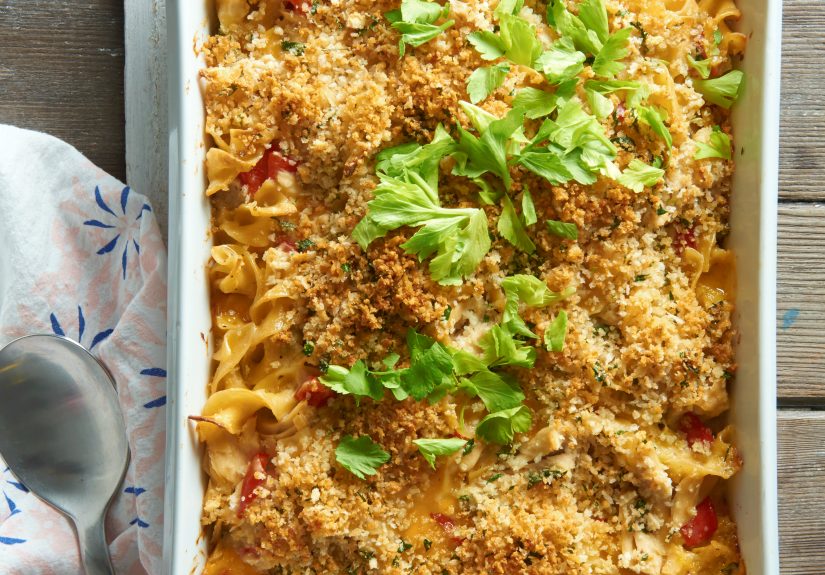
- Panko/crackers: Toss with melted butter first, then sprinkle over casserole.
- Bake: Bake uncovered for 25–30 minutes, until hot and bubbly and the top is golden. Rest 5–10 minutes before serving (this helps it set so you scoop squares instead of “creamy lava.”)
Want a faster, hotter bake? You can also bake at 400°F for about 20 minutes, then add the topping and bake a few minutes more to crisp it up.
How to Make Tuna Noodle Casserole Taste Like You Tried (Even If You Didn’t)
1) Drain the tuna like it owes you money
Watery tuna = watery casserole. Press it gently in the strainer. Your future self (the one eating leftovers at midnight) will thank you.
2) Keep noodles slightly undercooked
Perfectly cooked noodles in the pot often turn into overcooked noodles in the oven. Go al dente so the final bake lands in that tender-but-not-mushy zone.
3) Add acid, just a little
Tuna plus dairy can taste flat if everything’s rich and beige. A teaspoon or two of lemon juice (or a tiny dab of Dijon) cuts through the creaminess and makes the dish taste brighter without turning it into “lemon tuna noodle casserole,” which is not the goal.
4) Make the topping actually crunchy
If you’re using chips, add them right before baking and don’t bury them under cheese. If you’re using panko or crackers, butter them so they toast instead of drying out. If you want maximum crunch, add topping in the last 8–10 minutes of baking.
Crunchy Topping Ideas (Choose Your Personality)
- Crushed potato chips: salty, nostalgic, and impossible to dislike.
- Panko breadcrumbs: crisp and golden with a clean crunch.
- Crushed Ritz-style crackers: buttery, rich, and very “potluck hero.”
- French-fried onions: big flavor, big crunch, big “I brought something!” energy.
- Cornflakes: retro in the best way (also great with a little melted butter).
Make-Ahead, Storage, Freezing, and Reheating
Make-ahead
You can assemble the casserole (without the crunchy topping), cover, and refrigerate overnight. When ready to bake, let it sit at room temperature for 15–20 minutes while the oven heats, then add topping and bake.
Refrigerator storage
Store leftovers in an airtight container for up to 4 days. The flavors often get better as everything hangs out together. (Casseroles are social like that.)
Freezer tips
For best texture, freeze the casserole before baking and leave off the topping. Wrap tightly and freeze up to 3 months. Thaw overnight in the refrigerator, add topping, then bake until hot throughout.
Reheating
Reheat individual portions in the microwave, or rewarm a larger amount covered in a 325°F oven until hot. For food safety, leftovers should reach 165°F in the center. If the top starts browning too quickly, keep it loosely covered with foil.
Healthier (But Still Cozy) Tuna Casserole Variations
- Boost the veggies: Add broccoli, spinach, chopped green beans, or sautéed zucchini.
- Lighten the sauce: Use evaporated milk, reduced-fat soup, or stir in Greek yogurt off heat.
- Whole-grain swap: Try whole-wheat egg noodles or another sturdy pasta shape.
- More flavor, less salt: Use mushrooms, onion, Dijon, lemon, black pepper, and a pinch of paprika instead of extra salt.
- Gluten-free: Use gluten-free pasta and a cornstarch-thickened sauce, plus gluten-free crumbs or chips.
What to Serve With Tuna Noodle Casserole
This dish is a one-pan meal, but a few sides can make it feel like a full spread:
- Big green salad with a tangy vinaigrette (acid balances the creamy casserole).
- Roasted broccoli or green beans for color and crunch.
- Tomato soup if you’re leaning into maximum cozy.
- Pickles or something briny on the side (surprisingly perfect).
FAQ
Is tuna noodle casserole actually “American” food?
Absolutely. It’s a classic example of pantry-forward comfort cookingeconomical, filling, and designed to feed a family without turning the kitchen into a disaster zone.
Can I use tuna in oil?
You can. It tends to taste richer, but it can also make the casserole heavier. If you use it, drain well and consider a splash of lemon juice to keep things balanced.
Why did my casserole come out dry?
Usually it’s one of three things: noodles cooked too long, not enough sauce, or too much bake time. Next time, undercook the noodles slightly, loosen the sauce with a splash of milk, and check it at 20 minutes.
Why is mine watery?
Common culprits: tuna not drained, veggies releasing water (especially mushrooms), or adding frozen veggies without accounting for moisture. Drain well, sauté mushrooms, and don’t be shy about a thicker sauce.
Conclusion
A great tuna noodle casserole recipe is equal parts creamy, comforting, and crispy-on-toplike a warm hug with a satisfying crunch. Keep your noodles al dente, your tuna well-drained, and your topping boldly crunchy. After that, it’s your playground: add veggies, brighten with lemon, go classic with cream-of-mushroom, or build a homemade sauce that makes the dish taste like it got promoted.
of Tuna Noodle Casserole Experience (The “I’ve Made This a Lot” Edition)
The first time I made tuna noodle casserole, I treated it like any other pasta situation: boil noodles until perfect, mix everything, bake it “for a bit,” done. Reader, it was a cautionary tale. The noodles absorbed sauce like they were training for a sponge Olympics event, the casserole tightened up into a single creamy slab, and my crunchy topping went from “golden” to “archaeological artifact” in about three minutes. That batch still got eaten (because comfort food), but it taught me the golden rule: slightly undercook your noodles and give the sauce a little extra breathing room.
Over time, I learned there are basically two schools of tuna casserole people: the “dump-and-bake traditionalists” and the “from-scratch sauce romantics.” The shortcut version with condensed soup is honestly brilliant on a chaotic day. It’s consistent, fast, and hits that nostalgic note. But when you make a simple roux-based sauceeven just butter, flour, milk, and cheeseyou get more control and a deeper flavor that feels a little more modern. It’s like the same song, remastered. My compromise move is adding one tiny “grown-up” touch to the shortcut version: a teaspoon of Dijon or a squeeze of lemon. Suddenly the casserole tastes less like it came from a can and more like it has a podcast.
Then there’s the tuna itself. I used to buy whatever was on sale, open it, and toss it in. Now I’m pickiernot snobby, just… seasoned. Chunk light tuna tends to blend smoothly into the casserole, while albacore keeps bigger flakes that feel meatier. Either works, but here’s the real trick: drain it well. Not “tip the can once” well. I mean, press it gently in a strainer well. Too much liquid turns the sauce thin, and thin sauce turns the whole casserole into a sad puddle that looks like it needs therapy.
The topping is where personalities really show. Potato chips are the classic move: salty, crunchy, and basically guaranteed to get compliments. But I’ve had phases. Panko with melted butter makes a crisp, clean crunch that feels almost fancy. Crackers are buttery and rich, and they make the whole thing taste like a holiday side dish that accidentally became dinner. Fried onions are loud and proudand if you bring that version to a potluck, you should prepare to answer the question “Who made this?” at least seven times.
My biggest “experience lesson,” though, is about timing. If you want topping crunch that lasts, add it laterespecially if you’re reheating. I’ve started keeping a small container of crushed chips or toasted panko on the side, then sprinkling it over leftovers right before eating. It’s a tiny step that makes day-two tuna casserole taste like day-one tuna casserole. And when you find a trick that makes leftovers exciting, you’re basically winning at dinner.