Table of Contents >> Show >> Hide
- Why a Small Raised Bed Works So Well in Spring
- Start with the Right Setup
- The Best Crops for a Spring-Harvest Raised Bed
- A Simple Spring-Harvest Garden Plan for a 4×4 Raised Bed
- How to Plant It Step by Step
- Care Tips That Keep the Bed Productive
- Common Mistakes in a Small Raised Bed
- How to Stretch the Harvest Even Longer
- The Bottom Line
- What Growing This Kind of Bed Feels Like in Real Life
If your backyard is roughly the size of a yoga mat and your gardening confidence is hanging on by a very polite thread, good news: a small raised bed is more than enough space for a productive spring vegetable garden. In fact, spring is when small beds really shine. Cool-season crops are fast, forgiving, and far less dramatic than summer tomatoes, which tend to act like celebrities with complicated riders.
The trick is choosing the right vegetables, arranging them smartly, and planting with the season instead of against it. A spring-harvest bed works best when you focus on crops that love cool weather, don’t mind a light frost, and mature before summer heat turns lettuce bitter and spinach into a flowering escape artist.
This guide walks you through a practical spring-harvest vegetable garden plan for a small raised bed, including what to plant, how to arrange it, how to keep it productive, and how to avoid turning your tidy raised bed into an overcrowded leafy traffic jam.
Why a Small Raised Bed Works So Well in Spring
A raised bed gives spring vegetables a strong start because the soil usually warms and drains faster than in many in-ground garden plots. That matters early in the season, when cool temperatures and soggy ground can slow everything down. Raised beds also let you control soil quality, avoid compaction from foot traffic, and use intensive planting methods that make a small space feel surprisingly generous.
For most home gardeners, a bed about 3 to 4 feet wide is ideal because you can reach the center from either side without stepping into the soil. That may sound like a tiny detail, but stepping into the bed compresses the soil, and compacted soil is basically your root crops’ least favorite personality trait.
Spring crops are especially well suited to a small raised bed because many of them grow quickly and can be harvested young. Think leaf lettuce, spinach, radishes, scallions, baby carrots, and snap peas. These crops are not only productive in cool weather, but they also play nicely together when arranged in blocks instead of long rows.
Start with the Right Setup
Choose the Sunniest Spot You Can
Most vegetables do best with at least 6 to 8 hours of sunlight a day. If your yard is partly shaded, don’t panic. Leafy crops like lettuce, baby kale, radishes, and scallions can still perform well with less intense sun than fruiting crops like tomatoes or peppers. For a spring-only bed, that flexibility works in your favor.
Use Loose, Fertile Soil
The best raised-bed soil is loose, well-drained, and rich in organic matter. A blend that includes compost and quality topsoil or a compost-and-soilless mix works beautifully. The goal is fluffy soil that roots can move through easily, not a heavy brick of disappointment. Most vegetables can grow in a bed with at least 6 inches of soil, but deeper soil gives you better root development and more consistent moisture.
Water Like You Mean It
Raised beds dry out faster than in-ground gardens, especially once temperatures rise and windy spring days roll in. Keep the soil evenly moist, especially while seeds are germinating. Not soaked. Not bone dry. You’re aiming for “wrung-out sponge,” not “swamp documentary.” A light mulch can help hold moisture once seedlings are up.
The Best Crops for a Spring-Harvest Raised Bed
For a small raised bed, the winning combination is a mix of quick growers, leafy crops, and one vertical crop. That gives you a steady harvest, good use of vertical space, and a bed that looks abundant without becoming an all-you-can-eat buffet for fungal problems.
Top Choices for a Small Spring Bed
- Sugar snap peas or shelling peas: Great for a short trellis on the north side of the bed.
- Leaf lettuce: Fast, forgiving, and perfect for cut-and-come-again harvests.
- Spinach: Loves cool weather and produces early.
- Radishes: Quick to mature and excellent for filling small gaps.
- Carrots: Slow and steady, but worth the space in loose soil.
- Scallions or bunching onions: Compact, tidy, and useful in basically everything.
- Baby kale or mustard greens: Good for repeated harvests in cool weather.
You do not need to grow all of these. But if you want a balanced spring-harvest plan for a single small bed, this lineup covers texture, flavor, and harvest timing without asking your bed to do Olympic-level acrobatics.
A Simple Spring-Harvest Garden Plan for a 4×4 Raised Bed
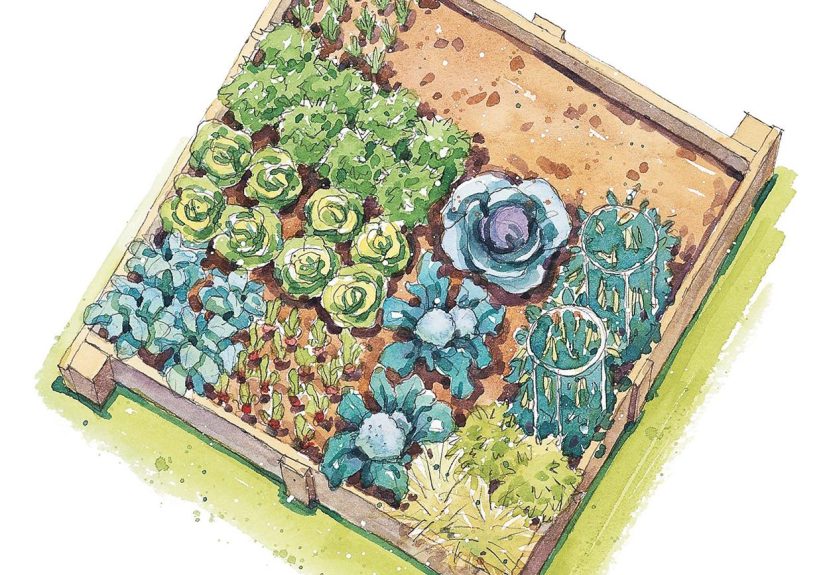
This layout is designed for one small 4-by-4-foot raised bed. It uses block planting rather than long rows, which makes better use of space and gives the bed a fuller, more intentional look.
Layout Overview
- North side: 1 narrow strip for peas on a short trellis
- Center left block: cut-and-come-again leaf lettuce
- Center right block: spinach
- Front left block: carrots interplanted with radishes
- Front right block: scallions and baby kale
Why This Plan Works
Peas go on the north side so they can climb without shading shorter crops. That one design choice makes a huge difference in a small raised bed. Lettuce and spinach sit in the middle where they’re easy to harvest often. Carrots take a bit longer, so radishes are sown among them as quick markers and fast rewards. By the time the carrots need more elbow room, the radishes are already on their way to your salad bowl. Scallions and baby kale round out the bed with compact growth and repeat harvest potential.
This is the kind of plan that makes a small raised bed feel organized, productive, and weirdly elegant for a patch of dirt producing vegetables at superhero speed.
How to Plant It Step by Step
1. Install the Trellis First
Set a short trellis or support along the north side of the bed before sowing anything. This keeps you from stomping around later trying to wedge a structure into an already planted bed. Peas do best when they can grab on early.
2. Direct Sow the Cool-Season Crops
As soon as the soil can be worked in spring, sow peas, spinach, lettuce, radishes, carrots, and scallions according to seed-packet depth and spacing. Cool-season vegetables are built for this window. The entire point is to let them grow while weather is still mild.
3. Use Thin, Even Sowing
It is wildly tempting to toss seeds around with the confidence of a game show host. Resist. Overcrowding leads to weak seedlings, poor airflow, and a thinning session that feels personal. Sow carefully and thin young plants as needed so each crop has room to mature.
4. Succession Plant the Fast Growers
To keep harvests coming, sow a small patch of leaf lettuce or radishes every week or two rather than planting the whole crop at once. This is one of the smartest ways to get more food from a small raised bed. Otherwise, you’ll go from “look at my beautiful harvest” to “why do I own 47 radishes?” in record time.
Care Tips That Keep the Bed Productive
Keep the Soil Evenly Moist
Leafy greens and root crops are happiest when moisture stays consistent. If the bed swings from very dry to very wet, lettuce can turn bitter and carrots may struggle to size up evenly. Morning watering is ideal, especially as the season warms.
Harvest Often
Spring vegetables reward regular picking. Snip outer leaves of lettuce and kale, pick spinach before leaves get oversized, and harvest peas often once they begin producing. Frequent harvesting encourages more tender growth and keeps the bed looking active rather than overgrown.
Watch the Weather, Not Just the Calendar
Spring gardening is all about timing, and timing varies by region. In some places, cool-season crops go in while there is still a real chance of frost. In others, spring is so brief that gardeners need to move quickly before early heat arrives. Always adjust sowing dates to your local last frost and current soil conditions.
Refresh with Compost if You Replant
If you pull a finished crop and plant something new in the same spot, add a little compost before replanting. Small raised beds are efficient, but that efficiency means the soil works hard. A quick refresh helps keep the next crop growing strong.
Common Mistakes in a Small Raised Bed
Planting Warm-Season Crops Too Early
Tomatoes, peppers, and cucumbers may be the headliners of summer, but they are not the stars of a spring-harvest bed. In cool soil, they mostly sit there looking confused. A spring bed performs best when it focuses on cool-season vegetables that actually enjoy the conditions.
Ignoring Mature Size
Seedlings are adorable liars. They look tiny and innocent, then suddenly your kale is elbowing the lettuce and the peas are throwing shade like professionals. Always plan based on mature size, not baby-plant optimism.
Skipping Vertical Space
In a small raised bed, vertical growing is free real estate. Peas on a trellis increase yield without taking over the ground plane. That is a big win in any compact garden plan.
Growing Too Much of One Thing
Unless your household consumes salads at the pace of a rabbit convention, avoid planting one giant block of lettuce. Diversity is your friend. A mixed spring bed gives you more useful harvests and helps spread out the work.
How to Stretch the Harvest Even Longer
If you want this bed to keep producing beyond the first flush of spring, succession planting is the secret sauce. Re-sow lettuce, radishes, or greens in small amounts while the weather stays cool. Once peas finish, you can remove them and transition that strip to a later crop if your climate allows. The bed can evolve from early spring to late spring and even into summer with smart handoffs.
You can also use a lightweight row cover during chilly spells to protect young seedlings and push growth a little faster. In many regions, that extra buffer makes a noticeable difference early in the season.
The Bottom Line
This spring-harvest vegetable garden plan is perfect for a small raised bed because it works with the season, not against it. Instead of trying to cram every vegetable under the sun into a tiny space, it focuses on cool-season crops that grow well together, mature quickly, and give you a steady stream of fresh food from a very manageable footprint.
A single small raised bed can absolutely produce a satisfying spring harvest when the layout is smart, the crop list is realistic, and the gardener remembers that “tiny seedling” and “future leafy empire” are often the same thing. Give your crops sun, loose soil, steady water, and a sensible amount of personal space, and that compact raised bed can earn its keep all season long.
What Growing This Kind of Bed Feels Like in Real Life
One of the best things about a small spring raised bed is how quickly it turns from a plain box of soil into something that feels hopeful. At first, it looks almost too simple to matter. A few seed packets. A little trellis. A watering can. Maybe a bag of compost leaning against the fence like it has important opinions. Then a week or two passes, and tiny green rows begin to show up. The peas start reaching. The radishes come up first like overachievers. Lettuce follows with that soft, bright green color that makes the whole bed look alive.
That early momentum is one reason small raised beds are so satisfying. You don’t need a huge yard or a complicated layout to feel successful. In fact, smaller spaces often make gardeners more observant. You notice when the spinach needs water. You catch a weed before it becomes a villain. You see which part of the bed stays damp longer after rain and which side gets warmer in the afternoon sun. A compact bed teaches you the garden in a very hands-on way.
There is also something deeply pleasant about harvesting from a bed that is scaled to real life. You are not hauling in wheelbarrows of produce while wondering what to do with eighteen pounds of turnips. You are snipping enough lettuce for dinner, pulling a few radishes for lunch, and grabbing a small handful of peas to snack on while standing in the yard pretending they might make it back to the kitchen. Sometimes they do. Sometimes they absolutely do not.
Gardeners often discover that spring beds are also confidence builders. Cool-season vegetables can be more forgiving than many summer crops, and success early in the year has a way of making the whole season feel possible. If the carrots come in a little crooked, who cares? They still taste great. If the lettuce grows faster than expected, that is a high-class problem. If the peas need retying to the trellis after a windy day, that is still easier than negotiating with a tomato plant in July.
There are small lessons, too. The first is that spacing matters more than it seems. The second is that succession planting is worth it. The third is that every gardener, no matter how careful, eventually plants more greens than intended because seedlings are charming and optimism is powerful. But even that becomes part of the experience. A spring raised bed is practical, yes, but it is also generous. It gives you food, routine, and a reason to step outside and check on something growing.
By the time the season shifts and the bed begins to change, you have learned a surprising amount from just a few square feet. You know how the soil feels when it is ready to water. You know which crops earned a repeat performance. You know that a small raised bed is not a compromise at all. It is a smart, productive, and genuinely enjoyable way to grow fresh vegetables in spring.