Table of Contents >> Show >> Hide
- What “Legally Blind” Actually Means
- What E-Glasses Are and How They Work
- Why These Devices Can Be So Helpful
- What the Research Says
- What E-Glasses Cannot Do
- The Cost and Access Problem Nobody Likes to Talk About
- Who Should Consider Electronic Glasses?
- Real-World Experiences With E-Glasses
- Conclusion
- SEO Metadata
There is a special kind of hope that arrives when technology stops being flashy and starts being useful. For people with severe vision loss, that hope may come in the form of electronic glasses, often called e-glasses: wearable low-vision devices that use cameras, displays, magnification, contrast enhancement, and real-time image processing to help users make better use of the vision they still have. No, they are not magic. No, they do not turn the world into 4K overnight. But for the right person, they can make faces sharper, text larger, edges clearer, and daily life a lot less exhausting.
That matters because legal blindness does not always mean complete darkness. In fact, many people who are legally blind still have some remaining vision. The challenge is that the vision they do have may be blurry, distorted, patchy, washed out, or too weak for reading, recognizing faces, navigating unfamiliar places, or spotting details across a room. This is where electronic glasses step in. They do not “cure” blindness, but they can function as a powerful tool in vision rehabilitation, helping some users read a menu, find a doorway, watch television, or look a loved one in the eye without guessing who it is.
What “Legally Blind” Actually Means
Let’s clear up one of the biggest misconceptions right away. “Legally blind” is a legal and functional definition, not a dramatic movie scene where everything goes black and the soundtrack suddenly becomes emotional piano. A person can be legally blind and still see light, colors, movement, or large shapes. Some people have severely reduced central vision. Others have tunnel vision so narrow that the world looks like it is being viewed through a straw.
In everyday life, legal blindness usually means a person’s sight is poor enough that standard eyeglasses, contact lenses, surgery, or routine medical treatment cannot restore normal function. That distinction matters because electronic glasses are not trying to replace ordinary prescription glasses. They are designed for low vision, which means the person still has some usable vision, but not enough to comfortably handle daily tasks without help.
What E-Glasses Are and How They Work
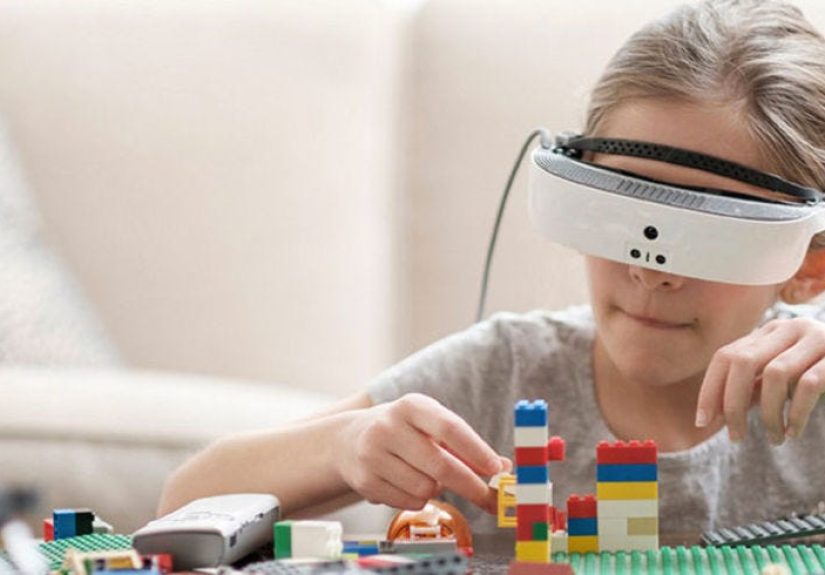
Electronic glasses for low vision are essentially wearable visual assistive devices. Most include a front-facing camera, one or two small screens near the eyes, and software that modifies the image in real time. The device captures the scene in front of the wearer, then enlarges it, sharpens edges, boosts contrast, changes brightness, or shifts colors to make important details easier to detect.
The basic technology inside the frame
Think of them as tiny computers for the eyes. Instead of simply bending light like traditional lenses, e-glasses process an image before the wearer sees it. That means the device can zoom in on text, increase contrast between objects, reduce glare, or freeze an image so the wearer can study it. Some systems allow users to switch between distance viewing and close-up reading. Others let them customize settings depending on whether they are shopping, reading mail, watching a classroom presentation, or trying to identify a face at the other end of the couch.
This is why the term electronic eyewear matters. These devices are not just passive lenses. They are active visual tools. That is also why people who try them often describe a “wow” moment followed by a learning curve. The first moment is emotional. The second is practical. The device may help immediately, but using it well usually takes training, patience, and repeated adjustment.
Who tends to benefit the most
The strongest fit is often for people with central vision loss, especially those who struggle to read or recognize faces because the center of their visual field is damaged. Conditions such as age-related macular degeneration, Stargardt disease, diabetic retinopathy, optic atrophy, and certain inherited retinal disorders are commonly associated with the kind of visual loss these devices try to address.
Some wearable systems are also being explored for people with peripheral field loss, including tunnel vision. In those cases, the goal is a little different. Instead of only magnifying what is directly ahead, the device may help compress or remap visual information so hazards at the edges are easier to notice. In plain English: fewer nasty surprises from the side.
Why These Devices Can Be So Helpful
The genius of e-glasses is not that they create perfect vision. It is that they can improve functional vision. Functional vision is the version that matters in real life: Can you read the microwave? Can you find the right bus? Can you recognize your friend before you wave at a mailbox and embarrass yourself in public?
For many users, the first gains are surprisingly ordinary. Reading a label. Seeing facial features. Spotting a curb. Telling whether the stove knob is pointing to “off.” These are not glamorous achievements, but they are deeply human ones. When a person regains the ability to perform small tasks independently, the effect can ripple outward into confidence, mood, safety, and social life.
Reading and near tasks
Reading is one of the biggest reasons people seek low-vision devices. E-glasses can enlarge print and improve contrast, which may make books, menus, medicine labels, bills, and smartphone screens more manageable. For someone with central vision loss, that can mean less guesswork and less fatigue. Reading stops being a wrestling match and becomes a task again.
Faces and social connection
Face recognition is another huge benefit. Severe vision loss can quietly damage relationships because it becomes harder to read expressions, identify people across a room, or tell whether someone is smiling, worried, or waiting for you to finish your sentence. A device that makes eyes, eyebrows, and mouths more visible may sound minor to a fully sighted person, but to someone with low vision it can feel like the social world suddenly got less lonely.
Distance viewing and mobility
Many users also report improvement with distance tasks: watching television, seeing a classroom board, reading signs, and locating objects across a room. Some wearable systems can help with mobility by making edges, obstacles, and contrast differences more noticeable. That does not mean a person should toss away other mobility tools and sprint into traffic like they are starring in an action movie. It means the device can sometimes add another layer of useful visual information.
What the Research Says
The evidence for wearable low-vision glasses is encouraging, though not unlimited. Studies of head-mounted low-vision devices, including well-known systems such as eSight, have found improvements in visual ability, reading-related tasks, face recognition, and some activities of daily living. Other research comparing different head-mounted displays has shown gains in distance visual acuity, reading distance, and contrast under certain conditions.
That said, researchers are careful with their wording, and for good reason. Results vary. Different devices work better for different eye conditions. Benefits seen in clinic testing do not always translate neatly into all-day real-world use. The best studies suggest that electronic glasses can help many users perform certain tasks better, but they do not transform every environment, every activity, or every patient into a success story.
Why training matters as much as technology
A wearable device is only one part of the equation. Vision rehabilitation specialists often teach users how to position text, adjust contrast, scan more effectively, and switch strategies depending on the task. In many cases, the real improvement comes from the combination of device plus training. That is not a letdown. That is how serious assistive technology works. The gadget opens the door; rehabilitation teaches you how to walk through it without smacking into the frame.
What E-Glasses Cannot Do
Now for the reality check, because every good technology story needs one. Electronic glasses are not a cure for blindness. They do not reverse retinal damage, regrow nerve tissue, or restore normal eyesight. If someone has no usable vision at all, these devices are unlikely to be the right solution. They are designed to enhance remaining vision, not manufacture sight out of thin air.
They also are not perfect in every setting. Bright sunlight, glare, fast motion, long wear time, battery limits, and device weight can all affect comfort and usefulness. Some users love the extra detail. Others feel visually overwhelmed. Some can read better but still struggle with walking. Others benefit in controlled tasks but use the device less than expected once real life starts throwing curveballs.
And yes, appearance matters. Research on head-mounted displays has found that some users hesitate to wear them in public because of aesthetics or social stigma. That may sound shallow until you remember that assistive devices live on human faces, not inside engineering diagrams. People want help, but they also want dignity, comfort, and a device that does not make them feel like a prototype from a sci-fi movie that ran out of budget halfway through filming.
The Cost and Access Problem Nobody Likes to Talk About
Here is the unsexy but important part: access. Advanced low-vision devices can be expensive, and coverage is inconsistent. That means the people who could benefit the most may also face the biggest barriers. Even when the technology is promising, the path from “this could help me” to “I can actually get one” is not always smooth.
Some manufacturers offer trial programs, and some patients may find assistance through rehabilitation programs, nonprofit support, state services, or local vision resources. But affordability remains one of the biggest obstacles in low-vision care. That is why the best conversation about e-glasses is not just about innovation. It is also about access, training, follow-up care, and whether the technology fits the user’s actual life rather than a glossy brochure version of it.
Who Should Consider Electronic Glasses?
People with low vision who still have some usable sight and struggle with tasks like reading, recognizing faces, viewing distant objects, or spotting details may be good candidates for electronic glasses. The strongest next step is not buying the first shiny device that appears in a search result. It is getting evaluated by a low-vision specialist or vision rehabilitation team.
A proper evaluation can help determine whether the main problem is central vision loss, reduced contrast sensitivity, field loss, glare sensitivity, or something else entirely. That matters because the “best” device depends on the person, the diagnosis, and the tasks they care about most. A retired teacher who wants to read, a college student trying to see classroom slides, and a grandparent wanting to watch a soccer game may all need different settings, different tools, or different expectations.
Real-World Experiences With E-Glasses
The most meaningful part of this story is not the camera resolution or the processing speed. It is the lived experience. People who use e-glasses often describe the first day as a strange mix of excitement, hope, and caution. They put the device on and suddenly a face has eyebrows again. A sign across the room is no longer just a pale rectangle. The television stops being a blur and becomes a scene. It can feel dramatic, but it can also feel deeply personal, because the improvement usually appears in the exact place where vision loss has been most frustrating.
One common experience is emotional fatigue finally easing a little. Before using a wearable low-vision aid, many people spend all day compensating. They lean forward. They squint. They ask others to read things. They pretend they recognized someone when they did not. They use memory to fill in gaps. E-glasses do not erase that history, but they can reduce the constant strain. A person may still need help in many situations, yet feel less worn down by the effort of trying to see.
Another common experience is surprise at how task-specific success can be. A user may love the device for reading mail but dislike it for walking outdoors. Someone else may find it excellent for television and terrible for grocery shopping. Another person may discover that faces are easier, but crowds are still visually chaotic. This does not mean the device failed. It means low vision is complicated, and so is real life. The best outcomes often happen when users stop expecting one device to do everything and start using it for the things it does especially well.
Social experiences can change, too. People with severe vision loss often talk about the awkwardness of missing visual cues. They may not recognize a neighbor, catch a smile, or notice when someone waves from across the room. With e-glasses, some users describe feeling more “present” in conversations because they can see expressions better. That does not just improve function. It improves confidence. It is easier to join the moment when you are not spending half your energy decoding it.
Still, the adjustment period is real. Some users need time to get comfortable with the weight of the device, the look of it, or the sensation of processing the world through a screen. There can be frustration. Menus may be fiddly. Battery routines become a new habit. Settings need tweaking. Public use can feel self-conscious. But many people who stick with the device say the payoff comes when the technology becomes less of an event and more of a tool. It turns from “the device I am testing” into “the thing I grab when I want to read the menu without asking for help.”
Perhaps that is the clearest way to understand the experience of e-glasses for legal blindness: they do not usually deliver a cinematic miracle. They deliver something quieter and, in many ways, more valuable. A little more clarity. A little more independence. A little less isolation. A little less guessing. And for the people who have spent years negotiating a blurry world, those “little” things can feel enormous.
Conclusion
Electronic glasses are one of the most promising tools in low-vision technology because they focus on what matters most: helping people use their remaining vision more effectively in daily life. For the right user, they can improve reading, face recognition, distance viewing, and confidence. But the smartest way to talk about them is with both optimism and honesty. These devices are assistive, not magical. They work best when matched carefully to a person’s eye condition, goals, and rehabilitation plan.
So yes, these e-glasses can help some legally blind people see better. The real headline, though, is not that technology is amazing. It is that practical, well-designed technology can help people reclaim parts of life that vision loss tried to steal. And that is a much better story than hype.