Table of Contents >> Show >> Hide
- What is a doctor’s digital twin (and what it is not)?
- Why “digital twin” instead of “chatbot”?
- How the doctor’s digital twin is built
- Where we’re already seeing the pieces in real clinics
- What patients gain (besides fewer awkward waiting-room magazines)
- What clinicians gain (besides the ability to blink)
- The hard parts: accuracy, bias, privacy, and liability
- Regulation and standards: the rules of the road
- What to ask if your clinic offers a “digital twin” experience
- Conclusion
- Bonus: Experiences from the digital-twin waiting room (500-ish words)
If you’ve ever sat in an exam room staring at a poster about “the miracle of the human pancreas” while your doctor wrestled an electronic health record like it owed them money, you already understand the problem. Modern medicine is brilliant at scienceand weirdly bad at time. Clinicians are buried under documentation, inbox messages, prior authorizations, and pop-up alerts that arrive with the warmth of a tax audit.
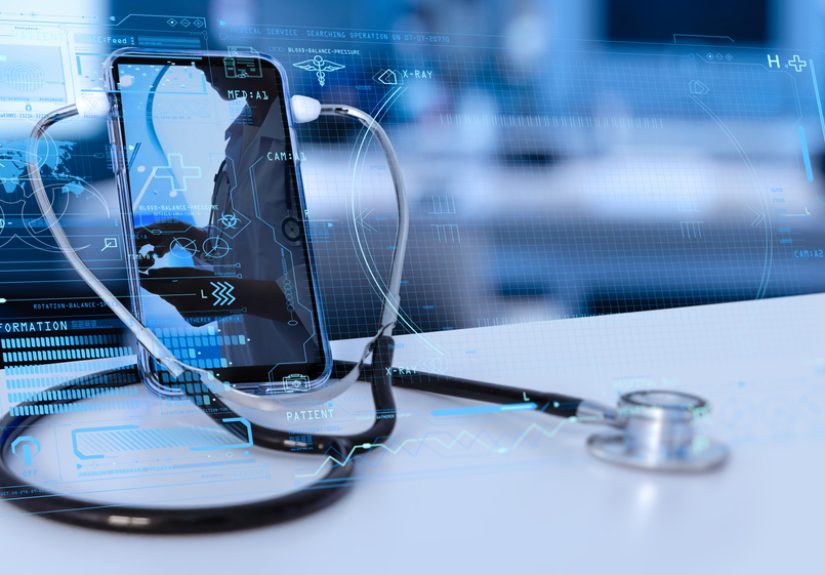
Enter the doctor’s digital twin: not a robot in a white coat, not a sci-fi clone, and definitely not an AI that replaces your physician. Think of it as a highly trained assistant that learns how a specific doctor thinks, talks, and practicesthen shows up early to do the prep work, and stays late to handle the paperwork. The goal is simple: give patients more attention and give clinicians their time (and sanity) back.
What is a doctor’s digital twin (and what it is not)?
A digital twin, in general, is a digital representation of something realupdated with real data so it can be analyzed, simulated, and used to make better decisions. In healthcare, digital twins have typically meant “patient twins” (models of a person’s physiology) or “system twins” (models of hospitals, workflows, even communities). A doctor’s digital twin flips the lens: it models the clinician’s practice patterns and communication style.
So what does it actually do?
- Pre-visit triage: gathers symptoms, history, meds, and context before the appointment.
- Drafts the note: turns the conversation into structured documentation for the clinician to review and sign.
- Summarizes the chart: pulls the “needle” facts out of the “haystack” recordrecent labs, imaging, meds, and prior decisions.
- Suggests guideline-aligned options: surfaces differential diagnoses, red flags, and next stepswith citations to internal protocols (in a well-built system).
- Explains the plan in plain English: generates after-visit instructions and follow-up reminders that sound human, not like a toaster manual.
What it’s not
It is not an autonomous “AI doctor.” It shouldn’t diagnose or prescribe on its own, and it shouldn’t be the final word on anything that could harm a patient. In a responsible setup, the digital twin is an augmented intelligence tool: it supports clinical judgment and keeps the clinician in control.
Why “digital twin” instead of “chatbot”?
Because the ambition is bigger than answering questions. A basic chatbot chats. A true digital twin aims to be context-aware, workflow-aware, and continuously updated. It knows the clinic’s preferred referral pathways, the doctor’s documentation style, which patient education handouts are used, what follow-up intervals are typical, and how to flag risk. It also learns boundaries: when to escalate, when to stop, when to say, “I don’t knowlet’s ask the human.”
In other words, it’s less “friendly internet answer machine” and more “invisible teammate with good memory.” (And, ideally, fewer hallucinations.)
How the doctor’s digital twin is built
The safest versions are not trained on random internet text and unleashed into your health system like a raccoon in a pantry. They’re built with a deliberate stack of componentseach designed to keep the model grounded, auditable, and clinically useful.
1) The knowledge layer: medicine with receipts
A digital twin needs reliable sources: clinical guidelines, local order sets, institutional policies, and validated reference content. The best systems use retrieval-based approaches so the model can point to “here’s the protocol” rather than improvising.
2) The patient context layer: the chart, cleaned up
Modern care produces a mountain of data: problem lists, meds, allergies, labs, imaging reports, specialist notes, device data, and messages. Interoperability matters because a digital twin can’t be helpful if it’s missing half the plot. The more complete and standardized the data, the better the twin can summarize and anticipate what the clinician needs.
3) The “doctor style” layer: preferences, patterns, and tone
Two clinicians can follow the same guideline and still practice differently: how they document, which questions they ask first, how they explain uncertainty, how they balance risks and benefits. A doctor’s digital twin learns these patterns through approved training dataoften de-identified, tightly governed, and limited to what’s necessary.
4) The safety layer: guardrails that actually guard
- Role limits: triage and drafting, not autonomous medical decision-making.
- Escalation triggers: chest pain, stroke symptoms, suicidal ideation, medication allergiesanything high risk should route to a human immediately.
- Monitoring: continuous evaluation for errors, bias, drift, and unsafe outputs.
- Audit trails: what the model saw, what it suggested, what the clinician accepted or edited.
Where we’re already seeing the pieces in real clinics
If “digital twin” sounds futuristic, it’s because the full version is still emerging. But the building blocks are already hereand quietly spreading across U.S. health systems.
Ambient documentation: the note that writes itself (almost)
Ambient AI scribes listen to the clinician-patient conversation and generate draft notes. Early deployments emphasize privacy, secure processing, and clinician review. This is one of the most practical on-ramps to a doctor’s digital twin because it tackles the biggest pain point: administrative burden.
Clinical decision support: the OG “digital helper”
Clinical decision support (CDS) tools have long delivered alerts and guidance at the point of care. The modern twist is making CDS more context-aware and less “pop-up confetti cannon.” A doctor’s digital twin can act as a smarter CDS wrapper: it can explain why an alert matters, tailor it to the patient, and present it in the clinician’s workflow instead of derailing it.
Digital twins of patients and organs: simulations that inform care
Digital twins are already being used to model patient anatomy and physiologyespecially in high-impact areas like cardiology and surgery. These efforts prove a key point: if we can create faithful digital representations of complex biological systems, we can also create responsible digital representations of clinical workflows and decision logic.
What patients gain (besides fewer awkward waiting-room magazines)
Faster access to “first contact” care
A digital twin can handle the front half of the visit: gathering symptoms, history, medications, and goals. That means your appointment can start with the hard partdecisionsrather than 12 minutes of “remind me when this started.”
Clearer explanations, better follow-through
Many patients leave visits with a plan that makes sense… for about 45 minutes. The doctor’s digital twin can produce customized after-visit summaries, reminders, and education at the patient’s reading level, in their preferred language, with the clinician’s tone (serious, gentle, or “dad joke adjacent”).
More time with the actual doctor
The real win isn’t automation for its own sake. It’s shifting the clinician’s time from typing and clicking back to listening, examining, and thinkingthe parts of care that patients can feel.
What clinicians gain (besides the ability to blink)
Reduced documentation load
Drafting notes, summarizing charts, and organizing visit context are exactly the tasks that bog down clinicians. A well-implemented twin doesn’t eliminate clinician responsibility; it eliminates the grunt work that steals attention from patients.
A calmer inbox
Many clinical inbox messages are repetitive: “Is this normal?” “When do I follow up?” “Can I take this with that?” A supervised digital twin can draft replies that the clinician approvesfaster, more consistently, and with fewer late-night typing sessions.
More consistent care delivery
The digital twin can prompt best practicesvaccines due, screening intervals, medication monitoringwithout nagging. Consistency is especially valuable in busy clinics where good intentions compete with the clock.
The hard parts: accuracy, bias, privacy, and liability
Here’s the truth: healthcare AI can help, but it can also harm. The doctor’s digital twin sits close to clinical decisions, so the bar for safety is high. Very high. “A little wrong” is not a fun vibe when someone’s kidney function is on the line.
Accuracy and hallucinations
Generative models can produce confident nonsense. In medicine, that’s unacceptable. The solution is not “hope the model behaves.” It’s grounding, constraints, and a workflow that forces human review, especially for diagnoses, medication changes, and anything urgent.
Bias and health equity
Models trained on biased or incomplete data can reproduce disparitiessometimes invisibly. A doctor’s digital twin must be evaluated across populations, monitored over time, and designed with equity in mind (including what data it uses and what assumptions it makes).
Privacy and data governance
Training and operating a digital twin touches protected health information. Health systems need clear policies on consent, de-identification where appropriate, vendor access, data retention, and the “who can see what” rules that keep patient trust intact.
Liability and accountability
If the digital twin drafts something wrong, who owns it? In responsible practice, the clinician remains accountable for the final clinical output which is why transparency, audit trails, and clear organizational governance are not optional. Think of it like autopilot: helpful, but you still keep your hands near the wheel.
Regulation and standards: the rules of the road
A doctor’s digital twin may fall under different oversight depending on what it does. Some functions look like administrative support; others look like clinical decision support or software as a medical device. U.S. regulators and standards bodies are actively shaping guidance on AI lifecycle management, transparency, and safety.
Practical takeaway for health systems
- Start with low-risk, high-value use cases: documentation drafts, chart summaries, patient education.
- Use a risk framework: define harms, mitigations, monitoring, and accountability.
- Separate “draft” from “decision”: the twin can suggest, but clinicians decide.
- Measure outcomes: time saved, error rates, clinician satisfaction, patient understanding, equity impact.
What to ask if your clinic offers a “digital twin” experience
- Is this tool drafting notes, giving medical advice, or both? The answer changes the risk.
- Does my clinician review and sign off? You want “yes” for anything clinical.
- How is my data protected? Ask about access, retention, and de-identification practices when applicable.
- Can I opt out? A trustworthy program gives patients choices.
- How do you monitor errors and bias? “We don’t” is not an acceptable answer.
Conclusion
“The doctor’s digital twin will see you now” sounds like a punchlineuntil you realize it could be a genuine upgrade to how care is delivered. Not because machines are better at medicine than clinicians, but because machines are better at the boring parts: organizing information, drafting text, and keeping track of a thousand tiny details.
Done right, the doctor’s digital twin makes healthcare feel more human, not less. The patient gets quicker clarity. The clinician gets more bandwidth to think and connect. The system gets fewer bottlenecks. Done wrong, it’s just another shiny tool that adds risk and confusion. The future isn’t “AI replaces doctors.” It’s “doctors get a digital teammateand patients get their doctor back.”
Bonus: Experiences from the digital-twin waiting room (500-ish words)
Experience #1: The pre-visit that finally respects your time.
You get a text the night before your appointment: “Want to check in early?” You expect the usual portal questionnaire with the personality of drywall. Instead, it asks smart, human questions: when the symptom started, what makes it better, what makes it worse, what you’re worried it might be. It even catches the small stufflike the new supplement you forgot to mention last timeand asks, “Any chance this overlaps with your current medications?” When you arrive, your doctor doesn’t start with, “So… what brings you in?” They start with, “I read your summarylet’s focus on the two biggest concerns.” You feel seen before anyone even walks into the room. That’s not magic. That’s good triage plus good design.
Experience #2: The visit where the computer stops being the third wheel.
In the exam room, your clinician is actually looking at you. Not half-looking at you while typing like they’re trying to win a competitive keyboard sport. After the visit, your after-visit summary arrives the same day. It’s clear. It’s in plain language. It includes the plan, the “why,” the warning signs, and the follow-up steps. It even sounds like your cliniciancalm, direct, and oddly reassuring. Later, you realize something else: the note is more complete than usual. Not because your clinician worked longer, but because the draft was done in the background and the clinician reviewed it with a professional eye. You didn’t get less doctor. You got more doctor.
Experience #3: The moment you learn the twin has boundaries.
A week later, you message the clinic: “I’m having chest tightness. Is this a side effect?” The digital twin doesn’t try to be brave. It doesn’t say, “Probably fine!” (which is how legends are bornbad ones). It escalates immediately: “This could be urgent. If you’re having chest pain, trouble breathing, dizziness, or symptoms are worsening, seek emergency care now. I’m alerting the care team.” That moment changes your trust calculation. You don’t want a system that always answers. You want a system that knows when not to answer.
Experience #4: The clinician’s versionless burnout, more brain.
Clinicians talk about “pajama time,” the after-hours charting that turns evenings into a second shift. When an AI scribe or digital twin drafts the first version of documentation, the clinician still edits, but the starting point isn’t a blank page. The result is subtle but profound: more energy during clinic, fewer late notes, and more mental space for the cases that actually require deep thinking. The best clinicians don’t want an AI that pretends to be them. They want an assistant that frees them to be themselves: curious, careful, empathetic, and present.
Experience #5: The awkward, important question“Is my data safe?”
You ask about privacy, and the clinic has an answer that isn’t hand-waving. They tell you what the tool does (drafting notes and summaries), what it doesn’t do (autonomous diagnosing), who reviews the output (your clinician), and how data is handled. They give you an opt-out. They explain monitoring. They treat your trust like something earned. That’s what the doctor’s digital twin era will require: not just smarter technology, but grown-up governanceand respect for the fact that health data is not “content.” It’s your life.