Table of Contents >> Show >> Hide
- Why Were There So Many Emus (and Why Were They So Angry at Wheat)?
- Meet the Opponent: The Emu, Built for Chaos
- The Decision: “Send In the Army”
- The Campaign: A Month of Chasing Birds with Lewis Guns
- So… Did the Australian Army Really Lose?
- Why the Operation Struggled: A Quick Tactical Autopsy
- What Happened After: Bounties, Barriers, and Less Dramatic Solutions
- Myths vs. Reality: Clearing the Feathers Out of the Story
- What the Great Emu War Still Teaches Us Today
- Experiences: How to Enjoy the Emu War Story (Without Starting Your Own)
- Conclusion
Imagine waking up one morning, stepping outside, and discovering your wheat field has been converted into an all-you-can-eat buffet
by a flock of six-foot-tall, sprinting feathered chaos machines. You do what any reasonable person would do: you complain to the government.
The government does what governments sometimes do when the vibes are bad: it sends in the military.
That’s the origin story of the Great Emu Wara very real 1932 nuisance-animal campaign in Western Australia that became a
global punchline because it played out like a slapstick nature documentary. The “enemy” didn’t shoot back. It didn’t need to.
It simply ran, scattered, and refused to politely stand still for machine-gun fire. In the end, the operation was widely viewed as a failure,
and the emus walked away with the only victory that matters in history: excellent PR.
Why Were There So Many Emus (and Why Were They So Angry at Wheat)?
The Emu War didn’t begin with a dramatic declaration or a bird-led coup. It began with economics, weather, and a whole lot of stressed-out farmers.
After World War I, Australia encouraged settlement and farming in parts of Western Australia’s Wheatbelt. By the early 1930s, the Great Depression
was squeezing agricultural communities, and conditions on marginal land were already tough. Then nature added a cherry on top: drought and seasonal
movement pushed large numbers of emus into farming areas where water and crops were… conveniently laid out like a catered event.
Emus weren’t plotting anything. They were doing what wild animals do: following food and water. But the results looked personal.
The birds trampled crops, ate what they could, andperhaps most infuriatinglydamaged fences, which helped other pests (like rabbits)
get into fields and cause even more destruction. If you’ve ever had one problem turn into three because a single “tiny fix” broke something else,
you already understand the emotional arc of the Emu War.
Meet the Opponent: The Emu, Built for Chaos
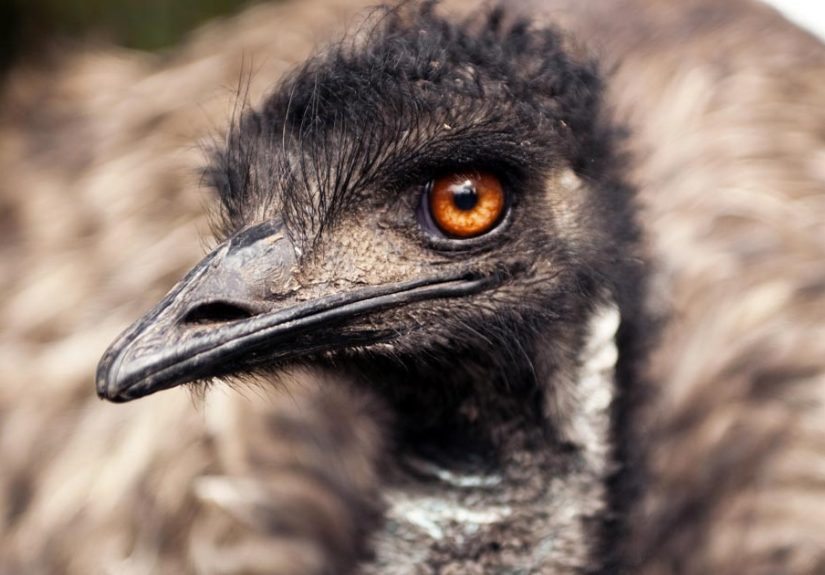
To understand why this went sideways, you have to respect the emu’s design spec. Emus are large, fast, and well adapted to open country.
They can cover ground quickly and don’t move like a neat, slow herd that politely clusters into a single target. When threatened,
they split into smaller groups and scatterexactly the behavior that makes “just point the machine gun at them” a hilariously optimistic plan.
Why machine guns were a weird match for this job
Machine guns are excellent at delivering sustained fire at targets that are (1) in range, (2) visible, and (3) not instantly turning into multiple
directions at once. Emus, on the other hand, are excellent at being (1) briefly visible, then (2) gone, while (3) your gun jams or your vehicle
bounces like a shopping cart with one bad wheel.
The Decision: “Send In the Army”
Desperate farmers petitioned the federal government for help. Some were veterans themselves and had a strong opinion about the most effective tool
for “problem solving”: the machine gun. The government approved a military-led operation under specific conditionsmilitary personnel would handle
the weapons, and logistics like costs and support would be handled locally.
The plan, at its simplest, was to reduce local emu numbers enough to protect crops. It wasn’t a declaration of war in the legal sense,
but it sure made for a better headline if you called it that. And headlines, as you’ll see, played a starring role in how this story
survived for nearly a century.
The Campaign: A Month of Chasing Birds with Lewis Guns
The operation unfolded in short, chaotic bursts between early November and early December 1932. It featured a tiny military detachment,
two Lewis machine guns, lots of ammunition, and a repeating pattern of events that goes like this:
see emus → attempt ambush → emus scatter → frustration increases.
Round 1: The “Just Herd Them” Strategy
Early encounters involved trying to guide emus into a concentrated areabasically, turning an emu flock into a cooperative line for target practice.
Unfortunately, emus did not read the script. When approached, they broke into small groups and ran. This made accurate fire difficult and turned
the operation into an exhausting cycle of brief opportunities followed by long stretches of dust, distance, and disappointment.
Round 2: The Big Ambush That Turned into a Jam
One of the most famous moments in Emu War lore involves a large number of emus moving toward a prepared position near a water source.
The idea was simple: wait until the flock is close, then open fire. What actually happened is the reason this story keeps getting retold:
the gun jammed after a small number of birds were down, and the rest scattered like living confetti.
If this feels like a cartoon scenewhere the villain sets up an elaborate trap and then slips on a banana peelthat’s because reality sometimes
writes comedy better than we do.
Round 3: “Put the Gun on a Truck” (AKA: Off-Roading Meets Physics)
Another tactic was mounting a machine gun on a vehicle to chase emus down and fire while moving. This is where the Australian outback gently reminds
you that a bouncing platform is not a stable firing position. The terrain made accurate firing difficult, and the emus, inconveniently,
remained faster than a truck trying not to shake itself apart.
So… Did the Australian Army Really Lose?
Here’s the honest answer: the detachment did kill emus. But the mission wasn’t “kill some emus.” The mission was to meaningfully reduce the damage
to crops by reducing local emu pressure. On that measure, the operation made only a small dent relative to the scale of the problem.
The birds kept coming. The press kept watching. And the cost-benefit story got uglier by the week.
The outcome became widely summarized as “the emus won,” partly because it’s funny, and partly because it captures the practical result:
machine guns did not solve the farmers’ emu problem in any lasting way.
Why the Operation Struggled: A Quick Tactical Autopsy
The Emu War is funny, but it’s also a real case study in wildlife management and mismatched tools. Several factors made success hard:
- Speed and dispersion: emus scattered into smaller groups, reducing the effectiveness of sustained fire.
- Terrain: open country, long sightlines, and uneven ground made ambush and vehicle-based tactics unreliable.
- Weapon limitations: machine guns can jam, overheat, or become ineffective when targets are moving unpredictably.
- Scale mismatch: even an efficient operation would struggle against a large, mobile population over a wide area.
- Public optics: media coverage turned a practical problem into a national spectacle, adding pressure to justify results.
In other words, the army didn’t lose because soldiers forgot how to use machine guns. They “lost” because the entire concept assumed the emus
would behave like targets instead of wildlife. Nature declined to cooperate.
What Happened After: Bounties, Barriers, and Less Dramatic Solutions
Once it became clear that the military solution wasn’t the magic fix, other approaches continued or expandedespecially bounties and improved fencing.
A bounty system had existed and later proved more scalable than sending a tiny detachment with machine guns.
The longer-term lesson was painfully normal: wildlife conflicts tend to require persistent, layered strategiesbarrier fencing,
targeted culls by local hunters, habitat management, and policy that doesn’t wait until the situation is “call the army” level.
It’s less cinematic, sure, but it’s also more likely to work.
Myths vs. Reality: Clearing the Feathers Out of the Story
Myth: The army fired for weeks and killed almost nothing
Reality is more nuanced: emus were killed, but not at a scale that matched the flock numbers or prevented ongoing crop damage.
The birds’ mobility and dispersion made large-scale impact difficult.
Myth: Australia literally declared war on birds
It wasn’t a formal war. It was an official nuisance-animal control effort that became known as a “war” because that framing is irresistible.
“The Great Administrative Attempt at Regional Emu Population Reduction” just doesn’t slap.
Myth: This proves the military is useless
Not at all. It proves that specialized tools don’t automatically solve problems outside their design. You can have the world’s best hammer and still
fail at baking a cake. (Please do not attempt cake-baking with a Lewis gun.)
What the Great Emu War Still Teaches Us Today
For a story that sounds like a meme, the Emu War highlights serious themes:
how governments respond to rural crises, how media shapes public perception of policy choices, and how human-wildlife conflict can escalate when
environmental pressure pushes animals into human spaces.
It also teaches humility. Not the “we are small in the universe” kind. The more practical kind:
“Maybe we should not underestimate a fast, durable bird that thrives in harsh landscapes and refuses to form a tidy line for our convenience.”
Experiences: How to Enjoy the Emu War Story (Without Starting Your Own)
The best part of the Great Emu Warbesides the pure comedic valueis how it can turn a dry slice of history into something you can actually
experience through travel, storytelling, and hands-on learning. If you ever find yourself fascinated by oddball history (the kind that makes
you say, “Wait, that really happened?”), here are grounded, practical ways to lean into the legendno machine guns required.
1) Road-trip the Wheatbelt vibe (even if you don’t go full historian)
The Emu War is tied to the farming regions of Western Australiabig skies, open country, long distances, and a landscape that makes you understand
why chasing anything on foot is a bad plan. If you travel through rural grain-growing areas anywhere (Australia, the U.S. Great Plains, Canada),
you’ll recognize the same emotional math: when a crop is your livelihood, “pests” aren’t a quirky inconvenience. They’re a threat to the year.
Seeing that scalefields that run to the horizonmakes the story feel less like a punchline and more like a desperate, messy decision made under pressure.
2) Go bird-watching with a “history lens”
Bird-watching usually sounds peaceful until you start noticing the tactical realities: how flocks use spacing, how quickly they switch direction,
how they treat a human presence as a moving hazard zone. Even if you’re watching geese at a city park, you can learn the core dynamic that haunted
the 1932 campaign: birds don’t stay where you want them. Try this as a mini “field study” momentwatch how a group reacts when one bird gets spooked.
That ripple effect is basically the Emu War in miniature: one disturbance, and suddenly your “target” becomes twenty moving vectors.
3) Read the story like a case study, not just a meme
If you enjoy nonfiction, the Emu War is a great gateway into bigger topics: wildlife management, rural policy, the Great Depression’s impact on farmers,
and how governments communicate “help” when resources are limited. A fun approach is to read two versions of the story back-to-back:
one that leans comedic and one that leans historical. The contrast is the point. Comedy highlights the absurd tactics; history highlights the human stakes.
You end up with a richer takeaway: it can be funny and meaningful at the same time.
4) Try “kitchen-table reenactment” (the safe kind)
Want a surprisingly effective way to understand the tactical problem? Do a tiny, harmless simulation. Grab a handful of coins or paper clips and scatter
them across a table to represent a flock. Now try “removing” them with a rule like “you can only pick up items that are touching each other.” You’ll
quickly discover the core issue: if the “flock” spreads out, efficient removal becomes hard. Add another ruleevery time you pick one up,
you must move three others to new positionsand congratulations, you’ve recreated the frustration of trying to deal with a dispersed, mobile target.
It’s silly, but it teaches the concept without romanticizing harm.
5) Turn it into a storytelling night
The Emu War is perfect for a “weird history” dinner conversation because it has a clean arc: desperate farmers, government action, chaotic execution,
a famous “loss,” and a practical aftermath. If you like writing, it’s also an amazing prompt: “What happens when a modern system meets a natural system
that doesn’t care?” You can riff on it as comedy, but you can also use it as a lesson in problem framinghow choosing the wrong tool can make a solvable
issue look impossible.
The nicest “experience” takeaway is this: the Emu War story lets you enjoy history in a way that’s approachable and memorable. And if it nudges you
to respect wildlife a little moreespecially the kind that can outrun your plansthen the emus are still winning, one chuckle at a time.
Conclusion
The Great Emu War endures because it’s hilarious on the surfacesoldiers versus birds!but also because it reveals something timeless:
humans love simple solutions, and nature loves making those solutions look silly. In 1932, the Australian Army brought serious weapons to a wildlife
problem and discovered that speed, terrain, and animal behavior don’t care about your equipment.
If you remember nothing else, remember this: the emus didn’t “win” by force. They won by being exactly what they arefast, scattered, stubborn,
and perfectly adapted to their environment. Sometimes the best defense is not attacking at all… but investing in fences, planning, and a little humility.