Table of Contents >> Show >> Hide
- What counts as a “worm,” anyway?
- 1) Guinea Worm: the year-long plot twist
- 2) Pork Tapeworm: the “wrong host” problem
- 3) Anisakis (“herring worm”): sushi’s unwanted plus-one
- 4) Bobbit Worm: the sand’s ambush predator
- 5) Horsehair Worms (Nematomorpha): puppet masters of the insect world
- 6) Hammerhead Flatworms (Bipalium): the backyard worm that doesn’t play nice
- So… are these worms actually dangerous to you?
- How to avoid the real-world nightmare
- Conclusion: nature’s “nope noodles,” responsibly admired
- of Worm Encounters: six scenes you can almost feel
- SEO Tags
Worms are proof that nature doesn’t need claws, fangs, or a dramatic theme song to be terrifying.
Sometimes all it takes is a body shaped like a shoelace, a life cycle that reads like a plot twist,
and the audacity to exist in places you’d rather not think about.
Before we begin: “nightmarish” here means fascinatingly creepynot “the world is ending.”
Most worms are harmless, many are helpful, and even the truly gross ones are usually avoidable with
basic food and water safety. Still, if you’re here for a safe, science-backed scare… welcome to the worm carnival.
What counts as a “worm,” anyway?
“Worm” isn’t one neat familyit’s more like a body plan that multiple groups arrived at independently.
The lineup below includes roundworms (nematodes), tapeworms (cestodes), flatworms (planarians and relatives),
and segmented bristle worms (annelids). They’re not all close cousins, but they do share an iconic talent:
making humans say, “Absolutely not.”
1) Guinea Worm: the year-long plot twist
The Guinea worm (Dracunculus medinensis) is a parasite that became infamous for two reasons:
(1) its long, sneaky timeline, and (2) the way it announces itself after you’ve completely forgotten you were ever at risk.
People typically get infected by drinking unsafe water that contains tiny crustaceans (copepods) carrying Guinea worm larvae.
After that, the parasite can develop inside the body for about a year with no obvious symptoms.
Why it’s nightmarish
A year of quiet followed by a “surprise, I live here now” finale is horror-movie pacing.
The illness can be intensely painful and incapacitating, which is why Guinea worm disease has historically hit
hardest in places where people can’t afford to lose weeks of mobility during planting, harvesting, or school seasons.
The strangely hopeful part
Guinea worm is also a public health success story in progress. There’s no vaccine and no specific medicine to cure it,
so control relies on community-based prevention: safer drinking water, filtering water, education, and stopping infected
people (and animals) from contaminating water sources. The world is closer than ever to eliminating human casesone of the
most dramatic “we beat the villain with teamwork” arcs in modern disease control.
2) Pork Tapeworm: the “wrong host” problem
The pork tapeworm (Taenia solium) is the kind of parasite that makes you realize the food chain has paperwork,
and it does not care if you filled it out correctly. Humans can carry adult tapeworms in the intestines (taeniasis)
after eating undercooked pork that contains larval cysts. That alone is unpleasant.
The truly nightmarish scenario is cysticercosis, which happens when a person swallows eggs
of T. soliumoften through fecal contamination (think poor sanitation or inadequate hand hygiene).
Those eggs can hatch and travel into tissues, forming cysts. When cysts are in the brain or central nervous system,
it’s called neurocysticercosis, which can cause serious neurological symptoms.
Why it’s nightmarish
This is a parasite with multiple “modes,” and the worst outcomes aren’t just about the pork.
It’s also about sanitation and food handlingmeaning the prevention story is as much public health infrastructure
as it is cooking temperature.
How people lower risk
Fully cooking pork, practicing careful handwashing, and improving sanitation are the big levers.
In other words: the pork tapeworm isn’t invincibleit’s just annoyingly good at exploiting gaps in systems.
3) Anisakis (“herring worm”): sushi’s unwanted plus-one
Anisakis roundworms (and close relatives) are parasites that naturally cycle through marine ecosystems.
Their larvae can be found in some marine fish and squid. Humans can become accidental hosts by eating raw or undercooked
seafood containing live larvae. This is the reason “parasite control” is a real thing in the sushi worldand why reputable
places take freezing standards seriously.
Why it’s nightmarish
Unlike some parasites that take months to cause trouble, anisakiasis can cause symptoms relatively soon after exposure.
It’s also a “surprise guest” problem: the fish can look totally normal, because these larvae are not auditioning for your attention.
What smart seafood safety looks like
Cooking seafood thoroughly is the simplest solution. For dishes that are served raw, commercial freezing protocols are used to kill parasites.
At home, the “I froze it in my freezer once” strategy is not always reliable, because typical home freezers may not hit the temperatures
needed for consistent parasite control.
4) Bobbit Worm: the sand’s ambush predator
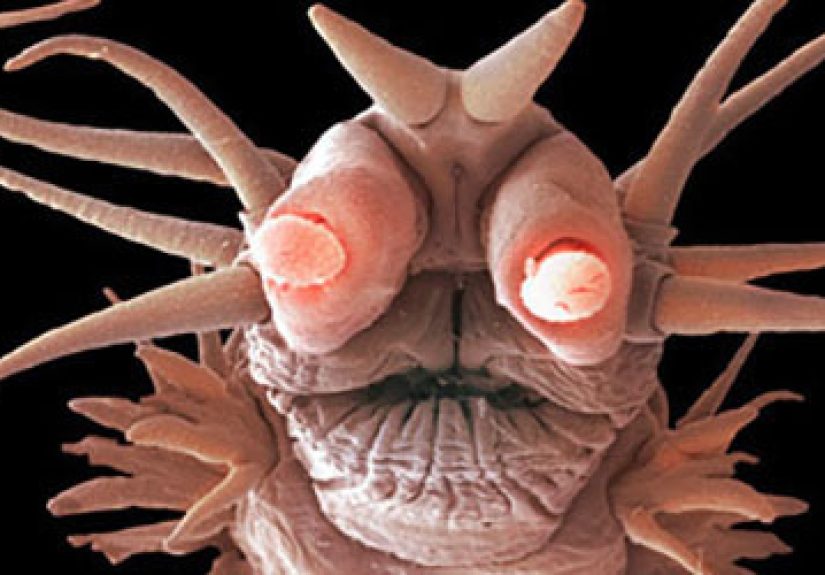
If the ocean had a “trapdoor monster” category, the bobbit worm (Eunice aphroditois) would be on the cover.
This is a marine bristle worm (a polychaete) that can hide in sand with only its antennae showing, waiting for prey to wander close.
When something edible swims by, it strikes quickly with impressive jaws and drags prey into its burrow.
Why it’s nightmarish
It’s not the size alone (though reports can be… attention-grabbing). It’s the strategy: stealth, patience, and an ambush
that feels like a jump scare. Bobbit worms are also infamous among aquarium hobbyists because a hidden worm can cause mysterious
“where did my fish go?” moments.
Nature’s reminder
The bobbit worm isn’t “evil.” It’s an efficient predator doing predator things. But it does have a rare talent for making humans
respect the ocean floor from a safe, non-burrowable distance.
5) Horsehair Worms (Nematomorpha): puppet masters of the insect world
Horsehair wormsalso called Gordian wormslook like animated pieces of string. They’re parasites of insects such as crickets,
grasshoppers, and mantises. Their claim to nightmare fame is behavioral manipulation: infected insects are often driven to seek water,
which helps the mature worm emerge and continue its life cycle in aquatic environments.
Why it’s nightmarish
Any creature that can influence another animal’s behavior gets instant “villain soundtrack” status.
Horsehair worms don’t typically infect humans, but they do show up in places that trigger instant paniclike pet water bowls,
puddles, or (occasionally) toiletsbecause water is where they want to be once they’re mature.
The reality check
For people, the horror is mostly psychological: they look alarming, but they’re generally not a human health threat.
For insects, though, it’s a full-on mind-bending thriller.
6) Hammerhead Flatworms (Bipalium): the backyard worm that doesn’t play nice
Hammerhead flatworms (often Bipalium species) are terrestrial planarians with a distinctive head shape that resembles a tiny hammerhead shark.
They’re predators that hunt other soil organismsespecially earthwormsusing mucus and a retractable pharynx (yes, nature is committed to weird).
Several hammerhead flatworms are invasive in parts of the United States, likely spread through potted plants and soil movement.
Why it’s nightmarish
First: they can reproduce by fragmentation, meaning if one breaks apart, pieces may regenerateso “cut it in half” is the opposite of a solution.
Second: some species produce tetrodotoxin in their mucus, a potent neurotoxin best known from pufferfish.
That doesn’t mean your yard is a toxin wasteland, but it does mean “don’t handle with bare hands” is solid advice.
What to do if you spot one
Treat it like you would any unknown wild critter: don’t touch barehanded, keep pets from mouthing it, and follow guidance from local extension
services or invasive species resources in your area.
So… are these worms actually dangerous to you?
Some are, some aren’t, and context matters. The bobbit worm is mostly “nightmare fuel” for fish and divers, not a typical human hazard.
Horsehair worms are unsettling but generally not a human parasite. Hammerhead flatworms are more of an ecosystem concern (earthworm predators)
with a side of “don’t handle casually.”
The biggest human health risks in this list are the parasites linked to food and water: Guinea worm (unsafe drinking water),
pork tapeworm (undercooked pork plus sanitation issues), and anisakiasis (raw or undercooked seafood). The good news is that these risks are
largely preventable through safe water, good hygiene, and proper food handling.
How to avoid the real-world nightmare
- Drink safer water: When traveling or in areas with limited treated water, use reliable filtration or safe water sources.
- Cook pork thoroughly: Proper cooking reduces risk from parasites associated with undercooked meat.
- Handle food with clean hands: Handwashing matters, especially when preparing meals for others.
- Be smart with raw seafood: Eat raw fish from reputable sources that follow parasite-control freezing practices.
- Garden with common sense: Wear gloves when handling unknown soil critters; keep kids and pets from sampling mystery worms.
Conclusion: nature’s “nope noodles,” responsibly admired
Worms are the ultimate reminder that evolution is wildly creative. Some specialize in stealth, some in survival, and some in
making your brain yell “NO THANK YOU” while your curiosity whispers “tell me more.”
If you take anything away, let it be this: the planet’s most unsettling worms are usually not a reason to panicbut they are a reason
to respect food safety, sanitation, and the fact that the soil and sea are full of stories happening without our permission.
of Worm Encounters: six scenes you can almost feel
Scene 1: The “I’m fine, it’s just water” moment. You’re traveling somewhere hot, dusty, and beautiful. A local offers water from a pond-side
container. It looks clear. It tastes fine. Nothing happens today, or tomorrow, or next week. A year later, you’re back home and telling friends about the trip,
and your brain has filed the whole thing under “fond memory.” That’s why Guinea worm prevention campaigns focus so hard on filtration and community education:
the danger isn’t obvious, and the timeline doesn’t match our intuition.
Scene 2: The undercooked shortcut. Someone jokes that they like their bacon “soft.” Another person prefers pork “still a little pink.”
Most of the time, the result is just a culinary debate and a slightly awkward dinner conversation. But parasites like Taenia solium thrive on
“most of the time.” The unsettling lesson isn’t meant to be fearmongeringit’s that food safety is a numbers game, and the safest habit is the boring one:
cook it properly and wash hands like you mean it.
Scene 3: The sushi confidence test. You order something raw and gorgeous and feel very sophisticated… until you remember the ocean is also
a habitat. That’s when reputable sushi becomes a quiet triumph of modern safety practices: sourcing, handling, and parasite-control freezing.
The “nightmare” here is mostly imaginaryunless you gamble with questionable raw seafood at home and assume your freezer has superhero powers.
Scene 4: The aquarium mystery. Fish vanish. Corals look stressed. You blame water chemistry, then blame the fish, then blame yourself.
Finally, during a late-night flashlight inspection, you spot antennae poking from the sand like the world’s creepiest periscope.
Bobbit worm stories live rent-free in aquarium forums for a reason: they’re a masterclass in stealth.
Scene 5: The puddle plot twist. After a rainstorm, you see what looks like a wet strand of hair wriggling in a shallow puddle.
Your first instinct is to assume your neighborhood has become a cursed object storage unit. But it might be a horsehair worman animal so string-like it
launched myths, and so strange it makes you feel like you’ve caught nature doing behind-the-scenes work.
Scene 6: The garden glove reminder. You flip a potted plant, and a flat, shiny worm slides away with a head shaped like a tiny shovel.
Your curiosity says “cool,” but your hands should say “gloves.” Hammerhead flatworms are a perfect example of why “don’t touch unknown critters”
is timeless wisdomespecially when the critter might be invasive, regenerates when fragmented, and comes with chemical defenses.