Table of Contents >> Show >> Hide
- What Actually Makes a Movie “Boring”?
- The 17 Most Boring Movies Of All Time, Ranked
- 17. No Country for Old Men (2007)
- 16. Casablanca (1942)
- 15. Lawrence of Arabia (1962)
- 14. Lincoln (2012)
- 13. Breakfast at Tiffany’s (1961)
- 12. The Curious Case of Benjamin Button (2008)
- 11. Tinker Tailor Soldier Spy (2011)
- 10. Citizen Kane (1941)
- 9. Hulk (2003)
- 8. Lost in Translation (2003)
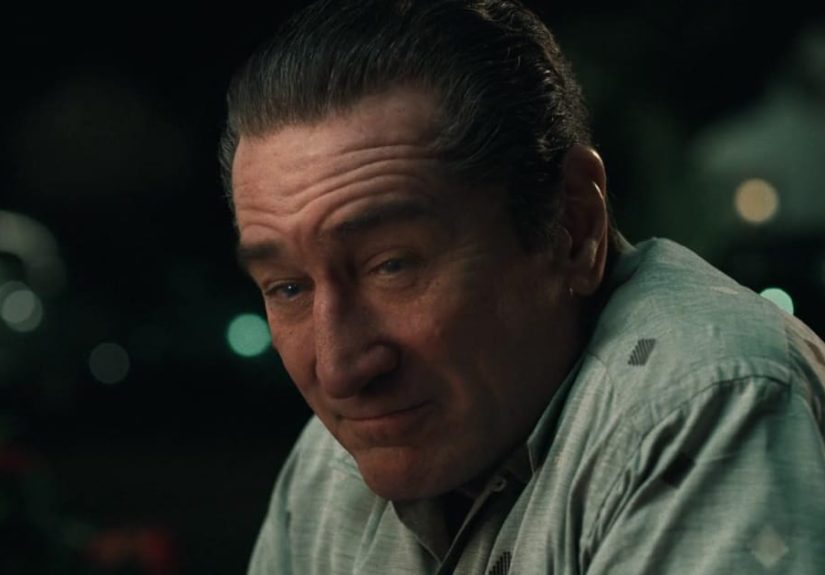
- 7. The Irishman (2019)
- 6. 2001: A Space Odyssey (1968)
- 5. Robin Hood (2010)
- 4. Boyhood (2014)
- 3. Avatar: The Way of Water (2022)
- 2. The Tree of Life (2011)
- 1. The English Patient (1996)
- Why We Keep Watching “Boring” Movies Anyway
- of Hard-Earned Experience with Boring Movies
Every movie has its audience, but some films seem designed to test your relationship with your couch and your attention span.
We’re talking about the movies that stretch three hours but feel like seven, the “classics” you feel guilty for not liking, and
the slow-burn dramas that never quite catch fire. This list of the 17 most boring movies of all time gathers titles that fans
regularly call slow, dull, or outright sleep-inducing – even when critics call them masterpieces.
Before we dive in, a quick disclaimer: “boring” is subjective. Many of these films are awards darlings, critical favorites, or
beloved by cinephiles. The ranking here reflects recurring fan complaints about pacing, story momentum, and rewatch value – not
a final verdict on whether the films are “good” or “bad.” Think of it as a fun (and slightly spicy) tour through cinema’s most
infamous snoozefests.
What Actually Makes a Movie “Boring”?
When viewers call a movie boring, they’re usually reacting to a few recurring issues:
- Slow pacing: Long stretches where nothing seems to happen, or where scenes linger past their emotional peak.
- Minimal plot movement: Lots of conversations, vibes, or symbolism but not much in the way of story progression.
- Overlong runtime: Movies that run close to (or past) the three-hour mark without enough story to justify it.
- Dense or abstract storytelling: Nonlinear timelines, philosophical monologues, and obscure symbolism can feel like homework.
- Marketing mismatch: Trailers sell a high-energy thriller; the movie turns out to be a quiet meditation on grief.
The films below often combine several of these traits. Some are technically brilliant yet emotionally distant. Others simply feel
like they’d be more comfortable as a museum installation than a Friday night watch. With that in mind, let’s count down the
17 most boring movies of all time, ranked by how often fans complain they nearly fell asleep.
The 17 Most Boring Movies Of All Time, Ranked
17. No Country for Old Men (2007)
On paper, this neo-Western crime thriller has everything: drug money, a relentless hitman, Texas landscapes, and the Coen Brothers
in top form. Yet for many casual viewers, No Country for Old Men feels less like a nail-biter and more like a slow,
unbroken tension line that never delivers the release they expect. The movie leans hard into long, quiet stretches and
philosophical reflections on violence and fate.
Fans of deliberate storytelling praise its minimalism and moral ambiguity. Others say it’s all build-up and no payoff, with an
ending that feels more like a shrug than a conclusion. If you’re expecting a traditional cat-and-mouse action thriller, you may
find yourself checking the time between monologues.
16. Casablanca (1942)
Casablanca is a stone-cold classic, endlessly quoted and endlessly referenced. But if you’re used to modern pacing,
this wartime romance can feel slow and static. Much of the story unfolds inside a single bar, with characters talking through
politics, regret, and heartbreak over cigarettes and cocktails instead of car chases and explosions.
For some viewers, that dialogue-heavy approach is pure gold. For others, the slow unfolding of the love triangle and the
talky political maneuvering make the movie feel older than its black-and-white film stock. It’s undeniably important to
film history – but not everyone finds it exciting.
15. Lawrence of Arabia (1962)
Lawrence of Arabia is often held up as the ultimate cinematic epic – and also the ultimate “so long I watched it in
shifts” movie. Clocking in at nearly four hours in some cuts, it’s packed with sweeping desert vistas, political intrigue,
and character study. The problem, at least for modern audiences, is that it takes a very long time to get where it’s going.
Long establishing shots, slow exposition, and extended conversations about military strategy can make this feel less like an
adventure and more like a beautifully shot history lecture. If you love old-school epics, it’s a feast. If you’re just here
for action, you might start zoning out somewhere around the second sand dune.
14. Lincoln (2012)
Steven Spielberg’s Lincoln is essentially a two-and-a-half-hour political meeting about passing the 13th Amendment.
Daniel Day-Lewis gives a meticulous, Oscar-winning performance, and the film is packed with historical detail and finely
written speeches. But this is a movie where the biggest action scene involves a vote count.
History buffs adore the focus on legislative horse-trading and Lincoln’s wit. For everyone else, the endless debates,
dimly lit rooms, and heavy dialogue can feel like watching C-SPAN with better costumes. It’s a high-quality film that many
people respect more than they actually enjoy watching.
13. Breakfast at Tiffany’s (1961)
Audrey Hepburn’s iconic black dress and cigarette holder are more famous than the actual plot of Breakfast at Tiffany’s,
and there’s a reason for that. The movie is stylish and charming in moments, but its story can feel strangely thin and slow.
We spend a lot of time simply hanging out with Holly Golightly as she flits from party to party and suitor to suitor.
Modern viewers also tend to struggle with some dated elements and an uneven tone. As a mood piece, it works; as a fast-moving
romantic comedy, it can feel shapeless and draggy – like a brunch date that goes on one mimosa too long.
12. The Curious Case of Benjamin Button (2008)
A man who ages backward sounds like the kind of high-concept hook that should be riveting. Instead, The Curious Case of
Benjamin Button often feels like an extremely long slideshow of one man’s melancholy life. Despite gorgeous visuals and
strong performances, the movie’s slow pace and focus on a drawn-out romance leave many viewers feeling emotionally distant.
The film follows Benjamin across decades, but it rarely feels urgent. Scenes linger, subplots fade quietly away, and the central
relationship takes up a lot of space without much surprise. For some, it’s a poetic meditation on time. For others, it’s a
beautifully produced lullaby.
11. Tinker Tailor Soldier Spy (2011)
If you go into Tinker Tailor Soldier Spy expecting James Bond, you’re in for a shock – and probably a nap. This
adaptation of John le Carré’s spy novel is all about whisper-level conversations, files, and grim faces in gray offices.
The movie rewards patience and attention to detail, but it moves at the speed of paperwork.
Fans of intricate espionage plotting love piecing together the clues. Casual viewers, however, often complain that the film
feels inert: too many scenes of old men staring at each other, not enough action to justify the slow burn. Blink and you’ll
miss an important hint; stay fully alert and you may still wonder why it felt so long.
10. Citizen Kane (1941)
Citizen Kane is frequently called the greatest movie ever made, but that doesn’t mean it’s the most fun to watch.
Its non-linear storytelling, heavy themes, and dense character study can be challenging, especially if you’re expecting
something more straightforward or fast-paced.
The movie was groundbreaking in the 1940s, but many modern viewers come to it after years of hype and discover a slow,
talky drama about regret and power. They appreciate its importance; they just don’t necessarily enjoy the experience of
watching it unfold in multiple flashbacks and long dialogue scenes.
9. Hulk (2003)
Long before the Marvel Cinematic Universe turned the Hulk into a quip machine, Ang Lee’s Hulk tried something very
different: a serious psychological character study about trauma and anger. The result is one of the most contemplative superhero
movies ever made – and, according to many fans, one of the dullest.
Instead of wall-to-wall smashing, we get extended dream sequences, comic-panel editing, and long scenes of Bruce Banner
wrestling with his inner demons. It’s interesting in theory, but viewers expecting a traditional popcorn blockbuster often
feel like they’ve been tricked into attending a very green therapy session.
8. Lost in Translation (2003)
Lost in Translation is quietly profound, beautifully acted, and deeply atmospheric. It’s also, by design, minimal
in plot. Two lonely people in Tokyo form a connection, wander the city, and talk about life. For some viewers, that’s
intimate and moving; for others, it’s painfully uneventful.
The film leans on mood and subtext rather than big story beats. That makes it a favorite of indie-film fans and a frequent
target for complaints like “nothing happens” from viewers who prefer stronger narrative momentum.
7. The Irishman (2019)
Martin Scorsese’s The Irishman reunites some of cinema’s greatest talents for a sprawling mob saga about aging,
loyalty, and regret. Its biggest enemy? Time. At over three hours, with a restrained tone and long, dialogue-heavy scenes,
even crime-movie fans admit it can feel like a marathon.
If you settle in ready for the propulsive energy of Goodfellas or Casino, you’ll instead find a slow,
reflective character study. The digital de-aging, muted color palette, and somber pacing all reinforce the theme of mortality.
They also make the movie feel heavy, glacial, and, for many, exhausting.
6. 2001: A Space Odyssey (1968)
Stanley Kubrick’s 2001: A Space Odyssey is legendary for a reason: it’s haunting, visionary, and hugely influential.
It’s also so slow that entire jokes have been built around watching spaceships dock in “real time.” Long, dialogue-free
passages, abstract imagery, and a famously cryptic ending make this feel less like a story and more like an art installation.
Sci-fi fans who love atmosphere and big ideas often find it hypnotic. Others simply see a lot of floating astronauts and
classical music with not enough payoff. If you’re not in the mood for philosophical space ballet, this one can feel like
watching the universe buffer.
5. Robin Hood (2010)
Ridley Scott’s Robin Hood, starring Russell Crowe, seems like a can’t-miss formula: the director of Gladiator,
a legendary folk hero, and a big-budget period production. Yet the movie spends a surprising amount of time on grim political
maneuvering, muted battles, and setup for a franchise that never truly materialized.
Viewers expecting a swashbuckling adventure with daring heists and heroic archery found a gray, serious origin story instead.
The pacing is uneven, the tone is dour, and the sense of fun is almost entirely missing – making this one feel longer than its
already hefty runtime.
4. Boyhood (2014)
Filmed over 12 years with the same cast, Boyhood is an impressive technical and artistic achievement. You literally
watch the actors grow up on screen. The catch? The story itself is intentionally ordinary: school, family arguments, awkward
relationships, and small milestones.
For some viewers, that everyday realism is exactly what makes the movie powerful. For others, it feels like sitting through
a very long, meticulously edited home video. With no major plot twist or dramatic hook, the movie’s gentle, wandering pace
can feel like a slog if you’re not deeply invested in the characters.
3. Avatar: The Way of Water (2022)
James Cameron’s long-awaited sequel to Avatar is a visual showcase of cutting-edge effects and lush alien ecosystems.
It’s also more than three hours long and spends a huge chunk of that time on extended underwater sequences and familiar story
beats. The result is a movie that’s stunning to look at but, for many, oddly tiring to sit through.
The family drama, colonial conflict, and environmental themes are all there, but they’re wrapped in so much repetition and
spectacle that some viewers report zoning out between big set pieces. When the credits finally roll, you may feel like you’ve
actually lived on Pandora for a year.
2. The Tree of Life (2011)
Terrence Malick’s The Tree of Life is the definition of “not for everyone.” It blends family drama with cosmic
imagery, whispered narration, and sequences that jump from childhood memories to the creation of the universe. It’s poetic,
ambitious, and frequently cited by audiences as one of the most beautiful yet boring movies they’ve ever seen.
Instead of a clear narrative, you get fragments of experience and emotion. The movie asks you to meditate on grief, faith,
and existence – not to follow a plot. For viewers who connect with it, it’s transcendent. For others, it feels like
two-plus hours of screensaver-plus-sermon.
1. The English Patient (1996)
Topping many fan-driven lists of dull movies, The English Patient is a sweeping World War II romance that picked up
a small mountain of Oscars – and a reputation for putting people to sleep. It tells its love story through a nonlinear structure,
shifting between past and present as a badly burned man recalls his tragic affair.
The desert cinematography is gorgeous, and the performances are strong, but the storytelling is slow and heavy with longing
glances and drawn-out scenes. For a lot of viewers, the movie feels like emotional quicksand: elegantly made, but so languid
that they never fully sink into the story before drifting off.
Why We Keep Watching “Boring” Movies Anyway
Here’s the twist: many of these “boring” titles are also considered essential viewing. They win awards, show up on “best ever”
lists, and are studied in film schools. That’s because “boring” in casual conversation often just means “slow, demanding, or
not what I expected.”
Some of the movies above are deliberately paced to create atmosphere, build dread, or invite reflection. Others were made for
different eras, when audiences were more used to longer scenes and slower editing. And a few simply misjudged how much patience
modern viewers really have.
Still, there’s something oddly satisfying about collectively admitting, “Yeah, that one put me to sleep,” even when critics
insist it’s a masterpiece. Part of being a movie fan is wrestling with those gaps between reputation and reality – and owning
your personal, slightly embarrassing “I just couldn’t get through it” list.
of Hard-Earned Experience with Boring Movies
If you’ve ever proudly sat down with snacks to finally conquer a famous “must-watch” film, only to wake up on the couch two
hours later, welcome to the club. Boring movies are a universal experience, and navigating them is practically a rite of
passage for film lovers.
One of the first lessons you learn is context matters. Put on a slow, introspective movie at 11:30 p.m. after
a long workday, and even the greatest film ever made doesn’t stand a chance. The same movie, watched on a lazy Sunday morning
with coffee and zero distractions, can feel deep and moving instead of excruciating. Half the “boring” label comes from when
and how we watch – not just what’s on screen.
You also start to notice how expectations shape your experience. If a trailer sells a movie as a thrilling
historical epic or pulse-pounding sci-fi adventure, you go in primed for action. When you’re instead greeted with whispered
monologues, long stares out of windows, and debates in candlelit rooms, your brain goes, “Wait, where’s the stuff I was
promised?” Even a good movie can feel dull if you showed up for the wrong reasons.
Another surprisingly common scenario: the guilt watch. This happens when a film has such a strong reputation
– “greatest of all time,” “essential classic,” “a masterpiece of modern cinema” – that you feel bad for not liking it. So you
push yourself through, determined to appreciate it, and end up spending half the runtime arguing with yourself:
“Am I missing something? Why is everyone else obsessed with this? Am I just not smart enough for this movie?”
Ironically, that pressure makes the movie feel even slower. You’re not just watching; you’re self-evaluating. Sometimes the
healthiest thing you can do is admit that not every legendary film is for you – and that’s okay. It’s better to be honest
about being bored than pretend you were thrilled by three hours of people talking in dim hallways.
There’s also a fun social side to the “boring movie” experience. Comparing notes with friends about which revered titles
nearly put you to sleep can be oddly bonding. One person confesses they couldn’t make it through a famous space opera;
another admits they fell asleep during an Oscar-winning drama. Suddenly, you’ve turned cinematic disappointment into a
group therapy session with popcorn.
Over time, you get better at knowing your own boredom triggers. Maybe endless exposition drains you,
or you can’t stand movies that are all symbolism and no story. Maybe your attention span collapses at the two-hour mark,
no matter how good the film is. Understanding that helps you decide which “slow” films are worth the challenge and which
ones you’re allowed to skip without shame.
And sometimes, in a twist worthy of its own third-act reveal, a once-boring movie becomes fascinating on a rewatch. With
different expectations, a calmer mindset, or simply more life experience, you might suddenly connect with the very things
that once put you off: the quiet pauses, the slow character arcs, the metaphor-heavy visuals.
In the end, “boring” isn’t a permanent label – it’s a snapshot of how a particular movie landed with you at a particular
moment. This ranked list isn’t here to kill anyone’s favorites; it’s here to celebrate that very human, very relatable
experience of thinking, halfway through a critically acclaimed film, “Wow… this is kind of a slog.” And honestly? There’s
something comforting about knowing you’re not the only one who thought so.