Table of Contents >> Show >> Hide
- 1. Dark Matter – The Invisible Scaffolding of the Cosmos
- 2. Dark Energy – The Mysterious Force Pushing Space Apart
- 3. The Arrow of Time – Why Time Flows Only One Way
- 4. Baryon Asymmetry – Why There’s Something Rather Than Nothing
- 5. Cosmic Inflation and the Multiverse Question
- 6. Fine-Tuning – Why the Universe Is So Comfortable for Life
- 7. Fast Radio Bursts – Millisecond Messages from the Deep
- 8. Ultra-High-Energy Cosmic Rays and Neutrinos – Nature’s Ultimate Particle Accelerators
- 9. Black Holes and the Information Paradox
- 10. Are We Alone? The Fermi Paradox
- Living With the Unknown: Human Experiences of a Puzzling Universe
- Conclusion
For a species that once thought the sky was a decorative ceiling, humans have come a long way.
We’ve parked robots on Mars, photographed black holes, and built telescopes so sensitive they can
sniff out molecules in the atmospheres of planets light-years away. And yet, when we zoom out to
the whole universe, the scoreboard still reads: Cosmos 10 – Humanity 0.
Modern cosmology is wildly successful at describing how the universe evolves, yet some of its
most basic ingredients remain stubbornly mysterious. We know there’s something called dark matter,
but we don’t know what it is. We know the universe is expanding faster and faster, but we’re still
guessing why. Even the fact that there’s anything here at all – stars, planets, you reading this on
a screen – is, at a deep level, an unsolved puzzle.
Below are ten of the biggest cosmic secrets science can’t fully explain. They’re not “we have no
clue” mysteries anymore – more like “we have a dozen half-finished explanations and an existential
headache” mysteries. Along the way, you’ll see how missions from NASA and other observatories
keep pushing the frontier, even as the universe smugly keeps some cards hidden behind its event
horizon.
1. Dark Matter – The Invisible Scaffolding of the Cosmos
Galaxies spin so fast that, based on the mass we can see, they should have long since flung their
stars off into deep space like glitter from a malfunctioning disco ball. Instead, galaxies hold
together. The best explanation is that most of their mass is made of some invisible stuff called
dark matter, which interacts through gravity but doesn’t emit, absorb, or reflect light.
Observations suggest dark matter makes up about 27% of the universe, vastly outweighing normal
matter like atoms.
We can map where dark matter probably is by how it bends light from distant galaxies – a trick called
gravitational lensing – and by how galaxies clump into a vast “cosmic web.” But despite decades of
experiments deep underground and in space, no one has detected a dark matter particle directly.
Some recent work even suggests that exotic objects such as primordial black holes could contribute,
but that’s controversial and far from settled.
In short: we can see dark matter’s footprints everywhere, but the creature itself refuses to
step into the spotlight. Until we catch it in the act in a detector or collider, dark matter remains
one of the universe’s most stubborn open cases.
2. Dark Energy – The Mysterious Force Pushing Space Apart
Just when astronomers were getting comfortable with a universe full of hidden mass, the late 1990s
delivered another shock: distant exploding stars (type Ia supernovas) looked dimmer than expected,
implying that the universe’s expansion is accelerating. To explain this cosmic turbo mode,
scientists invoked dark energy – a kind of energy built into space itself that pushes galaxies
away from one another.
Rough estimates say dark energy accounts for about 68–70% of the universe. The most conservative idea
is that it’s a “cosmological constant,” a uniform pressure that never changes. But recent results from
the Dark Energy Spectroscopic Instrument (DESI), which maps millions of galaxies in 3D, may suggest that
dark energy has evolved over time and could even be weakening. If that’s true, some of our neat textbook
stories about the universe ending in a “big freeze” might need a rewrite.
For now, dark energy is a label, not an explanation. We know it shapes the fate of the cosmos, but we
don’t know what it is, why it exists, or whether it’s hiding deeper new physics.
3. The Arrow of Time – Why Time Flows Only One Way
Physically, most fundamental equations work just as well forwards as backwards. If you reverse the
direction of time in the math, they still make sense. But everyday life does not run backwards.
Eggs don’t unscramble, smartphones don’t un-shatter, and you definitely don’t un-send that text.
This “arrow of time” is tied to entropy – the tendency for disorder to increase – yet why the universe
started in such a bizarrely low-entropy, highly ordered state is a deep unsolved puzzle.
Some cosmologists suggest that inflation (a brief period of ultra-fast expansion just after the Big Bang)
might help explain our low-entropy beginning. Others think we may live in a much larger multiverse where
different regions have different arrows of time. None of these ideas has definitive observational support
yet. For now, we can describe time’s arrow beautifully, but explaining why it exists at all remains one of
cosmology’s biggest conceptual headaches.
4. Baryon Asymmetry – Why There’s Something Rather Than Nothing
According to our best physics, the Big Bang should have produced equal amounts of matter and antimatter.
When matter meets antimatter, they annihilate in a flash of energy. If the early universe were perfectly
symmetric, everything should have wiped itself out, leaving only radiation behind – no stars, no galaxies,
no pizza, and no you. Yet we live in a universe dominated by matter, with very little antimatter around.
This imbalance is called the baryon asymmetry problem.
Soviet physicist Andrei Sakharov famously outlined three conditions needed for the universe to develop a
matter advantage. Experiments at CERN’s Large Hadron Collider are now finding subtle differences in how
certain particles and their antimatter twins decay (called CP violation), but the amount predicted by our
current theories still seems far too small to explain the universe’s huge matter surplus.
Somewhere in the early universe, the rules must have tilted the game ever so slightly in favor of matter.
We’re still trying to catch the universe in the act of cheating.
5. Cosmic Inflation and the Multiverse Question
To explain why the universe looks so smooth and uniform on large scales and why distant regions share
similar properties, many cosmologists believe in inflation: a brief era, fractions of a second
after the Big Bang, when space itself ballooned faster than the speed of light. Inflation fits observations
of the cosmic microwave background remarkably well, but we don’t know what field drove it, how exactly it
ended, or whether it happened in just one way or in countless variations.
Some inflation models naturally lead to a multiverse, where our observable universe is just one
bubble in a frothing cosmic foam, each bubble potentially with different physical constants. This could
even connect to the “fine-tuning” problem – why our universe’s constants seem so just-right for life.
But here’s the catch: other universes are, by definition, hard to observe.
NASA’s upcoming SPHEREx mission aims to map hundreds of millions of galaxies to test details of inflation,
but whether it can tell us anything conclusive about a multiverse is an open question. For now, the idea
sits somewhere between bold physics and extremely fancy speculation.
6. Fine-Tuning – Why the Universe Is So Comfortable for Life
Change the strength of gravity just a little, and stars might never form. Tweak the electromagnetic force,
and atoms could become unstable. Adjust the dark energy density, and the universe might either recollapse
quickly or fly apart so fast galaxies never condense. Many physicists and philosophers argue that the
universe appears fine-tuned for complex structures and life: the range of physical constants that
allow long-lived stars, chemistry, and biology looks surprisingly narrow.
Explanations come in several flavors. Maybe there’s an underlying “Theory of Everything” that forces the
constants to take these values – no tuning required. Maybe countless universes exist with different constants,
and we obviously find ourselves in one of the rare life-friendly ones. Or maybe our sense of “improbable” is
just bad when dealing with cosmic scales.
For now, fine-tuning is a Rorschach test for your philosophical mood: some see evidence of deep underlying
laws, others see multiverses, and some see a reminder that probability is trickier than it looks.
7. Fast Radio Bursts – Millisecond Messages from the Deep
In 2007, astronomers stumbled on a bizarre signal: a powerful radio pulse lasting just a few milliseconds,
coming from far beyond our galaxy. These events, now known as fast radio bursts (FRBs), release more energy
in an eyeblink than our Sun does in days. We now know there are thousands of them popping off all over the sky,
some repeating, some apparently one-off.
Leading suspects include highly magnetized neutron stars (magnetars), compact-object mergers, and other extreme
astrophysical engines. The James Webb Space Telescope recently traced the brightest FRB ever detected to a specific
region in a nearby galaxy, likely associated with an evolved massive star and possibly a hidden neutron star –
but even that doesn’t fully reveal how these bursts are generated.
Just to complicate things further, astronomers have used FRBs like cosmic flashlights to probe the thin gas between
galaxies and even to help track down some of the “missing” ordinary matter in the universe. They’re both a tool and
a mystery wrapped into one very loud, very brief cosmic ping.
8. Ultra-High-Energy Cosmic Rays and Neutrinos – Nature’s Ultimate Particle Accelerators
Earth is constantly bombarded by cosmic rays – high-energy particles from space. Most are modestly energetic,
but a tiny fraction arrive with mind-bending energies far beyond what the Large Hadron Collider can produce.
The famous “Oh-My-God particle” detected in 1991 carried the energy of a fast baseball packed into a single subatomic
particle. Where do these ultra-high-energy cosmic rays (UHECRs) come from? We still don’t know.
Candidates include shock waves around supermassive black holes, gamma-ray bursts, or exotic new physics. Similar
questions now surround ultra-high-energy neutrinos – ghostly particles recently detected at record-breaking energies
in deep-sea and Antarctic observatories. Their extreme energies suggest equally extreme cosmic engines, but their
precise origins remain murky.
In other words, somewhere out there the universe is running particle accelerators that make the LHC look like a
backyard science fair. We just haven’t found the machines yet.
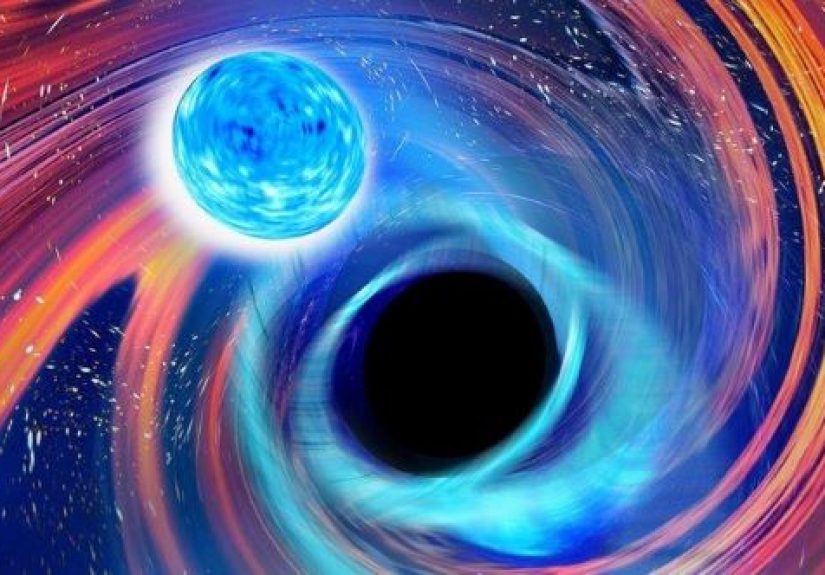
9. Black Holes and the Information Paradox
Black holes are regions where gravity is so intense that not even light can escape. Thanks to general relativity and
decades of observations, we understand many aspects of how they form and behave. But throw quantum mechanics into
the mix and things get weird fast. If you toss something into a black hole, does the information about its quantum
state vanish forever when the black hole eventually evaporates via Hawking radiation? That would violate a central
principle of quantum theory, which says information is never destroyed. This clash is known as the
black hole information paradox.
Proposed fixes range from the idea that information is somehow encoded in the Hawking radiation, to wild-sounding
concepts like “firewalls” at the event horizon or holographic descriptions where the information is stored on a
lower-dimensional boundary of spacetime. So far, no experiment can decisively pick a winner, though gravitational-wave
detections and high-resolution images of black hole shadows keep adding clues.
We have gorgeous images of black holes and detailed simulations of matter swirling into them – but a complete,
tested theory of what happens to information is still missing. The universe is keeping its most extreme filing
system strictly confidential.
10. Are We Alone? The Fermi Paradox
Statistically speaking, the galaxy should be crawling with planets, many in the potentially habitable zone where
liquid water can exist. NASA’s exoplanet missions confirm that there are likely billions of Earth-sized worlds in
our galaxy alone. If life isn’t incredibly rare, and if some civilizations survive long enough to develop advanced
technology, you might expect the sky to be buzzing with signals or astro-engineering projects. Instead, we hear
mostly static. This disconnect is known as the Fermi paradox: “Where is everybody?”
Explanations range from the depressing (intelligent species tend to wipe themselves out), to the mundane (interstellar
travel and broadcasting are too hard and too boring), to the spooky (we’re in a kind of cosmic wildlife preserve,
being quietly observed). Recent speculative work even suggests that alien civilizations might simply plateau at a
modest tech level and lose interest in cosmic outreach – they’re not god-like beings, just… busy or bored.
For now, we’ve only scratched the surface with radio searches and limited sky coverage. The silence might be telling
us something profound – or we might simply not have been listening in the right way, in the right places, for long enough.
Living With the Unknown: Human Experiences of a Puzzling Universe
It’s easy to treat these mysteries as abstract puzzles for professional cosmologists, but they quietly shape how all of
us experience the night sky. Stand outside on a clear, dark evening – preferably somewhere your phone signal is weak
enough to be truly terrifying – and let your eyes adjust. The Milky Way becomes visible as a hazy river of light.
Every point of light is a clue in some cosmic detective story we haven’t solved yet.
When you look at a galaxy in a telescope, you’re not just seeing stars. You’re staring at a vast halo of dark matter
whose true nature is unknown, and at a patch of space being slowly pushed away from you by dark energy. The serene
spiral in the eyepiece is secretly a battlefield of unsolved physics. Just knowing that changes the emotional texture
of stargazing. The sky stops being a static backdrop and becomes a live experiment in progress.
For many amateur astronomers, FRBs and UHECRs are never directly visible, but they still add drama to the hobby. That
faint galaxy in your backyard telescope might have hosted one of the brightest radio flashes the universe has ever
produced, or launched a cosmic ray that eventually slammed into Earth’s atmosphere with absurd energy. When you follow
astronomy news and then go outside to look up, every object in the eyepiece feels like it might be hiding secret
superpowers.
These mysteries also seep into everyday life in less obvious ways. Teachers use them to hook students who might not
care about equations but are very interested in big questions: Why does time move forward? Why does anything exist?
Are we alone? A single slide about the arrow of time or the matter–antimatter imbalance can turn a sleepy classroom
into a lively philosophy-of-science seminar. Students recognize that adults don’t have all the answers – not even the
scientists – and that realization can be strangely empowering.
On a more personal level, the universe’s lack of a neat, final explanation can be oddly comforting. In a world where
your apps and algorithms pretend to know exactly what you want next, cosmology is refreshingly honest:
“Here’s the data, here are some models, and here are several places we’re still baffled.” Our ignorance becomes
an invitation, not a failure. You don’t have to be a professional researcher to participate. You can follow missions
like JWST, SPHEREx, or DESI online, compare images, join citizen science projects, or just keep up with the headlines
and argue about multiverses over coffee.
Perhaps the most profound experience these ten mysteries offer is a sense of shared curiosity. Nobody on Earth – no
government, no corporation, no genius – currently knows what dark matter is, whether dark energy is changing, where
ultra-high-energy particles come from, or why there’s something rather than nothing. When you look up at the sky,
you’re asking the same unsolved questions as Nobel laureates and first-year physics students. There’s a kind of cosmic
equality in that. The universe is not a finished story we read; it’s an ongoing draft, and we’re all reading it live.
So the next time you step outside at night, maybe leave a few minutes between scrolling notifications. Look up, find a
bright star or a hazy patch of the Milky Way, and remember: behind that quiet twinkle are invisible halos, accelerating
space, violent radio flashes, impossible particles, and perhaps entire civilizations. Science has explained an astonishing
amount – but the universe’s biggest secrets are still up there, stubbornly unsolved, waiting for someone to ask the next
good question.
Conclusion
From dark matter and dark energy to FRBs, UHECRs, and the Fermi paradox, the cosmos keeps reminding us that our best
theories are still works in progress. These ten cosmic secrets sit at the edge of what we know, where precise data meets
bold imagination. Some of them will almost certainly be cracked in the coming decades as new telescopes, detectors, and
experiments come online. Others may evolve into deeper mysteries, the way solving one crossword clue often unlocks an
entirely new section of the puzzle.
In the meantime, living with these unknowns is part of the adventure. The universe isn’t just a collection of solved
equations; it’s a landscape of open questions. That gap between what we know and what we don’t is where curiosity lives –
and where the next generation of cosmic discoveries will be born.