Table of Contents >> Show >> Hide
- What Is a Sun Rash?
- Common Types of Sun Rash
- Sun Rash Causes: Why Does It Happen?
- Sun Rash Symptoms
- What Do Sun Rash Pictures Usually Show?
- How to Treat Sun Rash at Home
- Medical Treatment for Sun Rash
- When to Seek Medical Help
- How to Prevent Sun Rash
- Sun Rash vs. Sunburn vs. Heat Rash
- Experiences People Commonly Report With Sun Rash
- Final Takeaway
One minute you are enjoying a sunny afternoon. The next minute your skin is staging a dramatic protest. It itches. It burns. It turns red, bumpy, blotchy, or weirdly streaky. Suddenly you are searching for answers like a detective with sunscreen in one hand and aloe in the other.
That confusing reaction is often called a sun rash. The tricky part is that “sun rash” is not one single condition. It is more like an umbrella term people use when their skin reacts badly after sun exposure. Sometimes it is a sun allergy. Sometimes it is a severe sunburn people call sun poisoning. Sometimes it is polymorphous light eruption, photosensitivity, heat rash, or a reaction triggered by a medication, fragrance, plant juice, or skin product.
Note: “Sun poisoning” is a common phrase, not a formal medical diagnosis. It usually refers to a severe sunburn or a strong sun-related skin reaction with symptoms that can go beyond simple redness.
This guide breaks down what a sun rash can look like, what causes it, how to treat it at home, when to call a doctor, and what “pictures” of sun rash usually show so you know what patterns are worth taking seriously.
What Is a Sun Rash?
A sun rash is a skin eruption that appears after exposure to sunlight, especially ultraviolet light. Depending on the cause, it may show up within minutes, a few hours, or even one to three days later. That timing matters because different kinds of sun-related rashes behave very differently.
Some people develop small itchy bumps after the first strong sunny days of spring. Others get raised hives within minutes of being outdoors. Some notice red patches only where sunscreen, perfume, citrus juice, or a medication interacted with sunlight. And some people think they have a rash when they actually have a nasty case of heat rash or a severe sunburn with swelling and blistering.
In other words, if your skin seems to hate the sun, it helps to know which kind of hate you are dealing with.
Common Types of Sun Rash
1. Polymorphous Light Eruption (PMLE)
This is one of the most common conditions people mean when they say sun allergy. PMLE often appears as itchy red bumps, tiny blisters, or rough raised patches on sun-exposed skin such as the chest, neck, arms, and lower legs. It often shows up in spring or early summer, right when your skin has forgotten what sunshine feels like.
The rash can look different from person to person, which is exactly why the name sounds like a dermatology professor trying to win at Scrabble. “Polymorphous” simply means it can take many forms. The good news is that PMLE often clears on its own within days to about 10 days, though severe cases may need treatment.
2. Solar Urticaria
This is a rarer type of sun allergy that causes hives. The reaction can happen quickly, sometimes within minutes of sun exposure. The bumps are usually raised, itchy, and red, and they may fade after getting out of the sun. Because hives can sometimes be linked with swelling or more serious allergic symptoms, this version deserves medical attention, especially if it keeps happening.
3. Photoallergic Reaction
This happens when sunlight interacts with a substance on or in your body and triggers an immune reaction. Common culprits may include certain sunscreens, fragrances, cosmetics, shaving products, antibiotic ointments, or medications. This type of rash may appear a day or two after sun exposure, which makes it sneaky. You may not connect the dots until the dots are already all over your skin.
4. Phototoxic Reaction
This one is less of a classic allergy and more of a chemical-and-UV bad romance. Certain medications and ingredients make skin more sensitive to sunlight, causing a reaction that can look and feel like an exaggerated sunburn. Some antibiotics, acne medicines, anti-inflammatory drugs, and topical products are well-known troublemakers. The skin may burn, sting, turn red, swell, or even blister.
5. Phytophotodermatitis
This is the famous “margarita burn.” If citrus juice, celery, parsley, dill, figs, or certain plant compounds get on your skin and that skin then gets sun exposure, you can develop a streaky, blotchy, or blistering rash. It may later leave behind dark discoloration. If your rash looks like an oddly artistic splash pattern, this is one to consider.
6. Heat Rash
Strictly speaking, heat rash is not caused by UV light itself. It happens when sweat gets trapped under the skin, usually in hot, humid weather. The result is a prickly, itchy rash with tiny bumps. Because it often flares during sunny weather, people sometimes mistake it for a true sun rash.
7. Severe Sunburn, Sometimes Called “Sun Poisoning”
If your skin is intensely red, painful, swollen, blistered, or peeling and you also feel nauseated, dizzy, feverish, chilled, or dehydrated, people often call that sun poisoning. Again, it is not literal poisoning. It is severe skin damage and an intense body reaction to too much UV exposure.
Sun Rash Causes: Why Does It Happen?
The causes of sun rash vary, but the major possibilities include the following:
- Immune system sensitivity to sunlight, as in PMLE or solar urticaria
- Medications that increase photosensitivity, including some antibiotics, acne medications, anti-inflammatory drugs, diuretics, and other prescriptions
- Topical products such as fragrances, cosmetics, or sunscreen ingredients that react with UV light
- Plant chemicals from limes, lemons, celery, parsley, dill, or figs
- Hot, humid weather and sweating, which can trigger heat rash
- Underlying medical conditions, including autoimmune diseases that can make skin more sun-sensitive
- Family history or a personal tendency toward photosensitive skin reactions
You may also be more likely to react if you have fair skin, spend time near the equator or at high altitude, start a new medication, or go from “indoors all winter” to “beach all weekend” with zero transition time. Skin likes a little warning before chaos.
Sun Rash Symptoms
Symptoms depend on the cause, but common signs include:
- Itching
- Burning or stinging
- Redness
- Small bumps or clusters of bumps
- Raised patches or plaques
- Blisters
- Hives or welts
- Swelling
- Peeling after the rash fades
- Dark patches left behind after healing, especially after phytophotodermatitis
With severe sunburn or so-called sun poisoning, symptoms can expand beyond the skin and include headache, nausea, dizziness, dehydration, chills, fever, confusion, or fainting. At that point, your body is no longer just “a little annoyed.” It is asking for help.
What Do Sun Rash Pictures Usually Show?
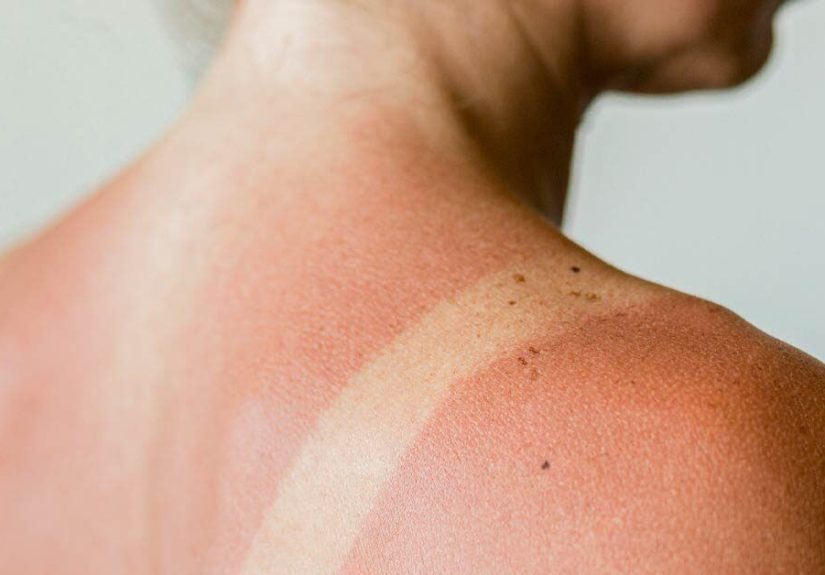
People often search for sun rash pictures because they want to compare what they are seeing in the mirror with what commonly appears online. While a photo cannot diagnose you, visual patterns can offer clues.
- PMLE pictures often show itchy bumps, tiny blisters, or rough red patches on the chest, neck, shoulders, and arms after sun exposure.
- Solar urticaria pictures usually show raised hives that appear quickly on exposed skin.
- Phototoxic reactions may look like an exaggerated sunburn with sharp borders, tenderness, swelling, and sometimes blisters.
- Photoallergic reactions can resemble eczema or allergic contact dermatitis, with redness, bumps, and intense itch.
- Phytophotodermatitis pictures often show streaks, drips, handprints, or splash-like marks where plant juice touched the skin.
- Heat rash pictures usually show tiny prickly bumps in sweaty, occluded areas.
If your rash is widespread, painful, blistering, or looks infected, do not rely on image comparison alone. Skin conditions love impersonation. A dermatologist is better at spotting the difference than the internet at 2 a.m.
How to Treat Sun Rash at Home
If the rash is mild and you do not have warning signs, sun rash treatment at home may include:
Get out of the sun
This is the least glamorous but most effective first step. Further UV exposure can worsen inflammation and keep the rash going.
Cool the skin
Use cool compresses, a cool shower, or a cool bath. Avoid ice directly on the skin unless wrapped in cloth.
Moisturize gently
A bland, fragrance-free moisturizer can calm dry, irritated skin. This is especially helpful after sunburn or with scaly rashes.
Use over-the-counter anti-itch options
Hydrocortisone cream may help with mild inflammatory rashes. Calamine or menthol-containing anti-itch products may also reduce itch for some people.
Consider an oral antihistamine
If itching is making you miserable, an antihistamine may help, especially for hive-like reactions.
Hydrate well
If you are dealing with severe sun exposure, drink water and consider fluids with electrolytes, especially if you feel weak, dizzy, or overheated.
Leave blisters alone
Do not pop them. Your skin is trying to do wound care, and it would appreciate not being sabotaged.
Medical Treatment for Sun Rash
If home care is not enough, a clinician may recommend:
- Prescription-strength topical corticosteroids
- Short-term oral steroids for more severe inflammation
- Prescription antihistamines
- Evaluation of medications that may be causing photosensitivity
- Patch testing or phototesting in selected cases
- Phototherapy to gradually harden skin against light in recurrent sun allergy cases
- Testing for underlying autoimmune or dermatologic conditions if the rash pattern suggests it
If the rash may be linked to a medication, do not stop a prescription on your own without medical guidance. The fix for your rash should not accidentally create a brand-new problem.
When to Seek Medical Help
You should seek medical care if you have:
- A rash over much of your body
- Blisters, open sores, or raw skin
- Fever, chills, nausea, dizziness, or fainting with the rash
- A painful rash rather than a mildly itchy one
- Rapidly spreading redness or swelling
- Signs of infection, such as pus, crusting, warmth, swelling, or worsening pain
- Involvement of the eyes, lips, mouth, or genital skin
- Repeated rashes every time you are in the sun
- Symptoms after starting a new medication or skin product
Get urgent help right away if there is trouble breathing, swelling of the face or throat, confusion, severe dehydration, or fainting.
How to Prevent Sun Rash
Prevention is not thrilling, but neither is scratching your shoulders like an extra from a mosquito documentary.
- Use a broad-spectrum sunscreen and reapply as directed
- Wear sun-protective clothing, including long sleeves, a wide-brimmed hat, and UV-protective sunglasses
- Seek shade, especially during the brightest midday hours
- Increase sun exposure gradually if you are prone to PMLE
- Avoid fragrances or plant juices on skin before outdoor time
- Review medications with your clinician or pharmacist if you suspect photosensitivity
- Choose lightweight, breathable clothing in hot weather to reduce heat rash
- Shower and change out of sweaty clothing promptly
Sun Rash vs. Sunburn vs. Heat Rash
Here is the simple version:
- Sunburn is direct UV damage to the skin, usually with pain, redness, and later peeling.
- Sun rash often implies a bumpy, itchy, allergic, or photosensitive reaction after sun exposure.
- Heat rash is caused by blocked sweat ducts, not UV light, though it often appears during hot sunny weather.
- Sun poisoning is the casual term people use when sunburn or sun-related skin reactions become severe and are accompanied by systemic symptoms.
Experiences People Commonly Report With Sun Rash
The following experiences are composite examples based on common real-world patterns doctors see. They are not individual patient stories, but they show how different types of sun rash can unfold in everyday life.
The first warm weekend surprise: A woman spends the first sunny Saturday of spring at an outdoor brunch wearing a sleeveless top. By evening, the front of her chest and arms are covered in itchy red bumps that feel hot and annoying, but the skin under her sleeves is perfectly normal. She assumes she forgot sunscreen, but the rash is much itchier than a normal burn and shows up as little clusters rather than uniform redness. This pattern often sounds like PMLE. People describe it as a rash that seems to “arrive late to the party,” sometimes hours after sun exposure, and then returns every spring as if it has a seasonal subscription.
The vacation overachiever: A man goes to the beach, stays out for hours, and proudly announces that he only got “a little color.” By nighttime, his shoulders are deeply red, swollen, and painful. The next morning he has chills, nausea, a pounding headache, and feels oddly wiped out. He may call it sun poisoning, and while the term is informal, the experience is very real. This kind of severe reaction often reflects intense sunburn plus dehydration. What surprises many people is how much worse they feel overall, not just on the skin.
The innocent lime incident: Someone spends the afternoon making drinks outside, squeezing fresh limes, wiping hands on shorts, and never thinking about it again. A day later, they develop bizarre streaky patches and blisters on the backs of their hands and forearms, followed by dark marks that hang around longer than expected. This is classic phytophotodermatitis territory. People are often convinced they touched poison ivy or had a chemical spill, when the real culprit was citrus juice plus sun.
The medication mystery: Another person starts a new antibiotic or acne treatment and then notices that even short walks outdoors suddenly leave their skin burning and red. They say things like, “I was only outside for 15 minutes,” because the reaction feels wildly out of proportion. That clue matters. Drug-related photosensitivity can make mild sun exposure feel intense. Once the medication link is recognized, the rash finally makes sense.
The sweaty summer rash: In hot, humid weather, people sometimes notice tiny prickly bumps under tight clothing, around the chest, back, or waistline. They assume they have a sun allergy, but the real issue is trapped sweat. Heat rash tends to improve when skin is cooled, dried, and aired out, while true sun-allergy patterns usually follow exposed areas more closely.
These experiences matter because they show how sun rash causes can look similar at first glance but have very different triggers. The timing, pattern, location, and symptoms around the rash often tell the real story.
Final Takeaway
A sun rash can be anything from a mild itchy annoyance to a sign that your skin is unusually sensitive to sunlight, a product, a medication, or intense UV damage. If the rash is mild, simple care like getting out of the sun, cooling the skin, moisturizing, and using anti-itch treatment may be enough. But if the rash is severe, blistering, painful, widespread, or comes with fever, nausea, dizziness, swelling, or trouble breathing, it is time to seek medical help.
The biggest lesson is this: not every “sun rash” is the same. When you know the pattern, you are much more likely to choose the right treatment, avoid the trigger, and prevent your next encounter with the bright giant drama lamp in the sky.