Table of Contents >> Show >> Hide
- Why Strength Training at Home Works So Well
- What Counts as Strength Training at Home?
- The Big Benefits of Home Strength Training
- How to Start Safely
- Home Workout Without Equipment
- Home Workout With Equipment
- A Simple Weekly Plan
- How to Progress Over Time
- Common Mistakes That Sabotage Home Workouts
- What Results Can You Expect?
- Real Experiences People Often Have With Home Strength Training
- Conclusion
Home strength training has officially graduated from “backup plan” to “main character energy.” You do not need a fancy gym, a mirror wall, or a machine that looks like it belongs on a spaceship. What you do need is a smart plan, a little consistency, and the willingness to look mildly ridiculous during your first few squats. That last part is optional, but highly traditional.
Strength training at home can be effective for beginners, busy parents, students, remote workers, older adults, and honestly anyone who has ever looked at a gym commute and thought, “Absolutely not.” Whether you use only your body weight or add resistance bands, dumbbells, a kettlebell, or even a loaded backpack, the goal is the same: challenge your muscles enough that they adapt, grow stronger, and make daily life feel easier.
For most adults, a solid baseline is to do muscle-strengthening work for all major muscle groups at least two days per week. That means training your legs, hips, back, abdomen, chest, shoulders, and arms on a regular schedule. Home workouts fit that goal beautifully because they remove one giant barrier: having to go somewhere else first.
Why Strength Training at Home Works So Well
The best workout is the one you will actually do, and home workouts are ridiculously convenient. There is no parking lot drama, no waiting for equipment, and no need to pretend you know how to adjust a machine that looks like it could launch a satellite. At home, you can train for 20 to 40 minutes and still make meaningful progress.
Strength training helps build muscle, support bone health, improve physical function, and make daily tasks feel less annoying. Carrying groceries, climbing stairs, lifting a suitcase, standing up from the floor, and chasing a toddler all become easier when your muscles are doing their job. Resistance training can also help reduce body fat, increase lean muscle mass, and support a healthier metabolism.
Another big advantage is flexibility. You can do a full-body bodyweight session in a bedroom, use resistance bands in a living room, or turn your garage into a mini training zone with adjustable dumbbells. Home training is also easier to personalize. If push-ups bother your wrists, you can swap in floor presses. If lunges make you wobble like a baby deer, you can use split squats while holding onto a chair.
What Counts as Strength Training at Home?
Strength training is any exercise that makes your muscles work against resistance. That resistance can come from your own body weight, a resistance band, dumbbells, kettlebells, medicine balls, or household items. Yes, your backpack full of books can absolutely clock in for duty.
Workouts Without Equipment
No-equipment strength training usually includes bodyweight moves such as squats, lunges, push-ups, glute bridges, planks, side planks, wall sits, calf raises, and hip hinges. These exercises can be surprisingly challenging when you slow them down, increase reps, reduce rest, or use single-leg and single-arm variations.
Workouts With Equipment
If you have equipment, even a little goes a long way. Resistance bands are affordable, light, and excellent for rows, presses, squats, glute work, and shoulder exercises. Dumbbells add straightforward resistance and make progression easy. Kettlebells are great for squats, carries, deadlifts, and swings if you already know proper form. A sturdy chair can help with step-ups, incline push-ups, split squats, and triceps dips. Adjustable weights are especially handy if you want more challenge without turning your home into a sporting goods store.
The Big Benefits of Home Strength Training
1. It Builds Real-World Strength
Bodyweight training is often called functional because it uses multiple muscles and joints at once. Squats help with sitting and standing. Rows help posture and pulling strength. Carries train your core and grip while also making you weirdly confident in the grocery store.
2. It Supports Bone and Joint Health
Strength training places healthy stress on the body, which helps support stronger bones and better joint function. That matters at every age, but especially as adults get older and naturally begin to lose muscle mass and strength.
3. It Improves Balance, Mobility, and Daily Movement
When you strength train regularly, you are not just building muscle. You are teaching your body to coordinate movement better. Exercises like split squats, bridges, planks, and rows can improve stability and body control, which pays off in everything from walking upstairs to getting off the couch without making dramatic sound effects.
4. It Saves Time
You do not need a 90-minute session to benefit. A well-designed 25-minute home workout can target every major muscle group and leave you feeling accomplished instead of logistically defeated.
How to Start Safely
The golden rule is simple: start slower than your motivation wants to. Many beginners make the same mistake. They feel inspired, do too much in week one, and then spend three days walking like they just lost a fight with a staircase.
Begin with basic movement patterns, use manageable resistance, and focus on form. Move through a comfortable range of motion and stop short of sloppy reps. A good beginner target is one to three sets of each exercise, with a resistance level that makes the last few reps feel challenging while still allowing good technique.
Rest matters too. Give the same muscle group about a day off before training it hard again. If you have a chronic health condition, an injury, or you have been inactive for a long time, it is smart to check in with a qualified healthcare professional before starting vigorous exercise.
Home Workout Without Equipment
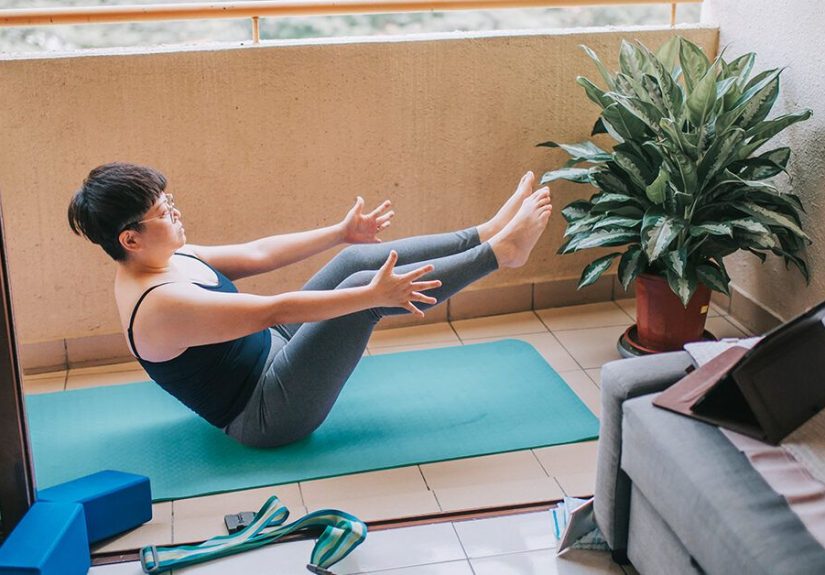
This bodyweight routine is beginner-friendly, effective, and requires only enough floor space to lie down without kicking a lamp.
Full-Body Bodyweight Circuit
- Squats 10 to 15 reps
- Incline or Knee Push-Ups 8 to 12 reps
- Reverse Lunges 8 to 10 reps per leg
- Glute Bridges 12 to 15 reps
- Plank 20 to 30 seconds
- Superman or Floor Cobra 10 to 12 reps
Rest for 30 to 60 seconds between exercises if needed. Complete the circuit two to three times. Do this workout two or three days per week on nonconsecutive days.
How to Make Bodyweight Exercises Harder
Bodyweight training stops being “easy” the moment you manipulate the variables. Slow your lowering phase to three seconds. Pause at the bottom of a squat. Elevate your feet during push-ups. Use a single-leg bridge instead of a standard bridge. Increase total rounds. Suddenly your humble living room becomes a very honest place.
Home Workout With Equipment
If you have a pair of dumbbells or a resistance band, you can create a beautifully effective full-body session at home.
Full-Body Dumbbell or Band Workout
- Goblet Squat or Band Squat 8 to 12 reps
- Dumbbell Row or Seated Band Row 10 to 12 reps
- Dumbbell Floor Press or Band Chest Press 8 to 12 reps
- Romanian Deadlift with Dumbbells 10 to 12 reps
- Overhead Press 8 to 10 reps
- Farmer Carry or March in Place with Weights 30 to 45 seconds
- Pallof Press or Plank 10 reps per side or 20 to 30 seconds
Perform two to four sets, resting about 45 to 90 seconds between sets depending on the difficulty. Choose a weight or band tension that challenges you without wrecking your form. Free weights can be especially valuable because stabilizing them often recruits more muscles than you expect. That is great for results and humbling for the ego.
No Dumbbells? Use These Household Swaps
- A backpack filled with books for squats, rows, and carries
- Water jugs for presses and deadlifts
- A towel for isometric pulling drills
- A sturdy chair for incline push-ups and step-ups
A Simple Weekly Plan
If you are brand new, keep it simple and repeatable.
Option 1: Beginner Plan
- Monday: Full-body strength workout
- Tuesday: Walk, mobility, or gentle stretching
- Wednesday: Full-body strength workout
- Thursday: Rest or light activity
- Friday: Full-body strength workout or short circuit
- Weekend: Recovery, walking, or recreational activity
Option 2: Two-Day Minimalist Plan
If your schedule is chaos wearing business casual, train twice a week. One full-body session on Tuesday and one on Saturday is still far better than waiting for the “perfect” routine that never arrives.
How to Progress Over Time
Strength gains come from progressive overload, which is the very unglamorous but effective idea of gradually asking your body to do a little more. That “more” can mean heavier weight, more reps, an extra set, more control, a tougher variation, or shorter rest periods.
Here is a practical approach: when you can complete all your planned reps with solid form and still feel like you had two or three reps left in the tank, make the next session slightly harder. Increase the weight a bit, add a rep or two, or move from incline push-ups to floor push-ups.
Do not rush progression. Fast progress looks cool on paper and terrible on sore knees.
Common Mistakes That Sabotage Home Workouts
Doing Random Exercises With No Plan
A few squats here and ten curls there is not a program. It is exercise confetti. Pick a structure, track your workouts, and repeat the basics long enough to improve them.
Ignoring the Back of the Body
Many people train what they can see in the mirror and forget the glutes, hamstrings, and upper back. Your posterior chain would like a word. Include rows, bridges, hinges, and band pull-aparts or reverse fly variations.
Going Too Hard Too Soon
More soreness is not always more progress. Start conservatively, especially during the first two weeks. You are building a habit, not auditioning for an action movie.
Using Bad Form to Chase Reps
Ugly reps do not count just because you believe in them. Prioritize control, posture, and range of motion you can own.
What Results Can You Expect?
With steady training, many people notice early wins within a few weeks. Daily tasks feel easier. Stairs feel less rude. Core exercises stop feeling like personal betrayal. Over time, you may notice better muscle tone, improved strength, more confidence with movement, and better exercise consistency simply because your workout is easier to access.
Visible physical changes can take longer than motivational quotes suggest, but performance improvements often show up first. Maybe you move from wall push-ups to incline push-ups. Maybe your plank time doubles. Maybe your backpack squats become dumbbell squats. Those are real signs that your body is adapting.
Real Experiences People Often Have With Home Strength Training
One of the most relatable experiences with home strength training is discovering that convenience beats ambition. A lot of people assume they need perfect conditions to work out, but the opposite is usually true. When the workout is a few steps away, it becomes easier to start even on low-energy days. People often say the hardest part is beginning, and home training shrinks that barrier. You do not need to drive anywhere, wait for equipment, or mentally prepare to be in public. You just put on shoes, clear a little floor space, and get moving.
Another common experience is that bodyweight workouts look easy until they are not. Squats seem harmless until the third set. Planks seem short until 20 seconds feels like a small eternity. Push-ups have a special talent for exposing overconfidence. Many beginners start home training thinking the lack of machines means the workout will be “light,” then quickly realize that good body control is a workout in itself. That realization can be humbling, but it is also empowering. People learn that strength is not only about lifting the heaviest object in the room. It is also about control, stability, balance, and consistency.
There is also a strong mental side to training at home. Many people report that workouts become less intimidating because no one is watching. That privacy helps beginners practice movements without self-consciousness. It can also help experienced exercisers focus better. On the flip side, the home environment can make distractions multiply. Laundry suddenly becomes fascinating. The couch develops magnetic powers. Your phone begins behaving like a needy coworker. Successful home exercisers usually learn to create tiny rituals, like working out at the same time, following a written plan, or setting up equipment the night before.
Progress at home often feels more personal, too. Instead of comparing yourself with strangers, you compare your current performance with what you could do last month. That shift can be surprisingly motivating. The first unassisted push-up, the first controlled split squat, or the first set of rows with a heavier dumbbell feels earned in a very satisfying way. These wins may look small from the outside, but they change how people see themselves. They begin to think, “I am someone who trains,” not just “I am trying to exercise.”
Another frequent experience is creativity. People become resourceful when training at home. A backpack becomes a weighted squat tool. A resistance band turns a hallway into a rowing station. A chair becomes a platform for step-ups and incline push-ups. Instead of seeing limits, people start spotting options. That mindset often carries into other parts of life, where consistency and problem-solving matter just as much as motivation.
Most of all, people often discover that home strength training is sustainable. It may not be flashy, but it is practical, adaptable, and real. Over time, the results add up. You feel stronger lifting groceries, steadier on stairs, more confident in your body, and less dependent on ideal circumstances. That is the kind of fitness that lasts.
Conclusion
Strength training at home is not a lesser version of “real” exercise. It is real exercise. Whether you use bodyweight, bands, dumbbells, or creative household resistance, you can build strength, support bone and joint health, improve daily function, and create a routine that actually fits your life. Start with the basics, train all the major muscle groups, progress gradually, and stay consistent. Your living room may never become glamorous, but it can absolutely become effective.