Table of Contents >> Show >> Hide
- Why This Claim Even Makes Sense on a Show Full of Terrible People
- Who Steve Holt Really Is Beneath the Catchphrase
- The Bluth Test: Everyone Else Fails It
- What Makes Steve Holt Different
- The Tragedy Hidden Inside the Joke
- Why Steve Holt Is One of the Smartest Jokes the Show Ever Made
- The Viewing Experience: Why Rooting for Steve Holt Feels Weirdly Personal
- Conclusion
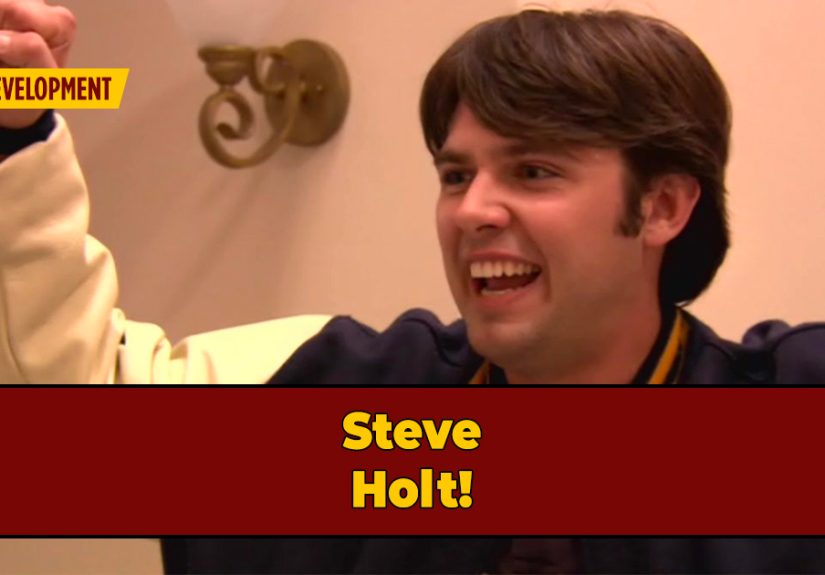
If you say the name out loud, you are legally required to throw both fists into the air. That is not a law, exactly, but it does feel like one. Steve Holt enters Arrested Development as a punchline with shoulder pads: a handsome high school jock whose entire branding strategy is yelling his own name. On a show packed with grifters, narcissists, accidental criminals, intentional criminals, and people who could turn a family brunch into a felony, Steve seems like he should be just another moving part in the machine. Instead, he becomes something much weirder and much sweeter: the closest thing this universe has to a genuinely good person.
That may sound ridiculous in a series built around the idea that everyone is, on some level, the worst. But that is exactly why the argument works. Arrested Development is not a sitcom about lovable messes. It is a comedy of selfishness, denial, status obsession, and inherited emotional malpractice. The Bluths do not simply make mistakes; they make mistakes with confidence, choreography, and custom tailoring. Steve Holt, somehow, wanders through all of that with a big grin, limited processing power, and a surprisingly intact heart.
So yes, this is a serious case for an unserious man. And by the end of it, the loudest boy in Orange County may start to look like the moral center of the whole banana-colored disaster.
Why This Claim Even Makes Sense on a Show Full of Terrible People
Before we put Steve Holt on a pedestal, it helps to remember what kind of show Arrested Development actually is. For all its whip-smart narration, nesting-doll callbacks, and legendary running jokes, the series is fundamentally a satire of privilege. The Bluth family has money, influence, and a supernatural ability to avoid learning lessons. Even when they lose their fortune, they keep the entitlement. They cling to image, dodge accountability, weaponize family loyalty, and treat ordinary decency like an optional add-on package.
That is why viewers sometimes misremember the show as warmer than it really is. It is warm in rhythm, not in ethics. It is cuddly in format, not in worldview. The comedy lands because the characters are so committed to their own delusions that even their better impulses get tangled up in vanity. Michael wants to be the responsible one, but he also wants everyone to notice that he is the responsible one. G.O.B. wants love, but only if love arrives through applause and smoke effects. Lucille wants control. George Sr. wants escape. Tobias wants attention. Lindsay wants status. Maeby wants leverage. Buster wants permission. George Michael wants approval. Everybody wants something, and almost nobody wants to become better.
Then there is Steve Holt. He wants family. He wants affection. He wants connection. He also wants to be in the school play and maybe not think too hard about any of this. Frankly, that is refreshing.
Who Steve Holt Really Is Beneath the Catchphrase
At first glance, Steve is a parody of the classic teen heartthrob meathead. He is popular, loud, physically gifted, and not exactly hiding a supercomputer behind the eyes. He feels like a stock character imported from a much dumber high school comedy. But Arrested Development loves using familiar TV types only to twist them. Steve is the “dumb jock,” sure, yet he is missing the poison that usually comes with that role.
He is not cruel. He is not predatory. He is not territorial in the way sitcom rivals usually are. George Michael has every reason to resent him, but Steve rarely behaves like a bully. He is more golden retriever than alpha wolf. That distinction matters. On a series where nearly everyone uses other people as props, Steve’s default mode is startlingly sincere.
Even the joke construction around him points in that direction. His signature move, shouting “Steve Holt!” while pumping his fist, is absurdly self-centered on paper. In practice, it comes off less like ego and more like human fireworks. He is not announcing dominance; he is celebrating existence. He treats life like a pep rally for being alive. That is not wisdom, exactly, but it is not malice either.
And then the show does something quietly brilliant: it links him to the Bluth family by revealing that he is G.O.B.’s son. Suddenly Steve is no longer just a recurring side joke. He is living evidence that the Bluth orbit reaches farther than expected and damages more people than it admits. Yet even after learning that his father is one of the least reliable men in Southern California, Steve does not harden into bitterness. He keeps showing up. He keeps hoping. That hope is almost alien in this show.
The Bluth Test: Everyone Else Fails It
Michael Bluth Is Better Than the Others, Not Actually Good
Michael is the obvious objection to the Steve Holt theory. He is the show’s straight man, the exasperated adult in the room, the guy trying to hold the family together with spreadsheets and sighs. But rewatch the series and his halo starts to flicker. Michael is more decent than his relatives, but he is also self-righteous, manipulative, and far more image-conscious than he wants to admit. He loves being the sane one. Sometimes he loves that role so much that he stops being sane.
His parenting can be controlling. His romantic life is a festival of projection. His moral speeches often arrive suspiciously close to moments when he wants to win. He is the family’s best PR representative, not its saint.
G.O.B. Is Funny Because He Is a Disaster
G.O.B. is one of television’s great comic creations, but goodness is not exactly his lane. He abandons responsibilities, confuses affection with spectacle, and treats emotional honesty like a magic trick gone wrong. The fact that Steve Holt turns out to be his son is funny because it is tragic. Steve wants a dad. G.O.B. wants an audience. Those are not the same thing, and the show never lets us forget it.
Lucille and George Sr. Built the Moral Sinkhole
If the Bluth family were a construction project, Lucille and George Sr. would be the cracked foundation underneath the marble foyer. Their influence is so corrosive that even moments of tenderness feel tactical. They lie, scheme, insult, deflect, and train their children to confuse power with identity. Comparing Steve Holt to them is like comparing a labrador to a tax audit.
Lindsay, Tobias, Maeby, and Buster Are Not Innocent Either
Lindsay talks a big game about values and then immediately checks whether values are wearing designer sunglasses. Tobias is less evil than delusional, but delusion still leaves a mark on the people around him. Maeby is brilliant, but she uses that brilliance like a lockpick. Buster is wounded, yes, but being wounded does not automatically make someone kind. The show is generous enough to explain why these people are broken, yet it is sharp enough not to excuse them.
Steve Holt, by contrast, remains startlingly uncomplicated. He can be foolish, but he is not calculating. He can be loud, but he is not vicious. On a show where everyone else is constantly angling, Steve mostly just arrives.
What Makes Steve Holt Different
The best case for Steve Holt as the only good person on Arrested Development is not that he is perfect. It is that he lacks the defining Bluth trait: appetite without conscience. He does not seem driven by greed, vanity, or family one-upmanship. He is not trying to secure power at the company. He is not staging fake illnesses. He is not manipulating relationships for leverage. He is not crafting a personal mythology out of lies and expensive shirts.
He is, in fact, a working guy later on, which matters more than the show makes explicit. In the broader moral landscape of the series, having a real job and doing it without theatrical complaint is practically heroic. Steve does not need prestige. He does not need a title. He does not need to be told he is the most important man in the room. That already puts him miles ahead of the family he never asked to join.
More importantly, Steve’s emotional instinct is almost always toward belonging. That makes him vulnerable, but it also makes him decent. He wants to be seen. He wants to be claimed. He wants to be part of something. The cruel joke is that he seeks all of that from the Bluths, a family uniquely unqualified to provide it.
The Tragedy Hidden Inside the Joke
Steve Holt is funny in the way many Arrested Development characters are funny: he is both a gag and a wound. The series keeps using him as a delivery system for chaotic comedy, but there is real sadness underneath the fist pumps. He is abandoned by a father who can barely organize his own ego, caught in weird romantic confusion, and repeatedly treated as someone memorable only when the plot needs a jolt. Even when he reappears later, he is still orbiting this family with the optimism of a kid waiting for adults to grow up.
That sadness is exactly why he lingers in memory. Steve is one of the few people on the show whose neediness feels innocent. Most Bluth neediness comes with manipulation, performance, or guilt-tripping. Steve’s neediness feels like a child holding up a hand-drawn sign that says, “Would one loving parent be too much trouble?”
The series never turns him into a moral lecturer, which is smart. Steve is not there to judge the Bluths. He is there to expose them. The more cheerful and openhearted he remains, the worse they look by comparison. He is a mirror they fail every time they pass it.
Why Steve Holt Is One of the Smartest Jokes the Show Ever Made
On a technical level, Steve Holt is a terrific piece of sitcom engineering. He begins as an exaggerated recurring gag, then evolves into a character who reveals deeper truths about the entire show. That is classic Arrested Development: plant something silly, water it with callbacks, and eventually harvest existential dread.
His existence also helps the series dodge cliché. In a lesser comedy, the popular athlete would exist to torment George Michael and validate Maeby’s bad choices. In this comedy, Steve is oddly pure, George Michael is full of panic and repression, and Maeby is usually the most dangerous person in the scene. The expected power dynamics get scrambled. The joke is not that Steve is secretly awful. The joke is that the supposedly simplistic guy has a cleaner soul than the self-aware people around him.
That inversion is part of what makes the character such an enduring fan favorite. Steve Holt is not just funny because he shouts his own name. He is funny because every time he does, it sounds like joy interrupting cynicism.
The Viewing Experience: Why Rooting for Steve Holt Feels Weirdly Personal
Watching Steve Holt can be a surprisingly emotional experience, especially on rewatch. The first time through, he often reads as a loud side character with excellent comedic timing and the energy of a human confetti cannon. The second or third time through, though, something changes. You begin to notice how often he enters a scene ready to connect and leaves that scene unclaimed. You notice how many people around him are performing adulthood without ever achieving it. You notice that the supposedly shallow kid is one of the only characters who is not constantly running a scam, curating an image, or treating affection like a transaction.
That recognition lands because most viewers know some version of Steve Holt in real life. Maybe it is the enthusiastic classmate everyone underestimated. Maybe it is the friend who was never the smartest person in the room but was always the kindest. Maybe it is the family member who kept showing up to holidays even when the rest of the clan acted like emotional stunt drivers. Steve represents a familiar kind of goodness: unfashionable goodness. Not polished, not profound, not especially articulate, but sincere. And sincerity, in a show like this, practically glows in the dark.
There is also something deeply satisfying about seeing a comedy refuse to punish earnestness. Plenty of sitcoms talk a big game about heart, then quietly treat earnest characters as suckers. Arrested Development is sharper than that. It lets Steve be ridiculous, yes, but the joke is rarely on his decency. The joke is on the world that cannot recognize decency when it is pumping its fist right in front of them. That is why his later appearances can feel both hilarious and a little heartbreaking. He keeps coming back with the same hope, as if maybe this time the family will realize what they have. Of course they do not. They are the Bluths. They could misplace a conscience in a locked drawer.
For viewers, that creates a strange mix of laughter and protectiveness. You laugh when Steve announces himself. You laugh when his confidence outruns his brain. But you also start wanting better for him. You want him away from the emotional black hole. You want him to find people who answer enthusiasm with enthusiasm instead of confusion. You want him to build a nice, normal life with people who say “Steve Holt!” because they are happy to see him, not because they are trapped inside an endless callback machine.
And maybe that is the final proof of the argument. Steve Holt is the only character on Arrested Development who makes you want less comedy for his sake. Everyone else becomes funnier the more chaos they attract. Steve becomes more lovable the more you imagine him escaping it. He is the rare sitcom fool whose foolishness feels uncorrupted. He is not trying to master the Bluth universe. He is just trying to be loved inside it.
That is why the title is not really an exaggeration. It is a recognition. In a series full of people who confuse love with leverage, Steve Holt never stops treating connection like something simple, joyful, and worth chasing. He may not be the wisest character on the show. He may not even be the most complex. But he is the one who keeps his humanity the longest. On Arrested Development, that is not just good. That is miraculous.
Conclusion
Arrested Development built its legacy on making selfishness look hilarious, but Steve Holt proves the show also understood the comic power of innocence. He is not the loudest punchline because he is empty; he is memorable because he is open. In a family tree full of rot, he is the one green branch. And in a sitcom where nearly everybody weaponizes personality, Steve’s greatest trick is that he never stops being exactly what he seems: a goofy, decent, deeply un-Bluth-like person trying to belong.
So go ahead and say it with feeling: Steve Holt. The exclamation point has earned it.