Table of Contents >> Show >> Hide
- Meet Standard Socket: Seattle’s “Let’s Make Better Lights” Moment
- Why Seattle Is the Perfect City for a Lighting Collective
- The “Standard Socket” Is More Than a Name
- What Standard Socket Makes (and Why It Feels Different)
- Seattle’s Energy-Smart Lighting Future
- How to Get the “Standard Socket” Vibe at Home (Without Starting a Wiring Saga)
- Conclusion: A Small Socket, A Big Seattle Story
- Experience Add-On: A “Standard Socket” Night Walk Through Seattle’s Glow
Seattle has a special relationship with light. Not “sunlight,” necessarilySeattle treats that like a limited-edition drop.
But light as comfort, craft, and culture? That’s practically a local language.
On any given gray afternoon, you can spot it everywhere: warm pendants glowing in coffee shops, moody sconces in old brick hallways,
and tiny pools of amber light reflecting off rain-slick sidewalks like the city is politely showing off.
In a place famous for dramatic skies, lighting isn’t a decorationit’s a survival skill with good taste.
Which is why the name Standard Socket feels so perfectly Seattle. It’s funny, a little utilitarian, and quietly profound.
It’s also a reminder that the most overlooked object in your homethe humble socketcan be the start of something unexpectedly beautiful.
Meet Standard Socket: Seattle’s “Let’s Make Better Lights” Moment
A 2012 origin story built on collaboration
Standard Socket launched in 2012 with a straightforward but ambitious idea: connect talented designers with a Seattle-based
lighting manufacturer so great concepts don’t die as sketches on a laptop. The founding teamDawna Holloway, Brian Beck,
Darin Montgomery, and Hillary Riellycombined design sensibility with real-world fabrication know-how, including experience
in UL-certified lighting manufacturing.
That mix matters. Plenty of brands can dream up a pretty fixture. The hard part is making it safe, repeatable, repairable,
and consistentwithout sanding off the personality. Standard Socket’s early identity leaned into that tension: clean lines,
honest materials, and a “we can actually build this” confidence.
WantedDesign: a debut that felt bigger than one brand
Standard Socket debuted its first collection at WantedDesign in New York during NYCxDesign week, and the lineup read like a
design-world group projectin the best way. The initial collection included pendants, sconces, floor lamps, and chandeliers,
with contributions from multiple studios and designers (a “collaboration-first” approach that became part of the brand’s DNA).
If that sounds like Seattle, it’s because it is. Seattle’s creative scene has always thrived on “let’s build it together” energy:
designers, makers, engineers, woodworkers, and metal shops swapping expertise like it’s a community currency (often paid in coffee).
Why Seattle Is the Perfect City for a Lighting Collective
Because winter gets… personal
In Seattle, darkness isn’t just an evening event. It’s a season. The city’s long, dim stretches make light feel emotional:
warm light says “welcome home,” while harsh overhead light says “we need to talk.” (No one wants that from a ceiling fixture.)
That’s why Seattle homes and businesses tend to favor layered lightingpendants for presence, sconces for softness,
task lights for function, and dimmers for the ability to pretend you’re in a Scandinavian design catalog instead of
eating leftovers in sweatpants.
Maker culture lives here for real
Seattle isn’t just a place that buys design. It’s a place that makes designoften in neighborhoods where you can hear
the buzz of a fabrication shop a few blocks from a bakery with a 40-minute line. This matters for lighting, because lighting is
one of the most “hands-on” categories in home design: metalwork, wiring, finishes, testing, packaging, and installation all have
to play nicely together.
Standard Socket’s manufacturing connection is part of that story. Eastbay Sculpture & Lighting, a Seattle shop known for
fabrication, prototyping, and UL-related services, operates in Georgetownan industrial neighborhood where making things is
still the point, not just the aesthetic.
The “Standard Socket” Is More Than a Name
There really is a standardand it’s doing a lot of work
In the U.S., the most common household light bulb base is the medium screw baseoften referred to as E26. That “standard”
isn’t just trivia for hardware-store experts; it’s what makes your bulb fit your lamp (and prevents the lighting version of
trying to charge an iPhone with a USB-C cable from 2012).
Standards bodies define the physical and electrical expectations for common lamp shapes and E26 bases. That’s the unglamorous
backbone behind a “simple” lampbecause the fixture has to accept the lamp properly, handle heat appropriately, and operate
safely for years.
Designers love constraints (even when they pretend they don’t)
A standard socket is a constraint: a fixed interface that forces every designer to start at the same point. And that’s exactly
why it’s powerful. When everyone starts with the same functional anchor, creativity moves to what surrounds itshades, materials,
proportions, cord treatments, canopies, finishes, and the way light is shaped in a room.
Standard Socket’s work plays in that zone: making “the part you never notice” become a deliberate feature without losing the
convenience of the familiar.
What Standard Socket Makes (and Why It Feels Different)
Pieces that look simpleuntil you realize they’re not
One of the easiest ways to describe Standard Socket’s style is “clean,” but that’s not the whole truth. The better description is
“clean with intention.” Each fixture tends to look obviouslike it always should have existedyet it’s full of small decisions that
make it feel right: thoughtful material pairings, balanced proportions, and a quiet confidence that doesn’t need to shout.
The Strung approach: minimal, warm, and a little playful
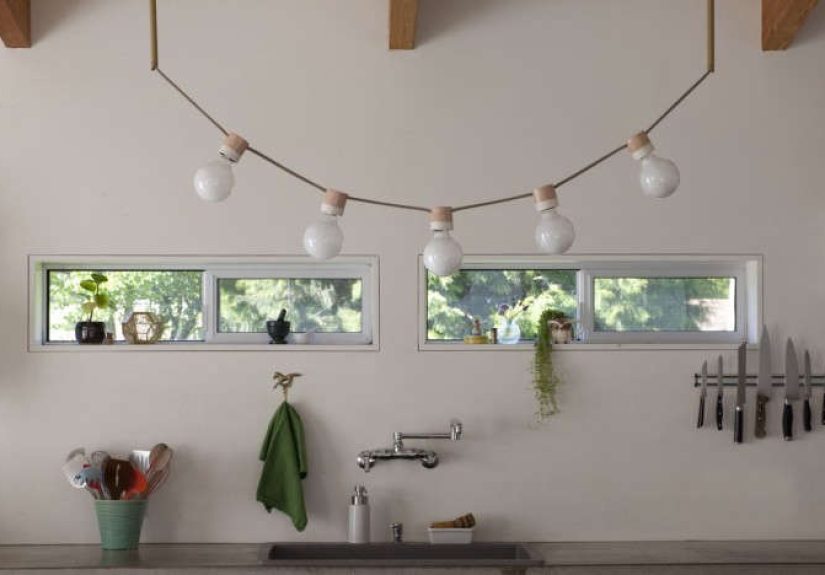
A great example is the Strung line, where cord becomes part of the design rather than something you hide out of embarrassment.
The Strung Sconce has been described with details like glazed ceramic socket covers, nylon cording, and brushed brass canopy/arms
a mix that reads equal parts modern, handcrafted, and “this will still look good after you repaint the room.” The Strung Pendant
leans into the same idea: functional components elevated into visual rhythm.
Collaborations that keep the catalog feeling alive
From the beginning, Standard Socket’s collections have involved a wider network of designersmeaning the aesthetic can stretch
without losing coherence. That variety helps the brand avoid the fate of many lighting lines: repeating the same silhouette forever
until your eyes glaze over like a donut.
And because the manufacturing side is part of the story, these aren’t just “concept” collaborations. They’re engineered products,
meant to be installed, used daily, and trusted.
Seattle’s Energy-Smart Lighting Future
Codes aren’t a buzzkillthey’re a design brief
Seattle’s Energy Code explicitly includes lighting: the number and type of fixtures, plus controls. In other words, the city treats
lighting as a major lever for energy use in new and remodeled buildingsnot an afterthought you pick at the end when you’re tired.
In practice, this pushes projects toward efficient sources (hello, LEDs) and smarter control strategies (dimmers, occupancy sensors,
daylight-responsive controls, and networked systems in larger buildings). Done well, it doesn’t feel restrictive; it feels like better
designlight where you need it, less waste where you don’t.
Seattle City Light incentives make upgrades more realistic
Seattle City Light’s Commercial and Industrial Retrofit Program supports energy-efficient upgrades, including LED lighting (new fixtures,
retrofit kits) and networked lighting controls. Incentive rates can change and are updated on a schedule (twice yearly), which is
a nerdy detail that matters if you’re planning a larger lighting refresh for a business or institution.
The program’s product eligibility guidance also reflects the broader reality of modern lighting: many incentives tie to qualified product
lists (such as DLC listings for fixtures and controls), and certain categories have specific requirements. Translation: “efficient lighting”
isn’t just about swapping a bulbit’s often about the system.
How this connects back to Standard Socket
Standard Socket sits at a sweet spot where Seattle lives: design-forward but practical, craft-driven but aware of standards, and modern
without feeling cold. As LEDs and advanced controls become the norm, the role of fixture design becomes even more importantbecause when
the light source is efficient by default, the fixture is what shapes the experience.
You can have the best LED in the world and still hate your room if your lighting is poorly placed, too bright, too cool in color temperature,
or stuck on one setting like it’s emotionally unavailable. Great fixturesand great planssolve that.
How to Get the “Standard Socket” Vibe at Home (Without Starting a Wiring Saga)
1) Build layers, not a single spotlight interrogation
Seattle-style lighting is rarely “one overhead light and vibes.” Aim for at least three layers:
ambient (general glow), task (focused work light), and accent (a sconce or small lamp that adds depth).
This makes a space feel intentionaleven if your laundry situation is not.
2) Choose a warm, flattering color temperature
Many Seattle interiors lean warm because it complements cloudy daylight and makes evenings feel cozy rather than clinical.
Warm doesn’t mean dim; it means inviting. If you want that Standard Socket moodsoft, modern, humanavoid ultra-cool lighting
unless you’re illuminating a laboratory (or doing surgery on a sourdough starter).
3) Let “functional” elements be part of the design
Standard Socket’s visual language often celebrates the basics: cord, socket, canopy, hardware. You can echo that with fixtures that show
a little structure instead of hiding everything behind a giant opaque shade. Look for exposed (but tasteful) hardware, visible cords,
and material contrasts like metal + ceramic or metal + wood.
4) Make safety the non-negotiable aesthetic
Lighting is where “DIY confidence” can accidentally become “DIY electricity.” If you’re changing fixtures or working with wiring,
use a licensed professional when needed, follow local requirements, and choose properly certified products. The goal is a beautiful room,
not a thrilling story for the emergency electrician.
Conclusion: A Small Socket, A Big Seattle Story
Standard Socket shines in Seattle because it captures something deeply local: respect for craft, love of collaboration, and the belief
that everyday objects can be improved without turning into gimmicks. It’s a brand name that sounds like a hardware aisleand that’s the point.
In a city where daylight plays hard to get, good lighting becomes a form of hospitality. And when a fixture is designed with equal parts
beauty and backbonematerials you can feel, proportions that make sense, and standards you can trustit doesn’t just brighten a room.
It changes how the room feels to live in.
Seattle will always have its gray days. But with the right lighting, those days stop being a problem and start being a mood.
The good kind.
500+ word experience add-on
Experience Add-On: A “Standard Socket” Night Walk Through Seattle’s Glow
If you want to feel what “Standard Socket Shines a Light in Seattle” means, you don’t need a showroom tour or an invitation-only design party.
You just need an evening, a light drizzle (Seattle provides this automatically), and the willingness to pay attention to the glow.
Start in Georgetown while the sky is still figuring out whether it’s sunset or just a darker shade of gray. Georgetown’s mix of industry,
art, and small businesses makes it the kind of neighborhood where fabrication feels normallike someone could be welding a frame a few blocks away
while you’re debating whether to order one more espresso. As storefront lights click on, notice how different spaces “announce” themselves:
warm bulbs near windows feel welcoming, while cooler, brighter lighting reads more utilitarian. Neither is wrong. They’re just different conversations.
From there, head north toward the stadium district and Pioneer Square. This is where you can watch lighting do architecture’s emotional work.
Old brick, tall windows, and historic details can look dramatic or dreary depending on the fixtures. The best-lit spaces don’t flood everything;
they create highlights and shadows, letting texture show off. A well-placed sconce can make a wall feel intentional. A pendant over a bar can turn
“a place to sit” into “a place to stay.”
Keep moving toward downtown as the city fully turns on. You’ll see the practical side of standards at workconsistent street and storefront lighting,
signage brightness that’s readable without feeling like a laser test, and interiors that rely on familiar lamp bases and fixtures because replacements
and maintenance have to be realistic. That’s the hidden power of “standard”: it makes beauty easier to keep alive. When parts are replaceable and systems
are common, good lighting isn’t precious. It’s livable.
Next, aim for a cozy stopsomewhere with layered lighting, not just overheads. Look for spaces that mix sources: a soft perimeter glow, focused table
lighting, and small accent points that make faces look friendly. (This is also known as “lighting that doesn’t make you regret being photographed.”)
If you’re with friends, pay attention to where people naturally gather. They’ll cluster where the light feels goodnear a warm pendant, beside a wall
with a gentle wash, or under a fixture that creates a calm pool of brightness. Humans are basically moths with better playlists.
Finish the night somewhere you can see the city from a distancenear the water, on a hill, or anywhere the skyline reflects back at you. The point
isn’t a perfect view; it’s the contrast. Seattle’s night glow is made of thousands of small decisions: streetlights, building interiors, signage,
residential windows, and the warm rectangles of apartment life. It’s a reminder that lighting design isn’t only about fixtures as objects; it’s about
how a city feels when the sun clocks out early.
That’s the Standard Socket lesson in real life: start with what’s standard, then make it betterthrough craft, collaboration, and choices that respect
how people actually live. You’ll go home noticing your own lamps differently. And you might even forgive Seattle for the graybecause the glow is doing
more work than you realized.