Table of Contents >> Show >> Hide
- Why Abby and Brittany Hensel Still Command So Much Attention
- What Is Actually Known, and What the Internet Keeps Guessing About
- Why the “Unusual Video” Hit So Hard
- The Real Story Is About Privacy, Not Just Virality
- What Coverage Often Misses About Abby and Brittany
- Why This Story Keeps Resurfacing Online
- Extended Reflection: What Experiences Like This Usually Feel Like
- Conclusion
Some viral stories arrive with facts. Others arrive with a dramatic soundtrack, a mysterious caption, and a comment section that starts sprinting before the truth has even tied its shoes. The renewed buzz around Abby and Brittany Hensel belongs firmly in the second category. After an unusual video and other cryptic social media moments resurfaced, online speculation exploded once again, with strangers acting like they had been appointed honorary spokespeople for two women they do not actually know.
That tension is exactly what makes this story so compelling. Abby and Brittany Hensel have lived in the public eye for decades, but never on the internet’s preferred terms. They became famous because their lives are rare, medically fascinating, and deeply human. Yet every time a wedding clip, recap montage, or baby-related image appears online, the same cycle begins: curiosity turns into gossip, gossip turns into certainty, and certainty turns into a thousand people typing with the confidence of close relatives at a backyard barbecue.
The smarter way to look at this moment is not to ask, “What wild secret did that video reveal?” It is to ask why any unusual clip involving Abby and Brittany Hensel instantly becomes a magnet for rumor. The answer has everything to do with celebrity culture, privacy, public curiosity about conjoined twins, and the uncomfortable modern habit of treating incomplete information like a finished documentary.
Why Abby and Brittany Hensel Still Command So Much Attention
Abby and Brittany Hensel are not new to public fascination. Long before TikTok detectives and comment-section philosophers arrived on the scene, the sisters were already known to millions of Americans. They first drew national attention as children, later appeared in documentaries, and eventually starred in Abby & Brittany, the TLC series that followed their lives as young adults navigating school, travel, work, and everyday independence.
Part of that interest is medical. Abby and Brittany are dicephalic parapagus conjoined twins, meaning they have two heads and one shared body. Each controls one side. Their lives naturally raise questions about coordination, communication, health, mobility, and independence. But part of the fascination is social as well. They have consistently challenged the lazy assumptions people make about disability, difference, identity, and what a full life can look like.
That is one reason the internet keeps circling back to them. Abby and Brittany are not famous in the usual celebrity sense. They are not constantly promoting projects, selling a brand, or live-streaming breakfast cereal reviews. Their relative privacy creates a vacuum, and the internet absolutely hates a vacuum. It fills the empty space with theories, predictions, and emotional overinvestment at high speed.
What Is Actually Known, and What the Internet Keeps Guessing About
The marriage became a major turning point
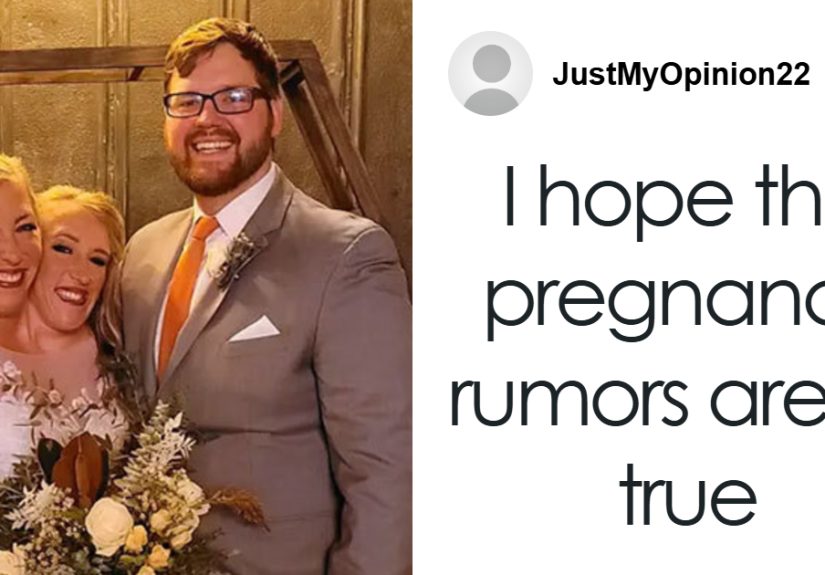
A huge wave of renewed attention began when the public learned that Abby had married Josh Bowling in 2021. The marriage only became widely known later, which made the reveal feel explosive even though the event itself was not new. Once that information surfaced, social platforms lit up with wedding photos, clips of the couple’s first dance, reposted headlines, and a steady stream of commentary from people acting both delighted and bizarrely entitled to private details.
That moment changed the way many casual observers talked about the Hensels. For years, internet curiosity focused on how the sisters lived day to day. After the marriage became public, the conversation shifted toward romance, family life, and future possibilities. In other words, the story became less “How do they manage daily routines?” and more “Tell us everything about their home life right now.” That is a very internet pivot.
The twins clearly noticed the noise
They did not exactly hold a press conference with a PowerPoint and a laser pointer. But their social posts made one thing clear: they were aware of the chatter. The now widely discussed videos and captions were interpreted as responses to criticism, intrusive attention, and the sudden spike in online obsession. That only added more fuel, because the internet loves nothing more than trying to decode a message that may simply mean, “Please calm down and mind your business.”
Then came additional posts, recap content, and resurfaced clips connected to their family life. Some viewers saw celebration. Some saw confirmation of rumors. Some saw vague symbolism where there may have been none at all. This is how speculation works online: one unusual video becomes ten different stories depending on who is holding the phone.
Why the “Unusual Video” Hit So Hard
The video at the center of renewed interest was not powerful because it offered crystal-clear answers. It was powerful because it did the opposite. It was brief, selective, emotionally suggestive, and open to interpretation. In internet terms, that is catnip.
When a public figure posts something unusual without context, viewers tend to assume there must be hidden meaning. Add a cryptic caption, a montage format, or images that hint at major life changes, and speculation starts multiplying like rabbits with Wi-Fi. In the Hensels’ case, the problem is intensified by how rarely they seem to explain themselves publicly. Silence becomes part of the story, even when silence may simply mean they do not feel like narrating their lives for strangers.
There is also the issue of visual storytelling. A short clip can feel intimate even when it is not informative. A glimpse of a wedding dance, a family photo, a replay montage, or a baby-related image can trigger huge emotional reactions. Viewers start connecting dots, then adding extra dots, then drawing an entire mural no one asked for.
Cryptic content invites projection
Most viral speculation is really projection wearing a detective hat. People bring their own assumptions to the screen. Some want a happy family update. Some want a mystery to solve. Some want to prove they understand a life they have only encountered through television clips and reposted headlines. The “unusual video” becomes a mirror, reflecting back whatever story the audience is most eager to tell.
That is why the exact same post can be interpreted as celebratory, defensive, secretive, joyful, sarcastic, or confirming. The internet does not merely consume content anymore; it auditions interpretations like it is casting a reality show.
A rare public appearance can trigger a rumor avalanche
Because Abby and Brittany are not constantly visible online, every new image carries outsized weight. If a mainstream celebrity posts a vague clip, it may disappear into the endless daily flood. If the Hensels do it, people treat it like a coded telegram from a long-lost island. The rarity of the update becomes part of the intrigue.
That is exactly what happened as wedding videos, recap posts, and later baby-related images stirred up renewed conversation. Instead of letting incomplete information remain incomplete, online audiences rushed to manufacture a satisfying ending. The trouble is that satisfying endings are often inaccurate ones.
The Real Story Is About Privacy, Not Just Virality
The strongest throughline in this entire media cycle is not scandal. It is boundaries. Abby and Brittany Hensel have spent their lives answering public curiosity, whether they wanted to or not. Their story has always carried educational value, but that does not erase their right to privacy. Those are two different things, and the internet tends to mash them together like leftovers in a microwave.
Viewers often justify invasive speculation by calling it harmless curiosity. But curiosity stops being harmless when it turns into surveillance, entitlement, or repeated demands for deeply personal explanations. That is especially true when the people involved are already subject to lifelong scrutiny because of how their bodies are perceived.
The strangest part is that many headlines about Abby and Brittany are framed like updates, but what they really reveal is the audience’s discomfort with ambiguity. People want neat categories. They want to know exactly what a marriage means in this context, exactly how family life works, exactly what any new photo “proves.” Real life, of course, has the audacity to be messier than a headline.
What Coverage Often Misses About Abby and Brittany
They are not an unsolved riddle
One of the laziest habits in entertainment coverage is turning human beings into puzzles. Abby and Brittany are often discussed as if every new image must answer a question the public has been assigned. But they are not a logic game. They are two adults living a life that includes work, family, history, medical uniqueness, and personal choice.
That distinction matters for SEO-minded content too. Articles perform better in the long run when they deliver useful context instead of empty sensationalism. Readers may arrive for a mysterious video, but they stay when a piece explains why the story matters and what it says about culture, privacy, and public attention. Clickbait gets the first tap. Context gets the trust.
The fascination is often less about the twins than about the audience
There is a revealing pattern in how people talk about the Hensels. The questions often say more about mainstream assumptions than about Abby and Brittany themselves. Can they do this? How does that work? What does this mean? The subtext is usually the same: people are still surprised that a life outside the norm can also be ordinary, stable, loving, and full.
That may be the biggest reason unusual videos spark such intense reactions. They interrupt the audience’s neat categories. A wedding clip is not just a wedding clip; it forces people to confront their assumptions about relationships. A family-oriented post is not just a post; it challenges the idea that only conventional lives fit conventional milestones. Suddenly, curiosity becomes a referendum on the viewer’s imagination.
Why This Story Keeps Resurfacing Online
There are several reasons this topic keeps trending. First, Abby and Brittany Hensel have a built-in audience from years of public exposure. Second, their updates are infrequent enough to feel important whenever they appear. Third, social media rewards mystery. A calm, fully explained life update rarely travels as far as a vague clip with emotional music and a caption that could mean six different things.
Fourth, and maybe most importantly, the internet has trained people to confuse access with ownership. Viewers see a post and feel invited into the entire backstory. But an image is not a contract, and a video is not an obligation. Public interest does not automatically create public rights.
That is why any responsible article about Abby and Brittany Hensel should resist the urge to turn speculation into certainty. The better story is not “Look at this bizarre secret.” It is “Look at how quickly we build elaborate narratives from scraps.” One of those approaches informs readers. The other just gives the algorithm a sugar rush.
Extended Reflection: What Experiences Like This Usually Feel Like
When an unusual video of a well-known figure starts circulating online, the public experience and the private experience are almost never the same. For viewers, it feels exciting. There is suspense, novelty, and the thrill of being “in the know.” Everyone wants to interpret the clues first. They send the clip to friends, post a theory, and refresh the comments to see whether their guess is winning. It feels social, fast, and harmless, like internet game night with too much caffeine.
For the people inside the story, the experience can be completely different. A video that may have been posted casually, emotionally, or without much intention beyond the moment suddenly becomes public property. Strangers dissect tone, body language, timing, clothing, background details, and captions as if they are investigating a major national event rather than another human being’s personal life. Even supportive attention can become exhausting when it arrives in giant waves and demands answers.
In stories involving Abby and Brittany Hensel, that effect is magnified because their visibility has always come with layers of projection. Many people first learned about them through documentaries or television, which created a sense of familiarity. But familiarity is not intimacy. Watching someone grow up on screen does not mean you understand their private decisions, their emotional boundaries, or what they owe the public now. That gap between perceived closeness and actual distance is where speculation breeds.
There is also the experience of being turned into a symbol. Some viewers see Abby and Brittany as inspiration. Others see them as a medical marvel. Others, less generously, treat them like an open-ended curiosity file. The problem with symbolism is that it flattens real life. Symbolic people are expected to explain everything, represent everyone, and behave in ways that satisfy the audience’s narrative needs. Real people usually have the nerve to be more complicated than that.
Another common experience in viral moments like this is the loss of context. A short clip can erase years of history. Suddenly, the public conversation centers on one unusual video while ignoring the long arc of the Hensels’ lives: their education, careers, routines, independence, and obvious determination. That flattening effect is one reason viral attention can feel so distorting. It makes a whole life look like one headline-sized mystery.
Then comes the comment-section problem. Online comments often swing between admiration and intrusion with almost no middle ground. One person writes a heartfelt blessing. Another asks a deeply personal question with shocking boldness. Another invents an explanation. Another repeats it as fact. Within hours, a rumor can gain the texture of truth simply because it has been repeated enough times by people using very confident punctuation.
For readers, the best response is not to suppress curiosity but to discipline it. Healthy curiosity asks, “What is confirmed?” Unhealthy curiosity asks, “What can I assume?” Healthy curiosity respects privacy. Unhealthy curiosity treats silence as an invitation to pry harder. If there is a lesson in the latest Abby and Brittany Hensel speculation, it is that unusual videos reveal just as much about online culture as they do about the people in them.
And maybe that is the final twist. The story feels like it is about one mysterious clip. In reality, it is about how modern audiences react whenever a rare, private, and deeply recognizable public figure appears onscreen for a few seconds. The video may be unusual. The internet’s behavior around it, by now, is anything but.
Conclusion
Speculation surrounding Abby and Brittany Hensel after an unusual video emerged says less about hidden revelations and more about the modern attention economy. Their lives have always invited public curiosity, but curiosity is not the same thing as entitlement. What is confirmed is meaningful enough: they have built a life marked by resilience, privacy, education, work, family ties, and an ability to weather the internet’s volume without handing over every detail on demand.
That is why this story resonates. It combines viral mystery, celebrity culture, medical fascination, and the timeless internet tradition of assuming way too much from way too little. But the most useful takeaway is refreshingly simple: unusual video or not, Abby and Brittany Hensel remain people first, headlines second. And in an era that monetizes every glance, that distinction matters more than ever.