Table of Contents >> Show >> Hide
- The Moment Simon Cowell Stopped Being Simon Cowell
- Meet Phillip Lewis: The Self-Taught Baton Twirler Who Brought a Parade to Prime Time
- What Actually Happened in the Audition (And Why It Landed)
- Baton Twirling Isn’t a GimmickIt’s a Sport (And the Rulebooks Prove It)
- Why Simon’s “Best I’ve Ever Seen” Line Hit So Loud
- The AGT Effect: What Happens After a Viral Audition
- What Other Performers Can Learn From Phillip Lewis’ Audition
- Experience Add-On: of “Baton Energy” You Can Actually Relate To
- Conclusion
Simon Cowell is not famous for handing out compliments like free samples at Costco. He’s famous for the opposite. So when Simon watches an America’s Got Talent audition and basically says, “Yep… that’s the one,” people lean in. And on Season 19, he did exactly thatafter a baton-twirling audition that sounded, on paper, like it belonged in a small-town parade… until it didn’t.
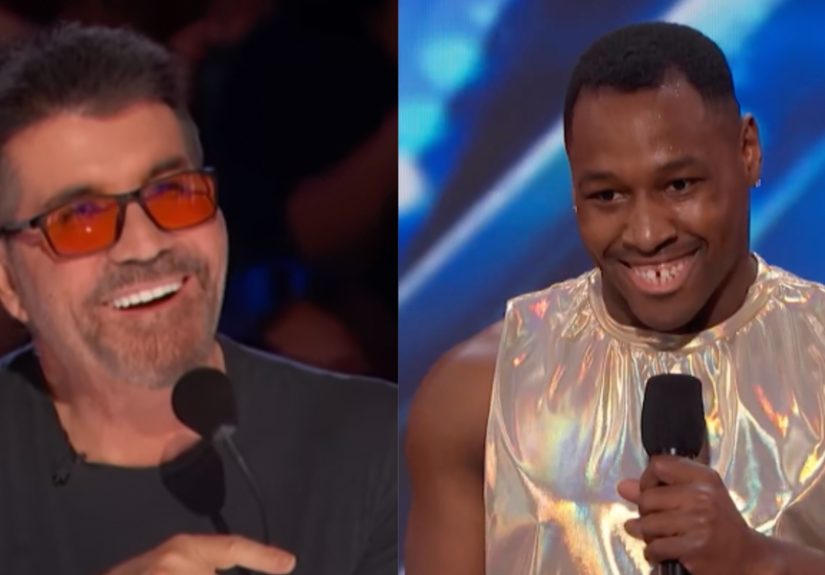
The act? Phillip Lewis, a self-taught baton twirler from Statesboro, Georgia, who walked into the AGT auditions and turned a “Wait, baton twirling?” into a full-blown “How is this human doing that?” moment. Simon’s reaction summed it up in one line: “This is the best I’ve ever seen.”
The Moment Simon Cowell Stopped Being Simon Cowell
The funniest part is that Simon basically admitted he wasn’t expecting much. Baton twirling, to most people, has a reputation: half marching band nostalgia, half “I once tried to spin a pencil in class and it shot across the room.” But Phillip’s audition didn’t feel like a throwback. It felt like a variety act built for televisiontight, fast, athletic, musical, and weirdly impossible to look away from.
The judges’ table that night featured Simon Cowell, Howie Mandel, Heidi Klum, and Sofía Vergarameaning Phillip didn’t just have to impress one person. He had to win over four wildly different “taste buds,” plus an audience that can sense boredom from three zip codes away. He didn’t just win them over. He made them stand up.
Meet Phillip Lewis: The Self-Taught Baton Twirler Who Brought a Parade to Prime Time
Phillip Lewis didn’t come in branding himself as the next pop star or heartbreak balladeer. He came in as a baton twirler a niche talent most people don’t see outside halftime shows and holiday paradesthen promptly reintroduced it as an athletic performance art that belongs on a Vegas stage.
From Drum Major Energy to Center Stage
Before the AGT spotlight, Phillip’s world included marching-band culture, where rhythm, posture, and performance are non-negotiable. Local coverage noted he’d been a drum major back homebasically the person in charge of turning “walk in a straight line” into “command a football stadium.” That background matters, because baton twirling on TV can’t be shy. It has to read big, bold, and cleareven to someone half-watching while reheating leftovers.
The Donut Practice Hack (Yes, Really)
Phillip’s audition didn’t start with a tragic backstory or a slow-motion montage. It started with personality. He joked about practicing with doughnutsa detail that sounds silly until you realize it’s actually a clever training trick: a donut can force cleaner hand placement, tighter control, and better consistency (plus it probably makes practice emotionally survivable).
And that’s the hidden genius of the moment: Phillip made the room laugh before he made it gasp. That’s showbiz math. Comedy lowers defenses. Then talent punches through.
What Actually Happened in the Audition (And Why It Landed)
Phillip’s routine was fast and layered: tosses, catches, continuous motion, bodywork, and musical timing that felt choreographed instead of chaotic. It didn’t look like “here are some tricks.” It looked like a full performance, built around a soundtrack and a vibe.
Even if you’ve never seen baton twirling up close, you could understand what was happening: the stakes were obvious, the timing was sharp, and the risk was real. That clarity is everything on AGT, where audiences don’t have time for a seminar. You get about two minutes to make strangers care.
Why the Crowd Reacted So Hard
- Speed: The routine didn’t drag. It accelerated.
- Control: The baton wasn’t “happening to him.” He was commanding it.
- Showmanship: Facial expression, posture, timingeverything read as “performer,” not “hobbyist.”
- Surprise factor: People expected basic. They got “how is this not a full-time sport on ESPN?”
Simon’s praise wasn’t just about difficulty. It was about presentation. In fact, he highlighted Phillip’s “off-the-charts” showmanshipbecause on a show like AGT, technical skill is the admission ticket, but showmanship is what sells the memory.
Baton Twirling Isn’t a GimmickIt’s a Sport (And the Rulebooks Prove It)
Outside of reality TV, baton twirling is an organized competitive sport with formal rules, judging criteria, and multiple event types. Organizations like the United States Twirling Association describe baton twirling as a sport that blends dance and gymnastics while manipulating one, two, or even three batons.
If you’ve ever wondered why Phillip’s performance felt so “legit,” it’s because twirling has structure. Competitive circuits evaluate athletes on things like variety, difficulty, control, smoothness, presentation, and showmanship. In other words: the exact blend that plays well on a televised talent show.
What Judges Look For in Real Competitions
Different organizations spell this out in different ways, but the core idea is consistent: twirling isn’t just “don’t drop it.” It’s the balance of difficulty + execution + performance quality. Some rule sets even assign penalties for drops and breaks in continuitybecause elite twirling isn’t only about being brave; it’s about being clean.
Why That Matters on AGT
AGT judging isn’t the same as competition twirling judging. It’s part skill, part entertainment value, part “did America just learn something new in two minutes?” Phillip’s audition hit all three. Even viewers who couldn’t name a single trick could still feel the precision.
Why Simon’s “Best I’ve Ever Seen” Line Hit So Loud
Simon Cowell has watched more auditions than most people have watched episodes of their favorite show. He’s also a producer, meaning he’s not only evaluating talenthe’s evaluating watchability. When he says something is the best he’s ever seen, he’s really saying: “This is world-class AND it plays on television.”
Translation: It Was a Perfect AGT Act
A “perfect AGT act” has a few traits:
- It’s instantly understandable (no long setup required).
- It escalates (each beat adds intensity).
- It’s visually dynamic (the camera loves it).
- It has personality (people remember the human, not just the trick).
Phillip checked every box. He didn’t need props the size of a truck or a choir of 40 people. He needed one baton, two minutes, and the confidence to perform like he belonged there. The result: an audition clip people replay, re-share, and argue about in comment sections like it’s a sporting event.
The AGT Effect: What Happens After a Viral Audition
On AGT, auditions are the spark, not the whole fire. The real test comes laterespecially during live shows, when timing is tighter, pressure is louder, and one small mistake feels ten times bigger. Phillip advanced beyond auditions and later appeared in the live show phase, where competition is brutal and viewer voting can turn a fan favorite into an instant exit.
That’s not a knock. That’s the reality of live competition TV. The talent level gets stacked, the margins get thinner, and the audience’s attention gets split across singers, dancers, danger acts, comedians, and everything in between.
Why Variety Acts Have a Harder Road (Sometimes)
Singing is easy to “rank” in your head. Variety acts are harder. People compare apples to motorcycles to a drone show. Which is why a variety act needs an identity beyond “I do a cool thing.” Phillip’s identity was clear: high-level baton twirling with stadium energy and a wink of humor. That’s a brand, not just a skill.
What Other Performers Can Learn From Phillip Lewis’ Audition
1) Explain Fast, Perform Faster
Phillip gave the room just enough context to understand what they were about to see, then got to the point. No long speech. No extra fluff. Just: “Here’s me. Here’s the weird donut detail. Now watch this.”
2) Make the Risk Obvious
One reason baton twirling works on TV is that the risk is visible. You don’t need expertise to know a high toss could go wrong. Your brain understands gravity. Gravity is a universal language.
3) Performance Face Is a Superpower
A lot of skilled people look like they’re taking a math test while performing. Phillip looked like he was hosting the party. That difference matters, because audiences don’t just vote for difficulty. They vote for how an act makes them feelexcited, impressed, joyful, surprised.
Experience Add-On: of “Baton Energy” You Can Actually Relate To
You don’t have to own a baton to understand why Phillip Lewis’ audition hit people in the gutin the best way. Most of us have tried to learn some skill that looked simple until we attempted it. Think about the first time you tried to juggle. Or flip a pancake. Or do that “spin a pen around your thumb” trick that always ends with you accidentally launching it at a coworker like a tiny plastic javelin.
Baton twirling lives in that same universe of “looks easy, is absolutely not easy.” It’s rhythm plus precision plus hand-eye coordination, layered with movement that has to stay smooth while your brain quietly screams, “PLEASE CATCH IT.” Watching a great twirler feels like watching someone hack physics. Your body almost flinches for them on the catches, because you can imagine the mistake before it happens.
That’s also why Phillip’s donut practice detail is secretly inspiring. Everybody loves a glamorous origin story, but most skills are built in unglamorous places: driveways, bedrooms, empty gyms, backyards, and the five square feet of living room your family begrudgingly lets you claim as “practice space.” Plenty of people learned to dance from mirrors, learned guitar on cheap instruments, learned comedy by bombing in front of five strangers, learned a sport by doing the same motion a thousand times until their muscles stopped negotiating.
The most relatable part of Phillip’s AGT moment is that he didn’t present himself like a “chosen one.” He presented like a person who worked. If you’ve ever practiced something alonewithout a coach, without a team, without an audience you know how much motivation it takes to keep going when nobody is clapping. That’s the grind: doing the reps without the reward. It’s filming yourself, deleting the video, filming again. It’s the tiny improvements you notice only after weeks, not minutes.
And then there’s the performance pressuresomething even non-performers recognize. Most people have had a “spotlight” moment: a presentation at work, a big interview, a toast at a wedding, a school recital, a first date where your brain forgets how to be a person. Your hands get sweaty, your timing gets weird, and suddenly you can’t remember the word for “chair.” Now imagine doing that while tossing a metal rod into the air and catching it on beat.
That’s why Phillip’s audition resonates beyond the novelty of baton twirling. It’s a reminder that “small” talents become “big” when someone commits to them with seriousness, creativity, and joy. The lesson isn’t “go buy a baton.” The lesson is: whatever your baton isyour niche skill, your odd hobby, your quiet obsessionpractice it like it matters. Because one day, it might walk onto a stage and make even Simon Cowell grin.
Conclusion
Phillip Lewis’ America’s Got Talent audition worked because it was a rare combo: elite control, nonstop momentum, and the kind of showmanship that turns a niche sport into a mainstream moment. Simon Cowell calling it “the best I’ve ever seen” wasn’t just a complimentit was proof that a well-built variety act can surprise even the toughest judge in the room.
Whether you came for the viral quote, the donut lore, or the sheer chaos of a baton moving faster than your Wi-Fi, the takeaway is simple: talent gets attention, but personality and performance make people remember.