Table of Contents >> Show >> Hide
- Marilyn Monroe’s Death: The Official Story
- Who Was Thomas Noguchi, the Coroner Connected to the Case?
- The Finding That Kept the Mystery Alive
- Why the Missing Follow-Up Testing Matters
- Why People Still Question the Marilyn Monroe Autopsy
- The Role of the 1982 Reinvestigation
- Why the “Finally Revealed” Headline Is Complicated
- The Human Story Behind the Forensic File
- What the Autopsy Controversy Teaches Us About Evidence
- Why Marilyn Monroe’s Death Still Dominates Search Interest
- So, What Was the Shocking Finding?
- Conclusion: The Mystery Is Not the Same as the Myth
- Experience Section: Reading the Marilyn Monroe Autopsy Story in the Age of True Crime
Marilyn Monroe’s death has never behaved like an ordinary Hollywood story. It has been reported, investigated, reexamined, dramatized, whispered about, shouted about, and recycled through enough documentaries and late-night theories to fill a studio backlot. Yet the most unsettling detail is not the loudest conspiracy theory. It is quieter, stranger, and more frustrating: the deputy coroner who performed Monroe’s autopsy reportedly identified unanswered forensic questions that could not be fully explored because key materials were no longer available for deeper testing.
That is the real “shocking finding” behind the renewed attention around the Marilyn Monroe autopsy. It does not prove murder. It does not rewrite history with a dramatic courtroom-style reveal. But it does expose a gap in the recordone large enough to keep public fascination alive for more than six decades. In a case where every detail matters, the unanswered questions around testing, evidence handling, and official conclusions still feel like a missing reel from a movie everyone has been trying to finish since 1962.
Marilyn Monroe’s Death: The Official Story
Marilyn Monroe was found dead in her Brentwood, Los Angeles home on August 5, 1962. She was only 36 years old. At the time, she was not merely a celebrity; she was one of the most recognizable women in the world. Her films, photographs, interviews, marriages, heartbreaks, and public image had made her both a person and a symbolHollywood glamour wrapped around private vulnerability.
The official conclusion was that Monroe died from acute barbiturate poisoning, and her death was classified as a probable suicide. The Los Angeles County coroner’s office reached that conclusion after reviewing the autopsy findings, toxicology results, scene evidence, and Monroe’s medical and personal history. In the years since, that ruling has remained the formal position most often cited by historians and investigators.
Still, “official” does not always mean “emotionally satisfying.” Monroe’s death came at the intersection of fame, prescription drug culture, politics, tabloid hunger, and public grief. People wanted certainty. What they got instead was a conclusion with the word “probable” attached to it. And in true Hollywood fashion, the word “probable” became a trapdoor.
Who Was Thomas Noguchi, the Coroner Connected to the Case?
Dr. Thomas Noguchi, then a deputy medical examiner in Los Angeles County, performed Marilyn Monroe’s autopsy. He later became famous as the “coroner to the stars,” a title that sounds like it was invented by a publicity agent with a cigarette holder and a flair for drama. Noguchi would become associated with several high-profile cases involving celebrities and public figures, but Monroe’s death remained one of the cases that followed him for the rest of his career.
Noguchi worked under Chief Coroner Theodore Curphey, who oversaw the office at the time. The coroner’s office faced intense pressure, not only because Monroe was famous, but because every newspaper, studio insider, fan, and rumor merchant wanted answers immediately. In that environment, forensic science had to compete with the speed of headlines. Spoiler alert: headlines usually run faster.
The Finding That Kept the Mystery Alive
The detail now drawing renewed attention centers on what Noguchi reportedly observed during the autopsy: there was no obvious visual evidence in Monroe’s stomach that clearly matched a large ingestion of capsules. That point has been discussed in books, interviews, forensic commentary, and public debates for years. On its own, it does not overturn the official cause of death. Drugs can be absorbed, bodies process substances differently, and visual inspection is not the same as full toxicological analysis.
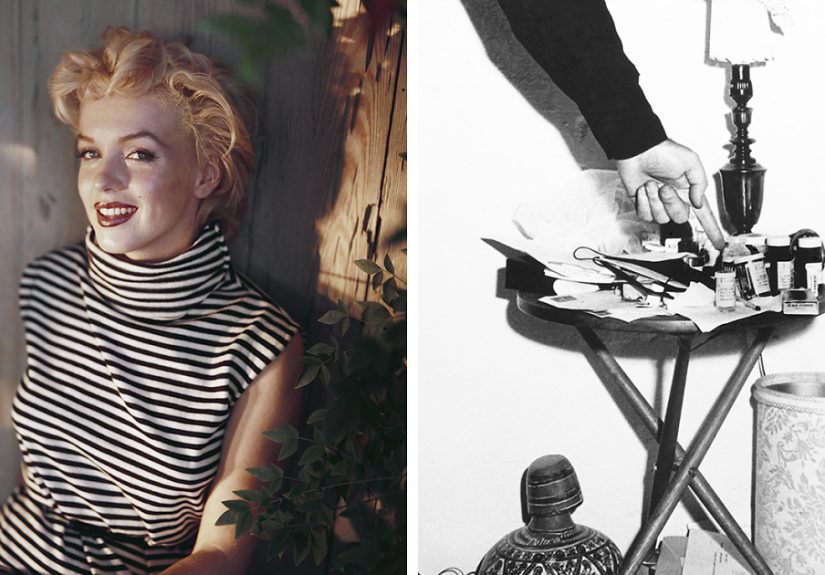
But the troubling part is what came next. According to later accounts involving Noguchi and researchers who examined the case, samples that could have supported additional testingsuch as stomach contents and related tissue materialswere reportedly not preserved for the deeper analysis Noguchi wanted. Once those materials were gone, the opportunity to answer certain questions was gone with them.
That is why the phrase “the coroner wasn’t allowed to probe” should be understood carefully. It does not necessarily mean a villain in a dark suit slammed a door and declared, “No more science!” The more precise point is that Noguchi could not fully pursue certain forensic questions after key materials were disposed of or became unavailable. In a death investigation, that kind of gap matters.
Why the Missing Follow-Up Testing Matters
Forensic investigations depend on preservation. If samples are kept, they can be retested, reviewed, and compared. If samples are lost, discarded, contaminated, or destroyed, future certainty becomes much harder. In Monroe’s case, the absence of complete follow-up testing helped fuel decades of debate over whether the official conclusion captured the full picture.
The question was not simply, “What was found in her system?” Toxicology did identify the substances that led investigators to the official cause of death. The larger question was whether the route and circumstances could be reconstructed with absolute confidence. Without complete preserved materials, some possibilities became harder to evaluate. That does not automatically create evidence of a crime. But it does create room for uncertainty, and uncertainty is the oxygen of every long-running Hollywood mystery.
No, This Does Not Prove a Murder Plot
Here is where responsible reporting matters. The incomplete evidence trail does not prove Marilyn Monroe was murdered. It does not prove a political cover-up. It does not prove that every theory involving famous men, government agencies, organized crime figures, doctors, housekeepers, or studio executives is suddenly true. The 1982 review by the Los Angeles County District Attorney’s Office found no credible evidence supporting a murder theory and did not overturn the original finding.
That conclusion is important because Monroe’s death has often been treated like a choose-your-own-adventure novel for adults who own too many corkboards and red strings. Some theories rely on speculation. Others lean on secondhand claims. A few raise fair questions about timing, evidence handling, and investigative procedure. The responsible approach is to separate the documented gaps from the dramatic leaps.
Why People Still Question the Marilyn Monroe Autopsy
Monroe’s case remains controversial because it sits at the crossroads of three powerful forces: forensic ambiguity, celebrity mythology, and public distrust. Each one alone can generate debate. Together, they create a cultural machine that never stops running.
1. The Autopsy Raised Questions
The most credible area of continuing debate concerns the limitations of the forensic record. Noguchi’s reported concern about the lack of visible pill residue and the inability to pursue full follow-up testing gave later writers and investigators a real detail to examine. Unlike wild rumors, this issue is tied to the procedures and materials of the autopsy itself.
2. The Timeline Felt Unclear to the Public
Many accounts of Monroe’s final night include confusing timelines, delayed notifications, and conflicting memories from people connected to the scene. Over time, these inconsistencies became fertile ground for suspicion. In high-profile deaths, even ordinary confusion can look sinister once the world starts rewinding the tape frame by frame.
3. Monroe’s Fame Made Everything Bigger
Had the same forensic gap occurred in an unknown person’s case, it might have remained a technical concern in a file box. Because it involved Marilyn Monroe, it became part of American mythology. She was not just a movie star; she was a symbol of beauty, sadness, ambition, exploitation, and reinvention. The public did not want her story to end in a clinical paragraph.
The Role of the 1982 Reinvestigation
Two decades after Monroe’s death, the Los Angeles County District Attorney’s Office reviewed the case after public speculation intensified. The review examined available records, prior investigative material, and various claims that had circulated over the years. Its conclusion was clear: investigators did not find credible evidence of homicide.
That does not erase every question. It does, however, place a boundary around what can responsibly be claimed. The available evidence supported the original classification, while the gaps in the record remained frustrating but not conclusive. In other words, the case contains mysteries, but not every mystery is proof of a hidden crime.
Why the “Finally Revealed” Headline Is Complicated
The phrase “finally revealed” makes the story sound as if a locked vault opened yesterday and Marilyn Monroe’s final secret stepped out wearing diamonds. The reality is more nuanced. Many of the key concerns around Noguchi’s autopsy observations, missing materials, and incomplete follow-up testing have been discussed for years in books, interviews, and investigative retrospectives. What is new is the renewed public attention around those details, especially as more readers revisit the case through modern true-crime culture.
That distinction matters for SEO, journalism, and plain old honesty. A headline can be dramatic, but the article underneath should not sell fireworks when the evidence only supports a flashlight. The real story is still compelling: a young deputy coroner handled one of the most famous deaths in American history, noticed details that raised questions, and later found himself unable to resolve them completely because the forensic trail had limits.
The Human Story Behind the Forensic File
It is easy to talk about Monroe as a mystery and forget that she was a person. Before she was “Marilyn Monroe,” she was Norma Jeane Mortenson, a girl who grew up through instability and remade herself into a global star through determination, discipline, and a powerful understanding of image. She was funny, ambitious, insecure, intelligent, and far more business-minded than her “dumb blonde” screen persona suggested.
Monroe fought for better roles, created her own production company, studied acting seriously, and understood the machinery of fame better than many of the men who claimed to manage it. She could turn a publicity crisis into career momentum. She could make a camera look like it had just discovered electricity. She could deliver comedy with timing so sharp it should have come with a warning label.
That is why her death still stings. The autopsy questions matter, but they should not swallow the entire woman. Marilyn Monroe was more than a case file, more than a rumor, and more than a tragic headline. The best writing about her death should remember her life.
What the Autopsy Controversy Teaches Us About Evidence
The Monroe case is a reminder that evidence is not just about what is discovered; it is also about what is preserved. In modern forensic practice, chain of custody, sample retention, documentation, and independent review are crucial. When those safeguards are incomplete, even a correct conclusion can become harder to defend later.
That is the uncomfortable lesson at the center of the Marilyn Monroe autopsy findings. The official ruling may still stand, and the murder theories may remain unsupported, but the case shows how procedural gaps can shape public memory. A missing test can become a national question. A discarded sample can become a legend. A technical limitation can become, in the public imagination, a locked door.
Why Marilyn Monroe’s Death Still Dominates Search Interest
Search engines love mysteries because people love unfinished stories. Queries like “Marilyn Monroe autopsy,” “Marilyn Monroe cause of death,” “Thomas Noguchi Marilyn Monroe,” and “Marilyn Monroe death investigation” continue to attract attention because the case feels unresolved to many readers. It combines Old Hollywood glamour, forensic uncertainty, famous names, official records, and the eternal question: what really happened?
But responsible SEO content should not exploit tragedy. It should inform. The goal is not to turn Monroe’s death into a carnival attraction. The goal is to explain why one specific forensic issue continues to matter and how it fits within the broader historical record.
So, What Was the Shocking Finding?
The most grounded answer is this: during the autopsy, Dr. Thomas Noguchi reportedly did not find the kind of obvious visual stomach evidence that some people expected in a fatal oral overdose case, and he was later unable to fully pursue additional testing because important materials were no longer available. That is the finding that continues to raise eyebrows.
It is shocking not because it proves a dramatic alternate ending, but because it reveals how fragile certainty can be. In one of the most famous deaths of the twentieth century, the public record contains a gap that no later investigation can completely close. That gap has kept Monroe’s death in the cultural conversation for more than 60 years.
Conclusion: The Mystery Is Not the Same as the Myth
Marilyn Monroe’s autopsy remains one of the most discussed forensic events in Hollywood history because it includes both official conclusions and unanswered questions. The official cause of death was acute barbiturate poisoning, and investigators later found no credible evidence of homicide. At the same time, Thomas Noguchi’s reported concerns about incomplete follow-up testing gave the public a legitimate reason to ask why every possible question was not answered while the evidence still existed.
The truth is less tidy than a headline and more interesting than a conspiracy slogan. The “shocking finding” is not a secret confession, a hidden villain, or a final scene worthy of a noir thriller. It is the realization that the forensic record had limitsand those limits helped turn Marilyn Monroe’s death from a tragic event into an enduring American mystery.
Experience Section: Reading the Marilyn Monroe Autopsy Story in the Age of True Crime
Anyone who spends time reading about Marilyn Monroe’s death quickly learns that this topic is not just a historical case; it is an experience. You begin with one article, then another, then a documentary clip, then a biography excerpt, and suddenly you are staring at your screen like a detective in a 1940s movie who has not slept since Tuesday. The case pulls readers in because it feels both famous and unfinished. There is enough documentation to make it serious, enough missing context to make it frustrating, and enough Hollywood atmosphere to make every unanswered question glow like a neon sign on Sunset Boulevard.
The most useful experience a reader can bring to this topic is patience. Marilyn Monroe’s death has been covered by serious historians, forensic writers, entertainment journalists, biographers, government reviewers, and, yes, plenty of people who treat speculation as if it arrived on official letterhead. Reading responsibly means slowing down. Ask what is documented, what is reported, what is inferred, and what is simply repeated because it sounds dramatic.
For example, the autopsy controversy is worth discussing because it involves real questions about forensic procedure. Missing or unavailable materials can limit later review. That is a meaningful point. But jumping from that point to a fully formed murder theory is like finding one loose thread on a sweater and declaring you have discovered a parachute. The thread matters. The parachute may not exist.
Another important experience is learning to see Monroe as more than the circumstances of her death. Many readers arrive because of the mystery, but they stay because Marilyn herself is fascinating. She was a hardworking performer, a skilled comic actress, a woman who challenged studio control, and a public figure who understood fame with painful clarity. Her death should not be allowed to erase her agency, talent, or intelligence.
Modern true-crime culture often rewards certainty, especially the kind delivered with ominous music and a narrator who sounds like he has never trusted a lampshade. But the Monroe case teaches the opposite lesson: sometimes the honest answer is that the official record supports one conclusion while still leaving procedural questions behind. That may not be as flashy as a grand conspiracy, but it is more respectful of the facts.
For writers, editors, and web publishers, the experience of covering this topic should come with a rule: be compelling without being careless. The headline may attract readers, but the body of the article has to earn their trust. Monroe’s story does not need exaggeration. It already contains fame, heartbreak, forensic uncertainty, institutional pressure, and a woman whose image still outlives nearly every studio executive who tried to define her. That is more than enough.
Note: This article is based on widely reported public records, reputable historical reporting, and documented discussion of the Marilyn Monroe death investigation. It presents disputed claims as disputed and does not claim that unproven theories are established fact.