Table of Contents >> Show >> Hide
- Quick Eczema Refresher: Why Your Skin Feels Like Sandpaper
- What Rosehip Oil Is (and Why People Put It on Their Skin)
- Rosehip Oil for Eczema: What the Evidence Really Suggests
- How to Use Rosehip Oil for Eczema Safely (Without Starting a Flare)
- Safety: Side Effects, Risks, and Who Should Be Extra Careful
- When Rosehip Oil Might Help Most
- Smart Eczema Plan: Where Rosehip Fits (If It Fits at All)
- Conclusion: Should You Try Rosehip Oil for Eczema?
- Real-World Experiences With Rosehip Oil and Eczema (What People Commonly Report)
Eczema (especially atopic dermatitis) has a special talent: it shows up uninvited, stays too long, and gets cranky when you ignore it.
If you’ve ever stared at your lotion shelf like it’s a game show“Behind Door #3 is… burning and regret!”you’re not alone.
Rosehip oil has become a popular “natural” option for dry, irritated skin, and it’s often marketed like a tiny bottle of calm.
But can it actually help eczema, and how do you use it without making your skin throw a tantrum?
This guide breaks down what rosehip oil can and can’t do for eczema, what the science suggests (and what it doesn’t), and the practical safety steps
that matter mostbecause “natural” isn’t automatically “harmless,” and eczema skin is basically the world’s pickiest roommate.
Quick Eczema Refresher: Why Your Skin Feels Like Sandpaper
Eczema is more than “dry skin”
Eczema is tied to a weakened skin barrier and an overachieving immune response. When the barrier is compromised, your skin loses water faster,
becomes more sensitive to irritants and allergens, and is more likely to itch. Scratching then damages the barrier even more, creating the classic
itch–scratch spiral. Fun!
Moisture strategy matters more than the “perfect” ingredient
Eczema care usually works best when you focus on boring (but effective) basics: gentle cleansing, consistent moisturizing, and avoiding known triggers.
Oilsincluding rosehipare best viewed as possible supporting players, not the starring role, especially during active flares.
What Rosehip Oil Is (and Why People Put It on Their Skin)
Rosehip oil vs. rosehip “extract” vs. rose essential oil
First, a quick translation of skincare label chaos:
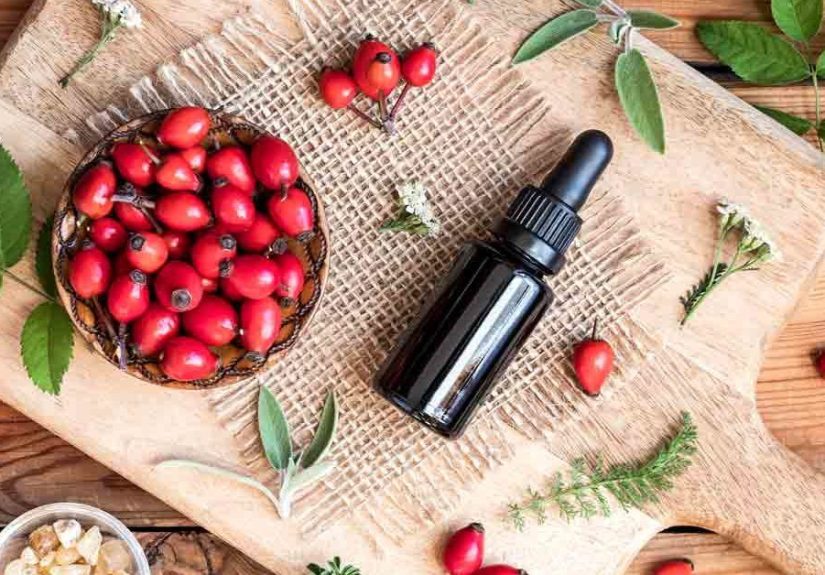
- Rosehip oil usually means oil pressed from rosehip seeds (commonly from wild rose species). It’s a carrier oilfatty, moisturizing, and used topically.
- Rosehip extract can mean many things (water-based extracts, powders, etc.) and won’t behave the same as an oil.
- Rose essential oil is fragrance-heavy and much more likely to irritate eczema-prone skin. If your product smells like a fancy bouquet, proceed with caution.
Why rosehip oil gets hype
Rosehip oil is popular because it contains a mix of fatty acids and antioxidants that, in theory, support the skin barrier and calm visible irritation.
It’s also lightweight compared with some heavier oils and butters, which makes it more appealing for daytime use.
Rosehip Oil for Eczema: What the Evidence Really Suggests
1) Barrier support is the main “why”
Eczema-friendly skincare is often about reducing water loss and helping the barrier do its job again. Oils can help by forming a thin occlusive layer
(reducing evaporation) and by replenishing lipids that are part of the barrier’s structure.
Rosehip oil is rich in polyunsaturated fatty acids, which are commonly discussed in barrier-focused skincare.
2) Anti-inflammatory potential is plausible, but not a guaranteed eczema fix
In lab and cosmetic research contexts, rosehip components are often described as antioxidant or soothing. That doesn’t automatically translate into
“eczema treatment,” because eczema is complicated and triggers vary wildly from person to person. Think of rosehip oil as a possible comfort tool for
drynessnot as a replacement for proven eczema therapies when inflammation is driving symptoms.
3) Direct clinical evidence for rosehip oil in eczema is limited
Here’s the honest headline: there isn’t a giant pile of high-quality clinical trials proving that rosehip oil reliably treats eczema.
Most eczema evidence is stronger for consistent moisturization in general (especially with thick, fragrance-free creams/ointments),
and for certain emollient formulations that support barrier function.
That doesn’t mean rosehip oil is uselessit means your expectations should be realistic.
4) Natural oils can help some people… and annoy others
Some plant oils are helpful for dry, eczema-prone skin, while others can sting, trigger irritation, or simply feel awful. Eczema skin can react
to “good” ingredients if the barrier is cracked or if you’re sensitized to something in the product. This is why patch testing and slow rollouts matter.
How to Use Rosehip Oil for Eczema Safely (Without Starting a Flare)
Step 1: Pick the right kind of product
- Look for 100% pure, fragrance-free rosehip seed oil (no added essential oils, no “parfum,” minimal ingredients).
- Choose dark glass packaging when possibleoils can oxidize with light and heat, and oxidized oils may irritate sensitive skin.
- Avoid “blends” if you’re reactive. The more ingredients, the more opportunities for your skin to say, “Absolutely not.”
Step 2: Patch test like you mean it
Patch testing is not just a cute suggestionit’s how you avoid turning “self-care” into “why is my skin on fire.”
Try this simple approach:
- Apply a drop to a small area (inner forearm or behind the ear).
- Leave it on and watch for redness, itching, swelling, or burning over the next 24–48 hours.
- If you react, stop. If you don’t react, move to a small eczema-prone area for a second test before full use.
If you have stubborn rashes or frequent reactions to products, a clinician-supervised patch test can identify specific allergens.
Step 3: Use it at the right time (timing = results)
Oils tend to work best when applied to slightly damp skinright after bathing or washingbecause they help lock in existing moisture.
If you apply oil to bone-dry skin, it can feel nice, but it may not hydrate as effectively as pairing it with a true moisturizer.
Step 4: Layer it the eczema-friendly way
A practical approach for many people:
- Option A (most common): Apply your fragrance-free cream/ointment first, then seal with a tiny amount of rosehip oil.
- Option B (lighter feel): Mix 1–2 drops of rosehip oil into a bland moisturizer in your palm, then apply.
- Option C (hands/feet rescue): Moisturizer + rosehip oil + cotton gloves/socks for an hour (or overnight if tolerated).
Start with once daily, then adjust. More is not always betterespecially with eczema.
Step 5: Know where NOT to use it
- Open, weeping, or infected skin (wait until the area is healing or follow clinician guidance).
- Very irritated flare zones where almost anything stingsuse your most boring, bland option first.
- Eyelids unless your clinician says it’s okay; the skin is thin and reactive there.
Safety: Side Effects, Risks, and Who Should Be Extra Careful
Common issues
- Stinging or burning (often a sign the barrier is too compromised right now).
- Redness or itching (possible irritation or allergystop and reassess).
- Breakouts in acne-prone areas (oils can be too heavy for some faces).
If you’re allergy-prone
People with a history of contact dermatitis, fragrance allergy, or very sensitive skin should be especially cautious.
Even “clean” oils can trigger reactions, and blended products increase risk.
Pregnancy, kids, and medical conditions
For infants, toddlers, pregnancy, or if you’re using prescription eczema treatments, check with a clinician before adding new topicals.
Not because rosehip oil is automatically dangerousbut because eczema plans should be coordinated, and sensitive populations deserve extra caution.
When Rosehip Oil Might Help Most
Best-case scenarios
- Mild dryness between flares (maintenance mode).
- Rough patches that need extra softness (especially hands, elbows, shins).
- As a “sealant” step over a proven moisturizer to reduce water loss.
When it’s probably not enough
- Moderate-to-severe flares with significant inflammation and itching.
- Frequent infections or cracked, painful skin.
- Sleep-disrupting itch (that’s your cue to escalate care, not just shop for another oil).
Smart Eczema Plan: Where Rosehip Fits (If It Fits at All)
Think of rosehip oil as an optional accessory in an eczema routinelike a scarf. Nice when it works, but you still need a coat when it’s freezing.
A solid eczema plan usually includes:
- Gentle cleanser (or just water for some washes)
- Consistent use of fragrance-free, barrier-supporting moisturizers
- Trigger management (detergents, fabrics, sweating, stress, etc.)
- Clinician-guided anti-inflammatory treatments when needed
Conclusion: Should You Try Rosehip Oil for Eczema?
Rosehip oil may help some people with eczema by supporting comfort and softnessespecially as a sealing step over a dependable moisturizer.
But it’s not a guaranteed eczema treatment, and the strongest evidence still favors consistent moisturization and barrier-first care.
If you’re curious, patch test first, choose a simple fragrance-free product, and introduce it slowly.
And if your eczema is intense, persistent, or affecting sleep, bring in professional guidanceyour skin deserves more than guesswork.
Real-World Experiences With Rosehip Oil and Eczema (What People Commonly Report)
Let’s talk about the messy, real-life side of eczema carethe part where routines collide with weather, stress, laundry detergent betrayals,
and the fact that your skin can change its opinion overnight.
While everyone’s eczema is different, people who experiment with rosehip oil often describe a few repeating themes.
These aren’t guarantees (eczema hates guarantees), but they can help set realistic expectations.
Experience #1: “It helped dryness, but not the itch”
A common report is that rosehip oil improves the “tight, papery” feeling of dry skinespecially on shins, elbows, and hands.
People often like it most when used over a plain moisturizer on damp skin. The oil gives a smoother finish and can reduce that mid-day dryness
where your skin starts feeling like it’s shrinking around your bones.
But many also notice it doesn’t fully calm the deep itch of an active flare. That makes sense: itch during flares is often driven by inflammation,
barrier breakdown, and nerve irritationthings that may need stronger, clinician-guided anti-inflammatory care.
In practice, rosehip oil becomes a “comfort step,” not the main fix.
Experience #2: “My skin liked it… until it didn’t”
Some people do great for weeks and then suddenly get redness, bumps, or burning.
Often the culprit isn’t rosehip oil itself but a change in context: winter air, over-washing, a new body wash, stress, or using the oil on freshly flared skin.
Another factor is oxidation. Oils can degrade over time (especially if stored in heat or sunlight). When an oil goes off, sensitive skin may react more.
People who do best tend to store it properly, keep the routine simple, and avoid applying it to angry, freshly inflamed patches.
The biggest takeaway: if your skin starts protesting, don’t “push through.” Eczema rarely rewards stubbornness.
Experience #3: “Patch testing saved me from a full-body meltdown”
Many eczema veterans learn the hard way that new products deserve a trial run.
People who patch test rosehip oil (and any new skincare) often avoid the nightmare scenario of spreading irritation
the one where your original eczema patch recruits five new friends.
Some report that the oil was fine on the forearm but stung on the face or neck, where skin can be thinner and more reactive.
Others discover they react only to blended oils that include fragrance or essential oils, not to a single-ingredient version.
If there’s one “experienced user” habit worth stealing, it’s this: start small, test carefully, and introduce one new thing at a time.
Experience #4: “It became my travel hack”
A practical use people mention is travelplanes, hotels, unfamiliar water, and climate changes can dry skin fast.
A tiny bottle of rosehip oil is easy to pack and can act as an emergency “sealant” over a bland moisturizer when the environment is stripping moisture away.
Travelers who succeed with this approach tend to treat the oil like a tool, not a miracle:
moisturizer first, then a couple drops of oil on top, and done.
The oil doesn’t replace a full eczema plan, but it can make your skin feel less miserable when routines get disrupted.
Bottom line from real-world use: rosehip oil is often most appreciated as a texture-and-comfort upgrade in a barrier-focused routine.
If it works for you, greatkeep it simple and consistent. If it doesn’t, that’s not a failure; it’s just eczema being eczema.
The goal is calmer skin, not loyalty to any single product.