Table of Contents >> Show >> Hide
- Why 28 Posti Feels Like a Social Experiment
- The Setting: Navigli Energy, Inside a Calm Bubble
- The Method: Blind Tasting Menus and the Art of Letting Go
- The Ingredients: Seasonality, Small Producers, and a Low-Waste Ethos
- The Wine Variable: Natural Bottles and Conversation Fuel
- Commensality: The Science-y Word for “This Feels Good”
- How to “Do” 28 Posti Like a Pro (Without Being Weird About It)
- Specific Examples: What Makes the Food Memorable
- Who Should Goand What Each Type of Diner Gets Out of It
- Conclusion: A Tiny Room with a Big Idea
- Extra: of Experience-Based “Field Notes” from a Night at 28 Posti
Imagine a restaurant as a living lab. The lighting is calibrated, the variables are plated, and the only thing more unpredictable than the chef’s
“surprise” tasting menu is the person sitting three inches from your elbow. Welcome to 28 Posti in Milana tiny, design-forward
dining room built around a wonderfully simple premise: when you change the way people sit, you change the way they eat.
The name is the thesis statement: 28 seats. That constraint isn’t just cute brandingit’s experimental design. With so few places available,
every night becomes a curated collision of strangers, couples, locals, travelers, and the occasional “we’re only here because our friend insisted”
skeptic. Add a blind tasting menu, an open view into the kitchen, and a natural-wine-friendly vibe, and you’ve got something that feels less like
“dinner” and more like a social study… with better snacks.
Why 28 Posti Feels Like a Social Experiment
Most restaurants optimize for comfort and control: private tables, predictable pacing, familiar choices. 28 Posti politely does the opposite.
It trades some control for a bigger payoffattention. When you can’t hide in a corner booth, you show up differently. Your senses dial in.
You notice the room. You notice the timing. You notice that you’re smiling at a stranger because the dish that just hit the table is confusing
in the best way.
The “experiment” runs on three principles:
- Constraint creates intimacy: Fewer seats means the room feels like a shared secret, not a mass production line.
- Surprise triggers participation: A blind tasting menu invites trustand trust is social glue.
- Design nudges behavior: The space encourages curiosity, conversation, and a slightly bolder appetite.
The Setting: Navigli Energy, Inside a Calm Bubble
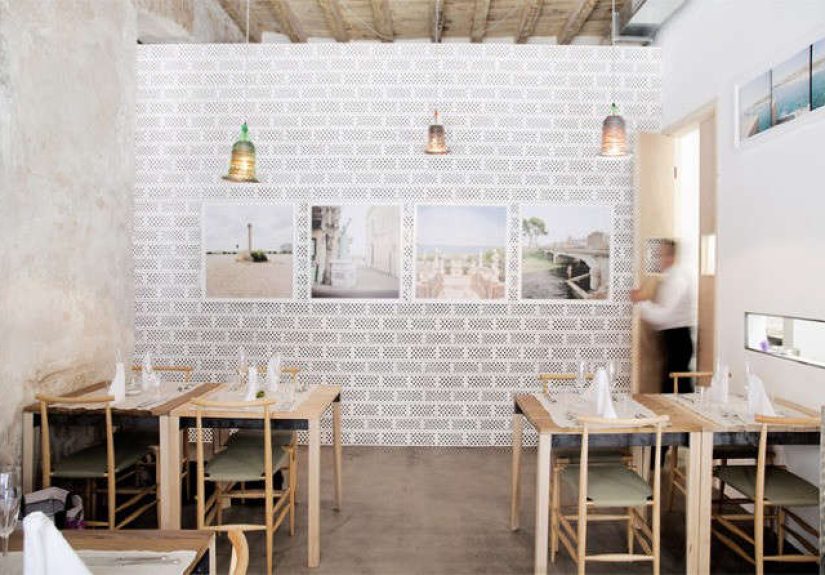
28 Posti sits near Milan’s Navigli canal district, an area famous for aperitivo culture, late-day strolls, and nightlife that can go from charming
to chaotic in about twelve minutes. That contrast matters. Outside, Navigli is a hum of bars and people-watching. Inside, 28 Posti feels like a
deliberate exhalewarm, modern, and quietly confident. It’s the type of place where the décor doesn’t scream for attention, but it absolutely knows
it’s photogenic.
This “calm within the current” dynamic shapes the night. You arrive from the buzz, slightly overstimulated, and then the room edits your mood.
You settle. You listen. You lean in. And when you lean in, social things happensometimes accidentally, sometimes beautifully.
The Method: Blind Tasting Menus and the Art of Letting Go
If you want to understand 28 Posti, start with its tastings. The restaurant is known for surprise menus offered in different lengthsessentially a
choose-your-own-adventure where you pick the chapter count, not the plot. This format is sneaky-smart: it removes the “menu negotiation” that can
turn dinner into a committee meeting. Instead of debating choices, you surrender to the kitchen’s rhythm.
Why surprise menus change the room
In a standard restaurant, ordering is an individual act. In a tasting-menu room, ordering becomes collective. Even if everyone gets different plates,
the emotional arc is shared: anticipation → reveal → reaction → comparison → “Wait, what is that?” That cycle naturally pulls people into
conversation, including people you didn’t arrive with.
That’s the “experiment” working: by removing a familiar decision (what to order), the restaurant makes space for a more interesting decision
(how to engage).
The Ingredients: Seasonality, Small Producers, and a Low-Waste Ethos
There’s a serious backbone beneath the playful format. 28 Posti has been recognized for an ethical approachprioritizing seasonal ingredients,
working with smaller producers, and putting real effort into minimizing food waste. This matters, not just morally, but stylistically: the menu becomes
fluid. It changes because nature changes. And when a restaurant embraces that, the food tends to feel alive rather than “locked.”
Expect modern Italian cooking with a curiosity streak: technique, fermentation, unexpected pairings, and flashes of global influence that don’t feel
like passport-stamping for its own sake. The best contemporary kitchens don’t “fusion” as a party trick; they borrow with purpose. In this kind of
cooking, a familiar ingredient might arrive in a format that makes you do a double takecrispy where you expected soft, bright where you expected deep,
savory where your brain was preparing sweet.
The Wine Variable: Natural Bottles and Conversation Fuel
Natural wine, at its best, functions like a friendly instigator. It’s expressive, sometimes wild, often a little unpredictableand it has a way of
making people talk. When a glass tastes unlike what you expected, you ask questions. When you ask questions, the table becomes social.
28 Posti leans into natural wines with intention. This aligns with the restaurant’s broader values (small producers, biodiversity, less intervention),
but it also supports the “social experiment” concept. Natural wines are basically conversation starters in liquid form. You don’t have to be a wine nerd.
You just have to be curious.
Commensality: The Science-y Word for “This Feels Good”
Researchers and writers often use the term commensalitythe practice of eating togetherto describe how shared meals build bonds, shape identity,
and create belonging. In plain American English: people feel better when they eat together, and food tends to taste better when the moment feels connected.
That doesn’t mean every shared-table night becomes a rom-com. Sometimes you sit near a loud talker. Sometimes a neighboring table is performing a live
podcast you didn’t subscribe to. But communal energy can also do wonderful things: it can make solo diners feel welcome, help travelers feel less alone,
and turn an ordinary Tuesday into a story you’ll tell later.
How to “Do” 28 Posti Like a Pro (Without Being Weird About It)
If the restaurant is the lab, you’re a participant. Here’s how to maximize the experience without acting like you’re collecting data with a clipboard.
(Unless the clipboard is edible. Then, by all means.)
1) Pick the tasting length based on your goals
Want a confident snapshot? Go shorter. Want the full narrative arc? Go longer. The point isn’t to “win dinner” by eating the most plates; it’s to choose
the pacing that fits your evening. A tasting menu should feel like an unfolding, not a marathon.
2) Treat the staff as guides, not just servers
In a surprise-menu restaurant, the staff is part translator, part storyteller, part traffic controller for your senses. Ask what the kitchen is thinking
tonight. Ask what’s in season. Ask which wine pairing will make you raise an eyebrow (in a good way).
3) Lean into “friendly” social rules
- Eye contact is free. Use it.
- Small talk is optional, not mandatory.
- Micro-compliments work: “That dish looks amazing” is a social cheat code.
- Boundaries are classy: you can be warm without becoming someone’s therapist.
Specific Examples: What Makes the Food Memorable
Without turning dinner into spoilers, here’s what tends to make modern, sustainability-minded tasting menus stand outespecially in a small room with a
visible kitchen:
Technique that supports flavor (not ego)
Fermentation, controlled acidity, layered textures, and smart use of “whole ingredient” cooking can create depth without heaviness. You might taste a
bright note that feels like a wake-up call, then a savory layer that lingers like a good song you didn’t expect to love.
Seasonality you can actually feel
A seasonal menu doesn’t just change ingredientsit changes mood. Spring plates tend to feel sharper, greener, more alive. Autumn leans earthy and warm.
When a kitchen truly follows the calendar, you don’t just eat dinner; you eat a time and place.
Portioning that keeps your curiosity awake
Tasting menus work when they’re paced like good storytelling: enough to satisfy, not so much that your brain shuts down. The goal is not a food coma.
The goal is momentum.
Who Should Goand What Each Type of Diner Gets Out of It
Solo diners
This is one of the best scenarios for eating alone in a restaurant that still feels social. You can stay quietly in your own world while still feeling
part of the room. And if you want to interact, the environment makes that easier than a two-top setup that screams, “Where is your second human?”
Couples
Great for couples who like discovery. Even if you don’t talk to anyone else, the meal gives you something to react to togetherlike shared plot twists,
but edible.
Friends
Ideal if your group enjoys food as a shared activity, not just a backdrop. Tasting menus create a rhythm of collective reaction. You’ll compare notes,
debate favorites, and probably try to describe an ingredient you can’t quite place. (“Is that… smoky strawberry?” “Sure. Let’s go with that.”)
Conclusion: A Tiny Room with a Big Idea
28 Posti isn’t trying to be everything to everyone. It’s trying to be itselfan intimate, modern Milan restaurant that uses constraints, surprise, and
ethics to shape not only what’s on the plate, but what happens around it. The social experiment isn’t forced. It’s invited.
If you want a night that’s more than “we ate, it was good,” this place delivers. You’ll leave with flavors in your memory and a subtle sense that
you were part of somethinghowever smallshared.
Extra: of Experience-Based “Field Notes” from a Night at 28 Posti
You arrive in Navigli right when Milan feels most Milan: the canals nearby, the streets humming, people dressed like they’re casually starring in a
fashion editorial. Outside, the energy is bright and slightly chaoticspritz glasses clink, scooters whisper by, and every group looks like they just
finished laughing at the same joke. Then you step into 28 Posti, and the volume turns down. Not silentalivebut focused. Like a room that has decided
it would rather flirt with your attention than shout for it.
The first “experiment” happens before the first plate: you notice yourself paying closer attention. With a small dining room, you can read the room’s
mood the way you read a menu. There’s a couple leaning in like they’re sharing secrets. There’s a solo diner who looks perfectly content, as if this is
a weekly ritual. There’s a table of friends who keep pausing mid-sentence because something interesting is happening in front of theman open kitchen
glimpse, a finishing touch, a plate landing with quiet confidence.
When the tasting begins, you stop thinking in categories like appetizer/entrée/dessert. Instead, dinner becomes a sequence of moments. A bite arrives
that tastes like it came from a familiar place, but it’s wearing a new outfit. Something crunchy shows up where you expected soft. Something bright
cuts through where you expected richness. You realize the kitchen isn’t trying to overwhelm youit’s trying to keep you awake. And it works. You take
a sip of wine and suddenly you’re talking, even if you didn’t plan to: with your companion, with the staff, maybe even with the person at the next
table who just made the same “what is THAT?” face you did.
The social part doesn’t feel forced. It feels like permission. You don’t have to perform friendliness, but you can lean into it when it happens. A
simple comment“That dish is wild”becomes a small bridge. You trade a few observations, laugh at how impossible it is to describe a flavor accurately,
and then drift back into your own meal. It’s social in the way a great city is social: you share space, you share energy, and you get to choose how
close you stand to the moment.
By the time the later courses roll in, you feel the rhythm: curiosity, surprise, satisfaction, reset. The portions don’t try to flatten you; they try
to carry you. You leave the table not just full, but alertlike your senses got a workout and your evening got a story. Outside, Navigli is still
buzzing, but you’re carrying a calmer kind of excitement. The experiment’s result is simple: when the room is intimate, the menu is surrendered to,
and the wine has a little personality, dinner becomes more than food. It becomes an event you participated in, not just something you consumed.