Table of Contents >> Show >> Hide
- What “Aortic Valve Repair” Actually Means
- Who Might Be a Good Candidate for Aortic Valve Repair?
- How Your Team Plans the Repair: Testing and Pre-Op Prep
- The Procedure: What Happens During Aortic Valve Repair Surgery
- Right After Surgery: Hospital Stay and the First Milestones
- Recovery at Home: What the Next 4–8 Weeks Often Look Like
- Complications: What Can Go Wrong (and What to Watch For)
- Repair vs. Replacement: Why Not Just Swap the Valve and Move On?
- How to Support a Strong Recovery and Long-Term Outcome
- Bottom Line
- Real-World Experiences: What Recovery Often Feels Like (About )
- 1) The first week home can feel like a reality check
- 2) Sleep can be awkward before it gets better
- 3) Your mood may be more “roller coaster” than “zen garden”
- 4) The “I feel great!” days can trick you
- 5) Cardiac rehab can rebuild confidence, not just stamina
- 6) The best advice patients give each other is boringand effective
The aortic valve is basically the heart’s “one-way door” to the rest of your body. When it opens smoothly, blood leaves
the left ventricle and heads out to do important things like “keep you conscious” and “power your legs so you can walk to
the fridge.” When it doesn’t open or close correctly, your heart has to work harder, symptoms show up, and your care team
starts talking about repair versus replacement.
This article focuses on aortic valve repair: what it is, how it’s done, what recovery usually looks like, and
the complications doctors watch for. Along the way, we’ll translate the medical jargon into normal-person Englishwithout
pretending a major heart procedure is “no big deal.” (It is a big deal. But it’s also something many people recover from
very well with the right plan and follow-up.)
What “Aortic Valve Repair” Actually Means
Aortic valve repair means surgeons preserve your native valve (the one you were born with) and fix the
parts that aren’t working. That might involve reshaping valve leaflets (cusps), reinforcing the valve’s ring (annulus),
patching small defects, or correcting structural problems in the nearby aorta that are pulling the valve out of shape.
Repair is most often used for aortic regurgitation (a leaky valve that doesn’t close tightly) and for certain
anatomy problems where the valve tissue is still healthy enough to salvage. Severe aortic stenosis (a stiff,
narrowed valveoften heavily calcified) is more commonly treated with replacement, though there are exceptions and special
situations.
Common types of aortic valve repair
-
Leaflet/cusp repair: Surgeons can reshape tissue so the cusps meet correctly, repair prolapse, or add a patch
to a tear or hole. - Annuloplasty (ring support): Reinforces or tightens the annulus so the valve closes more snugly.
-
Valve-sparing aortic root replacement: If the aortic root is enlarged (and stretching the valve open),
surgeons can replace the weakened aorta with a graft while preserving your valve. -
Balloon valvuloplasty (selected cases): A catheter-based approach that can temporarily improve a narrowed valve
in specific scenarios (more common in younger patients or as a bridge).
Who Might Be a Good Candidate for Aortic Valve Repair?
Candidacy depends on the valve problem, your anatomy, your overall health, andvery importantlyyour surgical center’s
experience with repair techniques. Many teams generally prefer repair when it’s feasible and durable, because keeping
your native valve can reduce certain long-term tradeoffs associated with replacement.
Situations where repair is often considered
- Leakage (aortic regurgitation) due to leaflet prolapse or mild leaflet abnormalities.
- Bicuspid aortic valve with anatomy suitable for reconstruction (case-by-case).
- Enlarged aortic root that causes the valve to leak even when the valve tissue itself is otherwise usable.
- Selected congenital or structural defects where repair can restore function.
When replacement is more likely
If the valve is severely calcified, severely deformed, infected with extensive destruction, or unlikely to hold up after repair,
the team may recommend replacement instead. This isn’t a “repair fail”it’s a durability decision.
How Your Team Plans the Repair: Testing and Pre-Op Prep
Before anyone fixes anything, they need to see the problem clearly. Planning usually includes imaging and a full “is your body
ready for surgery?” workup. Expect your team to ask about symptoms (shortness of breath, chest pain, fatigue, dizziness),
exercise tolerance, and any history of heart failure or rhythm issues.
Common tests
- Echocardiogram (TTE): The standard first look at valve leakage/stenosis and heart function.
- Transesophageal echo (TEE): A closer view that can help surgeons understand leaflet motion and leakage jets.
- CT/MRI (in some patients): Helpful for evaluating the aorta (especially if root/ascending aorta dilation is suspected).
- Cardiac catheterization (selected patients): May be used to evaluate coronary arteries and pressures.
- Routine labs and medical clearance: Bloodwork, kidney function, diabetes control, lung evaluation, and more.
Medication and lifestyle prep (the “boring but powerful” part)
Your care team may adjust blood thinners, diabetes medications, or certain supplements before surgery. They’ll also talk about
smoking cessation, nutrition, and planning for help at homebecause it’s hard to “take it easy” if you live alone and your
laundry basket weighs more than your lifting restriction.
The Procedure: What Happens During Aortic Valve Repair Surgery
Aortic valve repair is most often performed as an open-heart procedure, though minimally invasive approaches may be available
depending on your anatomy and the center. Either way, the goal is the same: restore valve function so blood flows forward
efficiently without significant leakage.
Step-by-step (high-level overview)
- Anesthesia: You’re asleep and pain-free throughout.
- Access to the heart: This may be a traditional incision through the breastbone (sternotomy) or a smaller incision (minimally invasive).
- Heart-lung machine (common in surgical repairs): It supports circulation while surgeons work on the valve.
-
Repair techniques tailored to your valve: Surgeons may patch defects, separate fused cusps, reshape tissue so it closes tightly,
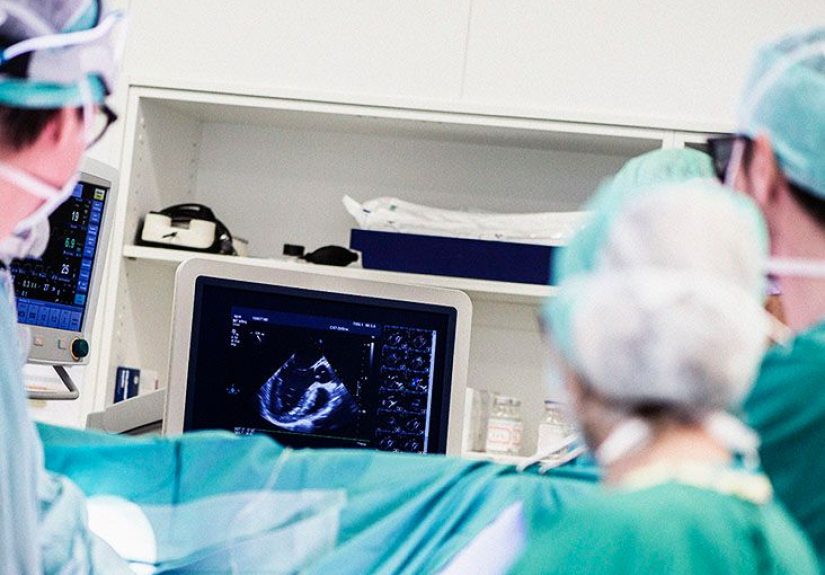
reinforce the annulus, or add support to the valve base/root. - Testing the repair: Intraoperative imaging (often echo) helps confirm the valve is working well before closing up.
- Closing and recovery: The incision is closed, and you move to intensive monitoring.
If the issue is an enlarged aortic root causing leakage, valve-sparing root procedures aim to restore normal geometry while
preserving your valve. That can be especially appealing in selected patients because it avoids placing a prosthetic valve
when the native valve tissue is still viable.
Right After Surgery: Hospital Stay and the First Milestones
Most people spend at least some time in an ICU setting after surgery, where the team monitors blood pressure, heart rhythm,
breathing, fluid status, and signs of bleeding or infection. You’ll likely have IV lines, monitoring leads, and tubes that drain
fluids temporarily. This is normaland temporary.
How long is the hospital stay?
Many patients stay several days. For surgical aortic valve repair specifically, a typical range is roughly 3 to 7 days,
depending on the complexity of the repair, your overall health, and how smoothly early recovery goes.
What the team pushes early (for good reasons)
- Breathing exercises: Helps prevent lung complications and improves oxygenation.
- Getting out of bed: Early movement reduces clot risk and rebuilds strength.
- Walking (gradually): Expect “tiny laps” at first. Yes, it feels humbling. It’s also effective.
- Pain control: Managed so you can breathe deeply and move safely.
Recovery at Home: What the Next 4–8 Weeks Often Look Like
Recovery isn’t a straight line. It’s more like: “I feel great!” followed by “Why am I exhausted after folding three towels?”
followed by “Oh right, my heart just got repaired.” In general, many people need about 4 to 8 weeks to recover,
and it can be shorter after minimally invasive approachesthough your timeline is personal.
Activity restrictions (common examples)
- Driving: Often restricted for a period of timeyour team will tell you when it’s safe.
- Lifting: Many patients are told not to lift heavy items (sometimes even modest weights) for several weeks.
- Work: Return depends on job demands; desk work may return sooner than physical work.
- Exercise: Usually starts as walking, then builds with guidance.
Cardiac rehab: the underrated cheat code
Cardiac rehabilitation is a supervised program that helps you rebuild endurance safely, improve heart-healthy habits,
and regain confidence. It’s not just “exercise class”it’s structured recovery with pros watching your vitals and progress.
Follow-ups and imaging
Expect follow-up appointments and repeat imaging (often echocardiography) to confirm the repair is holding up and the valve
is functioning as intended. If you ever hear the phrase “We’re going to keep an eye on it,” this is what they meanstrategic,
scheduled monitoring, not nervous guessing.
Complications: What Can Go Wrong (and What to Watch For)
Every heart operation carries risk. The specific risk profile depends on your age, other medical conditions, the type of repair,
and the experience of your surgical team. Your surgeon will review your individual risks. Here’s a clear, practical overview of
potential complications.
General surgical risks (seen with many heart valve operations)
- Bleeding during or after surgery.
- Blood clots that can lead to stroke, heart attack, or lung problems.
- Infection (incision infections, pneumonia, or heart valve infection).
- Arrhythmias (abnormal heart rhythms), sometimes requiring medication or pacing support.
- Stroke or transient neurologic events.
- Reactions to anesthesia or breathing problems.
Repair-specific concerns
- Recurrent aortic regurgitation: The valve may continue leaking or develop leakage again over time, possibly requiring another repair or replacement.
- Endocarditis: Infection of the valve (native or repaired) can occur and requires urgent treatment.
- Need for reintervention: Some patients need another procedure later if durability becomes an issue.
When to contact your care team urgently
Your hospital will give you a specific instruction sheet, but common “call right away” triggers include: fever or chills,
worsening shortness of breath, chest pain that’s new or severe, fainting, a racing or irregular heartbeat that won’t settle,
increasing redness/drainage at the incision, or one leg becoming swollen/painful (possible clot).
Repair vs. Replacement: Why Not Just Swap the Valve and Move On?
It’s a fair question. Replacement can be a great optionand sometimes it’s the best option. But repair has some advantages
when it’s technically possible and expected to last.
Potential advantages of repair
- Preserves your native valve: Your own valve anatomy can function very naturally when restored.
-
May reduce some long-term tradeoffs: For example, repair can help some patients avoid the lifelong blood-thinner
requirements typically associated with mechanical valve replacement (though individual situations vary). - Lower infection risk in some contexts: Preserving native tissue can be beneficial, depending on the case.
Tradeoffs and realities
- Not everyone is a repair candidate: Valve quality and anatomy matter.
- Durability matters: A repair that’s likely to fail quickly is not a “win.”
- Center experience matters: Repair is highly technique-dependent.
A simple way to think about it: repair is like restoring a classic caramazing when the frame is solid and the
mechanic is skilled; not ideal if the engine block is cracked in half. (In heart terms: severe calcification and damage.)
How to Support a Strong Recovery and Long-Term Outcome
The surgery is the headline, but recovery is the full story. Your job after discharge is to heal steadily, rebuild strength,
and reduce future strain on the heart.
Practical strategies that actually help
- Do cardiac rehab if recommendedand if logistics are hard, ask about alternatives or home-based options.
- Walk consistently (within your instructions). Small, frequent walks beat heroic overexertion.
- Protect sleep and accept that fatigue is part of healing.
- Take meds exactly as directed and keep a simple medication list.
- Eat for healing: protein, fiber, hydration, and heart-healthy patterns.
- Keep follow-ups and imaging appointmentsthis is how teams catch problems early.
- Mind your mouth: dental health matters because bacteria can enter the bloodstream and (rarely) cause valve infection.
Bottom Line
Aortic valve repair can be an excellent option for the right patientespecially when the goal is to preserve the native valve,
restore normal function, and reduce long-term downsides associated with some replacements. Recovery often takes weeks, not days,
and it’s normal to feel tired while your body rebuilds. The best outcomes come from a skilled heart team, a durable repair plan,
and a recovery routine that’s steady, supervised when needed, and realistic.
Real-World Experiences: What Recovery Often Feels Like (About )
People preparing for aortic valve repair usually expect pain (fair), but many are surprised by the weirdness of early recovery.
Not “scary weird”more like “Why am I emotional about soup?” and “Why does a shower feel like a triathlon?” If you’re reading this
before surgery, here are experiences many patients and caregivers describe, in plain language.
1) The first week home can feel like a reality check
In the hospital, nurses help you time medications, manage movement, and track symptoms. At home, it’s you (and maybe a caregiver),
plus a schedule. Many people say the biggest surprise is how quickly energy drains. You might walk around the living room and feel
accomplishedand you should. Early recovery is about consistency, not intensity. The “win” is doing small things safely every day.
2) Sleep can be awkward before it gets better
It’s common to have trouble finding a comfortable position, wake up more often, or feel like your sleep schedule got swapped with a
raccoon’s. Some people do better propped up slightly. Others need a routine: medication timing, a short evening walk, and a calm wind-down.
The key is to tell your care team if sleep problems are severebecause sleep is not a luxury item during healing.
3) Your mood may be more “roller coaster” than “zen garden”
Even if everything goes well, major surgery can temporarily shake your mood. People report irritability, anxiety, or feeling down for stretches.
This doesn’t mean you’re doing recovery wrong. It means your body and brain are processing stress, inflammation, and a big life event.
Many patients say movement helps: short walks, simple goals, and (when cleared) cardiac rehabbecause it provides structure and reassurance.
4) The “I feel great!” days can trick you
A common story: “I felt awesome on Tuesday, cleaned the kitchen, then Wednesday I felt like I got hit by a bus.” That’s normal.
Healing isn’t linear. Many teams recommend building activity gradually and keeping effort in the “could do a bit more” zone,
not the “I’m unstoppable” zone. Overdoing it can set you back for days.
5) Cardiac rehab can rebuild confidence, not just stamina
Patients often describe rehab as the moment recovery becomes less scary. You’re supervised, your progress is measurable, and you learn what’s
safe. For caregivers, rehab also brings peace of mindbecause someone else is watching the numbers and answering the “Is this normal?” questions.
6) The best advice patients give each other is boringand effective
Keep a simple checklist: meds taken, walk done, incision checked, hydration, and one small nourishing meal. Celebrate tiny milestones.
Ask for help early. And if something feels truly offfever, worsening breathing, unusual swelling, a new irregular heartbeatcall your team.
Peace of mind is part of recovery too.