Table of Contents >> Show >> Hide
- Why the ColecoVision Was a Big Deal
- The Original Design: Smart, Strange, and Very 1982
- Expansion Modules: The Console That Wanted to Be More
- What “Remaking” a ColecoVision Means Today
- The Challenges of Rebuilding One
- Why the ColecoVision Is Worth Reimagining
- Lessons Modern Makers Can Learn from the ColecoVision
- Final Thoughts
- Extended Experience: What It Feels Like to (Re)Make a ColecoVision
Some old game consoles make you feel nostalgic. Others make you feel curious. The ColecoVision does both, then casually dares you to pick up a screwdriver. Released in 1982, the ColecoVision arrived with a simple pitch: bring the arcade home without making it look like the arcade had suffered a budget cut on the way there. For a brief, glorious moment, it worked. The machine looked powerful for its era, its pack-in version of Donkey Kong turned heads, and its expandability gave it the swagger of a system that believed it could do absolutely anything. Then history happened, the market crashed, and the ColecoVision became one of those beloved machines people talk about with the same tone usually reserved for classic cars and weird uncles.
Today, remaking a ColecoVision can mean several things. It can mean restoring an original console that has yellowed, crackled, or decided that power delivery is now a matter of personal philosophy. It can mean recreating the experience through modern hardware, FPGA projects, reproduction shells, upgraded video output, and flash carts. Or it can mean reimagining what made the system special in the first place: arcade ambition, modular design, and a controller layout that felt like a calculator and a joystick had been forced into an arranged marriage.
This is the story of what made the ColecoVision matter, why people still rebuild it, and what “remaking” one really means in the twenty-first century. Spoiler alert: it involves equal parts affection, stubbornness, solder fumes, and the occasional muttered phrase of “who designed this controller?”
Why the ColecoVision Was a Big Deal
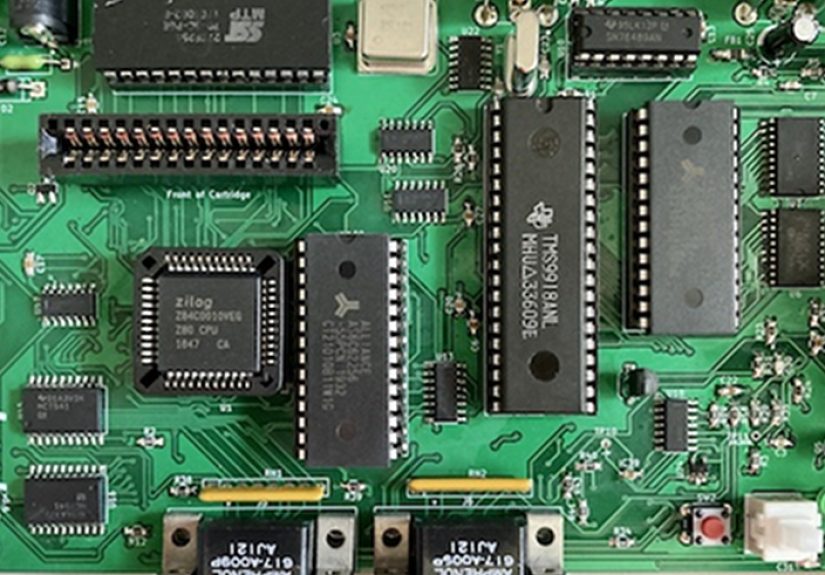
The ColecoVision landed in North America in August 1982, right in the thick of the second console generation. On paper, it looked impressive. Under the hood sat a Zilog Z80A CPU running at about 3.58 MHz, paired with a Texas Instruments video processor from the TMS99xx family and SN76489 sound hardware. In plain English, that meant it was built to push visuals and sound that felt much closer to arcade games than many home consoles of the time. That mattered because early 1980s players did not merely want games at home. They wanted the arcade fantasy at home. The ColecoVision sold that dream very well.
Its reputation got an immediate boost from the included version of Donkey Kong, which was exactly the sort of headline-grabbing pack-in title that makes parents think, “Well, I guess this one must be the fancy one.” And compared with many rivals, it often was. The machine had more than enough hardware muscle to create home conversions that looked sharper and more colorful than what many players were used to seeing on the Atari 2600.
In other words, the ColecoVision was not merely another beige box for the living room. It was an argument. It argued that home consoles could aim higher. It argued that expansion mattered. It argued that “good enough” was for someone else’s product line.
The Original Design: Smart, Strange, and Very 1982
One reason the ColecoVision remains fascinating is that it was both advanced and odd. The console itself had a sturdy, low-slung shape and a front-facing expansion interface that practically winked at consumers. “Sure,” it seemed to say, “I am already a game console, but imagine how much more I could become.” That expansion-first philosophy gave the system a kind of modular confidence that feels surprisingly modern.
Then there were the controllers. Ah yes, the controllers. Each unit combined a short joystick, side buttons, and a twelve-button numeric keypad. The idea was flexible input. The reality was a control scheme that could feel wonderfully inventive one moment and mildly accusatory the next. They were not sleek, but they were distinct. No one mistakes a ColecoVision controller for anything else, which is another way of saying it has personality in the same sense that a moody typewriter has personality.
Still, the weirdness served a purpose. Different overlays could be slipped over the keypad for specific games, letting developers map unique functions without redesigning the controller every time. It was clunky, yes, but also ambitious. And ambition is a recurring theme with this console. The ColecoVision constantly reached a little farther than you expected.
Expansion Modules: The Console That Wanted to Be More
If you want to understand why the phrase “remaking a ColecoVision” excites retro enthusiasts, start with the expansion modules. Coleco leaned hard into the idea that the machine was expandable. Expansion Module #1 made the system compatible with Atari 2600 cartridges and controllers, effectively giving owners access to a gigantic library of games. That move was bold, commercially clever, and just chaotic enough to become legendary. It even triggered legal action before Coleco and Atari settled the matter.
Expansion Module #2 introduced a driving controller and came bundled with Turbo, further proving that Coleco saw the base console as a platform rather than a fixed object. Then there was the famous not-quite path of Expansion Module #3. What began as the proposed Super Game Module eventually gave way to the Adam computer expansion, which transformed the ColecoVision into part of a larger home computer ecosystem.
This expandable DNA is one of the biggest reasons people love rebuilding the system today. A machine built around add-ons, alternative inputs, and upgrade dreams almost begs for modern reinterpretation. It invites tinkering. It asks to be reopened.
What “Remaking” a ColecoVision Means Today
There is no single correct way to remake a ColecoVision. That is excellent news for hobbyists and terrible news for anyone hoping for a simple shopping list. In practice, most modern ColecoVision remake projects fall into three camps: restoration, modernization, and recreation.
1. Restoration
This is the most faithful route. You find an original console, clean it thoroughly, inspect the board, replace failing capacitors where necessary, repair damaged traces, polish contacts, and restore the plastic shell as carefully as possible. The goal is not to reinvent the ColecoVision. The goal is to rescue it from time, dust, attic heat, mystery smells, and decades of neglect.
Restoration often includes controller refurbishment, which deserves both respect and patience. Keypads can become unreliable, joysticks wear out, and cable damage is common. A restored controller that works properly is one of the most satisfying wins in retro hardware. It also slightly improves your opinion of 1980s input design, which is no small feat.
2. Modernization
Some enthusiasts want the original machine, but with fewer compromises. That leads to upgrades like cleaner power solutions, video output improvements, flash cartridge support, replacement controller parts, and internal mods designed to make the system easier to use on modern displays. Purists may raise an eyebrow. Practical players raise both thumbs.
Modernization is often the sweet spot. It preserves the original hardware while removing the small annoyances that make retro gaming feel less like a hobby and more like a hostage negotiation with obsolete cables.
3. Recreation
This is where the project becomes truly fun. Recreation can involve building a clone-inspired system, using modern components to replicate original functionality, or employing programmable hardware to mimic the console’s behavior. For some builders, that means custom boards and reproduction cases. For others, it means a lovingly assembled hybrid that captures the ColecoVision experience without pretending every screw must be original.
Recreation is not about disrespecting history. Quite the opposite. It is about keeping history alive by making it usable, understandable, and repairable for a new generation.
The Challenges of Rebuilding One
Retro hardware projects always sound romantic until the first real obstacle appears. With a ColecoVision, those obstacles can show up quickly. Original components age. Connectors corrode. Plastic gets brittle. Power supplies become suspicious in the same way a fridge making growling noises becomes suspicious. And unlike modern hardware, documentation may be scattered across enthusiast communities, manuals, scanned schematics, and forum posts written by someone named “Z80Wizard1987.”
Another challenge is balancing authenticity with usability. Do you keep the original RF output path for historical accuracy, or adapt the console for modern video standards? Do you preserve worn controller membranes, or replace them for playability? Do you keep every quirk, including the inconvenient ones, or do you admit that 1982 was not the peak year for cable management?
These are not just technical decisions. They are philosophical ones. Every remake project answers the same question differently: what exactly are we trying to preserve? The electronics? The feel? The visual identity? The ritual of inserting a cartridge and hearing a click that says, “Yes, this is how games used to start”?
Why the ColecoVision Is Worth Reimagining
Not every retro console inspires the same degree of devotion. The ColecoVision does because it sits at a fascinating crossroads. It was powerful for its time. It was modular. It had strong arcade credibility. It linked to a broader expansion vision that eventually connected to the Adam computer. It also lived through one of the most dramatic eras in gaming history, right before the 1983 crash rearranged the whole industry.
That makes the system feel like a “what if” machine. What if Coleco had navigated the next few years differently? What if the Super Game Module had landed exactly as imagined? What if the Adam had not become a costly headache? What if the console’s best ideas had more time to evolve? Every remake project, in its own small way, is an answer to those questions. It says: here is what this machine was, and here is what it still can be.
Lessons Modern Makers Can Learn from the ColecoVision
Rebuilding a ColecoVision teaches lessons that stretch beyond retro gaming. First, good hardware design is not only about raw power. It is also about identity. The ColecoVision looked and felt distinct. Even its strangest choices helped define it. Second, expandability can make a product feel alive. The front expansion interface was not a gimmick. It was a promise, even if some parts of that promise took strange detours.
Third, preservation works best when it is hands-on. Reading about old hardware is nice. Rebuilding it is unforgettable. You begin to understand how components were selected, how cost pressures shaped design, and how engineers in an earlier era solved problems with a mix of ingenuity and compromise.
And finally, remaking old technology reminds us that progress is not always neat. The history of gaming is full of systems that were brilliant, flawed, underappreciated, or simply unlucky. The ColecoVision checks all four boxes with gusto.
Final Thoughts
(Re)making a ColecoVision is not merely a retro tech project. It is part restoration, part archaeology, part engineering challenge, and part love letter to an era when home gaming was still inventing itself in real time. The console’s hardware was strong, its ambitions were huge, and its expandable design gave it a legacy much bigger than its production lifespan might suggest.
Whether you are cleaning an original board, upgrading a video path, repairing a keypad, or building a modern interpretation from scratch, you are doing more than reviving a machine. You are reviving a moment in gaming when “arcade at home” felt like a revelation and when console makers were willing to get a little weird in pursuit of something memorable.
And honestly, thank goodness they did. A perfectly sensible console might have been easier to maintain. But a perfectly sensible console probably would not still be this fun to talk about more than forty years later.
Extended Experience: What It Feels Like to (Re)Make a ColecoVision
The first real experience of remaking a ColecoVision usually begins with optimism. You set the machine on a workbench, admire its sharp old-school lines, and think, “How hard can this be?” This is a charming and deeply unserious thought. Within half an hour, you are likely surrounded by screws, cotton swabs, contact cleaner, and the sudden realization that electronics from the early 1980s were designed in an era when no one expected a person in 2026 to be lovingly interrogating them under LED lighting.
But that is also where the magic starts. There is something deeply satisfying about opening a classic console and seeing the physical reality behind the nostalgia. Retro games often live in memory as music, pixels, and feelings. A remake project turns those memories back into objects. You see the board layout. You notice how much was accomplished with relatively modest hardware. You gain respect for the design, even when it occasionally fights back like a cat that resents being helped.
One of the most memorable parts of the experience is restoring the controllers. On paper, the ColecoVision controller sounds slightly absurd: a joystick, side buttons, and a numeric keypad all in one chunky unit. In practice, it feels like a time capsule from an era when designers were still exploring what home game input should be. Cleaning and repairing one gives you an appreciation for how much wear these devices endured. People did not gently tap these things while sipping tea. They mashed, yanked, twisted, and probably blamed the controller every time they lost.
Then there is the emotional curve of the first successful power-on. Few moments in retro restoration compare to the instant a once-neglected console comes alive again. The screen stabilizes. The familiar startup behavior appears. Suddenly, the machine is no longer a relic. It is active, responsive, and ready to play. That moment compresses decades. It feels like rescuing a little piece of living history from a very long nap.
Modernizing the system creates a different kind of satisfaction. When you adapt a ColecoVision to work more comfortably with contemporary setups, you start to appreciate the balance between preservation and practicality. A machine can remain authentically itself while still gaining the benefits of modern care. Better video output, more reliable power, and improved compatibility do not erase the past. They extend it. They let the console keep participating in the present rather than becoming a decorative brick with good stories.
Perhaps the best part of the entire experience is that remaking a ColecoVision makes you feel connected to a broader community of tinkerers, collectors, and players. Very few people take on a project like this because it is the easiest way to play old games. They do it because the process matters. They enjoy tracing the machine’s history, learning its quirks, solving its problems, and sharing small victories with other enthusiasts who understand why getting one keypad button to register properly feels like winning a minor Olympic event.
In the end, the experience is never just about the console. It is about curiosity, patience, and appreciation. It is about discovering that old hardware still has stories to tell, provided someone is willing to listen with a multimeter in hand. And with the ColecoVision, those stories are especially good: ambitious, a little eccentric, and far more durable than anyone in 1982 probably imagined.