Table of Contents >> Show >> Hide
- Why the Kitchen Hood Deserves Main-Character Energy
- Types of Range Hoods: Function First, Drama Second
- How to Choose the Right Size Without Guessing Like a Game Show Contestant
- Placement, Ductwork, and the Glamour of Hidden Engineering
- Designing Around the Hood Instead of Apologizing for It
- Cleaning and Maintenance: The Part That Separates Dream Kitchens from Sticky Ones
- Budget Priorities for a Hood-Centered Remodel
- What a Smart Remodel Gets Right
- Rehab Diaries: A 500-Word Tale from the Hood
- Conclusion
Every renovation has a surprise main character. Sometimes it is the tile. Sometimes it is the island. Sometimes it is the faucet that shows up late, costs too much, and somehow still becomes the star of the room. In this story, the hero is the kitchen hood.
Yes, the hood. That big, useful, often-overlooked box hanging above the range like a practical aunt at a family reunion. It does not beg for attention the way marble does. It does not trend on social media the way zellige tile does. But when you cook often, especially with high heat, oil, garlic, onions, or anything that can turn “cozy dinner” into “why does the whole house smell like fish tacos for three days,” the hood matters more than people think.
A good kitchen hood helps pull out smoke, grease, moisture, odors, and airborne cooking byproducts before they settle onto your cabinets, your curtains, and your dignity. A bad hood, meanwhile, is decorative disappointment with a light bulb. And that is why a smart kitchen remodel should treat ventilation as both a performance feature and a design opportunity.
This guide takes the title Rehab Diaries: Tales from the Hood and gives it a fresh spin: a real-world look at how the humble range hood can shape a kitchen renovation from layout to style, from air quality to resale appeal. We will talk about what makes a hood work, what size you actually need, when ductless can do the job, how to make the hood look intentional, and why the best remodels plan for cooking reality instead of fantasy-showroom perfection.
Why the Kitchen Hood Deserves Main-Character Energy
Range hoods are not just about smells. They are about how a kitchen lives. Cooking creates heat, grease particles, steam, and pollutants that can linger in the air and settle on nearby surfaces. That means more wiping, more sticky cabinet fronts, and more “Why is my ceiling slightly shiny?” moments. Proper kitchen ventilation helps reduce that buildup and makes the room more comfortable to cook in, especially in open-plan homes where the kitchen and living room basically share custody of the same air.
If you cook with gas, ventilation becomes even more important. But even electric and induction kitchens generate smoke, grease, and moisture. In other words, whether you are searing steak, frying eggs, simmering tomato sauce, or trying to toast cumin without setting off every alarm in a five-mile radius, the hood earns its keep.
The best remodel mindset is this: the hood is not an accessory. It is part appliance, part air-quality tool, part architectural feature. Once you accept that, the rest of your decisions get smarter.
Types of Range Hoods: Function First, Drama Second
Ducted Range Hoods
Ducted hoods vent air to the outdoors through ductwork. When the layout allows it, this is usually the gold standard. They remove heat, smoke, grease, and odors more effectively than recirculating models. If your renovation has enough wall or ceiling access for proper ducting, this is the move most pros prefer.
Ductless or Recirculating Hoods
Ductless hoods pull air through filters and send it back into the kitchen. They are easier to install and useful in apartments, condos, and layouts where running ductwork would be painfully expensive or structurally messy. They can help with grease and odors, but they are generally not as effective as venting to the outside. Think of them as a compromise, not a miracle.
Convertible Hoods
These can be set up as ducted or ductless, depending on the installation. They are handy when you want flexibility during a renovation or if you are future-proofing for a bigger upgrade later.
Wall-Mount, Under-Cabinet, Insert, and Island Hoods
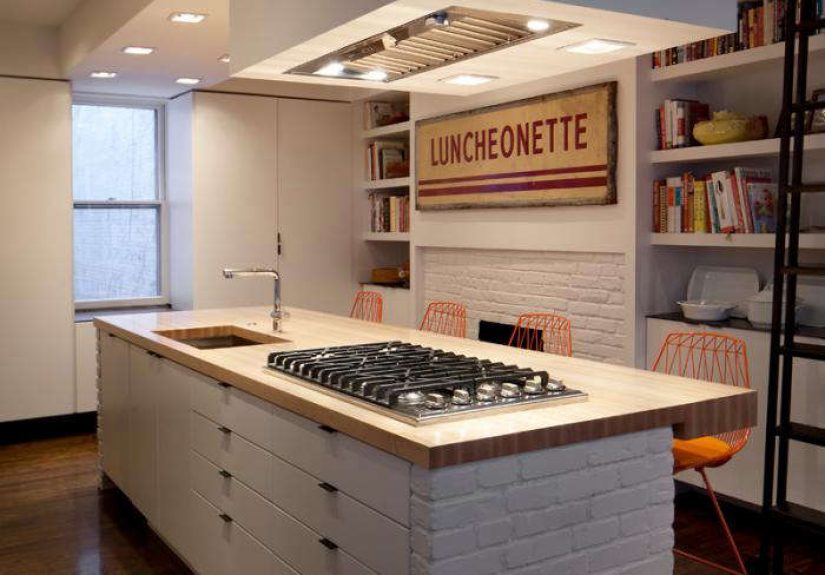
The style you choose depends on your kitchen layout. Wall-mount chimney hoods make a bold visual statement. Under-cabinet hoods save space and keep the look compact. Insert hoods disappear into custom wood or plaster covers, which is great if you want a cleaner, furniture-like aesthetic. Island hoods hang over a cooktop placed on an island and usually cost more because the ducting is trickier and the hood has to work harder in a more open space.
Downdraft Venting
Downdraft systems rise from the counter or sit behind the cooktop and pull air sideways or downward. They can solve tricky design problems, especially when you do not want a large hood overhead. But they are often more limited for heavy-duty cooking. Beautiful idea, very specific use case.
How to Choose the Right Size Without Guessing Like a Game Show Contestant
First rule: your hood should be at least as wide as your cooking surface. If it can be slightly wider, even better. Capture area matters. Smoke does not politely travel in a straight line; it drifts, swirls, and ignores your mood board. A larger hood gives the system a better chance of catching what your pans throw into the air.
Second rule: do not obsess over maximum CFM alone. CFM, or cubic feet per minute, measures airflow. Higher numbers can mean stronger ventilation, but they do not automatically guarantee better performance. A hood that is powerful but poorly designed, badly ducted, or too loud to use is not a winner. Quiet, well-installed, right-sized ventilation beats brute-force specs every time.
As a general guide, Home Ventilating Institute recommendations for wall hoods often land around 250 CFM for a 30-inch hood, 300 CFM for a 36-inch hood, and 400 CFM for a 48-inch hood. That is a helpful starting point, not a universal law. If you use a high-output pro-style range, wok cook regularly, or love cast-iron searing like it is a competitive sport, you may need more ventilation.
Also pay attention to sound. A hood that sounds like a helicopter landing on your backsplash will be turned off suspiciously often. Some homeowners learn this too late, usually mid-pasta. Look at noise ratings, fan speeds, and real-world reviews, not just glossy specs.
Placement, Ductwork, and the Glamour of Hidden Engineering
This is the part of the remodel nobody pins to a dream board, but it can make or break the performance of your kitchen hood.
Mounting Height
Most manufacturers and appliance guides place hoods somewhere in the mid-20-inch range above the cooking surface, often higher for gas than electric. Too low and the hood can feel intrusive or unsafe. Too high and performance drops because the smoke spreads before the hood captures it. Always follow the manual for the specific model, because hood shape, blower design, and cooking surface all matter.
Duct Path
The shortest, straightest duct run usually performs best. Smooth metal ducting is typically preferred over flexible duct because ridges create turbulence and reduce airflow. Good installations also vent outdoors, stay independent from other exhaust systems, and include the right damper details. Translation: the hidden stuff matters just as much as the pretty stuff.
Capture Over the Back Burners
One of the smartest low-effort habits is cooking on the back burners when possible. It sounds small, but it improves capture because the hood usually covers that zone more effectively.
Run the Hood Longer Than You Think
Turning on the fan only during the most dramatic smoke event is not enough. Use the hood whenever you cook and leave it running for a bit after the meal. That extra 10 to 20 minutes helps clear lingering particles and moisture before they settle around the room.
Designing Around the Hood Instead of Apologizing for It
This is where the remodel gets fun. A hood can disappear into the cabinetry, blend into plaster, echo the backsplash, or become a full-blown focal point. It all depends on the personality of the kitchen.
The Quiet Luxury Hood
If you want the room to feel soft, warm, and custom, consider an insert hidden inside a wood, plaster, or painted cover. This works beautifully in traditional, European-inspired, or transitional kitchens. The hood does its job while the cabinetry gets the applause.
The Statement Hood
Want something sculptural? A metal chimney hood, a plaster form with strong geometry, or a mixed-material design can anchor the entire wall. In many modern remodels, the hood becomes the visual center of the cooking zone. It is practical sculpture, which is honestly a pretty great job description.
The Small-Kitchen Hood
Compact kitchens usually benefit from under-cabinet or slim-profile models that do not eat visual space. The trick is to keep the line of sight clean without sacrificing power. A tiny hood that looks sleek but cannot clear bacon smoke is not minimalism. It is denial.
The Island Hood Challenge
Island hoods can look gorgeous, but they need careful planning. Because there is less wall containment, the fan often has to work harder, and the size and capture area become even more important. This is not the place to underspec because the fixture “looked lighter.” Smoke does not care about aesthetics. Smoke is a free spirit.
Cleaning and Maintenance: The Part That Separates Dream Kitchens from Sticky Ones
Even the best range hood loses its edge if the filters are caked with grease. Regular maintenance keeps airflow strong, reduces odors, and helps the hood last longer.
- Wash metal grease filters regularly, based on how often you cook.
- Replace charcoal filters on ductless units according to the manufacturer’s schedule.
- Wipe the hood canopy, controls, and nearby backsplash to prevent grease buildup.
- Check for rattling, unusual noise, or weak airflow before those little annoyances become expensive problems.
A clean hood is like a clean inbox: deeply satisfying, slightly rare, and worth the effort.
Budget Priorities for a Hood-Centered Remodel
If the renovation budget is tight, spend money where performance lives: blower quality, proper ducting, correct sizing, and installation. Fancy cladding means very little if the hood cannot actually vent your kitchen. Think of it this way: put the money into lungs first, lipstick second.
That does not mean style should be ignored. It means style should sit on top of substance. A basic but well-performing insert inside a custom cover can often give you the best of both worlds. You get the look you want and the function you need, without paying premium prices for a designer-branded sculpture with mediocre airflow.
Also remember that installation costs vary. Island hoods, long duct runs, roof penetrations, electrical upgrades, and custom covers can change the budget quickly. It is better to discover that on paper than while standing in your half-demolished kitchen holding coffee and regret.
What a Smart Remodel Gets Right
The best kitchen renovations do not treat ventilation as an afterthought. They ask the unglamorous questions early:
- How often do we really cook?
- Do we fry, sear, grill, or mostly reheat?
- Can we vent outdoors?
- How noisy is too noisy for us?
- Do we want the hood to disappear or become a focal point?
- Will this be easy to clean six months from now, when renovation optimism has faded?
Answer those honestly, and your kitchen will not just photograph well. It will live well.
Rehab Diaries: A 500-Word Tale from the Hood
The following diary-style section is a composite of common kitchen-remodel experiences, written to capture the mood of a hood-centered renovation while staying grounded in real design and ventilation choices.
Week one of the remodel began with confidence and ended with dust in the coffee maker. We thought the kitchen plan was all about the island, the storage wall, and the glorious drawer full of spices we had promised ourselves for years. Then the contractor asked, very casually, “What hood are you doing?” The room went silent. You would have thought he had asked us to choose a college major for the cabinets.
At first, we wanted the hood to disappear. Invisible. Quiet. No drama. Then we saw the wall drawings and realized the cooking zone needed a center of gravity. Suddenly the hood was not a nuisance; it was architecture. We started looking at chimney hoods, custom plaster covers, wood cladding, inserts, blower specs, and duct runs like people who had accidentally enrolled in graduate school for kitchen ventilation.
The romance faded a little when we learned that the prettiest option was not automatically the smartest. One model looked like a sculpture but had mediocre performance. Another had terrific airflow but sounded like a leaf blower with career ambitions. We finally understood an important truth about remodeling: beauty is wonderful, but beauty with annoying noise becomes character-building very fast.
So we got practical. We chose a hood that matched the range width, vented outside, and could sit at the right height without blocking the sightline across the room. We shortened the duct path, kept it as straight as possible, and stopped pretending a microwave vent would somehow become heroic if we believed in it hard enough. It would not.
Then came the design pivot. Instead of hiding the hood completely, we wrapped the insert in a painted surround that matched the cabinetry but still gave the cooking wall shape. That small decision changed the whole room. The hood became the visual bridge between function and style, which sounds dramatic until you see a kitchen where it works. Then it makes perfect sense.
The first week after installation, we tested it the only way that mattered: onions in a hot pan, salmon on the stove, garlic because we are not cowards, and a sauce that simmered long enough to fog every nearby surface in our old kitchen. This time, the air stayed clearer. The room smelled like dinner, not like dinner plus the memory of dinner plus a side quest called “open every window.” The fan had a hum, not a roar. The lights were bright enough to cook by. The backsplash survived without wearing a full coat of grease.
Now when people walk in, they notice the hood. They comment on the tile, sure, and the shelves, and the island stools we spent far too long debating. But the hood gets a second look because it feels intentional. That is the real lesson from the remodel. The hood was never just the vent. It was the thing that made the kitchen behave like a kitchen. Not a showroom. Not a fantasy. A real room for real cooking, with real air, and far fewer regrets.
Conclusion
Rehab Diaries: Tales from the Hood is really a story about respectrespect for how people actually cook, how air actually moves, and how good design works best when it solves a real problem. The right range hood improves comfort, cuts grease and odor buildup, supports better kitchen ventilation, and can even become a defining design feature. In a great remodel, the hood is not background equipment. It is the hardworking, surprisingly stylish engine above the stove that makes the rest of the kitchen make sense.