Table of Contents >> Show >> Hide
- Who Is Isabel Camille?
- What Makes Her Surreal Photographs Feel Like Dreams?
- Why Her Work Feels Both Editorial and Fine Art
- The Broader Surrealist Lineage Behind the Work
- Why Viewers Keep Coming Back to Her Images
- Specific Strengths That Define Isabel Camille’s Visual World
- The Experience of Entering Isabel Camille’s Dream World
- Final Thoughts
Some photographers document reality. Isabel Camille seems more interested in politely borrowing reality, dressing it in silk, softening the edges, and sending it back looking like it just woke up from a gorgeous, slightly mysterious dream. That is the pull of her surreal photography: it feels familiar enough to recognize, but strange enough to keep you staring two beats longer than expected.
In an online world packed with images that scream for attention like toddlers with glitter, Camille’s work stands out for a different reason. It whispers. Her photographs do not rely on chaos for their magic. Instead, they build mood through atmosphere, femininity, symbolism, painterly light, and a careful balance between photographic realism and digital invention. The result is an aesthetic dream world that feels romantic, futuristic, and emotionally intuitive all at once.
That blend matters. Surreal photography has always thrived on tension: the real versus the impossible, the body versus the symbol, the seen versus the felt. Isabel Camille works directly in that tradition, yet her images feel distinctly contemporary. They carry the polish of editorial photography, the mood of fine art portraiture, and the imaginative elasticity of 3D-based visual storytelling. In other words, this is not just “pretty surrealism.” It is image-making with atmosphere, intent, and a very good eye for when to leave something unexplained.
Who Is Isabel Camille?
Publicly, Isabel Camille presents herself as a surrealist photographer and 3D artist working between Los Angeles and New York. That detail alone explains a lot. Los Angeles brings cinematic ambition; New York contributes fashion energy and conceptual sharpness. Put them together, add a devotion to atmosphere, and you get a practice that moves fluidly between portraiture, visual art, and commercial storytelling.
Her public profiles also describe work centered on femininity, portraiture, video art, and a fascination with atmosphere over literal explanation. That is a useful clue to understanding her images. Camille is not chasing straightforward narrative. She is building tone. She is less interested in saying, “Here is exactly what happened,” and more interested in asking, “What does this moment feel like if memory, fantasy, and beauty all get a vote?”
There is also a classical undercurrent to her work. References to inspiration from Botticelli and Italian art traditions suggest why her photographs often feel less like snapshots and more like floating visual poems. Faces become icons. Fabric behaves like weather. Skin is not merely lit; it is sculpted. Even when the styling is modern, the emotional language can feel ancient, as if the image belongs to a myth that somehow learned how to use Photoshop without becoming annoying about it.
What Makes Her Surreal Photographs Feel Like Dreams?
The easiest answer would be to say color, editing, and unusual compositions. That would also be the boring answer. Camille’s dream world works because it follows dream logic. In dreams, objects are symbolic before they are practical. Space bends to emotion. Light arrives at precisely the right dramatic moment, as if the universe has hired a very competent gaffer. Her photographs tap into that same logic.
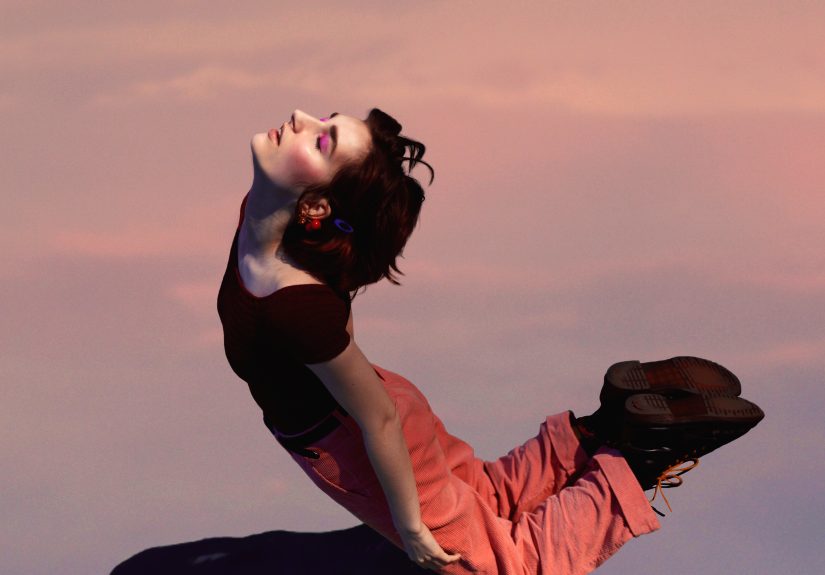
Rather than overwhelming the viewer with visual tricks, she often uses restraint. That is one of the most interesting things about her aesthetic. Some surreal photography goes big with levitation, spectacle, or impossible scale. Camille tends to make the unreal feel elegant rather than loud. The impossible slips in quietly. A body may feel half-human, half-statue. A setting may appear earthly but somehow untethered from ordinary time. A portrait may look editorial at first glance, then reveal an emotional weirdness that keeps unfolding.
Atmosphere Comes First
Her images prioritize atmosphere in the same way a great film scene does. Before you decode the subject, you feel the weather of the image. Is it dreamy? Sacred? Lonely? Seductive? Otherworldly? Camille seems to understand that viewers often connect emotionally before they connect intellectually. That is why the mood lands first.
This approach places her in conversation with a broader contemporary movement in surreal and conceptual photography, where artists use dreamlike portraiture and uncanny visual cues to push photography beyond documentation. But Camille’s version feels especially polished. Her work has the sleek surface of fashion imagery without becoming emotionally empty. That is harder than it looks. Plenty of images are stylish; fewer are transporting.
Femininity Without Cliché
Another strength in Camille’s photographs is the way she handles femininity. In lesser hands, femininity in surreal portraiture can become decorative shorthand: flowers, softness, wistful expressions, and a general haze of “please take me seriously, I added tulle.” Camille’s work avoids that trap by treating feminine imagery as psychological architecture, not just visual garnish.
Her women are not simply models posed inside beautiful scenes. They often feel like embodiments of states of mind: longing, transformation, serenity, power, distance, or self-mythology. That distinction matters. It turns the portrait from something merely pretty into something interpretive. The viewer is not just admiring a face; the viewer is entering an emotional symbol system.
Photography Meets 3D Art
Camille’s identity as both photographer and 3D artist is central to her visual language. Public references to works that combine photography and 3D make clear that she is comfortable moving between lens-based reality and digital world-building. This hybrid approach helps explain why her images can feel tactile and unreal at the same time.
That hybrid quality is one reason her surreal photographs feel so current. Contemporary audiences are visually fluent in composites, CGI, and digitally enhanced environments. But familiarity can make viewers numb. Camille gets around that by using digital tools in service of emotion rather than spectacle. The 3D elements do not scream, “Look what software can do!” They support the image’s atmosphere, like stage design in a performance where the mood matters more than the mechanics.
Why Her Work Feels Both Editorial and Fine Art
One of the most appealing tensions in Isabel Camille’s portfolio is the meeting point between art photography and brand storytelling. Her public client list includes fashion and lifestyle names, which suggests that she knows how to make an image work in commercial contexts. But importantly, the commercial sheen does not erase the dream logic. Instead, it sharpens it.
This is where Camille’s work reflects a larger shift in contemporary image culture. Brands increasingly want images that do more than show a product. They want a mood, a worldview, an identity fantasy. Surreal photography is perfect for that because it can suggest aspiration without becoming stiff. It lets a campaign feel cinematic, symbolic, and emotionally sticky. Camille seems especially well suited to this visual economy because her images already operate at the intersection of beauty, mood, and myth.
And yet the images do not feel like ads wearing art’s trench coat and fake mustache. They feel authored. That is the difference. You can sense a consistent point of view running through the work: a preference for ethereal environments, stylized portraiture, psychological space, and visual softness with conceptual bite.
The Broader Surrealist Lineage Behind the Work
It helps to place Camille in the larger history of surreal image-making. Surrealism has long been drawn to dreams, the uncanny, symbolism, distorted reality, and the emotional charge of unexpected juxtapositions. In photography, that tradition has always been especially interesting because the camera starts with the real world and then bends it. That built-in friction makes surreal photography uniquely powerful. It says, “Yes, this was photographed,” while also adding, “No, this could never quite happen.”
Camille’s work inherits that paradox. Like many contemporary artists working in surreal portraiture, she uses the language of reality to create an emotional truth rather than a literal one. That is why her images feel dreamlike instead of random. Good surrealism is not nonsense. It is precision disguised as mystery.
There is also a painterly quality to her aesthetic that connects her to artists who build fantasy through color harmony, texture, and symbolic staging. Her photographs often feel composed rather than captured. Every element appears to have been invited, seated, and given exact instructions about how much mystery it is allowed to communicate.
Why Viewers Keep Coming Back to Her Images
The best surreal photographs reward repeat viewing, and Camille’s work does exactly that. At first glance, the appeal may seem obvious: beautiful people, elegant styling, soft light, lush atmosphere. But linger a little longer and the images become less about beauty alone and more about tension. What is being concealed? Why does the scene feel intimate and distant at the same time? Why does the image feel like a memory you almost had?
That lingering quality is rare. Plenty of online images are optimized for the quick stop-scroll moment. Camille’s photographs can do that too, but they also survive the second and third look. They invite interpretation without locking themselves into one meaning. That openness is one reason surreal portraiture remains so compelling in the digital age. When literal information is everywhere, mystery starts to feel luxurious.
Her work also reflects a growing appetite for images that are less documentary and more experiential. Viewers do not always want a clean explanation. Sometimes they want atmosphere, suggestion, and emotional ambiguity. Camille understands that instinct. She creates photographs that feel less like answers and more like aesthetic encounters.
Specific Strengths That Define Isabel Camille’s Visual World
- Dreamlike portraiture: Her subjects often feel suspended between personhood and symbol.
- Painterly styling: Light, fabric, and composition often echo the elegance of classical art.
- Atmospheric restraint: The images are surreal without becoming visually chaotic.
- Hybrid technique: Photography and 3D art work together to expand emotional space.
- Contemporary femininity: Beauty is present, but it is shaped into mood, myth, and identity.
- Commercial versatility: Her aesthetic can move between fine art and branded imagery without losing character.
The Experience of Entering Isabel Camille’s Dream World
Looking at Isabel Camille’s surreal photographs can feel strangely physical, even though the experience starts on a screen. You notice your pace change. The normal internet rhythm, that caffeinated thumb-flick speed where every image gets half a second and a shrug, suddenly slows down. Her work asks for a pause, and more surprisingly, it earns one. The first reaction is usually visual pleasure: the softness of color, the glow of skin, the elegance of a pose, the clean intelligence of the composition. But then something less obvious arrives. The image starts to feel like a room you have entered rather than a file you have opened.
That is the real experience of her work: immersion without noise. The photographs do not attack the eye. They draw it inward. It is a bit like walking into a gallery where the air itself seems curated. The silence around the subject matters. The spacing matters. The negative space is not empty; it is charged. You begin to notice how your own imagination starts filling in the untold parts. What happened before this moment? What comes after it? Why does this face feel both present and unreachable?
There is also a familiar emotional sensation in her images, the feeling of remembering something you cannot fully place. Maybe it is a childhood fascination with fairy tales, classical paintings, old films, or fashion editorials that seemed too beautiful to belong to everyday life. Camille’s photographs stir that part of the viewer. They do not just show fantasy; they reactivate your memory of needing fantasy. And honestly, in a world run by notifications and low batteries, that is doing a public service.
The experience becomes even richer when you sit with the work longer. You start noticing how carefully the mood is controlled. Nothing feels accidental. A shadow is not just a shadow; it is a tone shift. A piece of fabric is not just styling; it is motion frozen into symbolism. A digitally altered surface is not there to impress you with technique; it is there to make reality feel just unreliable enough that emotion can take the lead. That balance is what keeps the work from collapsing into cliché. It remains elegant, but never vacant.
For artists, designers, photographers, and visually curious viewers, her work can also be energizing in a practical way. It reminds you that photography does not have to choose between documentation and invention. An image can begin with the camera and still end somewhere closer to memory, myth, or subconscious feeling. It can be beautiful without being shallow. It can be polished without becoming sterile. It can be feminine without becoming predictable. That is an exciting lesson, especially for younger image-makers trying to figure out whether beauty and meaning are allowed to occupy the same frame. Camille’s work says yes, absolutely, and perhaps with a bit of haze and excellent lighting.
Most of all, the experience of her photographs is one of suspended certainty. You are not entirely sure what you are seeing, but you are sure that you feel something. That is the sweet spot of surreal photography. It leaves behind the ordinary logic of the day and creates a more intuitive kind of recognition. You may not be able to summarize a Camille image in one neat sentence, but you can remember its atmosphere hours later. And in visual culture, that kind of staying power is its own form of magic.
Final Thoughts
Isabel Camille’s surreal photographs succeed because they do more than look beautiful. They create an aesthetic dream world with emotional gravity. By blending portraiture, femininity, painterly influence, atmospheric lighting, and digital world-building, she makes images that feel both contemporary and timeless. They belong to the evolving tradition of surreal photography, but they also speak fluently to today’s culture of fashion, mood, identity, and visual storytelling.
Most importantly, Camille understands that the most memorable surrealism is not about showing off how strange an image can be. It is about making the viewer feel that the strange is somehow true. That is why her photographs linger. They do not simply depict another world. They suggest that another world has been here all along, hovering just behind the visible one, waiting for the right artist to light it properly.