Table of Contents >> Show >> Hide
- Why Employee Retention and Burn Rate Belong in the Same Conversation
- Tip #1: Align Everyone to the Vision, the Priorities, and Their Specific Role in Winning
- Tip #2: Practice All-Way Communication, Not Just Founder-to-Employee Broadcasting
- Tip #3: Treat Career Growth Like a Retention Strategy, Not a Nice Bonus
- Tip #4: Recognize Good Work and Create Real Belonging, Not Just Slack Emoji Fireworks
- Tip #5: Let People Bring Their Authentic Selves to Work So They Can Focus on Customers, Not Survival
- What Founders Usually Get Wrong About Retention
- Experience From the Startup Trenches: What This Looks Like in Real Life
- Conclusion
- SEO Tags
There are two kinds of burn that keep startup founders awake at 2:13 a.m. The obvious one is cash. The sneakier one is people. One shows up on a finance dashboard. The other shows up when a high performer suddenly updates their LinkedIn headline to something painfully optimistic like “Exploring my next chapter.”
That second kind of burn matters more than many founders want to admit. When employees leave, startups do not just lose a salary line item and refill it later like they are replacing printer paper. They lose momentum, context, customer knowledge, team trust, and the kind of institutional memory that never seems important until it walks out the door carrying a branded water bottle.
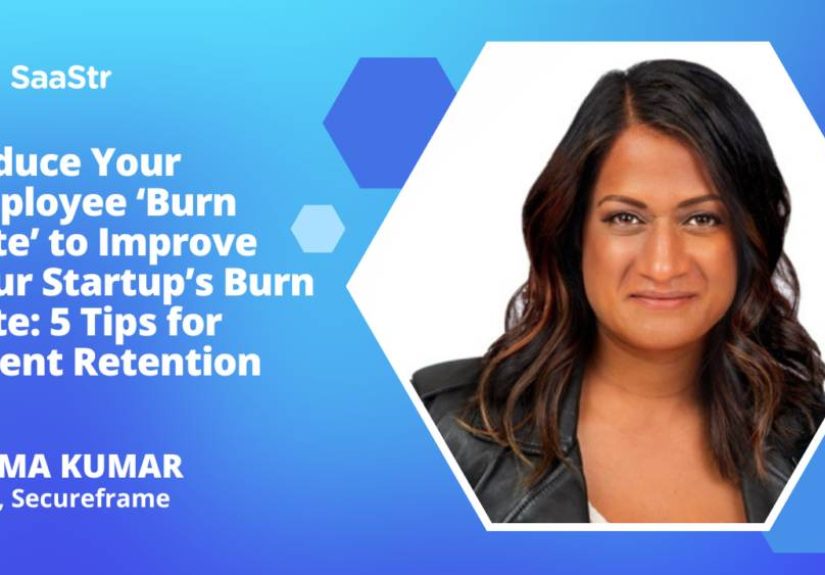
That is the heart of the argument Secureframe COO Seema Kumar makes in her SaaStr talk: if you reduce your employee “burn rate,” you improve your startup’s actual burn rate. It is a deceptively simple idea. Lower attrition means less recruiting expense, less time spent backfilling key roles, less training drag, and fewer months where important work moves at the speed of confused Slack messages and awkward handoffs.
And this is not just feel-good leadership theater. Recent workforce research keeps pointing in the same direction. U.S. employee engagement has weakened, many workers still care deeply about flexibility and mental health support, and turnover remains costly enough to make any finance lead grip their coffee cup a little tighter. In other words, talent retention is not only an HR issue. It is an operating discipline.
Secureframe is a fitting backdrop for this conversation. The company scaled quickly in compliance automation, and Kumar joined as COO after leadership experience at Salesforce. In the SaaStr session, she framed retention as a leadership problem before it becomes a budget problem. That distinction matters. Founders often try to solve retention late, with money. Great operators solve it early, with clarity, communication, development, belonging, and a workplace people do not feel the need to escape from.
So let’s turn Kumar’s ideas into a practical founder playbook. Here are five smart, modern, actually-usable tips for talent retention that can help reduce employee churn and, yes, improve your startup’s burn rate too.
Why Employee Retention and Burn Rate Belong in the Same Conversation
Founders love to talk about efficiency. They debate customer acquisition cost, sales efficiency, runway, and net revenue retention with the seriousness of medieval scholars. Yet many still treat employee turnover like weather: annoying, expensive, but somehow outside their control.
It is not. Turnover is one of the most controllable leaks in a startup’s bucket.
When someone quits, the costs stack fast. There is the direct cost of recruiting, interviewing, onboarding, and training. Then come the hidden costs: delayed launches, distracted managers, overworked teammates, customer frustration, and the morale hit that spreads through a team faster than free cold brew. SHRM has noted that replacing an employee can cost from 50% to 200% of annual salary depending on the role. For a startup, where a single person may own an entire function, the real impact can feel even larger.
That is why Kumar’s framing is so useful. High employee turnover increases startup burn even when payroll stays roughly the same. You spend more to get back to where you already were. That is not growth. That is organizational treadmill cardio.
The bigger irony is that many exits are preventable. Employees do not usually leave after one bad Tuesday. They leave after repeated signals that expectations are fuzzy, feedback is one-way, growth is limited, appreciation is rare, or the culture feels emotionally thin. By the time the exit interview happens, the resignation has often been emotionally submitted months earlier.
Tip #1: Align Everyone to the Vision, the Priorities, and Their Specific Role in Winning
Kumar starts with alignment, and rightly so. People stay longer when they know where the company is going, what matters most right now, and how their work contributes to the mission. That sounds obvious, but startups often confuse speed with clarity. They move fast, change priorities often, and assume everyone somehow absorbed the new direction through osmosis or vibes.
They did not.
In Kumar’s framework, alignment begins with defining the basics clearly: vision, priorities, strategy, SMART goals, and core values. That matters because employee engagement suffers when expectations are vague. Gallup’s latest U.S. findings show engagement has fallen to a 10-year low, and one of the biggest declines is in employees strongly agreeing they know what is expected of them at work. That is not a small issue. Unclear expectations are burnout fertilizer.
For founders, this means every employee should be able to answer five questions without blinking:
What are we building toward?
Your vision cannot be a vague poster slogan. It should be concrete enough to guide decisions and compelling enough to make people feel they are part of something larger than a sprint backlog.
What matters most this quarter?
If every priority is urgent, none of them are. Startups lose good people when teams are forced to juggle ten “top priorities” and then get blamed when all ten wobble.
How will we get there?
Strategy is not a luxury for later-stage companies. It is the difference between purposeful work and organized thrashing.
What does success look like for me?
Goals should travel all the way from company level to team level to individual level. If an employee cannot connect their weekly tasks to company outcomes, they are much more likely to feel replaceable, and people who feel replaceable tend to start replacing you first.
What behaviors matter here?
Core values are useful only when they shape decisions, hiring, feedback, and promotions. If your values disappear the second there is pressure, employees notice. Oh, they notice.
Alignment is retention because clarity reduces anxiety. It helps people focus, prioritize, and feel progress. And progress is one of the most underrated antidotes to burnout.
Tip #2: Practice All-Way Communication, Not Just Founder-to-Employee Broadcasting
Kumar’s second major point is communication, but not the usual “we send a company newsletter and call it transparency” kind. She emphasizes all-way communication: up, down, and across.
This is one of the smartest parts of her advice. Many leaders communicate downward very well. They can explain priorities, assign tasks, and give feedback. But retention improves when communication also travels upward and sideways. Employees are on the front lines with customers, prospects, vendors, and partners. If leaders are not listening to them, they are operating with expensive blind spots.
Gallup’s recent research on preventable turnover points in the same direction: meaningful manager conversations matter. When managers have consistent, useful one-on-ones that focus on goals, recognition, collaboration, and strengths, engagement rises. Translation: people are less likely to mentally pack a suitcase when someone actually talks with them instead of merely at them.
Good communication in a startup should look like this:
- Regular one-on-ones that are not canceled the second the calendar gets spicy.
- Upward feedback channels where employees can safely raise concerns.
- Cross-functional communication so people understand how decisions affect neighboring teams.
- Context-sharing, not just task-sharing.
- Leadership updates that explain not only what changed, but why.
Founders sometimes worry that more transparency creates more questions. Correct. It does. That is called healthy management. The alternative is silence, and silence is where rumor, anxiety, and disengagement rent a lovely apartment.
Tip #3: Treat Career Growth Like a Retention Strategy, Not a Nice Bonus
If you want people to stay, they need to believe they can grow without leaving. Kumar makes this point clearly: show employees that you are invested in their career goals and help them build a plan that they own.
This is where a lot of startups stumble. They think career development is something for giant corporations with career lattices, fancy learning portals, and budget lines with suspiciously inspiring names. But employees do not need a 47-page talent framework. They need evidence that staying will make them better.
That can include stretch projects, mentorship, clearer paths to promotion, skill-building, coaching, and honest conversations about where someone is headed. Work Institute has repeatedly found career development to be the top reason employees leave. In plain English: when people cannot picture a bigger future at your company, they start imagining one somewhere else.
Manager quality matters here too. Gallup’s research shows managers account for about 70% of the variance in team engagement. That is a gigantic lever. If managers are not equipped to coach, develop, and support employees, your retention strategy is basically a wish with a logo on it.
And yes, compensation still matters. Of course it does. Nobody pays rent with meaningful feedback. But current workforce research suggests that pay is only part of the retention equation. Competitive and fair compensation keeps you in the game. Development, recognition, flexibility, and culture often determine whether you win it.
WorldatWork reports that U.S. salary increase budgets have cooled from 4.4% in 2023 to 3.9% in 2024, with 3.8% projected for 2025. That means startups may not be able to outbid the market forever. So they need a stronger total value proposition: better growth, better managers, better mission fit, better daily work experience.
Tip #4: Recognize Good Work and Create Real Belonging, Not Just Slack Emoji Fireworks
Kumar connects retention to connection and belonging, especially in hybrid and remote workplaces. She also points to recognition, thoughtful thanks, and reinforcing commitment to the business, mission, and customers.
This is not soft stuff. It is structural stuff.
People stay where they feel seen. They leave faster where they feel interchangeable.
Gallup’s recent longitudinal research found that employees who are well recognized are significantly less likely to turn over. That should not surprise anyone who has ever worked hard on something only to hear the corporate equivalent of a shrug. Recognition does not need to be expensive, but it does need to be real, timely, and tied to meaningful contribution.
Belonging matters just as much. In Kumar’s words, employees need to feel part of something bigger. That is especially important in distributed teams, where isolation can quietly hollow out commitment. A person may be productive on paper while feeling emotionally detached in practice.
That is why simple rituals matter:
- Team check-ins that go beyond status updates.
- Managers who ask how people are doing, not only what they shipped.
- Recognition that connects work to customer impact.
- Moments of shared reflection after wins, misses, and launches.
- Inclusive decision-making that makes employees feel like contributors, not spectators.
Kumar even mentions “feelings check-ins,” which may sound awkward to some startup operators who are more comfortable discussing pipeline math than human emotion. But awkward is cheaper than attrition. A workplace that makes room for honesty builds trust faster than one that insists everyone perform relentless enthusiasm until further notice.
SHRM research also points to the power of employee experience overall. Workers with a positive employee experience are dramatically less likely to consider leaving. That means retention is not built by a single perk. It is built by the daily texture of work.
Tip #5: Let People Bring Their Authentic Selves to Work So They Can Focus on Customers, Not Survival
Kumar’s big takeaway is one of the strongest: encourage employees to bring their best, authentic selves to work every day so they can focus on customers and customer success.
That idea connects beautifully with the broader research on well-being and flexibility. The U.S. Surgeon General’s workplace framework highlights essentials like connection, work-life harmony, mattering, growth, and protection from harm. APA research has also shown that workers increasingly seek employers that support mental health. In a market where engagement is fragile, startups cannot afford a culture that turns basic humanity into a side quest.
Being able to show up authentically does not mean “anything goes.” It means people feel psychologically safe enough to ask questions, raise problems, disagree respectfully, admit mistakes, and operate without constant image management. That is not merely kinder. It is more efficient.
Flexibility also deserves a serious place in retention strategy. Stanford and Nature research on hybrid work found that giving employees two work-from-home days per week improved job satisfaction and reduced quit rates by about one-third, without hurting performance. That does not mean every company should copy the same schedule. It means founders should stop treating flexibility like a moral issue and start treating it like an operating design choice.
A workplace that respects people’s energy tends to keep more of it.
Mercer’s work on well-being and turnover reinforces this point: organizations with stronger cultures of health show lower turnover. So if your startup says it cares about people but rewards permanent urgency, celebrates boundaryless availability, and mistakes exhaustion for commitment, employees will eventually interpret the culture correctly.
What Founders Usually Get Wrong About Retention
Most retention mistakes are not dramatic. They are cumulative.
Founders wait too long to define roles. They promote great individual contributors into management without teaching them how to coach. They assume people know the mission because it was mentioned in an all-hands six months ago. They over-rely on compensation while underinvesting in recognition. They ignore early signs of detachment because deadlines feel louder. Then they act shocked when someone leaves “out of nowhere,” which is manager-speak for “I missed the clues.”
If that sounds harsh, good. Startups do not need guilt. They need pattern recognition.
The best founders treat talent retention the same way they treat customer retention: as a system. They measure it, talk about it, design for it, and improve it before it becomes an emergency.
Experience From the Startup Trenches: What This Looks Like in Real Life
In practical terms, I have seen this topic play out in a familiar startup pattern. A company raises fresh funding, hires quickly, and feels invincible for about three months. The team is energized, dashboards are pretty, and every meeting contains the phrase “massive opportunity” at least twice. Then reality arrives wearing hiking boots. Priorities multiply. Managers are overloaded. Product wants speed, sales wants certainty, support wants help, and nobody has time to explain how all the pieces fit together.
At first, nothing looks broken. Revenue may even be up. But the people signals begin to flicker. Top performers stop volunteering ideas. One-on-ones become tactical status calls. Recognition gets replaced by “thanks everyone” in a crowded Slack channel, which is the workplace equivalent of throwing a single granola bar into a stadium. A few employees quietly start wondering whether they are growing or just surviving.
Then one good employee leaves. Leadership tells itself it is normal. Then another leaves, and suddenly managers are doing two jobs, the recruiting pipeline is eating time, and the remaining team is forced to train new hires while also hitting aggressive targets. Burn rate rises, but not because somebody bought too many software licenses. It rises because attrition turns execution into molasses.
The companies that recover fastest are rarely the ones that panic and throw random perks at the problem. They are the ones that slow down just enough to fix the operating basics. They clarify the mission. They reduce priority clutter. They train managers to actually manage, not just monitor. They ask employees where friction lives and then do something with the answer. They make recognition specific. They create more humane rhythms. They stop pretending that culture will somehow take care of itself while everyone is overbooked and underslept.
I have also seen the opposite: startups with fewer resources but far better retention because employees know exactly why their work matters. In those environments, leaders repeat the vision until it feels obvious, not because the team is slow, but because clarity is a service. Managers ask about growth before employees have to beg for it. Feedback goes both directions. Wins are celebrated. Problems are surfaced early. Flexibility is designed intentionally instead of granted grudgingly. People work hard there too, but they do not feel used up.
That difference is everything. Employees can handle ambitious goals. What they struggle with is chaos without context, pressure without support, and effort without acknowledgment. Founders who understand that do not just build better cultures. They build more durable companies.
So if your startup is obsessing over runway, good. Keep doing that. Just remember that payroll efficiency is not only about headcount size. It is about how many talented people you can keep engaged, growing, and contributing without having to replace them every time the road gets bumpy. Reduce employee burn, and your financial burn often follows. Funny how human beings keep showing up in the spreadsheet.
Conclusion
Seema Kumar’s message is refreshingly direct: talent retention is not separate from financial discipline. It is financial discipline. Startups that align people to the mission, communicate in every direction, invest in growth, build belonging, and create a culture where people can do great work without burning out are not being soft. They are being smart.
In a tough market, founders often ask how to get more productivity from fewer people. A better question is how to build a company where your best people want to stay long enough to produce compounding results. That is where real startup efficiency lives.