Table of Contents >> Show >> Hide
- What Is postmarketOS?
- Why the 250-Device Boot Milestone Matters
- Booting Is Not the Same as Being Fully Supported
- The Role of Alpine Linux
- User Interfaces: Phosh, Plasma Mobile, GNOME Mobile, and Sxmo
- Real Examples of Devices in the postmarketOS World
- Why Mobile Linux Is So Hard
- What This Means for Old Phones
- Who Should Try postmarketOS?
- How postmarketOS Has Continued to Evolve
- The Bigger Picture: Owning the Computer in Your Pocket
- Experience Notes: What It Feels Like to Explore postmarketOS
- Conclusion
- SEO Metadata
There are tech milestones that arrive with fireworks, keynote speeches, and dramatic background music. Then there are milestones like this one: postmarketOS now boots on over 250 devices, and somewhere, a forgotten phone in a drawer just sat up and said, “Wait, I still have a career?”
For anyone who loves open-source software, repair culture, Linux tinkering, or simply hates seeing perfectly good hardware abandoned because a manufacturer stopped caring, this is a big deal. postmarketOS is not trying to be another Android skin with a fresh wallpaper and a few privacy promises sprinkled on top. It is a real Linux distribution designed for phones, tablets, and other mobile devices, built around the idea that consumer electronics should live longer than a two-year carrier contract.
The “over 250 devices” milestone came with postmarketOS v24.06, a release that expanded stable boot support to a much larger range of hardware. The important word here is boots. It does not mean every camera works, every modem behaves, or every device is ready to replace your daily driver tomorrow morning. But in the mobile Linux world, getting a device to boot a real Linux userspace is the first mountain. After that come the smaller mountains: Wi-Fi, display acceleration, audio, calls, suspend, cameras, sensors, and the classic “why is the battery percentage lying to me?” adventure.
Still, 250-plus devices is not a small footnote. It is a sign that postmarketOS has grown from a clever experiment into one of the most serious long-term efforts to bring mainline Linux principles to mobile hardware.
What Is postmarketOS?
postmarketOS is a free and open-source operating system for smartphones and other mobile devices. It is based on Alpine Linux, a lightweight distribution known for being small, simple, and security-focused. Instead of building on Android’s userspace, postmarketOS takes a more traditional Linux approach: packages, repositories, familiar Linux tools, and a development model that encourages upstream collaboration.
In plain English, postmarketOS wants your phone to behave less like a locked appliance and more like a computer you actually own. That does not mean it magically turns every old Android phone into a polished iPhone competitor. It means it gives developers and curious users a foundation for extending device life, experimenting with mobile Linux interfaces, and reducing dependence on closed ecosystems.
The project’s mission is closely tied to sustainability. Millions of phones are retired not because their screens are broken or their processors are useless, but because software support disappears. Security updates stop. Apps become heavier. The official firmware gets stale. Eventually, a device that could still browse, message, play music, display dashboards, run lightweight services, or act as a development machine ends up in a drawer or recycling bin. postmarketOS challenges that cycle.
Why the 250-Device Boot Milestone Matters
Booting on over 250 devices sounds like a number for enthusiasts, but the meaning goes deeper. Mobile hardware is notoriously difficult to support outside its original operating system. Unlike desktop PCs, where Linux can often boot on a wide variety of machines with relatively standardized components, phones are filled with device-specific quirks. Screens, touch panels, modems, cameras, batteries, sensors, bootloaders, and power management systems all need attention.
That makes every device port a small engineering puzzle. Sometimes it is a pleasant puzzle, like a 300-piece landscape. Sometimes it is a cruel puzzle where half the pieces are missing, three are from another box, and one is labeled “proprietary vendor blob.”
When postmarketOS reached the point where more than 250 devices could boot the stable release, it showed that the project’s porting model was working. It also made experimental device support more visible and accessible. Instead of leaving many devices hidden only in development channels, the v24.06 release brought a broader set of bootable hardware into the stable conversation.
That visibility matters. A device that boots can attract testers. Testers find bugs. Bug reports help maintainers. Maintainers improve device packages. More progress encourages more contributors. Open-source hardware support often grows through this kind of snowball effect, except the snowball is rolling downhill while someone is editing kernel configs at 2 a.m.
Booting Is Not the Same as Being Fully Supported
Here is the reality check: “supported” can mean different things depending on the device category. Some postmarketOS devices are surprisingly usable. Others are closer to proof-of-concept ports. A phone may boot but lack working cellular calls. Another may have Wi-Fi but no camera. Another may run a beautiful interface but struggle with suspend, battery life, or GPU acceleration.
This distinction is important for readers who are new to mobile Linux. If you install postmarketOS on a random old phone expecting a perfect Android replacement, you may end up learning three new command-line tools, two new acronyms, and one deep personal lesson about expectations. For hobbyists, that can be fun. For someone who needs a reliable alarm, banking app, rideshare app, and emergency calling device, it may not be the right fit yet.
The smarter way to look at postmarketOS device support is as a spectrum. At one end are devices that boot and show signs of life. In the middle are devices useful for testing, development, light tasks, or specific projects. At the stronger end are devices that can serve as daily drivers for patient users who understand the trade-offs. The device wiki is essential because it lists what works, what does not, and what still needs love.
The Role of Alpine Linux
postmarketOS uses Alpine Linux as its base, and that choice is more than a trivia answer for Linux night at the local coffee shop. Alpine is lightweight, security-oriented, and efficient. Those traits are useful on mobile devices, especially older ones with limited storage, aging processors, or modest memory.
A lean base system gives postmarketOS room to run on hardware that would not be happy with a heavy desktop-style distribution. It also supports the project’s long-term maintenance goals. Rather than building a giant one-off firmware image for every phone, postmarketOS tries to share as much software as possible across devices. Device-specific packages handle the hardware differences, while the common Linux userspace remains manageable.
This is one of the project’s most important ideas. Android device support is often tightly tied to vendor kernels, proprietary components, and manufacturer update schedules. postmarketOS moves in a different direction by encouraging mainline Linux work where possible and making device ports part of a broader distribution structure.
User Interfaces: Phosh, Plasma Mobile, GNOME Mobile, and Sxmo
A phone operating system is not just a kernel and a package manager. Users need an interface that works with fingers, small screens, portrait layouts, software keyboards, notifications, quick settings, and all the tiny daily interactions that make a phone feel like a phone rather than a shrunken laptop having an identity crisis.
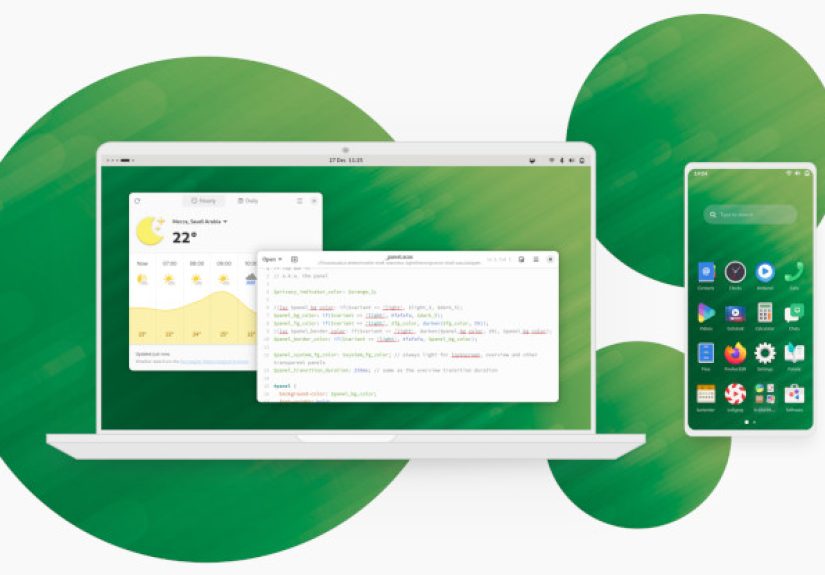
postmarketOS supports several mobile-friendly interfaces. Phosh is one of the best-known options. It is based on the GNOME stack and aims to provide a practical, touch-friendly shell for mobile Linux devices. Plasma Mobile, developed by the KDE community, brings the flexibility and customization culture of KDE Plasma to phones. GNOME Mobile continues the effort to adapt GNOME Shell concepts for handheld use. Sxmo, meanwhile, appeals to users who enjoy keyboard-driven, scriptable, minimalist environments.
This variety is part of the charm. postmarketOS is not betting everything on a single interface philosophy. It gives users and developers room to experiment. Want something GNOME-like and straightforward? Try Phosh. Want a more configurable mobile environment? Plasma Mobile may feel more natural. Want to script your phone into a tiny Linux command center? Sxmo is standing in the corner wearing sunglasses.
Real Examples of Devices in the postmarketOS World
postmarketOS has touched a wide range of hardware, from Linux-friendly phones to old Android devices and unusual gadgets. The PinePhone is one of the most recognizable examples because it was designed with open-source mobile operating systems in mind. The OnePlus 6 and OnePlus 6T have also been important in mobile Linux circles because they offer stronger hardware than many early Linux phone experiments. Older devices such as the Nokia N900 and Samsung Galaxy S II show how far the project’s preservation mindset can reach.
These examples highlight the diversity of the ecosystem. Some devices are attractive because they are easy to unlock. Some because they have strong community interest. Some because their hardware is unusually friendly to mainline Linux work. Others are simply beloved old machines that developers refuse to let fade quietly into the junk drawer.
That is part of what makes the postmarketOS device list fascinating. It is not just a compatibility chart. It is a map of community curiosity.
Why Mobile Linux Is So Hard
Desktop Linux users sometimes ask, “Why can’t phones just run Linux the way laptops do?” The answer is that phones are not standardized like PCs. A laptop usually has a fairly predictable boot process, graphics stack, storage setup, and peripheral layout. Phones are far more fragmented. Even two models from the same brand can have different display panels, camera sensors, modems, firmware requirements, and bootloader restrictions.
Then there is the modem problem. Cellular connectivity is one of the hardest parts of making a phone truly usable. Calls, SMS, mobile data, emergency behavior, audio routing, power states, and carrier quirks all matter. A device that boots Linux beautifully but cannot reliably make calls is exciting for developers but less exciting when your dentist is trying to confirm an appointment.
Cameras are another challenge. Modern phone cameras depend heavily on proprietary processing pipelines. Getting basic camera output can be difficult; matching the quality of stock Android camera software is often far harder. Battery life and suspend are equally tricky because mobile devices rely on aggressive power management. A phone that runs Linux but drains itself by lunch is not exactly living its best life.
This is why the 250-device milestone deserves respect. It does not mean the work is done. It means the foundation is expanding.
What This Means for Old Phones
The most exciting promise of postmarketOS is not that every user will flash it tomorrow. The promise is that hardware does not have to become useless just because official software support ends. An old phone can become a music player, a dedicated messaging device, a small home server, a smart home dashboard, a portable terminal, a testing device, a privacy-focused experiment, or a learning platform for Linux development.
For students and hobbyists, this is especially valuable. A retired phone is cheaper and less intimidating than a new development board. It already has a screen, battery, Wi-Fi, speakers, sensors, storage, and a case. In other words, it is a tiny computer with built-in peripherals. postmarketOS gives that computer a second act.
For repair advocates, the project supports a larger argument: software support should not be the thing that kills hardware. If open-source communities can keep devices useful after manufacturers move on, consumers gain more control and electronic waste can be reduced.
Who Should Try postmarketOS?
postmarketOS is best for curious users who enjoy experimenting, learning, and occasionally reading documentation with the emotional intensity of a detective novel. It is a good fit for Linux enthusiasts, developers, repair-minded users, privacy advocates, and anyone with an old supported device they can afford to tinker with.
It is not yet ideal for everyone. If you rely on a phone for banking apps, school apps, work authentication, high-quality camera performance, or guaranteed cellular reliability, you should be cautious. Many Android apps will not run natively, and while projects like Waydroid can help on some setups, compatibility varies. The mobile Linux app ecosystem is improving, but it is still not the same as the Android or iOS app stores.
The best approach is to start with a spare device. Check the postmarketOS device page carefully. Read what works and what does not. Understand the installation method. Back up anything important. Then treat the process as a learning project rather than a one-click makeover.
How postmarketOS Has Continued to Evolve
The “over 250 devices” headline belongs to the v24.06 era, but the project did not freeze there. Later releases continued improving mobile interfaces, device support, camera work, Android compatibility experiments, and system components. The project has also moved toward systemd support for major mobile interfaces, a change intended to improve integration with GNOME, KDE, Phosh, and the wider Linux desktop ecosystem.
That evolution shows a project maturing in public. Early mobile Linux efforts often felt like heroic demos: impressive, fragile, and not quite ready for normal people. postmarketOS still has rough edges, but it is increasingly structured like a serious distribution with release cycles, documentation, package management, device categorization, testing, and upgrade paths.
Perhaps the most encouraging sign is that postmarketOS is not working alone. It benefits from and contributes to broader projects: Alpine Linux, the Linux kernel, KDE, GNOME, Phosh, ModemManager, NetworkManager, Wayland, and many smaller components that make the mobile Linux stack possible. This upstream-first attitude helps prevent postmarketOS from becoming a pile of isolated hacks.
The Bigger Picture: Owning the Computer in Your Pocket
Phones are the most personal computers many people own, yet they are often the least controlled by their owners. App stores, locked bootloaders, vendor updates, cloud accounts, and closed firmware shape what users can do. postmarketOS represents a different philosophy: your device should be understandable, modifiable, and maintainable for as long as the hardware remains useful.
That philosophy will not appeal to everyone. Some people want their phones to be sealed, polished, and invisible. That is fine. But for users who believe computing should be open, repairable, and community-driven, postmarketOS is one of the most interesting projects in the mobile space.
The 250-device boot milestone matters because it proves the idea can scale. Not perfectly. Not effortlessly. Not without bugs that make developers stare into the middle distance. But scale is happening. More devices mean more testers, more maintainers, more documentation, more lessons, and more chances for old hardware to become useful again.
Experience Notes: What It Feels Like to Explore postmarketOS
Spending time with postmarketOS is less like buying a new phone and more like joining a workshop. The first thing you learn is patience. You do not simply ask, “Does my phone support postmarketOS?” You ask better questions: Does it boot? Does the display work? Is touch functional? What about Wi-Fi? Is the modem usable? Does suspend work? Which interface is recommended? Is the device using a mainline kernel or a downstream vendor kernel?
That research phase can actually be enjoyable. The device wiki feels like a field guide for rescued electronics. You may start by looking up one old phone and end up reading about five others you forgot existed. Suddenly, a dusty handset from 2016 looks less like e-waste and more like a weekend project with a screen.
The installation experience depends heavily on the device. On some hardware, especially devices designed with open-source systems in mind, the process can be surprisingly approachable. On others, it may involve bootloader unlocking, fastboot commands, device-specific notes, and careful reading. This is where postmarketOS teaches a valuable lesson: phones are computers, but they are computers wrapped in layers of manufacturer decisions.
Once the system boots, the first successful login feels oddly satisfying. Even if half the hardware is not ready, seeing a Linux interface on a device that was never meant to run it is a small victory. Phosh can feel familiar and practical, especially if you like GNOME-style simplicity. Plasma Mobile feels more configurable and playful, with the KDE spirit clearly present. Sxmo is a different beast entirely, rewarding users who enjoy keyboard-driven workflows and scripting.
The rough spots are part of the experience. You may discover that the camera is not useful, the battery drains faster than expected, or the interface occasionally behaves like it had too much coffee. But those imperfections also make the project feel alive. Every bug is a possible contribution. Every device note helps the next person. Every small fix is part of a larger effort to make mobile computing more open.
The best mindset is to treat postmarketOS as an exploration platform first and a phone replacement second. Use a spare device. Try different interfaces. Learn the package manager. Connect over SSH. Install lightweight apps. Turn an old phone into a bedside information panel, a portable Linux terminal, or a tiny server. The value is not only in replacing Android. The value is in discovering that your old device still has possibilities.
That is the charm of the “over 250 devices” milestone. It is not just a number. It is an invitation. It tells users, developers, repair fans, and Linux hobbyists that the mobile world does not have to be completely disposable. Somewhere in a drawer, an old phone may still have a job to do. postmarketOS is giving it a resume.
Conclusion
postmarketOS now booting on over 250 devices is more than an open-source bragging point. It is a sign that mobile Linux is becoming broader, better organized, and more ambitious. The project still faces major challenges, especially around hardware support, cellular reliability, cameras, app compatibility, and battery life. But progress in this space has always been incremental, and boot support is where many success stories begin.
For everyday users, postmarketOS is not yet a universal replacement for Android or iOS. For enthusiasts, developers, and sustainability-minded tinkerers, it is one of the most meaningful projects in open mobile computing. It gives old hardware a second chance, gives users more control, and gives the Linux community a serious path toward phones that feel less locked down and more like true personal computers.
The future of mobile Linux will not arrive all at once. It will arrive one device page, one kernel patch, one interface improvement, and one successful boot at a time.