Table of Contents >> Show >> Hide
- What Political Science Actually Studies
- The Main Cast in This Very Academic Teen Drama
- Why Politics Counts as a Science and Not Just Fancy Arguing
- The Plot, Retold as a High School Series
- The Big Subfields, Minus the Boring Brochure Voice
- What Political Science Teaches You to Notice
- What Political Science Can and Cannot Do
- Experiences That Make “Politics as Science” Click in Real Life
- Conclusion: The Hallway May Be Messy, but the Patterns Are Real
- SEO Tags
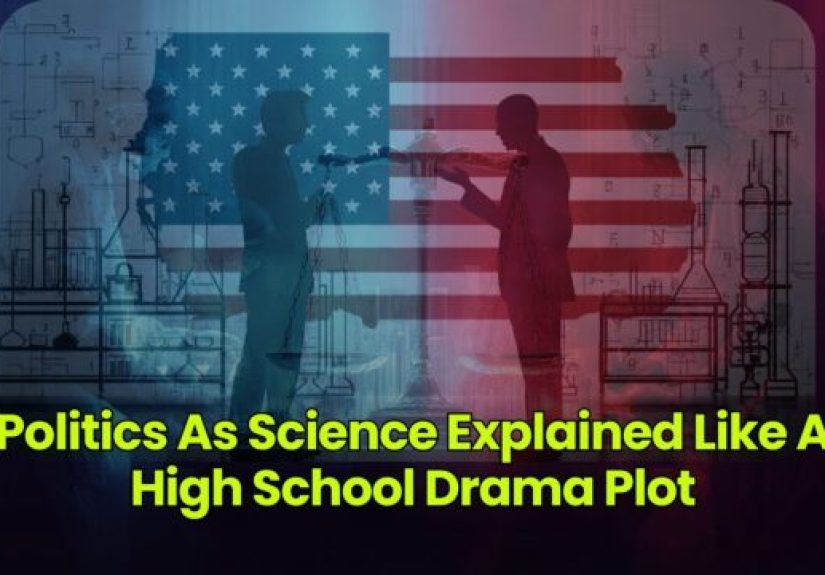
Politics can look like pure chaos from the outside: speeches, scandals, campaigns, spin, and at least one person acting like the cafeteria belongs to their bloodline. But political science is what happens when we stop treating that chaos like random gossip and start studying it like a pattern. In other words, politics is not just people yelling on TV. It is also incentives, institutions, rules, behavior, public opinion, and power moving through a system.
If that sounds suspiciously like a high school drama plot, congratulations, you already understand the basics. Political science asks who has power, how they got it, what rules shape their choices, why groups fight or cooperate, and why the same school handbook somehow gets enforced very differently depending on who is in charge. That is the fun part. The scientific part is that political scientists do not stop at vibes. They collect evidence, compare cases, test ideas, and look for patterns in how people and institutions behave.
So let’s decode politics as if it were a juicy teen series with student council elections, hallway alliances, broken promises, and one deeply suspicious dress code controversy. Somewhere between the principal’s office and the pep rally, you will find the logic of political science.
What Political Science Actually Studies
At its core, political science is the study of government, public policy, political systems, and political behavior. That means it looks at institutions like legislatures, courts, executives, parties, bureaucracies, and international organizations. It also looks at people: voters, activists, lobbyists, leaders, interest groups, and ordinary citizens who claim they are “not political” right before delivering a 14-minute speech about parking policy.
Think of politics as the process of making collective decisions. A school has to decide whether phones are allowed in class. A city has to decide where to build roads. A country has to decide how to tax, regulate, defend, negotiate, and distribute resources. Political science studies how those decisions get made, who influences them, and why some rules feel stable while others collapse the minute the wrong person grabs a microphone.
This is why the field is much broader than elections alone. Yes, elections matter. But so do constitutions, institutions, courts, public opinion, bureaucratic agencies, political culture, policy design, international conflict, diplomacy, and the economics of power. Political science is less “Who won the debate?” and more “What structures shaped the debate, what incentives drove the players, and what outcomes followed?”
The Main Cast in This Very Academic Teen Drama
The Principal: Executive Power
In the high school version of politics, the principal is the executive branch. This is the person expected to make decisions, enforce rules, and project authority even when the copier is broken and the hallway is one rumor away from a full rebellion. In real politics, executives include presidents, governors, mayors, and prime ministers. Political scientists study how much power they have, what limits exist, and how they interact with other institutions.
The Student Council: Legislatures
The student council is the legislature. It is where people campaign on slogans like “More school spirit!” and then discover that changing lunch policy requires forms, votes, committees, and at least three people who hate each other on principle. Legislatures write laws, allocate resources, and represent constituencies. Political science asks whether they actually represent people well, how coalitions form, and why some members grandstand while others quietly shape the final outcome.
The Rulebook: Constitutions and Institutions
The school handbook is your constitution. It sets the official rules, but the real story is how those rules are interpreted and enforced. Institutions are the formal and informal rules that structure political life. Formal rules are written down. Informal rules are the unwritten expectations everyone “just knows,” like who gets to speak first, what behavior is tolerated, and which traditions are treated like sacred law even though they started because somebody’s cousin made a good suggestion in 1998.
The Popular Crowd, the Nerd Table, and the Theater Kids: Interest Groups
Interest groups are organized groups trying to influence decisions without necessarily running the whole school themselves. They may lobby, persuade, pressure, or bargain. In politics, these can be business groups, labor unions, advocacy organizations, or professional associations. In school-drama terms, they are the clubs and cliques that know exactly how to get a policy changed by applying strategic pressure at the right moment.
The Entire Hallway: Public Opinion
Public opinion is what the student body thinks, fears, wants, or thinks it wants until the next rumor cycle. Measuring it matters because leaders claim to represent “the people” all the time. Political scientists use surveys and polling to understand attitudes, preferences, and participation. Of course, measuring opinion is tricky. People are inconsistent, easily influenced, and not always honest about what they believe or whether they actually plan to show up and vote.
Why Politics Counts as a Science and Not Just Fancy Arguing
This is where political science earns the “science” part of the name. It is not science because everyone agrees. That would eliminate roughly 93% of politics overnight. It is science because researchers use systematic methods to ask questions, collect evidence, test explanations, and compare outcomes.
A political scientist might ask why some democracies are stable while others backslide, why certain messages increase turnout, why some policies survive even when they are unpopular, or how institutions shape behavior. Then they build hypotheses. Maybe stricter institutions reduce personal favoritism. Maybe higher trust increases compliance. Maybe electoral rules change which kinds of candidates succeed. The next step is evidence, not guesswork.
Political science uses several tools:
- Surveys and polling to measure opinion, identity, ideology, and participation.
- Statistical analysis to find patterns across large datasets.
- Case studies to dig deeply into a country, event, institution, or policy.
- Comparative analysis to compare different systems and ask why outcomes vary.
- Experiments to test cause and effect, including field and survey experiments.
- Formal models to map incentives, strategy, bargaining, and collective decision-making.
- Archival and qualitative research to understand motives, meanings, and historical development.
So no, political science is not just “watching the news with a highlighter.” It is a structured attempt to explain how power works in the real world. Sometimes it behaves like sociology with sharper elbows. Sometimes it borrows from economics, history, psychology, law, and statistics. But the goal stays the same: explain collective power and decision-making with evidence.
The Plot, Retold as a High School Series
Imagine episode one opens with a student council election. The candidates promise upgraded vending machines, fewer hallway passes, and “a voice for every student,” which is campaign language for “please clap.” One candidate has charisma. One has better organization. One has the backing of the soccer team, debate club, and mysteriously all five office aides. Political science enters the chat and asks: what matters most here? Message? Money? Networks? Rules? Identity? Turnout? The popularity of free snacks?
Now imagine the winner takes office and immediately learns they cannot do much without committee approval, principal buy-in, and support from other students. This is where political science says: welcome to institutions. Personal charm matters, but rules and constraints matter too. A leader is not floating in space. They operate inside structures.
Then comes the conflict arc. A new hallway rule sparks outrage. One group frames it as safety. Another frames it as control. Rumors spread. Influencers post. Teachers interpret the rule differently. Enforcement varies by grade level. Suddenly the story is not about one rule. It is about legitimacy, compliance, perception, communication, and power. Political science loves this kind of mess because beneath the mess are patterns.
By midseason, alliances shift. People who hated each other last week now cooperate because they have a common enemy. That is coalition-building. A popular student uses emotional language and symbols to rally support. That is political communication. A faction threatens to boycott the pep rally unless demands are met. That is collective action. The administration compromises just enough to calm the hallway without fully giving in. That is bargaining under pressure.
Season finale? The rule changes, but not because one person heroically spoke truth to power while a slow piano song played. It changed because incentives shifted, opposition organized, leaders calculated costs, and institutions created openings for pressure. Political science would call that analysis. Netflix would call it character development.
The Big Subfields, Minus the Boring Brochure Voice
American Politics
This subfield studies political institutions, elections, parties, public opinion, representation, courts, Congress, the presidency, and public policy in the United States. It asks questions like why voters behave the way they do, how polarization changes governance, and whether institutions still produce accountability or just produce very polished excuses.
Comparative Politics
Comparative politics compares political systems across countries. Why do some democracies endure? Why do some states centralize power? Why do parties differ so much from one country to another? It is basically the art of asking, “Why does this school handle drama so differently from that school?” and then answering with evidence instead of stereotypes.
International Relations
This is the part that studies war, peace, trade, diplomacy, alliances, international institutions, and global conflict. On the high school scale, think rival schools, team alliances, reputation, deterrence, and the politics of who sits where at regionals. On the real scale, the stakes are much higher, but the logic of incentives, strategy, and uncertainty remains painfully familiar.
Political Theory
Political theory asks the big normative questions: What is justice? What makes authority legitimate? What do freedom and equality really mean? If empirical political science is figuring out who got elected prom king, political theory is asking whether the prom monarchy should exist at all.
Public Policy and Political Economy
This area studies how governments design and implement policy, how economics and politics shape one another, and why good ideas do not always survive contact with institutions. Policy is where noble intentions meet budgets, incentives, tradeoffs, and one committee chair who insists this is “not the right time.”
What Political Science Teaches You to Notice
Once you start thinking politically in a scientific way, you stop seeing events as isolated drama. You start seeing systems. You notice that rules shape choices. Incentives shape behavior. Symbols shape identity. Institutions create stability but also protect the people already inside them. You also notice that what people say they value and what they actually reward can be two very different things.
For example, a school may officially value fairness, but if students with connections get exceptions more often, the institution is producing a different real-world message. A government may say it values participation, but if registration rules, district lines, or bureaucratic barriers make participation harder, then behavior will not match the slogan. Political science is obsessed with that gap between stated ideals and lived outcomes.
It also teaches humility. Politics is not a machine with one magic lever. People are complicated. Institutions evolve. Public opinion shifts. Policies create unintended consequences. The same rule can work differently depending on culture, timing, enforcement, and trust. So political science is not fortune-telling. It is disciplined explanation.
What Political Science Can and Cannot Do
Political science can explain patterns, identify likely effects, compare systems, and test claims about cause and effect. It can show, for instance, that institutions influence outcomes, that voting behavior is shaped by more than one factor, and that public opinion does not appear out of thin air like a jump-scare in episode six.
What it cannot do is make politics neat. It cannot remove conflict because conflict is built into collective life. People want different things, have unequal resources, and live under rules that some benefit from more than others. Politics exists because society has to make shared decisions under conditions of disagreement. That is not a glitch. That is the plot.
And honestly, that is why the field matters. If politics were just random noise, studying it would be pointless. But because patterns exist, because institutions shape incentives, and because behavior can be observed and compared, political science gives us a better way to understand power than simply choosing our favorite dramatic monologue and calling it truth.
Experiences That Make “Politics as Science” Click in Real Life
Here is where the topic stops being abstract and starts feeling weirdly familiar. Most people have already lived through mini versions of politics before they ever take a class on it. You do not need to run for office to experience power, coalition-building, reputation, rule enforcement, and public opinion. You just need to exist in a group larger than three people and smaller than civilization.
Take student council season. Suddenly everyone becomes a branding expert. The candidate with the nicest poster is not always the candidate with the best plan. The student with the broadest social network often has an advantage, but even that is not enough if turnout is low or the rules favor a certain kind of campaign. Watching who volunteers, who persuades, who shows up, and who quietly influences decisions from behind the scenes is a crash course in political behavior. You begin to see that leadership is not just personality. It is organization plus incentives plus timing.
Then there is the classic group-project experience, which is secretly political science in sweatpants. One person does most of the work. One person controls the slide deck and therefore all symbolic power. One person vanishes until presentation day and reappears with the confidence of a long-serving minister. The group makes rules, negotiates responsibilities, enforces norms, and decides whether punishment is worth the drama. That is governance. That is collective action. That is institution-building with Google Docs.
School rules provide another unforgettable lesson. Maybe the administration introduces a new phone policy or changes how IDs must be displayed. Some students comply immediately. Some resist. Some follow the rule only when the strict teacher is on duty. Others turn the issue into a broader argument about fairness, privacy, trust, or selective enforcement. What seems like a simple rule becomes a living example of legitimacy and compliance. People obey rules more consistently when they think the rule is fair, clearly communicated, and evenly enforced. The minute they suspect favoritism, compliance starts looking optional.
Social media at school is another political laboratory wearing lip gloss. One post shifts the mood. One rumor reframes a decision. One meme turns an authority figure into a symbol. Suddenly the issue is not just what happened. It is how people interpret what happened. This is where public opinion, framing, and political communication become real. Facts matter, but so do narratives, identity, and emotion. A well-timed story can mobilize support faster than a perfectly logical explanation ever could.
Even friendships teach political lessons. People form alliances, trade loyalty for support, test boundaries, and decide when to speak up or stay quiet. None of this means friendship is fake. It means humans are social creatures navigating power and belonging all the time. Political science helps explain why certain groups hold together, why others fracture, and why leadership can be both admired and resented in the same week.
So when someone says politics is just loud people arguing, that misses the deeper truth. Politics is built into everyday group life. The science part is learning how to slow down, observe patterns, compare cases, and ask better questions. Once you do that, the world starts making more sense. Still messy, sure. Still dramatic, absolutely. But no longer random.
Conclusion: The Hallway May Be Messy, but the Patterns Are Real
Politics as science is not about draining the life out of public life. It is about making that life intelligible. It is about understanding how rules, institutions, incentives, beliefs, and group behavior shape the choices that affect everyone. The high school drama metaphor works because politics really is full of alliances, status battles, strategic messaging, and moments when one decision changes the mood of the entire building.
But unlike gossip, political science does not stop at “Can you believe what happened?” It asks why it happened, what conditions made it likely, who benefited, who lost, and what might happen next if the same structure stays in place. That is what makes the field so useful. It helps us see the machinery inside the melodrama.
So the next time politics looks like a chaotic season finale, remember: beneath every speech, scandal, election, protest, and policy fight is a system. Political science studies that system with evidence, comparison, and analysis. Which means that yes, politics can feel like high school drama. But the science is what lets us decode the script.