Table of Contents >> Show >> Hide
- What Is a Personal Recommendation Letter?
- When You Might Need One
- The 6-Part Structure That Makes Letters Actually Work
- Quick “Do This / Not That” Checklist
- Personal Recommendation Letter Examples (Copy, Customize, Send)
- Example 1: General Personal Recommendation for a Job
- Example 2: Personal Reference for an Apartment or Rental Application
- Example 3: Scholarship Character Reference (Leadership + Service)
- Example 4: Volunteer Position Recommendation (Reliability Under Pressure)
- Example 5: Personal Recommendation for a Student or Program Application
- Example 6: Character Reference Letter for Court (Careful + Respectful)
- Example 7: Support Letter for Immigration (Community Ties + Credibility)
- Example 8: Personal Recommendation for a Career Change (Skills Transfer)
- Make Any Example Better in 10 Minutes
- FAQ: Common Questions People Google at 1:00 a.m.
- Conclusion
- Real-World Experiences and Lessons (500+ Words)
Personal recommendation letters (also called personal reference or character reference letters) do one job really well: they put a living, breathing human behind an application. Resumes list what someone did. A personal recommendation letter explains how they did itand what it’s like to rely on them when it actually matters.
This guide gives you practical, modern personal recommendation letter examples you can adapt for real situations: jobs, rentals, scholarships, volunteering, court, immigration, and more. You’ll also get a simple structure that works across the board, plus a “don’t accidentally tank your friend’s chances” checklist.
What Is a Personal Recommendation Letter?
A personal recommendation letter is a written endorsement from someone who knows the applicant in a non-supervisory or informal capacity (neighbor, family friend, community leader, mentor, volunteer coordinator, coach, etc.). It focuses on character traits, reliability, and real-life examplesespecially when the reader wants to know, “Is this person trustworthy? Responsible? Consistent?”
When You Might Need One
- Jobs (especially entry-level roles or career changes)
- Apartment or rental applications (reliability, payment habits, respect for rules)
- Scholarships (character + leadership + service)
- Volunteer roles (dependability and attitude)
- Court-related character letters (only when requested/appropriate)
- Immigration matters (support letters about community ties and good moral character)
- Academic programs (when a personal recommender is allowed)
The 6-Part Structure That Makes Letters Actually Work
If you remember nothing else, remember this: a strong letter is specific, organized, and credible. Use this reliable structure:
1) Header + date + recipient (when known)
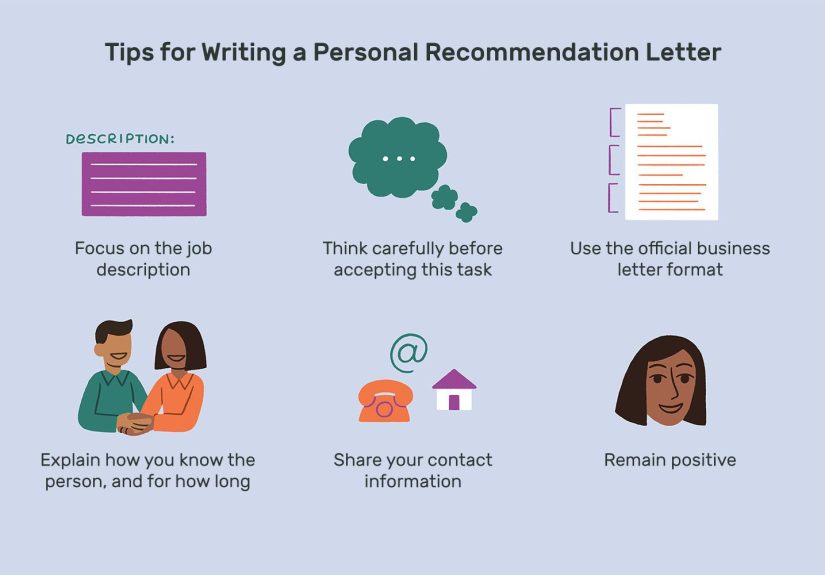
Use a simple business-letter format. If you don’t know the recipient, “To Whom It May Concern” is still commonjust don’t use it if you have a name.
2) Clear relationship + how long you’ve known them
Explain who you are, how you know the person, and why your opinion is worth reading.
3) 2–3 standout qualities (choose the right ones for the situation)
Pick traits that match what the reader cares about. For a rental: reliability and respect. For a scholarship: initiative and service. For a job: communication and work ethic.
4) Proof: short stories, not slogans
Anyone can say “Jordan is responsible.” Show it with a specific moment or pattern of behavior.
5) A confident recommendation
Say the quiet part out loud: you recommend them. If you can’t honestly do that, it’s better to decline writing the letter.
6) Contact info + signature
Make it easy for the reader to follow up. Keep tone professional, even if you’re writing about someone you’ve known since you both thought flip phones were peak technology.
Quick “Do This / Not That” Checklist
Do
- Keep it to one page when possible (roughly 300–).
- Use 2–3 qualities and back them up with examples.
- Match the letter to the purpose (job vs. rental vs. scholarship).
- Use a tone that’s warm but still business-appropriate.
- Proofread names, dates, and details (the “tiny” stuff is what readers notice first).
Not That
- Don’t write a generic paragraph that could describe a houseplant.
- Don’t overshare personal info (health, family issues, private drama).
- Don’t exaggerate (“best human on Earth”)it can backfire.
- Don’t include anything you can’t defend if asked.
- Don’t send it without the applicant’s correct name and the correct target (company, program, landlord).
Personal Recommendation Letter Examples (Copy, Customize, Send)
Below are original, adaptable examples. Replace bracketed placeholders and adjust details so the letter sounds like a real person wrote itbecause a real person did (you).
Example 1: General Personal Recommendation for a Job
Best for: Entry-level roles, customer service, internships, career transitions.
Example 2: Personal Reference for an Apartment or Rental Application
Best for: Landlords/property managers who want confidence about payments, care of property, and neighbor behavior.
Example 3: Scholarship Character Reference (Leadership + Service)
Best for: Scholarships that value initiative, community impact, perseverance.
Example 4: Volunteer Position Recommendation (Reliability Under Pressure)
Best for: Nonprofits, community programs, youth organizations, event-based volunteering.
Example 5: Personal Recommendation for a Student or Program Application
Best for: Programs that accept a non-academic recommender (mentors, community leaders, supervisors from service activities).
Example 6: Character Reference Letter for Court (Careful + Respectful)
Important: Court-related letters should be truthful, specific, and respectful. Don’t attack anyone or argue legal issues unless an attorney instructs you to. Keep the focus on what you personally know about the person’s character and actions.
Example 7: Support Letter for Immigration (Community Ties + Credibility)
Note: Immigration letters vary widely depending on the type of case. Keep it factual, based on what you personally know, and consistent with any official documentation. Avoid guessing.
Example 8: Personal Recommendation for a Career Change (Skills Transfer)
Best for: Applicants moving industries who need someone to validate transferable skills (communication, leadership, organization).
Make Any Example Better in 10 Minutes
Before you send your letter, do these upgrades (they’re small but powerful):
- Swap vague praise for proof: replace “hardworking” with a real scenario.
- Match traits to the goal: rentals want stability; scholarships want initiative; jobs want collaboration.
- Add a credibility line: “I worked alongside them weekly for two years” beats “I know them well.”
- Use one standout story: one sharp example is better than five fuzzy ones.
- End with availability: show you’re comfortable being contacted.
FAQ: Common Questions People Google at 1:00 a.m.
How long should a personal recommendation letter be?
Usually one page. Aim for 3–5 short paragraphs. Long letters often repeat themselves and accidentally lower confidence.
Should I include weaknesses?
Only if the context expects it (some academic recommendations do). For most personal references, focus on strengths backed by exampleswithout exaggeration.
Can I write one if I’m family?
Sometimes, but it can be seen as biased. If you’re family, be extra specific and professional, and focus on what you’ve personally observed over time.
Should the letter be signed?
Yes. A typed name is often acceptable, but a signature (digital or ink) adds credibility when practical.
Conclusion
The best personal recommendation letters aren’t fancythey’re clear, specific, and believable. Choose 2–3 traits that match the goal, prove them with real examples, and make it easy for the reader to contact you. Do that, and your letter won’t just “help.” It’ll actually move the needle.
Real-World Experiences and Lessons (500+ Words)
In real life, personal recommendation letters tend to succeed or fail for reasons that have nothing to do with grammar and everything to do with signal. The reader is scanning for a few quiet answers: “Does this writer truly know the applicant?” “Are they willing to attach their name to this?” “Is the praise supported by reality?” The strongest letters feel like a friend is giving you a confident heads-up: “Yes, you can count on this person.”
One common scenario: someone requests a letter in a panictwo days before it’s duethen sends nothing but “Can you write me something?” That usually creates a letter full of generic compliments, not because the recommender doesn’t care, but because they’re missing the raw materials. In practice, the easiest way to raise the quality fast is to ask the applicant for a short “mini packet”: what they’re applying for, why it matters, and two or three achievements the recommender personally witnessed. This isn’t cheating; it’s how you prevent a well-meaning letter from becoming a polite nothingburger.
Another real-world pattern shows up in rental references. Landlords and property managers aren’t looking for poetry. They want reassurance that the applicant pays on time, respects the property, and won’t cause constant conflict. The letters that work best in this setting sound grounded: a clear relationship, a track record of reliability, and one or two examples that signal predictability. The letters that work worst tend to be dramatic (“They are the kindest soul in the universe!”) while ignoring the landlord’s actual fear (“Will I have to chase rent?”). Matching the letter to the reader’s concerns is a superpower.
Scholarship and program letters are a different animal. Many applicants are academically qualified, so committees often use recommendation letters to separate “capable” from “compelling.” The most persuasive letters highlight a pattern: initiative, leadership, or perseverance over time. A single heroic moment is nice, but repeated behavior is better. For example, “helped organize one fundraiser” is good; “identified a gap, recruited others, and built a repeatable system” is stronger. Readers trust patterns because patterns predict what the applicant will do next year, not just what they did once.
Then there are high-stakes letterscourt and immigration support letterswhere tone matters as much as content. The best approach is respectful, factual, and tightly connected to personal observation. Overreaching can hurt credibility. If a writer claims things they can’t know (“They would never do anything wrong”), the reader may discount the entire letter. A more credible approach is: “I’ve known them for X years, I’ve observed these behaviors, and I’ve seen these steps toward responsibility.” That keeps the letter in its proper lane and makes it stronger.
Finally, there’s the “awkward truth” lesson: sometimes the kindest move is declining to write the letter. If you can’t honestly recommend the person, a weak letter can quietly do damageand a negative letter can do obvious damage. A respectful decline (“I don’t feel I can write the strong letter you deserve”) protects both of you. The goal of recommendation letters isn’t to produce text; it’s to produce trust. When a letter earns trust, it becomes a leverone page that can open doors that resumes alone sometimes can’t.