Table of Contents >> Show >> Hide
- Meet OVMS: Open-Source Telematics That Doesn’t Snitch (Unless You Ask)
- Why Your EV Has a “Soul” (And It Speaks in Metrics)
- What OVMS Can Actually Do (Besides Make You Feel Like a Wizard)
- OVMS vs. The Official App: Freedom, Friction, and Fine Print
- How to Use OVMS Without Turning Your EV Into a Science Fair Volcano
- Use Cases That Feel Like Cheating (In a Good Way)
- Field Notes: What OVMS Feels Like in Real Life (500-ish Words of Experience)
- 1) The “phantom drain” mystery finally gets a plotline
- 2) Charging stopsand you find out now, not tomorrow morning
- 3) You learn your car’s “normal,” and that’s secretly the superpower
- 4) Home automation becomes genuinely useful, not just a party trick
- 5) Your EV stops being a black box during road trips
- 6) You become politely skeptical of “the app says…”
- 7) You also learn restraint (eventually)
- Conclusion: A Window, Not a Wrench
Every EV owner has had that moment: you open the official app, it spins like it’s buffering a live feed from Mars, and then it tells you something deeply unhelpful like, “Charging: Yes.” Thanks, robot. I, too, have eyes.
Now imagine a different kind of relationship with your electric carone where your EV doesn’t just mumble status updates, but actually lets you peek behind the curtain: battery state of charge, temperatures, charging events, alerts, logs, and integrations with the smart-home gadgets that already run your life. That’s the vibe of the Open Vehicle Monitoring System (OVMS): an open-source telematics project that can feel like a literal window into your EV’s inner worldthe “soul,” if you’ll allow a little drama.
Meet OVMS: Open-Source Telematics That Doesn’t Snitch (Unless You Ask)
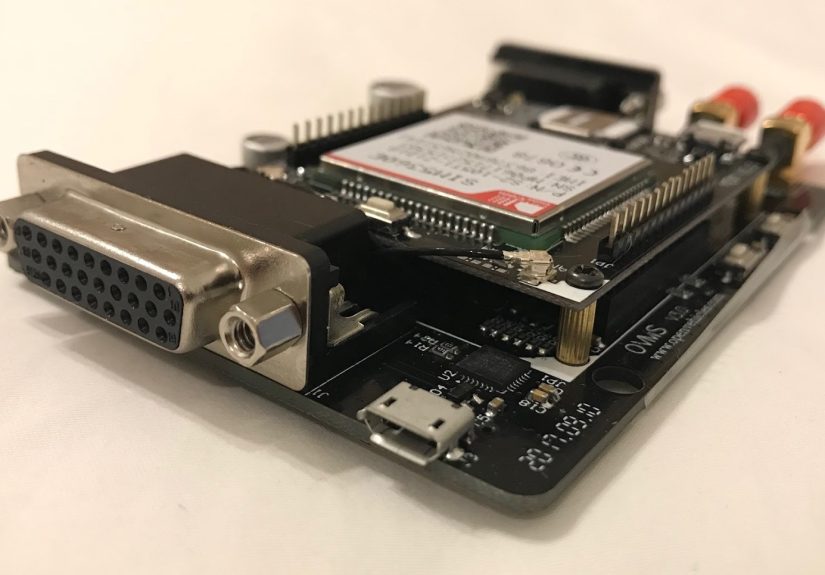
OVMS is, at its core, a DIY-friendly approach to EV monitoring and remote visibility. Instead of depending entirely on a manufacturer’s cloud and app, OVMS is built around a vehicle module (hardware in the car), software services, and mobile/web interfaces that let you monitor and, depending on vehicle support, control certain functions. The “open” part isn’t marketing glitterit’s a real design philosophy: transparency, extensibility, and more control over your data.
Think of it like this: the automaker app is the front desk of a fancy hotel. OVMS is the maintenance hallway behind the wallsstill safe if you behave, but definitely more honest about what’s going on. You can watch metrics in real time, store logs, trigger notifications, and connect your car’s status to other systems (home automation folks, you know who you are).
Why Your EV Has a “Soul” (And It Speaks in Metrics)
Your EV is basically a rolling data center
EVs are packed with sensors and control units that constantly measure and manage performanceespecially around the battery pack. Unlike a gas car, where a lot of the “magic” happens mechanically, an EV’s behavior is heavily mediated by software: battery management, thermal management, charging logic, power delivery, and protective limits. That’s why vehicle telemetry is so valuable: it’s the language your EV already uses internally.
The nervous system: CAN bus and OBD-II
Most modern vehicles use a communication backbone commonly referred to as the CAN bus (Controller Area Network). It’s how electronic control units (ECUs) and devices share messagesfast, reliable, and designed for the noisy, real-time world inside a car.
Then there’s the OBD-II port, the standardized connector that (on many vehicles) provides a gateway to diagnostic data. OBD-II became standard in the U.S. for many 1996+ vehicles and is closely tied to emissions monitoring and fault reporting. Translation: it’s one of the most common “legal doors” into certain vehicle data, and it’s why so many diagnostic dongles plug in under your dashboard.
OVMS doesn’t magically “hack” your car. It listens, interprets, and reportsusing vehicle integrations that depend on the make/model and what’s available through diagnostics and in-vehicle networks. When people call it “a window,” they mean it: you’re observing the car’s internal state, not just the polished summary the official app feels like sharing today.
What OVMS Can Actually Do (Besides Make You Feel Like a Wizard)
1) Live EV monitoring that’s more than “Charging: Yes”
OVMS is known for tracking practical metrics like state of charge, temperatures, tire pressure (where available), charging status, and fault conditions. The point isn’t to drown you in numbersit’s to help you understand what your EV is doing in real time, especially when something changes unexpectedly.
2) Alerts that show up before a minor issue becomes a stranded-you issue
The most underrated part of monitoring is notifications. Charge stopped early? Temperature looks suspicious? Unexpected unplug? Some setups can alert you quickly, which matters because EV problems often start as “small weird” before turning into “big inconvenient.” OVMS-style alerts are the difference between “I’ll check later” and “Oh, I should fix that now.”
3) Remote commands (when supported), with the right amount of caution
Depending on the vehicle integration, some users can do things like manage aspects of charging or climate control. This is where the “window vs. wrench” distinction matters: monitoring is inherently safer than control. When you start sending commands into vehicle systems, you’re no longer just observingyou’re participating. OVMS can support both, but responsible setups start with visibility and grow carefully.
4) Logging, dashboards, and integrations that make your car part of your digital life
A huge appeal of OVMS is that it plays nicely with the broader DIY ecosystem: logging data for later analysis, integrating with automation tools (like MQTT-based setups), and enabling custom dashboards. If you’ve ever wished your EV could trigger a smart plug, change your home HVAC routine, or simply give you better historical data than the official app allowsthis is the playground.
OVMS vs. The Official App: Freedom, Friction, and Fine Print
Privacy: your driving data is valuable (to you, and to… others)
Connected-car data is a real policy and consumer protection topic in the U.S., especially around location and driving behavior. Regulators have emphasized that precise geolocation is sensitive, and major enforcement actions have highlighted how vehicle data can be collected, shared, and monetized in ways drivers didn’t expect.
OVMS appeals to privacy-minded owners because “open” tends to mean you can design a setup where you decide what gets stored, where it goes, and who sees it. It won’t automatically make everything privatebut it gives you choices that closed ecosystems often don’t.
Reliability and longevity: clouds come and go; your car keeps existing
Manufacturer apps depend on servers, subscriptions, region rules, and corporate priorities. Open-source projects aren’t immortal either, but they can be maintained by a community, run on infrastructure you control, and adapted when vendors change direction. For owners keeping a car long-term, that flexibility isn’t academicit’s practical.
Feature depth: official apps are designed for “most people,” not “you, specifically”
Automaker apps tend to focus on broad, safe features. OVMS-style tools are for the edge cases: tracking patterns, correlating charging sessions, building custom notifications, or integrating your EV into a workflow that makes sense for your household (or your fleet).
How to Use OVMS Without Turning Your EV Into a Science Fair Volcano
Start with “read-only” thinking
The safest way to treat OVMS is as an observability layer first: monitor, log, learn. Get comfortable with what “normal” looks like for your car: typical battery temperature ranges, typical charge curves, typical overnight drain. Once you can recognize “weird,” you’re far less likely to do something… enthusiastically unhelpful.
Cybersecurity hygiene is not optional
Modern vehicle cybersecurity guidance emphasizes risk management, supply chain trust, access control, and update practices. Any device that connects to vehicle networks should be treated like a serious computer, not a cute accessory. Use strong credentials, keep firmware updated, and avoid exposing interfaces to the open internet unless you know exactly what you’re doing (and enjoy anxiety as a hobby).
Warranty, safety, and responsibility
You’re responsible for your vehicle. If you install hardware, follow instructions, avoid sketchy power routing, and understand that sending commands into vehicle systems can have real consequences. If your goal is “insight and alerts,” you can usually get a lot of value while staying conservative. If your goal is “I will now reprogram reality,” at least do it in a controlled, well-documented way.
Practical setup mindset (no heroics required)
Most successful setups focus on clean installation, reliable connectivity, and clear data flows: where metrics are stored, how alerts are routed, and what happens during connectivity gaps. If you treat it like a small infrastructure projectsimple, documented, maintainableyou’ll be happier than if you treat it like a weekend stunt.
Use Cases That Feel Like Cheating (In a Good Way)
Smarter charging habits
OVMS-style monitoring can help you spot patterns: charging that stops early, repeated slow-charging sessions, temperature-related throttling, or “this charger is flaky” behavior. Over time, those observations can reduce inconvenience and even improve battery carebecause you’re making decisions with context, not vibes.
Cold-weather sanity
In winter, an EV’s personality can change dramatically. Preconditioning, temperature effects on range, and charging speeds all become more noticeable. Monitoring battery and system temperatures can help you understand why the car behaves differentlyand how to plan around it without resorting to superstition.
Theft awareness and “did I lock it?” peace of mind
Depending on vehicle support, location/status monitoring and alerts can provide reassurance. Even simple event notifications can reduce that classic spiral: “I’m pretty sure I locked it. I’m also pretty sure I didn’t.”
Fleet and multi-driver coordination
In fleet contexts, telematics is often about uptime: knowing charge status, location, and readiness. Even for families sharing one EV, readiness is the real dramawho needs the car, when, and whether it’s actually charged like they promised it would be.
Field Notes: What OVMS Feels Like in Real Life (500-ish Words of Experience)
I can’t claim a personal garage full of EVs (I’m software, not a suburban homeowner), but here’s the kind of “hands-on” experience EV owners routinely describe once they add OVMS-style visibilitywritten in the same practical spirit you’ll feel the first time your car tells you something useful before you asked.
1) The “phantom drain” mystery finally gets a plotline
You know the feeling: you park at 62%, wake up to 58%, and start blaming ghosts, weather, or your neighbor’s cat. With consistent telemetry, you can often see when the drain happensright after parking, during a periodic wake cycle, or when a third-party accessory is staying awake. Suddenly it’s not spooky; it’s diagnosable.
2) Charging stopsand you find out now, not tomorrow morning
A charge session abort is only a disaster if you learn about it eight hours later. Real-time alerts turn it into a minor annoyance: you reseat the connector, swap stalls, or adjust a setting while the night is still young. It’s the difference between “late for work” and “mildly irritated but caffeinated.”
3) You learn your car’s “normal,” and that’s secretly the superpower
Owners often say the biggest win isn’t any single featureit’s pattern recognition. Once you’ve watched a few weeks of charge curves and temperatures, you develop a baseline. When something deviates, you notice early. EV ownership becomes less like reading tea leaves and more like reading… well, data.
4) Home automation becomes genuinely useful, not just a party trick
The fun begins when the car becomes a trigger: “If SOC drops below X, notify me,” or “When charging starts, turn on the garage fan,” or “If the car arrives home, pre-cool the house.” People start small, then accidentally build a space program. (It’s fine. This is how hobbies work.)
5) Your EV stops being a black box during road trips
On long drives, extra visibility can be calming. If range seems weird, you can look at context: temperature, recent charging, or other metrics. It doesn’t replace good trip planningbut it reduces that anxious “Is something wrong, or is it just… physics?”
6) You become politely skeptical of “the app says…”
Manufacturer apps are great until they’re not. Community experience often includes moments where the official app lags, fails to refresh, or reports a simplified status that hides what matters. OVMS-style monitoring doesn’t necessarily replace the official tool; it complements it with detail and history.
7) You also learn restraint (eventually)
Most enthusiasts start with curiosity and end with wisdom: monitor first, change things slowly, document everything, and treat anything that can send commands as “production equipment,” not a toy. The best setups are boring in the best way: stable, secure, and useful.
Conclusion: A Window, Not a Wrench
The Open Vehicle Monitoring System is compelling because it shifts your EV experience from “trust the app” to “understand the machine.” For owners who want better EV monitoring, richer vehicle telemetry, and more control over where data lives, OVMS can feel like opening a curtain on the car’s real operating state.
Just remember: the goal isn’t to poke every wire until your dashboard lights up like a holiday parade. Start with observability, practice good security, and treat control features with respect. Do that, and OVMS really can be a window into your EV’s “soul”the kind that helps you drive smarter, charge calmer, and sleep better when the car’s plugged in.