Table of Contents >> Show >> Hide
- Why Replacing the A-10 Is So Hard
- What a Light Attack Plane Can Actually Do
- Candidate No. 1: OA-1K Skyraider II
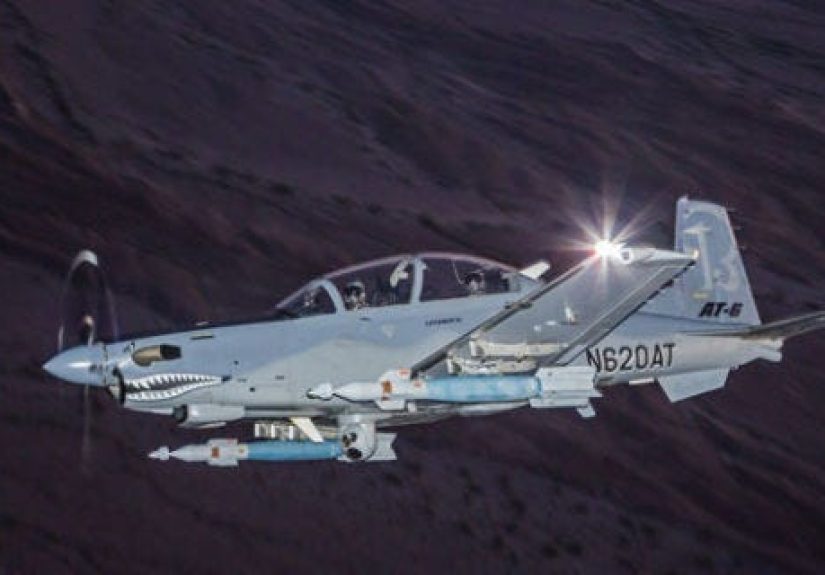
- Candidate No. 2: AT-6 Wolverine
- Candidate No. 3: A-29 Super Tucano
- So Which One Could Help Replace the A-10?
- The Bigger Truth: The A-10 Is Being Replaced by a Mission Mix, Not a Single Aircraft
- Experience on the Ground and in the Cockpit: What This Shift Would Actually Feel Like
- Conclusion
The A-10 Warthog has spent decades doing what few aircraft do well and even fewer do gracefully: flying low, sticking around, taking hits, and ruining very bad days for enemy armor. It is loud, stubborn, and built with the subtle charm of a flying socket wrench. That is exactly why replacing it has been such a headache.
Now that the U.S. Air Force is steadily moving toward retirement of the A-10 fleet, the obvious question is not whether something will replace it. Something always does. The real question is whether any single aircraft can replace what the A-10 actually does. That answer is probably no. But if the mission is broken into smaller pieces, especially in permissive or lower-threat environments, three light attack aircraft stand out as serious candidates to help shoulder the load: the OA-1K Skyraider II, the AT-6 Wolverine, and the A-29 Super Tucano.
Notice the key word there: help. None of these aircraft is a perfect one-for-one A-10 replacement. None is a titanium bathtub with a giant gun and a permanent attitude problem. But all three offer useful combinations of loiter time, austere-field operations, low operating costs, precision strike capability, and close support potential. In the right fight, that matters a lot.
Why Replacing the A-10 Is So Hard
The A-10 was designed around close air support, not adapted into it later. That difference matters. Its low-speed handling, heavy survivability features, ability to loiter, and famous GAU-8 30mm cannon all make it unusually effective when troops need responsive, accurate firepower close to the fight. It can operate from rougher locations than many fast jets, remain overhead for long stretches, and absorb punishment better than aircraft that were designed primarily for air-to-air combat or deep strike.
That is also why so many debates about replacing the A-10 turn into shouting matches with PowerPoint slides. Modern multirole aircraft can perform close air support, but they do it differently. They are faster, more networked, and often more survivable in contested airspace. What they are not is cheap to fly for long periods over low-intensity battlefields. Sending a high-end fighter to hunt pickup trucks, escort convoys, or provide armed overwatch can be a bit like using a chainsaw to open a soup can: impressive, expensive, and not exactly elegant.
That is where light attack aircraft enter the chat. They are not meant to survive dense modern air defenses or dominate against peer competitors. They are built for permissive environments, border security, counterinsurgency, armed reconnaissance, and persistent support over troops who need an aircraft overhead for hours, not minutes. In other words, they are not the answer to every A-10 mission, but they may be the right answer to the missions that do not require a fast jet.
What a Light Attack Plane Can Actually Do
Before anyone starts tattooing “new Warthog” on a turboprop, it is worth being honest about the category. A light attack aircraft shines when the enemy lacks sophisticated integrated air defenses, when runways are rough, when budgets are tight, and when commanders want a crewed platform that can find, track, identify, and hit targets while staying nearby. These aircraft can also be useful for partner-force training, border patrol, counter-drone work, convoy escort, combat search-and-rescue support, and armed overwatch.
What they cannot do well is push into dense, highly contested airspace full of modern surface-to-air missiles and advanced fighters. That is not a flaw. That is just mission reality. The smartest argument for light attack planes is not that they can become the next A-10 in every scenario. It is that they can take over the lower-end fights and free more expensive platforms for higher-end missions.
Candidate No. 1: OA-1K Skyraider II
If this were a horse race, the OA-1K Skyraider II would be the horse already trotting onto the track while the others are still adjusting their saddles. It has real momentum because it is already in the system. Developed from the rugged Air Tractor platform and fielded for Armed Overwatch, the OA-1K is built for austere operations, short takeoffs and landings, remote airfields, and long-endurance missions in support of special operations forces.
This airplane has one big advantage in the A-10 replacement conversation: it was not designed to be flashy. It was designed to be there. That sounds simple, but it is a huge deal. The OA-1K can haul a meaningful payload, carry sensors and precision weapons, linger over the battlefield, and operate from places where more delicate aircraft would start asking for a better zip code. For light close support, armed ISR, and overwatch in lower-threat environments, that is exactly the sort of usefulness commanders tend to appreciate.
Its strengths are practical rather than romantic. The OA-1K offers persistence, low support demands, and mission flexibility. It can support troops, provide precision strike, and gather intelligence without needing a giant logistics caravan behind it. It is also attractive because it collapses multiple tasks into a single relatively affordable aircraft. In a future where the Pentagon wants more capability for fewer dollars, that argument lands hard.
The weakness is equally obvious: this is not an A-10 clone with a propeller. It lacks the same kind of legendary armor, raw gun effect, and speed for battlefield repositioning. But if the mission is armed overwatch, precision engagement, rural interdiction, convoy support, or persistent low-threat CAS, the OA-1K is probably the most realistic near-term aircraft to help replace parts of the A-10 mission set.
Best use case for the OA-1K
Counterterrorism missions, special operations support, armed overwatch, remote-area strike, and long-endurance close support where austere basing matters more than supersonic speed.
Candidate No. 2: AT-6 Wolverine
The AT-6 Wolverine makes a different pitch. Where the OA-1K leans into rugged persistence, the AT-6 leans into familiarity, modularity, and systems integration. Derived from the T-6 trainer family, it benefits from a broad support base and a platform many U.S. and allied pilots already know well. That alone gives it serious appeal for training pipelines, partner-nation interoperability, and lower-risk adoption.
Textron has positioned the AT-6 as a highly configurable light attack and armed reconnaissance aircraft with seven hardpoints, a broad menu of weapons, and avionics that borrow from more established combat systems. One especially interesting detail is its use of the A-10C mission computer architecture. That does not magically turn it into a baby Warthog, but it does hint at an effort to make the transition feel less like jumping from a pickup truck into a canoe.
The AT-6 is also attractive because it can wear several hats. It can support light strike missions, ISR, FAC(A), training, and internal security tasks. For countries that want one aircraft to do a lot of jobs without draining the fuel budget of a small nation, that is compelling. It also means the Wolverine is a strong candidate for missions where the Air Force wants capacity, not just prestige.
Its limitation is the same one haunting the whole category: it is best in permissive environments. Against modern air defenses, the AT-6 would need help, distance, or a different mission entirely. But for steady-state close support, low-cost armed reconnaissance, and partner-force operations, it checks a lot of boxes. If the Pentagon wanted an aircraft that could fill some A-10-like demand while also feeding training and coalition needs, the AT-6 would be easy to defend.
Best use case for the AT-6
Training-linked light attack, allied interoperability, forward air control, armed reconnaissance, and affordable close support where a familiar support ecosystem matters.
Candidate No. 3: A-29 Super Tucano
The A-29 Super Tucano is the seasoned veteran of this trio. It is not hypothetical, and it is not new to combat. It has a long record in light attack, armed reconnaissance, pilot training, and counterinsurgency operations across multiple countries. That matters because military planners love innovation right up to the moment they have to bet lives on it. The A-29 already has the résumé.
One reason the Super Tucano remains so relevant is balance. It blends respectable speed, long endurance, rugged field performance, internal guns, precision-weapon capability, and mature systems into a package that has been exported widely and used operationally for years. This is not a paper airplane in a brochure. It is a platform that has built credibility the old-fashioned way: by showing up and doing the job.
The A-29 also benefits from being a platform that sits comfortably between trainer and attack aircraft. That dual nature helps it remain attractive for countries and services that need both competence and affordability. It can patrol, observe, identify, and strike while keeping operating costs lower than a fast-jet solution. It is especially appealing for missions where commanders need persistent eyes overhead and enough punch to deal with fleeting targets.
If there is a knock on the Super Tucano, it is that it may feel less “American program of record” than the OA-1K or AT-6 in a U.S.-centric procurement argument, even though it has worked closely with U.S. partners and appeared in Air Force light attack experiments. Still, from a pure capability-and-maturity standpoint, the A-29 is hard to dismiss. It is arguably the most globally proven light attack aircraft in the conversation.
Best use case for the A-29
Partner air forces, border security, counterinsurgency, persistent armed reconnaissance, pilot training, and lower-cost close support in permissive theaters.
So Which One Could Help Replace the A-10?
If the question is which aircraft could most credibly help replace the A-10 in selected missions, the OA-1K Skyraider II is the strongest answer right now. It has current institutional momentum, a mission profile built around armed overwatch and austere operations, and a design philosophy that aligns well with the kinds of lower-threat support missions the Air Force and Special Operations Command still need.
If the question is which platform is the best all-around light attack aircraft for global customers and proven lower-intensity combat, the A-29 Super Tucano makes an excellent case. It is mature, tested, efficient, and widely used.
If the question is which aircraft best fits a flexible U.S.-friendly training-and-strike ecosystem, the AT-6 Wolverine becomes very attractive. Its commonality, systems approach, and configurability give it a real edge in force-building and coalition support.
In plain English: the Air Force does not need one miracle plane. It needs a smarter division of labor. High-end jets can own the contested fight. Light attack aircraft can handle long-duration missions in lower-threat environments. That kind of mix will never satisfy die-hard A-10 fans who want another armored beast with a giant cannon and a bad temper. But it might satisfy accountants, planners, and commanders, which is usually how procurement decisions get made anyway.
The Bigger Truth: The A-10 Is Being Replaced by a Mission Mix, Not a Single Aircraft
That is the uncomfortable truth sitting underneath this whole debate. The A-10 is not being replaced by one airplane because the Pentagon no longer thinks in those terms. Instead, it is redistributing missions across a portfolio: F-35s and F-16s for some strike and CAS roles, drones for persistence, AC-130s for niche support, and light attack aircraft for lower-end armed overwatch and permissive-environment attack. From a planning perspective, that makes sense. From an emotional perspective, it feels like replacing your favorite old pickup with three apps and a subscription.
Still, military aviation is about outcomes, not nostalgia. If the goal is to keep troops supported, maintain affordable presence, and avoid burning expensive fighter hours on jobs a rugged turboprop can do just fine, then light attack aircraft deserve serious attention. They may not wear the A-10’s crown, but they can absolutely carry pieces of its workload.
Experience on the Ground and in the Cockpit: What This Shift Would Actually Feel Like
For pilots, maintainers, and troops on the ground, the move from the A-10 era to a light attack mix would feel less like a dramatic movie reboot and more like a very practical change in how air support shows up. The A-10 has always had a psychological effect that is hard to quantify. Ground troops know the sound. They know the silhouette. They know that if a Hog is orbiting overhead, somebody brought a serious tool kit. Replacing that confidence is not just a matter of matching payload on a spreadsheet.
From the cockpit perspective, a pilot in an OA-1K, AT-6, or A-29 would experience a different style of close support. These aircraft are built for persistence and observation. Crews are more likely to spend long hours building pattern-of-life awareness, talking to controllers, confirming target identity, and delivering precise weapons at the right moment rather than charging into the fight with brute force. It is a more patient kind of lethality. Less sledgehammer, more scalpel with wings.
For maintainers, these aircraft offer a different kind of appeal. Light attack planes generally ask less from the logistics system than advanced fast jets. They can be serviced in rougher conditions, supported with smaller footprints, and turned around without an industrial festival unfolding on the ramp. In a remote theater, that matters. The ability to keep aircraft flying with fewer people, fewer specialty tools, and less infrastructure can be the difference between “airpower available” and “airpower theoretically available after three meetings and a forklift.”
For joint terminal attack controllers and troops calling for support, the experience could be reassuring in some ways and disappointing in others. Reassuring because these aircraft can stay overhead, maintain contact, watch roads, follow vehicles, and respond quickly in lower-threat fights. Disappointing because they do not bring the same intimidation factor or same close-in gun reputation as the A-10. That means trust would need to be rebuilt through repetition, training, and operational success.
There is also a broader strategic experience here. In the post-A-10 world, the military may end up valuing endurance and affordability more openly than before. That could be healthy. Not every mission requires a stealth jet. Not every battlefield problem needs the most expensive answer available. Sometimes the best aircraft is the one that can launch from a rough strip, stay on station, talk clearly to the troops below, and fire exactly what is needed without draining the budget dry.
That is why this shift feels important. It is not really just about replacing one famous airplane. It is about deciding what kind of airpower the United States wants for messy, prolonged, lower-intensity fights. If that future includes the OA-1K, AT-6, or A-29, the crews flying them will not be pretending to be A-10 pilots. They will be doing something more useful: adapting close support to a new era without forgetting why the old era mattered so much.
Conclusion
The A-10 is not easy to replace because it was never ordinary. It was purpose-built for close air support and became legendary because it delivered exactly what ground troops needed in exactly the kind of ugly conditions that make legends possible. But the mission environment is changing, budgets are tightening, and the Air Force is clearly moving toward a different mix of platforms.
Among light attack aircraft, the OA-1K Skyraider II stands out as the strongest near-term option to help replace selected A-10 duties, especially in austere, low-threat, armed-overwatch missions. The AT-6 Wolverine offers flexibility, training value, and an attractive support ecosystem. The A-29 Super Tucano brings the confidence of a globally proven combat record. None is a pure Warthog successor. All three, however, prove that affordable, persistent, precise airpower still has a place in modern war.
If the future of close air support is a team effort rather than a solo act, one of these three light attack planes could absolutely earn a starring role.
Note: This article is based on real-world aircraft programs, official specifications, and current defense reporting, but source links are intentionally omitted for web publishing.