Table of Contents >> Show >> Hide
- A Lost ROM, a Found Listing, and a Very Patient Scanner
- Quick Refresher: What Was the Dragon 64, Anyway?
- Microsoft BASIC (But Make It 6809): Why This Interpreter Was a Big Deal
- The Recovery Story: From Fan-Fold Paper to GitHub
- Why “Recovered Source” Beats “Disassembly” (Most of the Time)
- What the Dragon 64 BASIC Source Reveals
- Practical Examples: What You Can Do with Dragon BASIC Today
- Preservation Meets Licensing: A Quick Reality Check
- Why This Recovery Matters Beyond Nostalgia
- Hands-On Experiences: What It Feels Like to Work with Recovered Dragon 64 BASIC (500+ Words)
- Conclusion
When 340 pages of fan-fold paper escape an attic and immediately start rewriting retrocomputing history.
A Lost ROM, a Found Listing, and a Very Patient Scanner
Retrocomputing has a special kind of magic: you can spend months hunting down a rare cartridge, only to discover the real treasure was sitting in someone’s attic the whole timequietly aging like a fine (and highly flammable) stack of dot-matrix printouts. That’s basically what happened with Microsoft BASIC for the Dragon 64.
In 2023, the hobby world got a gift wrapped in tractor-feed perforations: the assembly source listing for the Dragon 64’s Microsoft BASICrecovered from a multi-hundred-page printout produced in the early 1980s and later turned into a buildable, searchable repository. The result isn’t just “we dumped a ROM.” It’s “we got the road map the engineers used to pave the ROM in the first place.”
If you’ve ever wondered how a full-featured BASIC interpreter could fit into a small ROM, juggle graphics and sound, and still have space left over to scold you for typing PRNIT instead of PRINT, this recovery is catnip.
Quick Refresher: What Was the Dragon 64, Anyway?
A home computer with a Welsh accent (and big ambitions)
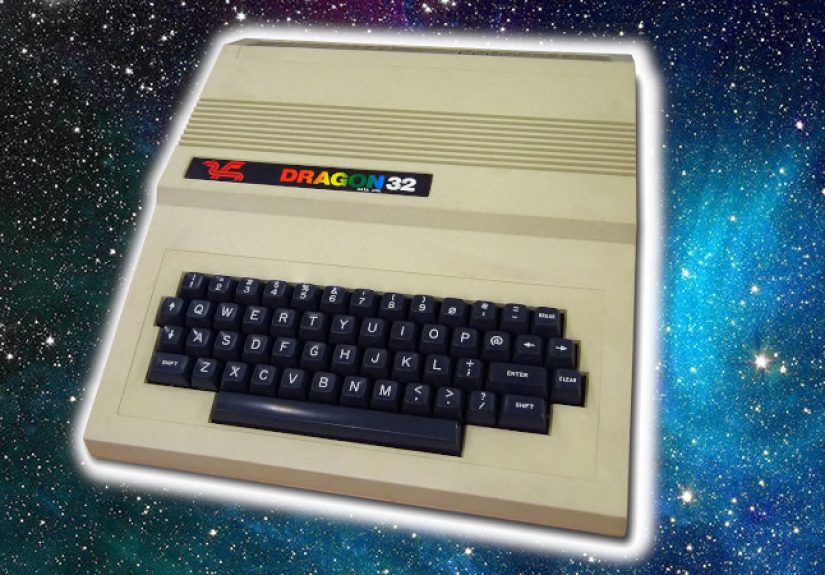
The Dragon 64 was an early-1980s 8-bit home computer built around the Motorola 6809E CPU, paired with a simple-but-flexible video system and the kind of I/O that screamed “I’m ready for serious hobbies.” Compared with its sibling, the Dragon 32, the Dragon 64’s headline upgrades were 64KB of RAM and a built-in RS-232 serial porta fancy feature in an era when most home computers communicated through cassette squeals and prayer.
The CoCo cousin with a different wardrobe
The Dragon line is famously similar to the TRS-80 Color Computer family. That similarity isn’t just trivia; it helps explain why the Dragon shipped with a flavor of Microsoft BASIC closely related to Extended Color BASIC (sometimes referenced in historical discussions as “BASIC-69” for the 6809 line). Under the hood, you’re looking at a shared ecosystem: the 6809, a compact ROM-based BASIC, and a graphics model designed to do a lot with little.
Why the 6809 matters
The Motorola 6809 is beloved because it’s a “nice” 8-bit CPU: it has a clean instruction set, multiple index registers, and a reputation for making assembly programmers feel slightly less like they’re wrestling a bear. That matters when your BASIC interpreter lives in ROM and every byte is contested territory.
Microsoft BASIC (But Make It 6809): Why This Interpreter Was a Big Deal
BASIC wasn’t just a languageit was the whole on-ramp
In early home computers, BASIC was often the user experience: power on, get a cursor, start typing. The interpreter wasn’t a “nice-to-have.” It was the beginner-friendly front door, the teaching tool, andif you were a kid in the 80sthe fastest way to turn a TV into a machine that obeyed you (mostly).
16KB of ROM: the tightest studio apartment in software history
The Dragon’s BASIC lived in ROM and had to do a lot: tokenization, line editing, expression parsing, floating-point math, string management, error messages, screen/keyboard I/O, and hooks for graphics and soundwithout the luxury of “we’ll just add a library.” The 6809’s strengths helped, but this was still an exercise in ruthless prioritization.
Extended Color BASIC DNA
The recovered source connects the Dragon’s Microsoft BASIC to the broader family of Microsoft BASIC ports that spread across 8-bit machines. Microsoft’s own historical notes around BASIC releases show how core BASIC concepts were adapted across CPUs and platforms (6502, 6809, and others), often through shared master sources and translation approaches. The Dragon’s ROM is a living example of that “portable core, platform-specific edges” philosophy.
The Recovery Story: From Fan-Fold Paper to GitHub
Step 1: Find the artifact (and don’t sneeze near it)
The recovered material wasn’t a floppy disk or a magnetic tapeit was a paper listing: a Motorola-assembler output printout created in 1983 at Dragon Data’s R&D facility. It survived decades boxed away, and when it resurfaced, it turned out to be remarkably readable for something that has the structural integrity of dry lasagna.
Step 2: Scan like your wrists depend on it
The pages were carefully hand-fed into a scanner at a Dragon meetup event, page by page, with the kind of attention normally reserved for museum manuscripts and newborn kittens. The goal wasn’t just “get images”it was “don’t destroy the only known copy while trying to preserve it.”
Step 3: OCR… and then the real work begins
OCR is great at turning crisp printed text into editable text. It is less great at understanding that a tiny speck of ink is not, in fact, the letter O trying its best. The recovered BASIC source required bulk OCR, manual correction, and occasional reference back to the original listing to resolve ambiguous scans. That human-in-the-loop grind is why this isn’t just a “scan dump”it’s a practical source you can actually study and build.
Step 4: Make it buildable (and byte-identical)
A major milestone was getting the corrected source into a state where it could be assembled using modern toolchains and produce byte-identical ROM images to the originalsmeaning the recovery isn’t just “close,” it’s provably faithful. That’s a huge deal for preservation, because it lets researchers confirm the source truly matches what shipped.
Why “Recovered Source” Beats “Disassembly” (Most of the Time)
Comments are time machines
A disassembly can tell you what the code does. A source listing can hint at what the code was meant to do. Even minimal commentsnaming conventions, structure, and groupingcarry design intent that disassemblies often lose. That intent is the difference between “I can patch this” and “I can understand this.”
Build pipelines become reproducible history
When you can rebuild a ROM from source and match it exactly, you’ve preserved more than bytesyou’ve preserved a process. That makes it easier to verify authenticity, compare versions, and document how a platform evolved.
It clarifies platform-specific quirks
The Dragon 64’s BASIC had to integrate with its particular hardware map and I/O behavior. Source makes these seams visible: where “generic BASIC” ends and “Dragon-specific reality” begins.
What the Dragon 64 BASIC Source Reveals
Performance tricks you can feel
Old BASIC interpreters have a reputation for being slowuntil you realize they were parsing, tokenizing, and running code on hardware that could be outpaced by a modern toaster’s LED controller. Efficient inner loops, compact token tables, and careful use of registers weren’t “optimizations.” They were survival.
Memory management that’s equal parts clever and terrifying
Strings, numeric variables, program lines, and the stack all share a small RAM world. BASIC has to constantly juggle space, sometimes moving memory around to keep the program runnable. That’s why early Microsoft BASIC lineages became famous for their compact variable representations and a string system that could be both elegant and unforgiving if you poked it the wrong way.
Two modes, one ROM family
The recovered listing includes material for both 32K and 64K modes, reflecting how the Dragon platform had to serve multiple memory configurations and still boot instantly into a friendly prompt. This matters because it shows how the same “product” behaved differently depending on available RAM and memory mapping.
Practical Examples: What You Can Do with Dragon BASIC Today
1) Run classic programs in emulation
If you’re here for nostalgia, emulators and modern preservation toolchains let you relive the Dragon experience without sourcing a 40-year-old power supply that may or may not be secretly powered by lightning. The recovered source also makes it easier for emulator authors and preservationists to validate behavior.
2) Learn graphics the 1983 way (blocky, proud, and oddly charming)
Dragon/CoCo-style BASIC environments are famous for making graphics approachable. Here’s the vibe in miniature:
Even if your exact graphics statements differ by ROM version, the bigger point stands: the “extended” BASIC family gave beginners a direct path from math to pixels.
3) Use PEEK/POKE like a responsible adult (or at least a careful one)
Part of the Dragon mystique is that the BASIC prompt is also a hardware playground. Some documented tricks even let you accelerate the ROM-resident interpreter with carefully chosen memory writesoften with trade-offs. In other words: classic home computing, where performance tuning occasionally disables your cassette port.
4) Study the source to understand language design constraints
Want a masterclass in trade-offs? Look at how keywords are tokenized, how errors are reported, how line numbers are stored, and how the interpreter jumps between parse routines and runtime routines. It’s a blueprint for building a usable language runtime under intense resource limits.
Preservation Meets Licensing: A Quick Reality Check
One subtle (but important) part of the story is that “found source code” doesn’t automatically mean “free to do anything with.” Preservation projects often publish material for archival and educational interest while being careful about legal ownership. That caution shows up in how repositories describe usage and licensing terms.
At the same time, Microsoft has made highly visible moves in recent years to open-source or publicly release historically significant BASIC code (for example, GW-BASIC and later vintage BASIC releases under modern licensing). That broader context helps explain why the retro scene has become more optimistic about documentation, reproducible builds, and “official” access to foundational software.
The takeaway: preservation is part archaeology, part engineering, and part paperwork. (Yes, even the fun hobbies have paperwork.)
Why This Recovery Matters Beyond Nostalgia
- It’s a rare look at production-quality interpreter engineering: not a demo, not a hobby rewritean actual commercial ROM.
- It strengthens emulator accuracy: source and reproducible ROM builds help validate edge cases.
- It preserves cultural history: this is how millions learned to codeone line number at a time.
- It’s teachable: modern developers can study compact parsers, tokenization strategies, and tight runtime loops.
And maybe the biggest reason: it reminds us that software is fragile. Not because it’s “digital,” but because the artifacts that explain itsource, notes, build scriptsoften lived on paper, in offices, and in boxes nobody thought to label “future history.”
Hands-On Experiences: What It Feels Like to Work with Recovered Dragon 64 BASIC (500+ Words)
Let’s talk about the part nobody tells you when they say “the source code was recovered”: what it’s like to actually live with that recovery. Not as a headline, but as a weekend project where you open a directory and realize you’re staring at the same kind of engineering decisions that powered a generation of bedroom programmers.
The first “experience” is honestly emotionallike reading a diary written in opcodes. You recognize patterns immediately: jump tables, tight loops, compressed tables of tokens. But you also notice the human fingerprints: naming conventions, the places where routines are split into logical chunks, and the subtle “this was built by people who knew they’d have to debug it later.” In a ROM-based interpreter, debugging later might mean a new ROM revision, so the discipline has a different intensity than modern “we’ll patch it next sprint.”
Then comes the practical joy: reproducibility. With a recovered listing that assembles into a byte-identical ROM, you can do something rare in retro projects: change one thing, rebuild, and know exactly what changed. That’s a superpower. It turns folklore (“I heard this ROM does X”) into testable reality (“here’s the routine; here’s the branch; here’s why it happens”).
A surprisingly fun exercise is to pick one familiar BASIC featuresay, how errors are formattedand trace it end to end: from token parsing, to syntax validation, to runtime checks, to printing the message. Along the way you discover how carefully the interpreter avoids doing extra work. Modern languages love abstraction; ROM BASIC loves not dying. You see “fast paths” everywhere: shortcuts for common cases, early exits when tokens don’t match, compact representations that let the interpreter move quickly through memory.
Another hands-on moment that hits hard is the hardware integration. In modern programming, you might call an API. In Dragon-era BASIC, the “API” is often a set of carefully defined memory locations and ROM routines. Studying recovered source makes that boundary explicit. You can see where the interpreter reaches outward: keyboard scanning, screen output, cassette behaviors, and platform-specific hooks. It’s like watching a language runtime negotiate with the physical worldpolitely, but with very sharp elbows.
If you’re the tinkering type, you can also treat the recovered source as a playground for historically respectful experiments: add a diagnostic message, toggle a compile-time option, or instrument a routine to count how often it runs in a typical program. You quickly gain intuition for why some BASIC programs felt “snappy” and others felt like they were dragging a piano uphill. That insight translates surprisingly well to modern software performance work: the core lesson is still “measure, identify hot paths, and respect the cost of memory movement.”
Finally, there’s the community angle. Recovered source turns solitary nostalgia into shared understanding. People can point to a line, a label, a table entryand have a real conversation about how something works. That’s how preservation becomes progress: not rewriting history, but giving it enough clarity that new builders can learn from it. In a world where so much software disappears into proprietary fog, a recovered listingpainstakingly scanned, OCR’d, corrected, and rebuilt feels like a small miracle you can compile.
Conclusion
The recovery of Microsoft BASIC for the Dragon 64 is more than a quirky “old code found” story. It’s a case study in preservation done right: careful scanning, painstaking OCR correction, and a buildable source tree that deepens our understanding of how classic home computers actually worked.
For historians, it’s primary material. For emulator authors, it’s a correctness gift. For developers, it’s a lesson in constraints. And for everyone else, it’s a reminder that sometimes the most important software artifacts aren’t locked in a vault they’re waiting in a box, in an attic, hoping someone still owns a scanner and an unreasonable amount of patience.