Table of Contents >> Show >> Hide
- The Viral “Boomer Interview” Story in a Nutshell
- How Job Interviews Have Changed in 38 Years
- Why the “Boomer” Behavior Bombed So Hard
- What Older Candidates Can Learn from This Disaster
- What Younger Generations Can Learn Too
- Bridging the Generational Gap in Interviews
- Extra : Real-World Experiences and Lessons from “Boomer” Interview Fails
- Conclusion: Don’t Let Ego Tank Your Second Act
Imagine spending nearly four decades in one company, believing you’ve mastered the rules of work forever. Then, suddenly, you’re back on the market, sitting in a modern office (or on a Zoom call) where the interviewers are younger than your favorite pair of jeans, and everyone keeps using phrases like “culture add” and “cross-functional collaboration.” It’s a recipe for anxiety… or, in the case of one now-viral Bored Panda story, a recipe for disaster.
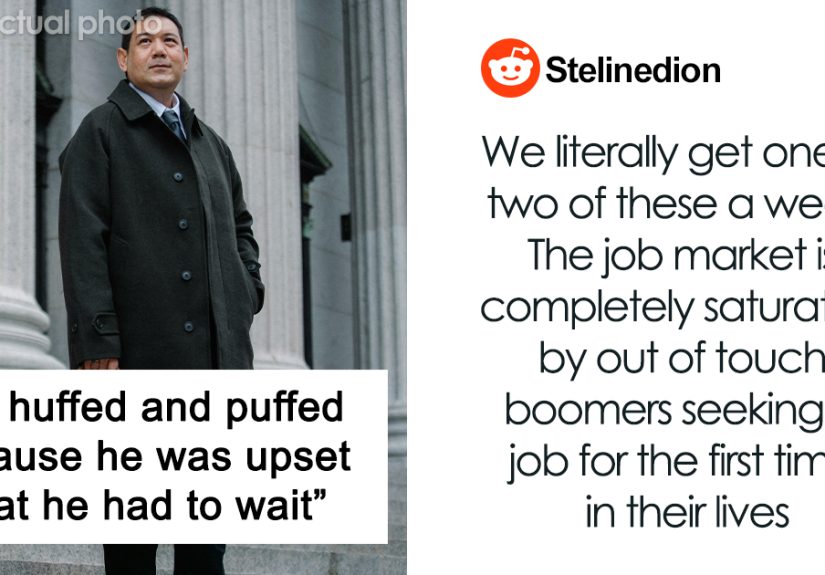
The story goes like this: a man loses his long-term job after 38 years, gets a golden opportunity thanks to his son, and then completely torpedoes the interview by acting like it’s still 1987. Instead of showing humility and curiosity, he leans into entitlement, dismisses the process, and ends up looking like exactly what the internet calls “a Boomer” in the worst sense of the word.
Beyond the laughs and eye rolls, this situation reveals something deeper about how job interviews have changed, how generational gaps show up at work, and what older candidates and younger relatives can learn from one very awkward day at the office.
The Viral “Boomer Interview” Story in a Nutshell
In the Bored Panda feature, a son works at a company with a solid opening that could fit his father-in-law or father (depending on the retelling) who has just lost his job after 38 years of loyalty to one employer. The son does what many of us would: he pulls a few strings, gets his dad an interview, and hopes this will be a soft landing into a new chapter of life.
On paper, it seems like a sweet story about family support and second chances. Instead, it turns into a live demonstration of how outdated attitudes can wreck modern job interviews.
- The father arrives assuming his “decades of experience” automatically put him above the hiring process.
- He treats the interview less like a conversation and more like a formality.
- He shows little respect for the team, the role, or the evolving nature of work.
- He embarrasses his son by making comments that scream, “I’m too important for this.”
Instead of impressing the interview panel, he signals that he’s not willing to adapt, collaborate, or learn. That’s not “seasoned professional” energy; that’s “walking red flag” energy.
How Job Interviews Have Changed in 38 Years
To be fair, if your last job interview was during the Reagan era, you’ve missed a few memos. Modern hiring looks nothing like it did in the 1980s or even the early 2000s. If you walk into today’s job market with yesterday’s mindset, you’re going to have a bad time.
From Longevity to Adaptability
For many Baby Boomers, staying with one employer for decades was a badge of honor. It proved loyalty, reliability, and stability. Today, employers still value commitment, but adaptability, learning, and collaboration tend to outrank “I stayed in one company forever” on the priority list.
Recruiters often look for:
- Transferable skills – communication, leadership, problem-solving.
- Tech comfort – not expert-level coding, but basic digital fluency.
- Growth mindset – willingness to learn, accept feedback, and evolve.
- Team fit – can you work with colleagues from multiple generations?
If you walk into an interview acting like your long tenure means you’re above learning new tools or following a respectful process, you’re signaling the opposite of adaptability.
From “Know-It-All” to “Collaborative Partner”
The old-school interview model often treated the candidate like someone who needed to prove they were tough, stoic, and unquestioningly obedient. Today, interviews are more about two-way evaluation: the company is checking if you’re a good fit, and you’re checking if this is somewhere you actually want to work.
That means:
- Listening carefully instead of dominating the conversation.
- Asking thoughtful questions about the role and team.
- Showing respect for people who might be younger but still have authority.
A “boomer” who storms into the room acting like the job is already theirs because of age and years served misses this entirely. The result: the panel sees arrogance, not expertise.
Technology, Etiquette, and Soft Skills
Many interviews now include video calls, applicant tracking systems, online assessments, and panel interviews across different time zones. Even in-person meetings have evolved, with an emphasis on communication style, cultural awareness, and emotional intelligence.
In other words, soft skills are hard requirements. If someone responds to this updated landscape with eye-rolling, sarcastic jokes about “kids these days,” or refusal to follow simple guidelines, they make it easy for hiring managers to say, “Next.”
Why the “Boomer” Behavior Bombed So Hard
Let’s break down what likely ruined this man’s interview and why it triggered such a strong reaction online. Yes, the internet loves drama, but there are real lessons under the memes.
1. Entitlement Instead of Gratitude
The son did something meaningful: he used his reputation at work to secure the older man an interview. That’s social capital. When the father walked in acting like the company owed him the job, he disrespected not only the employer but also his son’s effort.
A healthier approach would have been:
- Thanking his son for the opportunity.
- Respecting the process, even if it felt unfamiliar.
- Showing curiosity about the company and role.
Entitlement is a universal interview killerno matter your generation.
2. Talking Down to Younger Professionals
In many workplaces today, managers, team leads, and even executives may be younger than long-tenured candidates. That’s normal. Dismissing them as “kids” or assuming they know less purely because of age is not just rude; it’s strategically disastrous.
When an older candidate:
- Interrupts younger interviewers,
- Makes snide remarks about “how we used to do things,” or
- Refuses to take questions seriously,
they send a clear message: “I’m hard to manage and I won’t respect leadership unless they’re older than me.” That’s a fast track to the rejection pile.
3. Confusing Experience with Superiority
Experience is valuable. Superiority is not. The two are often confused in stories like this. The father in the viral interview story has nearly 40 years of experiencebut in one environment, under one culture, with one set of norms. That’s depth, but not necessarily breadth.
Modern employers want experienced people who can:
- Translate old lessons into new realities,
- Work around new tools instead of resisting them, and
- Support younger colleagues instead of talking down to them.
When someone insists their old way is automatically the best way, they shut the door on growth. Interviewers noticeand move on.
What Older Candidates Can Learn from This Disaster
If you’re a Baby Boomer or anyone who has been out of the interview game for a long time, the moral of this story isn’t “stay out of the workforce.” It’s “update your playbook.” Your experience is incredibly valuable, but it needs the right packaging.
1. Do Your Homework on Today’s Job Market
Before the interview, research how interviews work in your industry today. Look up common behavioral questions, modern job responsibilities, and tools of the trade. Read about how multi-generational teams work and what younger managers look for in senior colleagues.
Even a couple of evenings spent learning will:
- Help you avoid outdated assumptions,
- Show respect for the process, and
- Give you fresher language to describe your strengths.
2. Lead with Humility and Curiosity
Humility is not weakness; it’s a competitive advantage. Saying things like:
- “I’ve done this a long time, but I’m also eager to learn how your team operates today.”
- “I’m comfortable with change and happy to pick up new tools.”
- “I’d love to hear how you measure success in this role now.”
signals that you bring both wisdom and flexibilitya powerful combination in any workplace.
3. Respect Boundaries, Roles, and Relationships
If a family member or friend gets you an interview, treat that as a privilege, not a guarantee. Respect that:
- Your relative’s reputation is on the line.
- The hiring team still needs you to prove yourself.
- You’re being evaluated like any other candidate.
Avoid using phrases like “I’m doing you a favor by joining” or “Back at my old company, they knew my worth.” Even if you believe it, that energy rarely lands well.
What Younger Generations Can Learn Too
While the dad in this story clearly behaves badly, it’s also true that the modern job market is confusing and intimidating for people who haven’t had to navigate it in decades. If you’re the millennial or Gen Z kid trying to help your parent or in-law, there are a few smart moves you can make.
Coach, Don’t Just Connect
Don’t assume that getting them an interview is enough. Help them prepare:
- Explain how interviews work at your company.
- Role-play common questions and answers.
- Talk candidly about what behavior will reflect wellor poorlyon both of you.
You can’t fully control how they behave, but you can give them a fair shot at understanding the expectations.
Set Boundaries Around Your Reputation
It’s okay to say, “I’m happy to help, but this reflects on me too, so I need you to take it seriously.” If someone refuses to respect the opportunity, you’re allowed to protect your professional standing.
The son in the Bored Panda story ends up embarrassed in front of colleagues and managers because his father chose ego over effort. That’s a painful but important lesson: nepotism without accountability is a mess waiting to happen.
Bridging the Generational Gap in Interviews
This whole saga also highlights a bigger question: how can companies avoid turning generational differences into full-blown conflicts at the interview table?
For Employers and Recruiters
- Check your bias, not your standards. Don’t reject older candidates just for being older, but do hold everyone to the same expectations of respect, teamwork, and growth mindset.
- Explain your process clearly. Older candidates may be unfamiliar with video interviews, online assessments, or panel formats. Clear instructions can reduce friction.
- Look for teachability. A 59-year-old willing to learn might be a far better hire than a 25-year-old who thinks they already know everything.
For Candidates of Every Age
- Show up prepared, not entitled.
- Respect everyone in the room, regardless of age or title.
- Be honest about what you knowand what you’re ready to learn.
The internet loves to label bad behavior as “Boomer,” “Millennial,” or “Gen Z,” but truly, the worst interview traitsarrogance, disrespect, rigidityare not confined to one birth year. The real difference-maker is willingness to adapt.
Extra : Real-World Experiences and Lessons from “Boomer” Interview Fails
The Bored Panda story struck a nerve because so many people have seen some version of that interview trainwreck in real life. Let’s dig into a few composite examples and the lessons hiding inside them.
The “Back in My Day” Monologue
Picture this: an experienced candidate sits down for a managerial interview. The hiring manager, who happens to be in their early thirties, asks how the candidate handles feedback. Instead of answering directly, the candidate launches into a speech:
“Back in my day, we didn’t need performance reviews. If you messed up, you just worked harder. People today are too sensitive.”
The room goes quietnot because everyone is impressed, but because the candidate just announced that they:
- Don’t value structured feedback,
- Might dismiss younger colleagues’ needs, and
- Probably won’t contribute to a healthy, modern workplace culture.
The lesson? Sharing past experience is great; using it to insult the present is not. A better answer might acknowledge differences while emphasizing adaptability: “We handled feedback more informally in my previous company, but I appreciate structured approaches now because they make expectations clearer for everyone.”
The “I’m Doing You a Favor” Energy
In another scenario, a senior candidate interviews for a leadership role at a growing startup. They keep saying things like:
- “You need someone like me to fix this place.”
- “You’re lucky I’m even considering this role.”
They never ask about the team’s accomplishments, the company’s roadmap, or how they can collaborate with existing leaders. The implicit message: “I’m above you, and I’m here to rescue you from yourselves.”
Unsurprisingly, the hiring team passes. Not because they don’t value experience, but because they want a partner, not a self-appointed savior.
A more effective approach from an older, highly experienced candidate would be:
- “Here’s what I’ve done before.”
- “Here’s what I see you’re already doing well.”
- “Here’s where I think I could add value, if you agree these are priorities.”
That subtle shiftfrom “I’m better than you” to “I’m excited to build with you”makes all the difference.
When Tech Becomes a Wall Instead of a Bridge
One of the most common pain points for older candidates is technology. Not everyone who’s 55+ struggles with tech, of course, but when someone loudly declares, “I don’t do computers,” in a world where nearly every job involves email, messaging apps, or basic software, it raises red flags.
In some real-world interviews, older candidates have:
- Refused to turn on their camera during virtual interviews without a valid reason.
- Complained about online assessments as “beneath them.”
- Dismissed tools like project management software as “a waste of time.”
None of these are dealbreakers because of age; they’re dealbreakers because of attitude. Many employers are happy to offer training if they see effort and openness. What they can’t fix is stubborn resistance to even trying.
A stronger interview move would be something like: “I haven’t used this exact tool before, but I’ve picked up new systems throughout my career. If you’re open to a little ramp-up time, I’m confident I can get comfortable with it.”
Turning Boomer Stereotypes Upside Down
The funny thing about the “Boomer ruins interview” stereotype is that it’s not inevitable. In fact, when older candidates bring the best of their generationwork ethic, long-term perspective, conflict resolution skillsand pair it with a learner’s mindset, they often stand out in a very positive way.
Some of the most successful cross-generational teams are built on:
- Mutual respect – younger employees value experience; older employees value fresh ideas.
- Shared curiosity – everyone stays open to new tools and new perspectives.
- Balanced communication – no one weaponizes age as proof of superiority.
The Bored Panda story is a cautionary tale, but it doesn’t have to be the script for every older job seeker. With a bit of humility, preparation, and updated expectations, a 38-year career can be a powerful assetnot a punchline.
Conclusion: Don’t Let Ego Tank Your Second Act
“Man goes to a job interview for the first time in 38 years, ruins it by being a Boomer” is a headline designed to spark clicks, comments, and debatesand it does all three. Underneath the drama, though, is a simple truth: the job market has changed, and surviving it requires more than a long résumé.
Whether you’re a Baby Boomer re-entering the workforce or a Gen Z grad sitting down for your first real interview, the basics are the same: show respect, stay curious, listen more than you brag, and treat every opportunity like it matters. Generations may clash, but professionalism never goes out of style.