Table of Contents >> Show >> Hide
- What Is Korea’s Artificial Sun?
- The Record: 100 Million Degrees for 48 Seconds
- Why H-Mode for 102 Seconds Is a Big Deal
- The Tungsten Divertor: The Unsung Hero in the Hot Zone
- How a Tokamak Keeps Plasma Away From the Walls
- Why 100 Million Degrees Is Not Just a Bragging Number
- Does This Mean Fusion Power Is Ready?
- How KSTAR Fits Into the Global Fusion Race
- The Role of Artificial Intelligence and Better Control Systems
- Why Fusion Energy Gets So Much Attention
- What Makes the KSTAR Record Different From Fusion Hype?
- Specific Examples of Why This Record Matters
- Experience-Based Reflections: What KSTAR Teaches Us About Big Technology
- Conclusion: A Hotter, Longer Step Toward Fusion’s Future
South Korea’s “artificial sun” has done it again, and no, this is not the opening scene of a sci-fi movie where someone in a lab coat whispers, “We may have gone too far.” The Korea Superconducting Tokamak Advanced Research device, better known as KSTAR, recently pushed nuclear fusion research forward by sustaining plasma at an ion temperature of 100 million degrees Celsius for 48 seconds. That is roughly seven times hotter than the center of the Sun, which makes your overworked laptop fan look like a gentle spring breeze.
This achievement matters because fusion energy is one of the most ambitious clean-energy goals on Earth: producing power by copying the same basic reaction that fuels stars. KSTAR did not create a commercial fusion power plant overnight, and it did not magically plug a star into the electric grid. What it did accomplish is still huge. It showed that scientists are getting better at controlling ultra-hot plasma for longer periods, which is one of the hardest steps on the road to practical fusion power.
The new KSTAR fusion record also included a high-confinement mode, or H-mode, operation lasting 102 seconds. H-mode is important because it helps plasma hold heat more efficiently, a little like upgrading from a leaky coffee cup to a double-wall insulated mugexcept the “coffee” is hotter than anything in your kitchen should ever be allowed to become.
What Is Korea’s Artificial Sun?
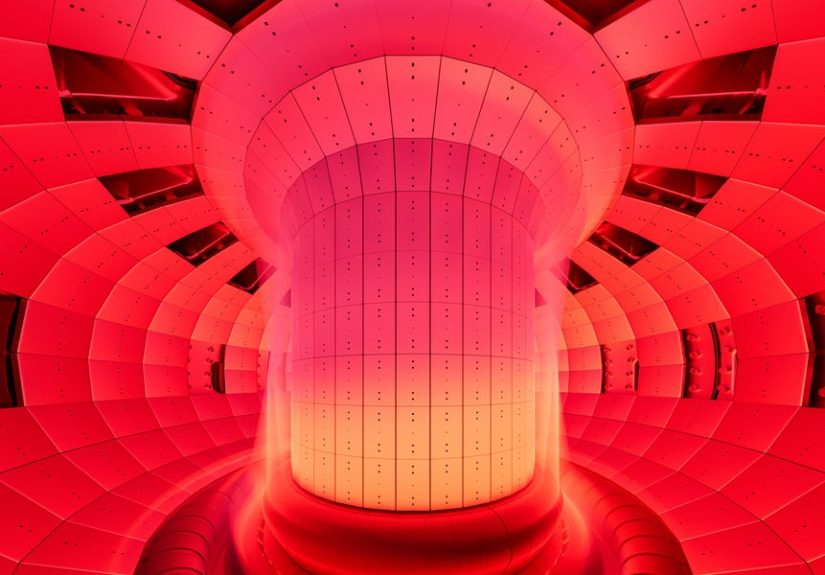
KSTAR is a superconducting tokamak located in Daejeon, South Korea. A tokamak is a donut-shaped fusion research machine that uses powerful magnetic fields to confine plasma. Plasma is often called the fourth state of matter, and in fusion research, it is the superheated soup of charged particles where atomic nuclei can potentially fuse together and release energy.
The nickname “artificial sun” sounds dramatic, but it is actually pretty accurate. The Sun produces energy through nuclear fusion, where lighter atomic nuclei merge into heavier nuclei and release enormous amounts of energy. On Earth, scientists are trying to reproduce that process inside carefully engineered devices. The challenge is that Earth does not have the Sun’s massive gravity to squeeze plasma together, so researchers use magnetic fields, vacuum chambers, heating systems, and extremely precise control software.
KSTAR’s job is not to power homes today. Its job is to help researchers understand how to operate a future fusion reactor safely, steadily, and efficiently. In that sense, it is less like a power plant and more like a world-class training gym for star-making technology.
The Record: 100 Million Degrees for 48 Seconds
The headline number is simple but astonishing: KSTAR maintained plasma at 100 million degrees Celsius for 48 seconds. Its earlier record was 30 seconds, so the jump was not just a tiny improvement. It was a meaningful leap in long-pulse plasma operation.
In fusion research, seconds matter. That may sound odd in a world where people complain if a microwave takes 90 seconds to heat lunch, but plasma confinement is brutally difficult. A fusion plasma must stay hot, dense, and stable long enough for meaningful reactions to occur. If the plasma cools too quickly, touches the wall, or becomes unstable, the experiment ends. There is no “just jiggle the cable” solution when the cable is a magnet system holding a miniature star away from metal walls.
KSTAR’s 48-second result is important because it shows progress toward sustained plasma control. Fusion does not become practical simply because a reactor gets hot. Many experimental devices can reach impressive temperatures. The bigger question is whether scientists can maintain the right conditions long enough, while managing heat, turbulence, fuel behavior, and materials stress.
Why H-Mode for 102 Seconds Is a Big Deal
Alongside the 48-second ultra-high-temperature plasma record, KSTAR also sustained H-mode for 102 seconds. H-mode stands for high-confinement mode, a plasma state in which heat and particles are held more efficiently. Think of it as the plasma behaving less like a wild crowd at a discount sale and more like a disciplined orchestrastill intense, still loud, but finally following the conductor.
H-mode matters because future fusion reactors need high-performance plasma conditions. Better confinement means the plasma can retain heat longer, which improves the odds of reaching useful fusion conditions. It also helps researchers test scenarios that may be relevant to larger projects, including ITER and future demonstration power plants.
The 102-second H-mode operation gives scientists more data about how plasma behaves over longer periods. That data is gold. Every extra second helps researchers understand instabilities, heat flow, magnetic control, and component durability. Fusion research is not just about one heroic temperature number. It is about repeatable control, and KSTAR’s longer H-mode operation is part of that control story.
The Tungsten Divertor: The Unsung Hero in the Hot Zone
One major reason KSTAR improved its performance is a hardware upgrade: the switch from a carbon divertor to a tungsten divertor. The divertor is one of the hardest-working parts of a tokamak. It helps remove heat and impurities from the plasma, acting almost like an exhaust system for a machine that is trying to bottle star power.
Calling the divertor “important” is like calling the engine in an airplane “somewhat useful.” Plasma-facing components must survive extreme heat loads. The old carbon-based design had advantages, but tungsten offers better performance for long-duration operations. Tungsten has an extremely high melting point and is being studied widely for fusion devices because it can handle punishing environments better than many alternative materials.
KSTAR’s upgraded tungsten divertor helped reduce performance degradation during longer plasma operations. In plain English: the machine became better at staying stable while the experiment continued. That is exactly the kind of engineering progress fusion needs. Big breakthroughs are rarely one magic discovery. They are usually a stack of improvementsbetter materials, better controls, better diagnostics, better heating, and a lot of scientists drinking coffee near complicated screens.
How a Tokamak Keeps Plasma Away From the Walls
A tokamak uses magnetic fields to control plasma because no solid material can simply “hold” plasma at 100 million degrees Celsius. If the plasma touched the inner wall directly, the experiment would rapidly lose stability and the wall components would suffer. So instead of using a physical container in the normal sense, tokamaks use magnetic confinement.
Plasma is made of charged particles, and charged particles respond to magnetic fields. By shaping those fields inside a toroidal, or donut-shaped, chamber, scientists can guide the plasma around the vessel without letting it slam into the walls. It is a bit like trying to keep a hyperactive dragon flying in circles without landing on the furniture. The difference is that the dragon is made of ionized gas, and the furniture costs millions of dollars.
This is why plasma control is such a central challenge. The machine must heat the plasma, keep it away from the walls, maintain the right shape, avoid damaging instabilities, and do all of this repeatedly. KSTAR’s record suggests that researchers are improving the delicate balancing act required for long-pulse fusion experiments.
Why 100 Million Degrees Is Not Just a Bragging Number
The temperature sounds outrageous because it is. But in fusion science, extremely high temperatures are necessary because atomic nuclei naturally repel each other. Both nuclei are positively charged, so they do not politely merge just because scientists asked nicely. They need enough energy to overcome that repulsion and get close enough for the strong nuclear force to take over.
Different fusion approaches and fuel cycles require different conditions, but deuterium-tritium fusion is currently the most widely discussed pathway for near-term fusion energy. Deuterium and tritium are isotopes of hydrogen. When they fuse, they produce helium, a high-energy neutron, and a lot of energy. That energy could someday be used to heat a working fluid, drive turbines, and generate electricity.
However, temperature alone is not enough. Fusion researchers often talk about the “triple product,” which includes temperature, density, and confinement time. You need the plasma hot enough, dense enough, and confined long enough. KSTAR’s record is exciting because it improves the confinement-time part of that puzzle at extreme temperature.
Does This Mean Fusion Power Is Ready?
Not yet. Let’s say that clearly before someone starts shopping for a fusion-powered toaster. KSTAR’s achievement is a research milestone, not a commercial energy announcement. The device did not produce electricity for the grid, and it was not designed to operate as a power station.
The road from fusion experiment to fusion power plant is long. Scientists and engineers still need to solve major problems: maintaining plasma for much longer periods, producing more energy than the full system consumes, breeding or supplying tritium fuel, protecting reactor materials from neutron damage, removing heat efficiently, and building systems that can operate reliably day after day.
That said, records like KSTAR’s are not empty hype. They are stepping stones. Commercial fusion will not arrive through one giant miracle button. It will arrive, if it arrives, through thousands of improvements in plasma physics, superconducting magnets, materials science, robotics, power conversion, fuel cycles, and computer control.
How KSTAR Fits Into the Global Fusion Race
KSTAR is part of a much bigger international fusion effort. Around the world, research teams are exploring different paths to fusion energy. ITER, the massive international tokamak project in France, is designed to demonstrate burning plasma physics at a power-plant-relevant scale. In the United States, facilities such as the National Ignition Facility have advanced inertial confinement fusion, while tokamak programs and private fusion companies continue pushing magnetic confinement technologies.
China’s EAST tokamak, Europe’s JET and WEST programs, Japan’s JT-60SA, America’s DIII-D, and emerging private projects all contribute pieces to the puzzle. Some machines specialize in long pulses. Some focus on high magnetic fields. Some test plasma scenarios. Some study materials. Some chase net energy gain. Fusion science is less like a single race car speeding down a track and more like a giant workshop where everyone is building different parts of the future engine.
KSTAR’s particular value lies in long-pulse, high-performance plasma operation. Its superconducting design allows researchers to explore steady-state scenarios that matter for future reactors. The tungsten divertor upgrade also makes KSTAR especially relevant to next-generation fusion machines that will need durable plasma-facing components.
The Role of Artificial Intelligence and Better Control Systems
Modern fusion research is not just about bigger magnets and tougher metals. It is also about smarter control. Plasma is dynamic, fast, and occasionally moody. A tiny instability can grow quickly if the control system does not respond in time. That is why researchers are increasingly using advanced modeling, real-time feedback, and artificial intelligence-assisted systems to predict and manage plasma behavior.
KSTAR’s future goals include improving heating and current-drive systems, replacing more inner-wall components with tungsten, and securing AI-based real-time feedback control technology. These upgrades are not glamorous in the comic-book sense, but they are exactly what fusion needs. A commercial reactor must be less like a one-time stunt and more like an airline schedule: repeatable, controlled, and boring in the best possible way.
If AI can help detect instabilities early, optimize magnetic fields, or improve heating strategies, it could become a powerful tool in the fusion toolkit. The goal is not to let a robot casually run a star in a bottle while everyone goes to lunch. The goal is to give human operators better predictive tools and faster control systems.
Why Fusion Energy Gets So Much Attention
Fusion is attractive because its potential benefits are enormous. A practical fusion power plant could produce large amounts of electricity with no carbon dioxide emissions during operation. The fuel supply could be abundant compared with fossil fuels, especially because deuterium can be extracted from water. Fusion also avoids the same long-lived waste profile associated with traditional nuclear fission reactors.
There are important caveats. Fusion reactors would still involve radioactive materials, especially tritium, and neutron activation of reactor components must be managed carefully. They would require complex engineering and strict safety systems. They would not be “free energy,” and they would not erase the need for solar, wind, storage, fission, efficiency, or better grids in the near term.
Still, the prize is big enough that governments, universities, laboratories, and private companies are investing heavily. If fusion becomes commercially viable, it could become a major part of a low-carbon energy system, especially for industries and regions that need reliable high-output power.
What Makes the KSTAR Record Different From Fusion Hype?
Fusion has a reputation problem. For decades, people have joked that fusion is always 30 years away. The joke is funny because it contains a tiny, annoying kernel of truth. Fusion is hard. Very hard. Hard in the “make the center of a star behave inside a machine” category.
But not all fusion news is hype. KSTAR’s achievement is measurable, specific, and scientifically useful. It does not claim that commercial fusion has arrived. It does not promise that electricity bills will vanish next Tuesday. It simply shows that a key experimental device sustained hotter-than-the-Sun plasma longer than before, after targeted upgrades to hardware and control systems.
That is the kind of progress that matters: not vague optimism, but improved performance under real experimental conditions. Fusion advances often look incremental from the outside, but each record helps researchers narrow the gap between laboratory plasma and practical power generation.
Specific Examples of Why This Record Matters
1. Better Materials for Future Reactors
The tungsten divertor upgrade provides valuable information about how plasma-facing materials behave under intense heat. Future reactors will need components that can survive repeated exposure to extreme conditions. KSTAR’s success helps validate tungsten as a serious candidate for long-pulse operations.
2. Longer Plasma Control
Holding 100-million-degree plasma for 48 seconds gives researchers more time to study behavior that short experiments cannot fully reveal. Longer pulses expose slow-developing issues in stability, heat management, impurities, and control.
3. More Useful Data for ITER and DEMO Concepts
KSTAR’s results can inform larger fusion programs. ITER and future demonstration reactors need knowledge about tungsten walls, H-mode behavior, heating systems, plasma stability, and long-duration operation.
4. Progress Toward 300 Seconds
KSTAR’s stated goal is to sustain 100-million-degree plasma for 300 seconds. Five minutes may not sound dramatic until you remember that the plasma is hotter than the center of the Sun. In that context, five minutes is not a wait at the drive-thru; it is an engineering mountain.
Experience-Based Reflections: What KSTAR Teaches Us About Big Technology
There is a useful lesson in KSTAR’s record that goes beyond physics: major technological progress usually looks slow until suddenly it does not. People often expect breakthroughs to arrive like fireworksone giant flash, loud applause, and then the future changes overnight. Fusion is not like that. Fusion progress is more like climbing a mountain in fog. You take careful steps, check your instruments, fix your gear, and occasionally realize you are much higher than you were yesterday.
Anyone who has worked on a difficult long-term project can recognize the pattern. Whether you are building software, restoring a car, learning a language, designing a bridge, or trying to keep plasma hotter than the Sun from touching a wall, the same principle applies: the boring improvements are often the heroic ones. Better insulation. Cleaner code. Stronger materials. More accurate sensors. Fewer errors. A smarter control loop. None of these sound as glamorous as “unlimited clean energy,” but they are how big dreams become real machines.
KSTAR also reminds us that science advances through teams, not lone geniuses scribbling equations under dramatic lightning. The record depended on plasma physicists, materials scientists, engineers, computer modelers, technicians, operators, and international collaborators. Someone had to design the tungsten divertor. Someone had to install it. Someone had to test the heating systems. Someone had to analyze instabilities. Someone had to make sure the machine did not behave like a very expensive dragon with trust issues.
For readers, the most valuable takeaway is patience with precision. Fusion energy is exciting, but responsible excitement matters. It is easy to oversell every record as “the end of the energy crisis.” That is not fair to the science. A better way to look at KSTAR is this: humanity is learning how to control one of nature’s most powerful processes, one carefully measured experiment at a time.
There is also a public communication lesson here. The phrase “artificial sun” grabs attention, and that is useful. But the real story is even more impressive than the nickname. KSTAR is not just hot; it is controlled. It is not just spectacular; it is measured. It is not just a symbol of ambition; it is a working research platform producing data that can guide future machines.
Imagine trying to keep a soap bubble floating in the middle of a hurricane while adjusting its shape with invisible hands. Now imagine the bubble is plasma at 100 million degrees Celsius, the hurricane is a storm of electromagnetic forces, and the invisible hands are superconducting magnets and real-time control systems. That is the flavor of the challenge. The fact that researchers can extend these conditions for tens of secondsand hold improved confinement for more than 100 secondsis genuinely remarkable.
For students, entrepreneurs, engineers, and science fans, KSTAR’s record offers a realistic kind of inspiration. It says that the future is built by people who keep improving things that most of the world barely notices. A divertor upgrade can matter. A better model can matter. A longer pulse can matter. A cleaner measurement can matter. Progress is not always loud, but it accumulates.
And yes, it is also okay to feel a little amazed. Somewhere in South Korea, humans built a machine that can create plasma hotter than the Sun’s core and hold it with magnetic fields. That sentence would have sounded like mythology for most of human history. Today, it is an engineering update.
Conclusion: A Hotter, Longer Step Toward Fusion’s Future
Korea’s artificial sun has not solved fusion power yet, but it has delivered a record that deserves attention. By sustaining 100-million-degree plasma for 48 seconds and maintaining H-mode for 102 seconds, KSTAR has shown that long-pulse, high-performance plasma control is improving. The tungsten divertor upgrade, better heating performance, advanced control techniques, and future AI-assisted systems all point toward a more mature fusion research landscape.
The future of fusion will not be built on headlines alone. It will be built on durable materials, stable plasmas, repeatable experiments, smarter controls, and honest analysis. KSTAR’s latest record is not the finish line, but it is a strong sign that the field is moving in the right direction. The dream of clean, abundant fusion energy is still difficult. But thanks to records like this, it feels a little less like fantasy and a little more like engineering with very dramatic temperature settings.