Table of Contents >> Show >> Hide
- Why This Mom’s Chore-Job Idea Resonates
- Why Turning Chores Into Jobs Can Actually Work
- What Parents Should Keep in Mind Before Copying the Idea
- How to Set Up Household Chore Jobs Without Making Your Home Feel Like a Corporate Office
- The Biggest Benefits of a Chore-Job System
- Potential Downsides Parents Should Watch For
- A Smart Sample System Parents Can Borrow
- Why Kids Secretly Like This More Than Parents Expect
- Real-Life Experiences Families Often Have With This Idea
- Conclusion
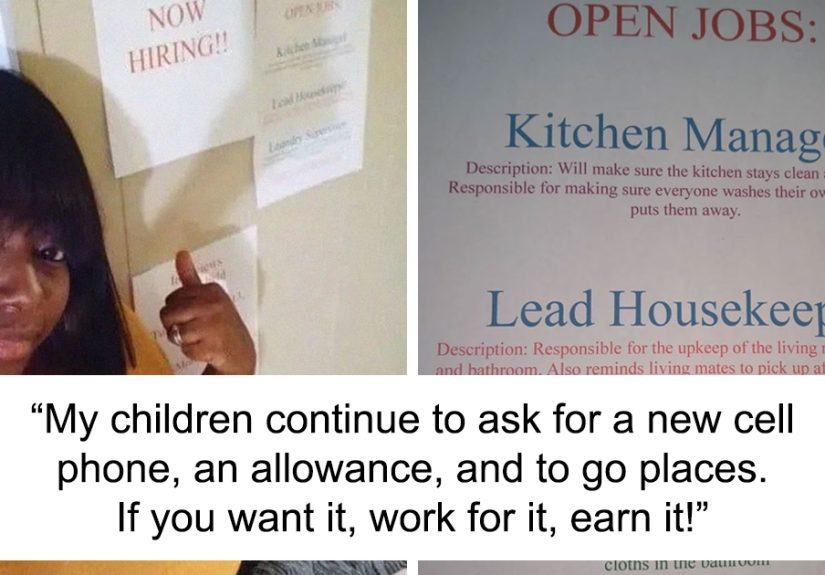
Every family has that moment. The kids want more pocket money. The parent wants fewer mysterious wet towels on the floor. Negotiations begin. Someone sighs dramatically. Someone else says, “But I need it.” And somewhere in the middle of that very familiar domestic comedy, one smart mom comes up with a solution that feels equal parts parenting hack, life lesson, and tiny in-house corporation: if the kids want more money, they can apply for household chore jobs.
It is funny because it sounds absurdly formal. A resume for wiping the table? An interview for folding laundry? A performance review for taking out the trash? But the idea lands because it taps into something real. Kids want spending power. Parents want responsibility. A “job board” for chores turns a vague argument about money into a clear system with rules, expectations, and rewards.
And no, this does not mean your kitchen suddenly needs a human resources department. The best version of this idea is not cold or corporate. It is playful, structured, and surprisingly practical. Done well, it teaches children that money is connected to effort, that privileges come with responsibility, and that not every request for cash should end with Mom opening her wallet like a friendly neighborhood ATM.
Why This Mom’s Chore-Job Idea Resonates
The reason this story feels so instantly relatable is simple: parents are always trying to balance generosity with realism. Most moms and dads want their children to learn how money works, but they also do not want every trip to the store to become a courtroom drama about why a child urgently requires candy, slime, or a glitter pen shaped like a flamingo.
By creating household chore jobs and making the kids apply, the mom solves several problems at once. First, she moves the conversation away from whining and into action. Second, she gives the children a little ownership. Third, she adds a layer of novelty. Kids who ignore “Please help clean the living room” may suddenly become very interested in the role of “Saturday Floor Patrol” once it sounds like a paid position.
That is the genius of the approach. It turns routine family chores into a small-scale lesson in work, accountability, and follow-through. It also makes the whole thing more memorable. Children may not remember every lecture about financial responsibility, but they will absolutely remember the time they had to “interview” for the prestigious position of Dishwasher Assistant II.
Why Turning Chores Into Jobs Can Actually Work
It connects money to effort
For children, money can feel magical. It appears from wallets, purses, phones, and cards with very little explanation. A chore-job system makes earning visible. A child completes a task, does it well, and receives payment. That simple cause-and-effect relationship helps kids understand that money is not just handed out by the universe. It comes from work, planning, and consistency.
It creates clear expectations
Parents often get stuck in a foggy system where kids “help sometimes” and ask for money often. A household job chart fixes that. Each role can include what needs to be done, how often it needs to be done, when it is due, and how much it pays. Suddenly, there is less confusion and fewer debates. The rules are visible. The child knows what counts as finished, and the parent does not have to invent new decisions every day while standing near an overflowing trash can.
It builds responsibility without endless lectures
Children usually learn faster from routines than from speeches. When chores become regular “jobs,” kids begin to see themselves as contributors to the household. That matters. A child who feeds the dog daily or sorts the recycling every Wednesday starts to understand that families work better when everyone carries part of the load.
It gives kids a taste of real-world systems
Applying for a chore job is obviously a playful version of the adult world, but that is what makes it useful. Even a simple application process can teach kids to read instructions, choose a role, commit to a schedule, and understand that some jobs come with higher expectations than others. Older children can even learn how to negotiate for a raise, explain why they deserve more responsibility, or save toward a specific goal.
What Parents Should Keep in Mind Before Copying the Idea
Before transforming your hallway into a domestic hiring center, there is one important distinction to make: not every household task should be treated as a paid gig. Most parenting experts agree that children benefit from having some basic unpaid responsibilities simply because they are members of the family. Making their bed, putting dirty clothes in the hamper, clearing their plate, or helping keep shared spaces tidy can be part of normal family life.
Paid chore jobs tend to work best for extra tasks, special projects, or jobs that go beyond the baseline expectation. That might include washing the car, organizing the pantry, helping with yard cleanup, matching socks from the laundry abyss, or doing an especially thorough weekend reset of the playroom. In other words: not everything deserves a paycheck, but some things can earn one.
This distinction matters because parents do not want to accidentally create tiny union negotiators who respond to every request with, “How much are you offering?” The goal is not to make family life feel transactional. The goal is to teach kids that contribution is normal and extra effort can be rewarded.
How to Set Up Household Chore Jobs Without Making Your Home Feel Like a Corporate Office
1. Separate basic responsibilities from bonus jobs
Start with two categories. The first is “everyone helps because we live here.” The second is “extra jobs you can apply for and earn from.” This keeps the system sane. It also protects parents from paying $3 for a child to carry their own backpack three feet into the house.
2. Write simple job descriptions
Keep them short and specific. For example:
Laundry Sorter: Separate lights and darks, pair socks, and place folded piles in the right rooms every Saturday. Pay: $4.
Pet Feeding Captain: Feed the cat morning and evening for one week, refill water bowl, and report when food runs low. Pay: $5.
Backyard Cleanup Crew: Pick up toys, sports gear, and loose items before dinner on Fridays. Pay: $3.
3. Make the application part fun
This is where the whole idea shines. Younger kids can circle which job they want and answer one funny question like, “Why are you the best person for this role?” Older kids can fill out a mini form with availability, experience, and one goal for what they will do with the money. It is silly, yes, but it also gives them buy-in.
4. Set standards up front
“Clean the bathroom” means very different things depending on whether you are a parent or a child. Define what done looks like. Towels hung? Mirror wiped? Trash emptied? Toys off the floor? If quality matters, say so. If time matters, say that too. This avoids the classic conflict where a child says the room is clean and the parent wonders if they are standing in the same room.
5. Pay on schedule, not on impulse
Weekly payment works well because it is predictable and easy to track. Irregular handouts make the system messy. Children learn more when there is a clear pay day and a clear record of what they earned. Even a simple notebook or fridge chart works.
6. Add saving, spending, and giving buckets
If you want the lesson to go beyond earning, divide the money into categories. Kids can spend some, save some, and optionally give some. That teaches a much fuller money habit than simply collecting cash and setting a world speed record for buying gummy candy.
7. Revisit the jobs every month
Children grow. Skills improve. Interests change. A monthly reset gives the system freshness. It also lets parents rotate roles so one child is not always getting the better-paying “executive” position while the other gets trapped in a permanent internship involving napkin folding.
The Biggest Benefits of a Chore-Job System
Less arguing about money: kids know how they can earn more instead of repeatedly asking for more.
More visible contribution: children can see that their work matters to the home.
Better money habits: they learn to wait, plan, and prioritize.
More confidence: earning money themselves can make children feel capable and trusted.
A more peaceful household: or at least a household with slightly fewer dramatic speeches about financial injustice.
Potential Downsides Parents Should Watch For
Everything can become negotiable
If the system is too broad, children may begin expecting payment for every basic act of cooperation. That is when parents need to return to the baseline rule: some responsibilities come with being part of the family, period.
One child may do invisible work
Parents should also be careful about fairness. Some children naturally volunteer more, while others artfully disappear when the dishwasher opens. Make sure the system does not reward only the loudest negotiator or the child who is best at self-promotion. Quiet contribution counts too.
The jobs may not be age-appropriate
A five-year-old can match socks. A teenager can help mow the lawn if it is safe and supervised. A toddler should not be promoted to “Glass Vase Dusting Specialist.” Assign chores that fit the child’s age, maturity, and ability.
A Smart Sample System Parents Can Borrow
Here is a balanced way to run it:
Unpaid family responsibilities: make your bed, put laundry in hamper, clear your plate, tidy toys, put shoes away.
Paid bonus jobs: fold towels, vacuum stairs, wipe baseboards, water plants for a week, clean the car interior, help organize a closet, wash windows, bag yard debris.
Application requirement: choose up to two jobs per week and explain why you can finish them on time.
Payment rule: full pay for full completion, partial pay for partial work, no pay for “I definitely meant to do it.”
Savings rule: 50% spend, 40% save, 10% giveor any version that fits the family.
Why Kids Secretly Like This More Than Parents Expect
Here is the funny part: children often respond well to structure when it feels like a game. A plain instruction can sound like a burden. A titled role with a chart and a reward can feel like an opportunity. Kids like feeling trusted. They like earning. They like seeing progress. They especially like telling siblings that they were “selected” for the role of Weekend Snack Shelf Manager as if they just landed a Fortune 500 internship.
What begins as a strategy to stop the constant requests for more pocket money can turn into something better: a family culture where responsibility is normal, work has value, and money is discussed openly instead of mysteriously. That is a much bigger win than a few extra dollars saved or spent.
Real-Life Experiences Families Often Have With This Idea
In real households, chore-job systems rarely unfold in a perfectly polished way, and honestly, that is part of their charm. The first week usually begins with great excitement. Kids suddenly become very professional. They ask about pay rates. They want to know whether “experience” matters. They may even try to negotiate benefits, which is adorable until someone requests a signing bonus for feeding the dog.
Then reality arrives. One child proudly applies for three jobs and discovers that enthusiasm is not the same thing as follow-through. Another picks the easiest task on the board and still acts like they have completed a moon mission. Parents quickly learn that creating the jobs is the easy part. Sticking to the standards is what makes the system work.
Many families notice that children become much more aware of what it actually takes to keep a home running. A kid who once walked past a full trash can as if it were invisible may suddenly understand that somebody has to notice it, remove the bag, replace the liner, and carry it outside. That shift matters. It builds respect for the work that used to happen in the background.
Parents also often say the system changes the tone of money conversations. Instead of hearing, “Can I have five dollars?” for the twelfth time in a week, they can answer with, “What job are you planning to do for it?” That response feels calm, consistent, and fair. It removes the drama. The child may not love the answer in the moment, but it gives them a path forward. They can earn instead of argue.
Some of the best experiences come from the surprises. The child who is messy in every other area might become an excellent organizer when there is a clear task and a visible reward. The sibling rivalry that usually explodes over snacks may soften when the jobs rotate and each child gets a turn to be in charge. Older kids sometimes start suggesting useful tasks on their own, which is how parents end up hearing delightfully strange but helpful ideas like, “I could inventory the freezer for $6.”
Of course, there are bumps. Kids forget deadlines. Parents forget payday. Someone insists they completed a task that was done with roughly the energy of a sleepy raccoon. But even those moments can be useful. Families learn how to talk about quality, accountability, and fairness in a real setting, not just in abstract lectures.
Over time, the strongest result is not the money itself. It is the mindset. Children begin to understand that wanting something extra often means doing something extra. They learn that work can be measured, that effort has value, and that family life is not powered by magic. It is powered by people noticing what needs to be done and doing it. That is a lesson with staying power, even after the novelty of applying for the role of Sock Matching Associate wears off.
Conclusion
When kids keep asking for more pocket money, a mom who creates household chore jobs and makes them apply is doing more than being clever. She is turning a recurring family frustration into a lesson about work, money, and responsibility. The beauty of the idea is that it is flexible. Families can keep it light and funny, make it highly organized, or land somewhere in between.
The key is balance. Children should have basic responsibilities because they belong to the family, not because they are constantly on payroll. But giving them access to paid bonus jobs can be a smart, memorable way to teach the value of earning. It helps them see that money is not random, chores are not punishment, and contribution matters.
In a world where kids can easily think cash comes from tapping a screen, a household chore-job system offers a refreshingly grounded message: if you want more money, there is work to be done. And sometimes the road to financial literacy begins with a handwritten application for bathroom counter duty.