Table of Contents >> Show >> Hide
- Why bathing a small dog is a little different
- How often should you bathe a small dog?
- What you’ll need (small-dog bath checklist)
- Prep work: 5 minutes that makes bath time 10x easier
- Step-by-step: How to give a small dog a bath
- Step 1: Make the first 30 seconds calm
- Step 2: Wet the body first (avoid the face initially)
- Step 3: Shampoo (less than you think)
- Step 4: Face cleaning (gentle and minimal)
- Step 5: Rinse like you mean it
- Step 6: Conditioner (optional, but helpful for tangles)
- Step 7: If using medicated shampoo, follow directions exactly
- Drying a small dog without starting World War III
- After-bath cleanup: the “don’t skip this” mini routine
- Troubleshooting: common small-dog bath problems (and fixes)
- Quick cheat sheet: small dog bath in 10 minutes
- Final thoughts: clean dog, calm dog, happy human
- Real-world experiences: what small-dog bath time is actually like
Bathing a small dog sounds easy until you remember two facts: (1) water makes them 40% faster, and (2) tiny dogs can project betrayal with Oscar-worthy intensity. The good news? With the right setup and a calm, step-by-step approach, you can give a small dog a bath at home (sink, tub, or shower) without turning your bathroom into a splash zone crime scene.
This guide breaks down exactly how to bathe a small dog safely and efficientlyplus what to do when your dog hates baths, how often to bathe them, and how to avoid common mistakes like itchy residue or water-in-the-ear drama.
Why bathing a small dog is a little different
Small dogs aren’t just “regular dogs, but pocket-sized.” They cool off faster, slip more easily, and can feel overwhelmed by loud water or a deep tub. Many toy breeds also have fine coats and sensitive skin, which means the “more shampoo = more clean” math does not apply here.
The goal is a clean coat and healthy skinwithout stripping natural oils, triggering irritation, or creating a fear of bath time. Think: gentle spa day, not pressure-washer detangling.
How often should you bathe a small dog?
There isn’t one perfect schedule for every dog. A Chihuahua who mostly lives on your couch will need fewer baths than a Yorkie who treats every sidewalk crack like a nature documentary.
General guidelines that work for most small dogs
- Most healthy small dogs: about every 4–8 weeks is a common “middle of the road” range.
- Very dirty dog / rolled in something gross: bathe as needed, but use gentle products and rinse extremely well.
- Skin conditions (itching, infections, allergies): follow your veterinarian’s plan, especially with medicated shampoos.
- Between baths: brushing, paw wipes, and spot-cleaning often reduce how frequently you need full baths.
If your dog’s skin gets flaky, itchy, or greasy quickly, the answer might not be “bathe more”it might be “change products, improve rinsing, or ask your vet what’s going on.” Over-bathing can backfire.
What you’ll need (small-dog bath checklist)
Gather everything first. Leaving a wet dog unattended to hunt for a towel is how bathroom murals happen.
Must-haves
- Dog-specific shampoo (gentle, ideally fragrance-light; choose sensitive-skin if your dog is itchy)
- Non-slip surface (rubber bath mat or folded towel for the sink/tub)
- 2–3 towels (one for drying, one “backup,” one for your inevitable splash zone)
- Brush/comb appropriate for coat type
- Rinse tool (cup, pitcher, handheld sprayer, or a squeeze bottle)
- Treats (tiny, high-value, and frequentlike you’re paying a furry consultant)
Nice-to-haves
- Conditioner (helpful for long-haired dogs prone to tangles)
- Detangler spray (for post-bath brushing)
- Cotton balls (optional; for gently blocking splashes at the ear openingnever push anything inside the ear)
- Blow dryer with cool/low heat settings (many small dogs do best with towel + air-dry, but coats vary)
Prep work: 5 minutes that makes bath time 10x easier
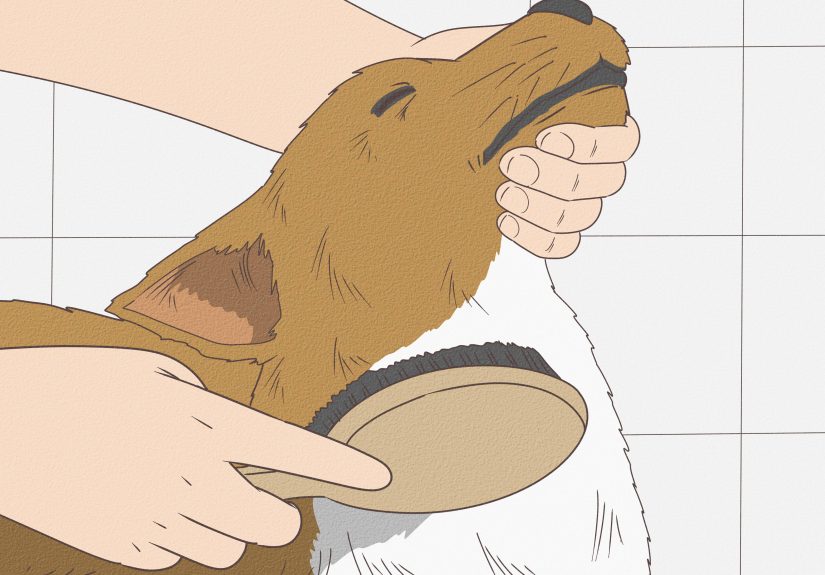
1) Brush first (seriously)
Brushing before the bath removes loose hair and dirt and helps prevent mats from tightening when wet. If your small dog has a long or curly coat, this step is non-negotiable.
2) Choose the right location
- Sink: Great for small dogs; less bending; easier control.
- Bathtub: Better for dogs who hate being “hovered over” or who wiggle too much in a sink.
- Shower: Useful if you have a handheld sprayer and want quick rinsing.
Wherever you bathe them, add a non-slip mat/towel. Small dogs + slick surfaces = instant panic salsa.
3) Set water temperature to lukewarm
Think “comfortable for a baby,” not “hot shower for an adult.” Dogs can be more sensitive to heat, and small bodies can get chilled if the process drags onso aim for warm-ish water, efficient washing, and fast drying.
4) Tire them out a little
A short walk or play session before the bath can reduce zoomies and anxiety. A calmer dog is a safer dogespecially when water and slippery surfaces are involved.
Step-by-step: How to give a small dog a bath
Step 1: Make the first 30 seconds calm
Place your dog on the non-slip surface, let them sniff the area, and offer a treat. Speak calmly. If your dog is anxious, you’re aiming for “quiet confidence,” not “we’re late for a meeting.”
Step 2: Wet the body first (avoid the face initially)
Start at the neck and work back. Use a gentle streamespecially with toy breedsso you don’t startle them. Keep water away from eyes and ear openings. A cup or low-pressure sprayer is usually less scary than a roaring faucet.
Step 3: Shampoo (less than you think)
Use a dog shampoo, and consider diluting it with water (many groomers do this) so it spreads evenly and rinses out more easily. Work the lather through the coat with your fingers, massaging down to the skin without scratching.
- Focus areas: chest, belly, paws, under the collar/harness area, and the “rear end” zone.
- Avoid: direct shampoo on the face, inside ears, and near the eyes.
Step 4: Face cleaning (gentle and minimal)
For the face, use a damp washcloth (water only, or a tiny amount of tear-free dog face cleanser if needed). Wipe the muzzle, cheeks, and around the eyes carefully. If your dog has eye gunk or tear staining, use a clean, damp cotton pad and never poke near the eyeball.
Step 5: Rinse like you mean it
Shampoo residue is a top reason dogs get itchy after a bath. Rinse thoroughly, then rinse again. Pay extra attention to “soap traps” like armpits, under the chest, groin area, and between toes.
A good rule: when you think you’re done rinsing, do another full-body rinse pass. Your future self (and your dog’s skin) will thank you.
Step 6: Conditioner (optional, but helpful for tangles)
If your dog has a long, silky, curly, or easily matted coat, a dog conditioner can make brushing easier and reduce breakage. Apply lightly, avoid the face, and rinse thoroughly.
Step 7: If using medicated shampoo, follow directions exactly
Medicated products often need contact time (several minutes) to work. This is where treat bribery becomes a legitimate medical support strategy. Set a timer, keep your dog warm, and rinse thoroughly afterward.
Drying a small dog without starting World War III
1) Towel “burrito,” don’t rub aggressively
Wrap your dog in a towel and blot/squeeze water from the coat. Vigorous rubbing can tangle long hair and irritate sensitive skin. Use a second towel if the first becomes a soggy surrender flag.
2) Consider a blow dryeronly if your dog tolerates it
If you blow-dry, use cool or low heat, keep it moving, and hold it at a safe distance. Many small dogs hate the noise, so don’t force it. A quiet room, towel drying, and warm indoor air can be enough for many coats.
3) Keep them warm while they finish drying
Small dogs can chill more quickly. After towel drying, keep them in a warm room (no drafts). If your dog shivers a lot, speed up the process with extra towels and a calm environment.
After-bath cleanup: the “don’t skip this” mini routine
Brush once dry (or mostly dry)
Brushing after the bath prevents tangles and keeps the coat neat. For long-haired small dogs, gentle combing around ears, armpits, and the back legs prevents mats from forming in those high-friction areas.
Check ears (outer only)
If the outer ear flap and visible areas look dirty, wipe gently with a damp cloth. Don’t push anything into the ear canal. If you notice redness, odor, discharge, or lots of head shaking after baths, talk to your vetsmall dogs with floppy ears can be more prone to ear trouble.
Reward immediately
Treats, praise, a favorite toy, or a post-bath cuddle session teaches your dog one important truth: baths are not the end of joy. This single habit can dramatically improve future bath cooperation.
Troubleshooting: common small-dog bath problems (and fixes)
“My dog freaks out in the tub.”
- Switch to a sink bath with a non-slip towel and slower, quieter water.
- Use tiny treats every 10–20 seconds for calm behavior.
- Try shorter baths more efficiently: wet → shampoo → rinse → towel, done.
- Practice “dry runs”: place dog in the sink/tub, treat, leaveno waterso the location isn’t always a trap.
“My dog is itchy after baths.”
- Rinse longer (most common issue).
- Switch to a gentler dog shampoo (fragrance-light, sensitive-skin).
- Reduce bath frequency and focus on brushing + spot cleaning.
- If itching persists, consult a veterinarian to rule out allergies or skin infection.
“Can I use human shampoo or dish soap?”
For regular bathing, stick to dog shampoo. Human products can disrupt canine skin balance and trigger dryness and irritation. Dish soap can strip oils and should not be your go-to grooming product. In rare emergency situations (like skunk oil, sticky substances, or certain decontamination scenarios), a vet may say a diluted detergent is acceptablebut for everyday baths, it’s not the right tool.
“My dog has fleas.”
A bath alone won’t solve fleas. If you suspect fleas, talk to your veterinarian about safe, effective flea prevention and treatment. Bathing can help remove dirt and some parasites, but flea control is a full plan (pet + home + prevention).
Quick cheat sheet: small dog bath in 10 minutes
- Brush (2 minutes).
- Non-slip mat/towel down, supplies ready.
- Lukewarm water, wet from neck down.
- Diluted dog shampoo, gentle massage.
- Rinse thoroughly (then rinse again).
- Towel burrito + blot dry.
- Brush once mostly dry + treat jackpot.
Final thoughts: clean dog, calm dog, happy human
When you know how to give a small dog a bath the right way, it stops being a chaotic event and becomes a simple routine. The secret is not “more soap” or “more force.” It’s preparation, gentle handling, thorough rinsing, and a positive finish.
If your dog consistently panics, has skin issues, or you’re dealing with severe matting, a professional groomer (or your vet) can be the best next step. Sometimes the most loving bath is the one you outsource.
Real-world experiences: what small-dog bath time is actually like
If you’ve never bathed a small dog before, here’s a comforting truth: nearly everyone’s first attempt is a little messy. Small dogs are experts at turning minor inconvenience into performance art. Many owners describe the “pre-bath phase” as suspicious side-eye, followed by the “negotiation phase,” where your dog suddenly remembers how to sit, shake, and look heartbreakingly adorablepurely as a legal defense strategy.
One common experience: the instant statue. You place your dog in the sink, and they go completely still, as if movement might activate the water. Owners often think, “Wow, this is going great,” and then the faucet turns on and the statue becomes a spring-loaded gymnast. That’s why people who have done this a few times swear by the non-slip towel or matit doesn’t just prevent slipping, it reduces the dog’s “I’m falling!” panic, which reduces the dog’s “I must escape!” plan.
Another classic: the tiny dog, huge shake. Small dogs can produce an astonishing amount of spray. Many owners learn to keep one hand lightly on the dog (for safety) and one towel strategically ready for the post-rinse shake. It’s also why people often wear an old T-shirt or even keep a “bath hoodie” nearby. It’s not pessimism; it’s experience.
You’ll also hear a lot about the face-washing truce. Owners who try to rinse a small dog’s face directly often report it’s the moment everything falls apart: blinking, sneezing, pawing, and dramatic “why have you done this?” expressions. People who switch to a damp washcloth for the face usually see an immediate improvement. It feels less invasive to the dog, and it keeps soap away from sensitive areas. In other words, it’s not just gentlerit’s faster.
Small-dog owners also talk about the post-bath personality shift. Some dogs become “couch burrito” quiet and want warmth. Others get the “freshly washed zoomies,” sprinting around as if cleanliness is a performance-enhancing drug. Both are normal. What matters is that you keep them warm while drying and make sure they’re not slipping on floors. Many people lay down an extra towel or rug after the bath because a damp dog on hardwood can turn into a tiny ice skater.
A very practical experience many owners share: itchiness after baths is often a rinsing issue, not a shampoo issue. People switch products three times, only to discover they were leaving residue in armpits, under the chest, or between toes. Once they start rinsing longer (and doing a second rinse pass), the itching often improves. That “rinse until you think you’re done, then rinse again” advice sounds excessiveuntil it saves your evening from a scratching marathon.
Finally, there’s the experience that changes everything: the treat routine. Owners who give treats only at the end often find their dog still hates the bath. Owners who give tiny treats during calm momentsstanding still, letting paws be washed, tolerating rinsingreport the biggest improvement over time. It’s like teaching your dog a new skill: they learn that cooperation makes good things happen, and bath time becomes predictable instead of scary. The long-term win isn’t just a cleaner dogit’s a dog who trusts the process.