Table of Contents >> Show >> Hide
- What Is a Cat Enema?
- Signs Your Cat May Be Constipated
- When an Enema Is Not Safe at Home
- How to Give a Cat an Enema at Home: 11 Safety-First Steps
- Step 1: Call Your Veterinarian First
- Step 2: Use Only a Vet-Approved Enema Product
- Step 3: Confirm the Dose and Instructions
- Step 4: Choose a Quiet, Easy-to-Clean Space
- Step 5: Gather Supplies Before Bringing in Your Cat
- Helpful supplies may include:
- Step 6: Keep Your Cat Calm and Properly Supported
- Step 7: Follow Your Vet’s Demonstrated Technique
- Step 8: Allow Time and Give Your Cat Privacy
- Step 9: Monitor What Comes Out
- Step 10: Clean Your Cat Gently
- Step 11: Follow Up With Your Veterinarian
- What Never to Use for a Cat Enema
- Why Cats Become Constipated
- At-Home Prevention After Your Cat Recovers
- Common Mistakes Cat Owners Make
- Experience-Based Tips: What Cat Owners Often Learn the Hard Way
- Conclusion
Important note before we begin: Giving a cat an enema at home is not a casual “I saw it online, let’s try it” project. Cats are delicate, opinionated little roommates with tiny bodies and very specific medical risks. A cat enema should only be done at home if your veterinarian has examined your cat, confirmed constipation, prescribed or approved the exact enema product, and shown you how to use it safely. Never use human sodium phosphate enemas, including Fleet-style enemas, because they can cause severe electrolyte problems and may be fatal to cats.
That said, cat constipation is common, uncomfortable, and sometimes scary. One day your cat is judging you from the windowsill, and the next day they are making repeated trips to the litter box with nothing to show for it. This guide explains the safe, responsible way to approach the topic of giving a cat an enema at home, including what to ask your vet, what supplies may be needed, what warning signs mean “go now,” and how to prevent the problem from coming back.
What Is a Cat Enema?
A cat enema is a veterinary treatment used to help soften and move stool from the lower colon and rectum. It involves introducing a vet-approved fluid or medication into the rectum to help hydrate hardened stool and stimulate bowel movement. In simple terms, it helps the “traffic jam” move alongbut it must be done gently and correctly.
Constipation happens when a cat has trouble passing stool. The stool may become dry, hard, and painful to eliminate. If constipation becomes severe, a cat may develop obstipation, which means the colon is so packed with stool that the cat cannot empty it normally. Chronic or repeated constipation can contribute to megacolon, a condition where the colon becomes enlarged and weak.
This is why the first step is not grabbing a bottle from the medicine cabinet. The first step is calling your veterinarian. The wrong product, too much fluid, rough handling, or treating the wrong problem can turn a constipation concern into an emergency.
Signs Your Cat May Be Constipated
Before thinking about an at-home cat enema, you need to know whether constipation is actually the problem. Cats can strain in the litter box for several reasons, and some are urgent.
Common signs of constipation in cats
- Repeated trips to the litter box with little or no stool
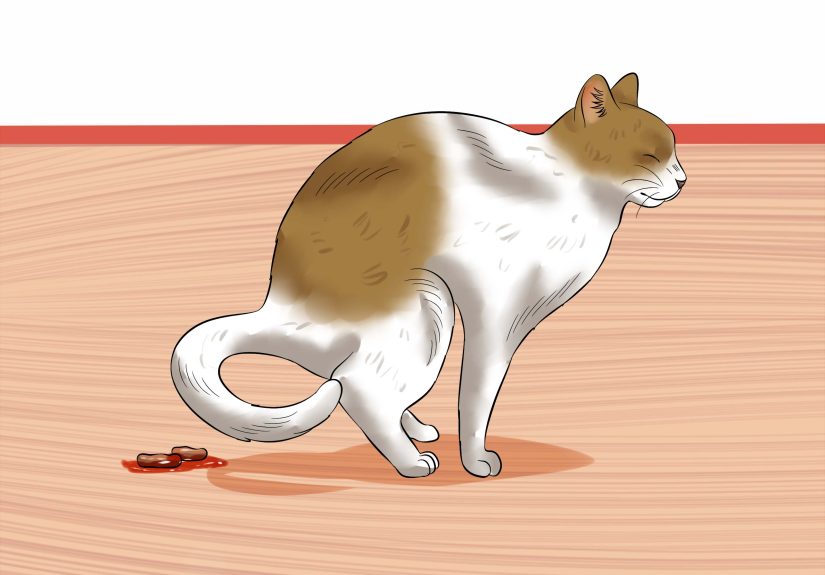
- Small, dry, hard stools
- Crying, hunching, or discomfort while trying to defecate
- Reduced appetite
- Vomiting
- Lethargy or hiding
- A firm or painful belly
- Stool outside the litter box
Here is the tricky part: straining can also be a sign of urinary blockage, especially in male cats. A blocked cat may look constipated but is actually unable to urinate. That is a true emergency. If your cat is straining, crying, producing little or no urine, vomiting, or acting weak, skip the home experiment and contact an emergency veterinarian immediately.
When an Enema Is Not Safe at Home
Some cats should not receive an enema at home at all. Even with good intentions, at-home care can be risky if your cat is very painful, dehydrated, weak, aggressive from discomfort, or severely impacted. Many cats need fluids, pain control, sedation, X-rays, or manual stool removal performed by a veterinarian.
Do not attempt an at-home enema if your cat has:
- Vomiting along with constipation
- No stool for more than 24 to 48 hours
- Severe pain or crying in the litter box
- Lethargy, collapse, or weakness
- A swollen or hard abdomen
- Possible urinary blockage
- Blood from the rectum
- Known kidney disease, heart disease, diabetes, or dehydration
- A history of megacolon
- A kitten, senior cat, or medically fragile cat
In these cases, your cat needs veterinary care, not a brave bathroom mission starring you, a towel, and a very offended feline.
How to Give a Cat an Enema at Home: 11 Safety-First Steps
The following steps are designed for cat owners whose veterinarian has already approved an at-home enema and provided the exact product, dose, and instructions. This is not a replacement for veterinary care. Think of it as a responsible checklist, not a license to improvise.
Step 1: Call Your Veterinarian First
Before doing anything, call your vet. Describe your cat’s symptoms, how long it has been since they passed stool, whether they are eating, whether they are vomiting, and whether they are urinating normally. Your vet may recommend an exam before any treatment, especially if this is your cat’s first constipation episode.
Ask directly: “Is it safe for me to give an enema at home, and what exact product and amount should I use?” If the answer is no, believe them. Veterinarians are not trying to ruin your afternoon; they are trying to protect your cat’s colon, kidneys, and life.
Step 2: Use Only a Vet-Approved Enema Product
This is the golden rule. Use only what your veterinarian recommends. Do not use human sodium phosphate enemas, saline enemas, soap-based mixtures, essential oils, herbal remedies, or random internet recipes. Human constipation products are not automatically safe for cats.
Phosphate enemas are especially dangerous for cats because they can cause severe electrolyte imbalances. Even a small amount may be harmful. If you already used one, contact your veterinarian or animal poison control immediately.
Step 3: Confirm the Dose and Instructions
Cats vary in size, age, hydration status, and medical history. A dose that is safe for one cat may be unsafe for another. Confirm the amount, timing, and method with your veterinarian. If you are unsure, stop and ask. Guessing is great for game shows, not for feline medical care.
Step 4: Choose a Quiet, Easy-to-Clean Space
Pick a small room with a washable floor, such as a bathroom or laundry room. Close the door. Remove rugs, towels, laundry piles, and anything you do not want “decorated.” After an enema, stool may pass quickly or messily. Your cat will not care about your bath mat’s emotional journey.
Set up a clean litter box nearby. Keep lighting soft and noise low. The calmer the environment, the better your chances of keeping your cat relaxed.
Step 5: Gather Supplies Before Bringing in Your Cat
Have everything ready before you involve your cat. Once your cat realizes a suspicious medical activity is happening, the countdown to escape begins.
Helpful supplies may include:
- Vet-approved enema product
- Disposable gloves
- Old towels
- Pet-safe wipes or damp paper towels
- A clean litter box
- A trash bag
- Your veterinarian’s phone number
- Treats, if your cat is willing
Do not add extra tools unless your vet specifically tells you to. Avoid rigid tips, forceful devices, or anything that could scratch or injure the rectum.
Step 6: Keep Your Cat Calm and Properly Supported
Speak softly and move slowly. If your cat is calm, you may gently wrap them in a towel, leaving the rear accessible. This “kitty burrito” approach can help prevent scratching and sudden twisting. However, if your cat panics, bites, screams, or struggles hard, stop. Stress and force increase the risk of injury.
If possible, have another adult help by gently supporting your cat. Never pin your cat aggressively. The goal is controlled comfort, not a wrestling match with whiskers.
Step 7: Follow Your Vet’s Demonstrated Technique
This is the point where your veterinarian’s specific training matters. Follow only the method your vet demonstrated or described. Be gentle, patient, and slow. Never force the applicator or tip. If you meet resistance, stop. Resistance may mean pain, severe impaction, swelling, or incorrect positioning.
Do not push hard. Do not rush. Do not assume “more pressure equals better results.” With cats, more pressure often equals more danger and more betrayal in their eyes.
Step 8: Allow Time and Give Your Cat Privacy
After the vet-approved enema is administered, place your cat near the litter box in the quiet room. Some cats may pass stool soon; others may need more time. Keep them confined to the easy-to-clean area until you know what is happening.
Watch from a respectful distance. Cats do not enjoy an audience for bathroom business, and frankly, who can blame them?
Step 9: Monitor What Comes Out
Observe whether your cat passes stool, liquid, or nothing at all. A small amount of loose stool can occur after an enema. However, blood, severe diarrhea, repeated vomiting, weakness, collapse, or continued straining without stool are warning signs.
If your cat does not improve, do not repeat the enema unless your veterinarian specifically instructs you to do so. Repeating treatment without guidance can worsen dehydration, irritation, or injury.
Step 10: Clean Your Cat Gently
Your cat may need help cleaning the rear area afterward, especially if stool is loose. Use a damp cloth or pet-safe wipe. Avoid harsh soaps, fragrances, alcohol-based wipes, or essential oil products. Be gentle around the anus, which may already be irritated.
If your cat has long fur, stool can get trapped. Do not tug. If cleaning is difficult, call your vet or groomer for help. This is one of those moments when everyone involved deserves patience and possibly a snack.
Step 11: Follow Up With Your Veterinarian
Even if your cat passes stool, update your vet. Constipation often has an underlying cause, such as dehydration, low fiber intake, obesity, arthritis, kidney disease, hair accumulation, medication side effects, pelvic injury, or megacolon. Treating one episode is helpful, but preventing the next one is the real win.
Your veterinarian may recommend diet changes, hydration support, stool softeners, laxatives, pain control, weight management, or further testing. Do not start over-the-counter laxatives without veterinary advice, because the wrong choice or dose can cause problems.
What Never to Use for a Cat Enema
Some products are dangerous for cats even if they are common in human medicine cabinets. Cats are not small humans wearing fur coats. Their bodies process chemicals differently, and a product that seems harmless to people can be hazardous to them.
Avoid these unless your veterinarian specifically directs otherwise:
- Fleet or sodium phosphate enemas
- Human saline enemas
- Soap-suds enemas
- Essential oils
- Hydrogen peroxide
- Mineral oil by mouth unless prescribed
- Herbal mixtures
- Large-volume enemas
- Repeated enemas without veterinary guidance
The safest answer is simple: if your vet did not approve it, do not put it in your cat.
Why Cats Become Constipated
Constipation can happen for many reasons. Sometimes the cause is simple: a cat is not drinking enough water, eats a dry-food-heavy diet, or avoids the litter box because it is dirty, noisy, covered, or located beside the washing machine that roars like a tiny dragon.
Other causes are medical. Arthritis can make it painful for a cat to climb into the litter box or posture properly. Kidney disease can lead to dehydration. Obesity can reduce mobility. Hairballs, intestinal narrowing, pelvic injuries, tumors, certain medications, and nerve or muscle problems can also contribute.
Older cats are especially prone to constipation because they may drink less, move less, groom more, and develop chronic conditions. Long-haired cats may swallow more hair. Cats with megacolon may struggle repeatedly because the colon no longer contracts effectively.
At-Home Prevention After Your Cat Recovers
The best cat enema is the one your cat never needs. Prevention focuses on hydration, diet, movement, litter box comfort, and early veterinary care.
Encourage better hydration
Many cats do not drink enough water. Try adding wet food, using a cat water fountain, placing multiple water bowls around the home, and keeping bowls clean. Some cats prefer wide ceramic or stainless-steel bowls because their whiskers do not touch the sides.
Improve litter box access
Make sure litter boxes are easy to enter, especially for senior cats. Low-sided boxes can help cats with arthritis. Keep boxes clean and place them in quiet, accessible areas. The usual rule is one box per cat, plus one extra.
Discuss diet with your vet
Some cats benefit from more moisture, specific fiber levels, or prescription diets. However, fiber is not a magic wand. In some cats, too much fiber may worsen stool bulk if hydration is poor. Your veterinarian can help choose the right approach.
Promote gentle activity
Playtime supports gut movement and weight control. Feather wands, treat puzzles, short chase games, and climbing opportunities can help. No need to turn your cat into a marathon runner; a few daily play sessions can make a difference.
Monitor stool habits
Notice what is normal for your cat. Healthy stools are usually formed but not rock-hard. If stools become dry, tiny, infrequent, or painful to pass, call your veterinarian before the problem becomes severe.
Common Mistakes Cat Owners Make
One common mistake is assuming constipation is harmless. Mild constipation may be manageable, but repeated or severe constipation can become painful and medically serious. Another mistake is treating straining as constipation without confirming the cat is urinating. Urinary blockage can look similar and can become fatal quickly.
A third mistake is using human products. This is where many well-meaning owners get into trouble. Human enemas, laxatives, and supplements may be unsafe for cats. Always ask your vet before using them.
Finally, some owners wait too long. Cats are experts at hiding discomfort. By the time a cat is vomiting, not eating, hiding, or crying in the litter box, the situation may already be advanced.
Experience-Based Tips: What Cat Owners Often Learn the Hard Way
Anyone who has cared for a constipated cat knows the experience is equal parts worry, detective work, and humble bathroom cleanup. The first lesson is that cats rarely announce problems clearly. They do not stroll into the kitchen and say, “Excuse me, my colon is underperforming.” Instead, they visit the litter box five times, scratch dramatically, leave one pebble-sized stool, and then stare at you as if you personally caused the digestive crisis.
The second lesson is that litter box monitoring matters. Many owners only notice constipation after several days because they have multiple cats or automatic litter boxes. If you have more than one cat, it can help to observe who is using which box, check stool size and texture, and pay attention to changes in routine. A cat that suddenly avoids the box, crouches longer than usual, or leaves hard pellets around the home may be trying to tell you something.
The third lesson is that hydration is not optional. Cats evolved from desert animals, and some behave as if drinking water is a suspicious hobby. Wet food, fountains, extra bowls, and fresh water can make a real difference. Many cat owners discover that the expensive fountain they bought is ignored for three weeksuntil one magical Tuesday when the cat decides it is the greatest invention since cardboard boxes. Be patient and experiment.
The fourth lesson is that the environment matters. A senior cat with sore hips may avoid a high-sided litter box. A nervous cat may hold stool because the box is near a loud appliance or a bossy dog. A picky cat may reject scented litter with the disgust of a restaurant critic. Fixing constipation sometimes begins with fixing the bathroom setup.
The fifth lesson is that at-home enemas are not a shortcut. Even when a veterinarian approves one, it can be stressful, messy, and emotionally dramatic. Some cats tolerate handling; others transform into furry tornadoes. If your cat fights hard, forcing the process is not worth the risk. A veterinary clinic can provide trained handling, appropriate products, fluids, pain control, and sedation when needed.
The sixth lesson is that follow-up care matters more than the dramatic moment. After a cat finally passes stool, it is tempting to celebrate and move on. Celebrate, yesperhaps with coffee and a clean towelbut also ask why it happened. Does your cat need more moisture? A medication review? Arthritis support? A weight plan? Bloodwork? A long-term stool softener? Preventing the next episode is kinder, cheaper, and much less messy than repeating the emergency.
The final lesson is simple: do not be embarrassed to call the vet about poop. Veterinary teams talk about stool all day. They have heard every description, from “dry little nuggets” to “cement sausage.” The sooner you ask for help, the better chance your cat has of quick, comfortable relief.
Conclusion
Learning how to give a cat an enema at home starts with understanding when not to do it. A cat enema can help in certain constipation cases, but it must be veterinarian-approved, carefully performed, and never attempted with unsafe human products. The safest 11-step approach is to call your vet, confirm constipation, use only the prescribed product, prepare a calm space, handle your cat gently, monitor results, and follow up to prevent recurrence.
Your cat may forgive you eventually. They may also sit across the room and blink slowly with legal suspicion. Either way, the goal is comfort, safety, and a healthier litter box routine. When in doubt, call your veterinarian. With cats, caution is not overreactingit is good caregiving.