Table of Contents >> Show >> Hide
- Why Kia Steering Wheel Locks Became a Big Deal
- Who May Qualify for a Free Kia Steering Wheel Lock?
- How to Get a Free Kia Steering Wheel Lock
- What to Bring When Claiming a Free Lock
- How to Use a Kia Steering Wheel Lock
- Best Practices for Making the Lock More Effective
- Steering Wheel Lock vs. Kia Software Update: Which One Do You Need?
- What If You Already Bought a Steering Wheel Lock?
- Common Mistakes to Avoid
- Real-World Experience: What Getting and Using One Actually Feels Like
- Conclusion
- SEO Tags
If you own an older Kia with a traditional steel key, you may have heard the same sentence from neighbors, police departments, insurance agents, and the internet’s loudest comment sections: “Get a steering wheel lock.” That advice is not just grandpa energy in a yellow metal bar. For many affected Kia owners, a steering wheel lock is a practical, visible, no-cost layer of protection offered through Kia programs, local law enforcement giveaways, or related anti-theft support efforts.
The reason is simple. Certain Kia vehicles sold in the United States, especially older models with turn-key ignitions and no factory engine immobilizer, became targets after theft methods spread on social media. Kia responded with free anti-theft software updates for many eligible vehicles, free steering wheel locks for impacted owners, and hardware protections for some vehicles that cannot receive the software upgrade. In plain English: Kia knows the problem exists, and in many cases, there is a free way to make your car less attractive to thieves.
This guide explains how to get a free Kia steering wheel lock, who is most likely to qualify, what documents you may need, how to install and remove the device correctly, and why this old-school anti-theft tool still matters. It is not glamorous. It will not make your Kia look like a spy car. But it can make a would-be thief look at your vehicle and decide, “Absolutely not today.”
Why Kia Steering Wheel Locks Became a Big Deal
For years, most drivers thought of steering wheel locks as something your uncle bought in the 1990s and refused to stop talking about. Then vehicle theft trends changed. Certain Kia and Hyundai models without push-button start systems and without electronic immobilizers became unusually vulnerable to theft attempts. These vehicles typically used a steel key and a traditional turn-to-start ignition.
An engine immobilizer is an anti-theft system that helps prevent a vehicle from starting unless the correct coded key or smart key is present. Many competing vehicles had immobilizers as standard equipment earlier, but some Kia models in the 2011–2022 range did not. That gap became more serious once theft-related videos spread online and made specific models more visible to criminals.
Kia and Hyundai later rolled out software campaigns for millions of affected vehicles. The software upgrade is designed to make it harder to start a locked vehicle without the proper key and may extend the alarm duration. However, not every affected Kia can receive the software update because some trims lack the necessary factory alarm hardware. That is where the free steering wheel lock comes in.
A steering wheel lock does not magically turn your car into Fort Knox on tires. What it does is create a large, obvious physical obstacle. Thieves generally prefer speed, silence, and easy targets. A bright metal bar clamped across the steering wheel says, “This will take longer, make noise, and possibly ruin your afternoon.” Sometimes that message is enough.
Who May Qualify for a Free Kia Steering Wheel Lock?
Eligibility is usually tied to the vehicle, not simply the owner’s level of anxiety. The most commonly affected Kia vehicles are older models with a steel key and traditional turn-key ignition. Push-button-start models are generally not part of the same theft vulnerability because they usually have different anti-theft technology.
Models often discussed in Kia anti-theft programs include certain model years of the Kia Soul, Sportage, Forte, Rio, Optima, Sorento, and Sedona. Exact eligibility depends on your VIN, model year, trim, ignition type, and whether your vehicle can receive the software or hardware anti-theft upgrade. Do not guess from a random list online. Your Kia’s 17-digit vehicle identification number is the magic decoder ring.
You are more likely to qualify if:
- You own or lease an affected Kia with a steel key and turn-to-start ignition.
- Your vehicle was built without a factory engine immobilizer.
- Your vehicle is not eligible for Kia’s anti-theft software update, or your local program includes locks for eligible owners.
- You received a Kia mailer, offer code, dealer notice, or law enforcement announcement about free steering wheel locks.
- Your local police department is distributing locks to Kia and Hyundai owners while supplies last.
Some Kia owners may qualify for a free anti-theft software update instead of, or in addition to, a steering wheel lock. Others may qualify for an ignition cylinder protector, which is a hardware modification installed by a dealer to reinforce the ignition area. Because Kia’s response has included several overlapping programs, the best move is to check all available options rather than assuming the steering wheel lock is the only fix.
How to Get a Free Kia Steering Wheel Lock
There are three realistic paths to getting a free Kia steering wheel lock: through Kia directly, through a Kia dealer, or through local law enforcement. Availability can change by location and supply, so move quickly once you confirm that your vehicle qualifies. Free programs love the phrase “while supplies last,” which is the official language of “don’t wait until next summer.”
1. Check Kia’s Anti-Theft Support Portal
Start with Kia’s official anti-theft support resources. Kia has used a dedicated owner support portal where drivers can enter vehicle information to check eligibility for anti-theft software, steering wheel locks, or related theft-deterrent support. You may need your VIN, which is usually visible on the driver-side dashboard near the windshield, on your registration, on your insurance card, or inside the driver-side door jamb.
If your vehicle qualifies for a free steering wheel lock through Kia, you may be asked to submit your name, shipping address, VIN, and possibly an offer code from a notice you received in the mail. Older Kia notices stated that one lock was available per eligible vehicle and that delivery could take about two weeks after ordering, though shipping time depends on availability and conditions.
Even if you never received a mailer, it is still worth checking your VIN. Mail gets lost, previous owners forget to forward documents, and sometimes the most important envelope gets buried under pizza coupons and dental cleaning reminders.
2. Call Kia Customer Care
If the online form does not work, your VIN shows confusing results, or you bought the car used, call Kia Customer Care. Have your VIN ready before calling. Ask specifically whether your vehicle is eligible for a free steering wheel lock, anti-theft software update, ignition cylinder protector, or any open theft-deterrent service campaign.
This is also a smart step if your vehicle has already been stolen or damaged in a theft attempt. Kia support may be able to point you toward active remedies, dealer service, or claim-related resources. Keep notes from the call, including the date, representative name if available, and any case number. Paper trails are boring until they save you money.
3. Contact Your Local Kia Dealer
Your local Kia dealer can check your VIN for open service campaigns. Ask for the service department, not sales. Sales will happily show you a shiny new vehicle with a monthly payment that looks small until it grows fangs. Service is where you want to be.
Ask the dealer these questions:
- Is my Kia eligible for the free anti-theft software update?
- If not, is it eligible for a free ignition cylinder protector?
- Can I receive or order a free steering wheel lock?
- How long will the service take?
- Will I receive window decals after the update or hardware installation?
Kia has held software upgrade clinics in some U.S. cities, often in partnership with local dealers and police departments. These events may allow eligible owners to receive anti-theft updates without a normal service appointment. Some clinics have also included steering wheel lock distribution for vehicles that could not receive the software upgrade.
4. Ask Your Local Police Department or Sheriff’s Office
Many police departments across the United States have distributed free steering wheel locks to owners of affected Kia and Hyundai vehicles. These programs are often funded or supplied in partnership with the automakers and are usually first-come, first-served.
Search your city or county police department website or social media pages for phrases like “free steering wheel lock Kia,” “Hyundai Kia anti-theft device,” or “vehicle theft prevention giveaway.” You can also call the non-emergency number and ask whether locks are available for Kia owners.
Local programs often require proof that you live in the area, proof that you own the vehicle, and proof that the vehicle is an affected model. Bring your driver’s license, current vehicle registration, and insurance card. Some departments only distribute locks to residents. Others may focus on specific model years, such as 2011–2021 vehicles with key-start ignitions. Push-to-start vehicles may be excluded.
What to Bring When Claiming a Free Lock
Whether you request the lock online or pick one up locally, preparation makes the process smoother. Before you start, gather your VIN, current registration, photo ID, proof of insurance, and any Kia notice or offer code you received. If you are picking up a lock at a police department, bring the Kia itself if possible. Some programs verify the vehicle on site.
If you bought your Kia used, make sure the vehicle ownership records are updated. Anti-theft notices may have gone to the previous owner. That does not automatically mean you are out of luck, but it can add an extra step. Register your vehicle through Kia’s owner resources and ask the dealer to update ownership information when you schedule service.
How to Use a Kia Steering Wheel Lock
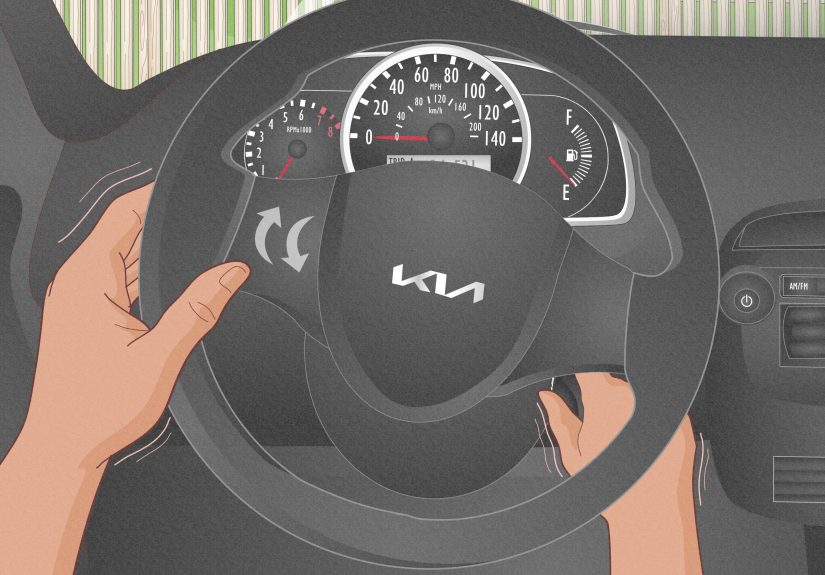
Most free steering wheel locks distributed for Kia theft prevention work like a traditional bar-style lock. Designs vary, so always read the instructions included with your device. The general process is simple: park, turn off the car, attach the lock across the steering wheel, extend or close it until it grips firmly, lock it, and remove the key.
Step-by-Step Instructions
- Park safely. Choose a well-lit area when possible, turn off the engine, and put the vehicle in park.
- Set the steering wheel position. Make sure the steering wheel is settled and not still adjusting. If your vehicle has adjustable steering or seat memory, wait until movement stops.
- Place the lock across the steering wheel. Hook one end of the device around one side of the steering wheel rim.
- Extend or close the lock. Adjust the bar so the opposite hook grips the other side of the wheel. The lock should sit firmly and visibly.
- Engage the lock. Depending on the model, it may click into place automatically or require the key to lock it.
- Remove the key. Do not leave the steering wheel lock key inside the vehicle. That would be like locking your front door and taping the key to the handle with a tiny note that says “please don’t.”
- Check the fit. Gently tug the lock to confirm it is secure. It should prevent the wheel from turning normally.
To remove it, insert the key, unlock the device, compress or release the bar, remove it from the steering wheel, and store it somewhere accessible but not loose under the pedals. Never drive with the lock attached. That sounds obvious, but the world contains warning labels for a reason.
Best Practices for Making the Lock More Effective
A steering wheel lock works best when it is visible. The goal is not only to stop steering movement after a break-in; it is to discourage the break-in from happening in the first place. Place the lock high enough on the wheel that it can be seen through the windshield or driver-side window. Bright-colored locks are especially useful because they advertise inconvenience from several parking spaces away.
Use the lock every time, even for “just five minutes.” Many thefts and break-ins are crimes of opportunity. A quick stop at a gas station, gym, convenience store, or apartment lot is still enough time for trouble. The lock only helps when it is installed, not when it is rolling around in the back seat like a metal pool noodle.
Pair the lock with basic theft prevention habits. Lock the doors with the key fob if your anti-theft software requires that action to activate. Close the windows. Do not leave spare keys, laptops, bags, wallets, firearms, or visible valuables inside. Park under lights or near cameras when you can. If your Kia qualifies for the software update or ignition cylinder protector, get that done too. Layered security is better than relying on one device to do all the heavy lifting.
Steering Wheel Lock vs. Kia Software Update: Which One Do You Need?
The best answer may be both. Kia’s anti-theft software update is designed to make certain vehicles harder to start without the proper key. Research from insurance safety groups has shown that the software upgrade reduced theft claim frequency for updated Hyundai and Kia vehicles, although theft and vandalism risk did not disappear completely. That makes sense: thieves may not know your vehicle has the update until after they damage a window or steering column.
A steering wheel lock helps before that moment. It is visible from outside. It tells thieves there is an extra obstacle before they even touch the door handle. The software is the hidden bouncer; the steering wheel lock is the giant person at the entrance wearing a neon vest.
If your Kia can receive the software update, schedule it. If your Kia cannot receive it, ask about the ignition cylinder protector. If a steering wheel lock is available, use it regardless. No single device guarantees protection, but several deterrents together can make your vehicle a much less appealing target.
What If You Already Bought a Steering Wheel Lock?
If you purchased a steering wheel lock before finding out about the free program, you may still have options. Some theft-related settlements and owner programs have included reimbursement for certain anti-theft devices, depending on vehicle eligibility, purchase timing, documentation, and claim rules. Keep your receipt, product packaging, and proof of payment.
Check the official settlement or Kia support resources that apply to your vehicle. You may be asked to enter your VIN to determine whether your Kia is included. Do not rely on screenshots from social media or “my cousin said” legal advice. Settlement eligibility can be technical, and deadlines matter.
Common Mistakes to Avoid
Assuming every Kia qualifies
Not every Kia is affected, and not every affected Kia qualifies for the same remedy. Newer models, push-button-start models, and vehicles with factory immobilizers may not qualify for free locks through the same programs.
Ignoring the VIN check
Model year lists are helpful, but the VIN is the final authority. Two vehicles with the same model name can have different trims, equipment, and eligibility status.
Leaving the lock in the trunk
A steering wheel lock in the trunk is not a deterrent. It is cargo. Put it on the wheel every time you park.
Leaving the key in the car
Store the steering wheel lock key on your key ring or in a safe place outside the vehicle. Do not leave it in the cup holder, glove box, center console, or door pocket.
Skipping the dealer update
The lock is helpful, but it should not replace a no-cost software or hardware upgrade if your Kia qualifies. Think of the lock as one layer in a bigger anti-theft plan.
Real-World Experience: What Getting and Using One Actually Feels Like
Here is the honest experience most Kia owners can expect: getting a free steering wheel lock is not difficult, but it may require persistence. The first step is usually the VIN check. That part feels like entering a secret code into a government-adjacent vending machine. Sometimes the result is clear. Sometimes it tells you to contact Kia or a dealer. Sometimes you learn that your vehicle is eligible for software instead of a lock, which is still good news, even if you were emotionally prepared to receive a bright metal bar in the mail.
If you go through a local police department, the experience is usually more straightforward but more supply-dependent. You may see an announcement online that says locks are available on a certain date, during certain hours, while supplies last. Translation: bring your paperwork and do not arrive at closing time. Owners often need a driver’s license and registration. The process may take only a few minutes, especially if the department has done several giveaways already. Nobody makes you recite the Kia owner’s oath. They check the paperwork, hand over the lock, and remind you to use it.
The first time you install the lock, you may feel slightly clumsy. That is normal. Steering wheel locks are simple, but they are also intentionally awkward chunks of metal. The trick is to position one hook firmly, extend the bar across the wheel, and let the other hook catch the opposite side. After a few uses, it becomes muscle memory. Park, turn off the car, grab the lock, clamp, click, remove key, walk away. It adds maybe 15 to 30 seconds to your routine. That is less time than most people spend deciding whether they need a receipt at the gas pump.
The biggest behavioral change is consistency. At first, you may only use the lock at night or in unfamiliar areas. Then you remember that theft attempts do not politely schedule themselves for dramatic lighting. Apartment lots, work parking areas, grocery stores, and school lots can all be targets. The lock works best when thieves see it before they commit to breaking anything. That means using it even when you feel silly. Yes, it is slightly inconvenient. So is replacing a window, filing a police report, calling insurance, missing work, and explaining to your family why your car is now part of a crime trend.
There is also a small confidence boost. A steering wheel lock will not remove every worry, but it gives you something visible and practical to do. Owners of affected Kias have dealt with real frustration: higher theft concern, insurance headaches, repairs, and the annoyance of wondering whether their car looks like an easy target. Installing the lock is a way to take back a little control. It says, “Not this car. Try the imaginary car with no lock parked in your bad decision fantasy.”
The best experience comes from combining the lock with the dealer remedy. Get the software update if eligible. Ask about the ignition cylinder protector if your vehicle cannot get the software. Use the lock daily. Keep valuables out of sight. Park smart. Save all paperwork. That combination is not dramatic, but it is effective in the real world, where most prevention is boring right up until it prevents a very expensive problem.
Conclusion
Getting a free Kia steering wheel lock is one of the easiest anti-theft steps affected owners can take, especially if they drive an older key-start Kia that may be vulnerable to theft attempts. Start by checking your VIN through Kia’s anti-theft support resources, then contact Kia Customer Care, your local dealer, and your police department if needed. Bring proof of ownership, act quickly when supplies are available, and do not stop at the lock if your vehicle qualifies for a free software update or ignition cylinder protector.
A steering wheel lock is not fancy. It does not beep, sync, update, or ask you to create another password. It simply sits across the wheel and makes your Kia harder and less attractive to steal. In a world where car thieves often look for the fastest target, that big visible bar can be exactly the kind of boring, practical protection your vehicle needs.
Note: Free lock availability, eligibility rules, shipping timelines, and dealer remedies can change by VIN, location, supply, and program deadlines. Kia owners should verify current options directly with Kia, an authorized Kia dealer, or their local law enforcement agency before relying on any single program.