Table of Contents >> Show >> Hide
Note: Web-ready HTML body only; placeholder citation artifacts removed.
Summer squash is one of those vegetables that shows up with big golden-retriever energy: cheerful, abundant, and suddenly everywhere. One day you buy a couple of zucchini for dinner, and the next thing you know, your counter looks like a farmers market had a minor explosion. The good news is that summer squash is wildly versatile. The bad news is that it can go from crisp-tender to sad and soggy faster than you can say, “Maybe I should’ve used a hotter pan.”
This guide covers exactly how to cook summer squash nine different ways, including roasted, grilled, sautéed, broiled, steamed, microwaved, boiled, baked, and air-fried. Along the way, you’ll learn how to keep zucchini, yellow squash, and pattypan squash flavorful instead of watery, bland, or suspiciously floppy. Whether you want a quick weeknight side dish, a smoky grilled vegetable platter, or an excuse to make zucchini bread like a domestic legend, you’re in the right place.
What Counts as Summer Squash?
Summer squash includes zucchini, yellow squash, crookneck squash, pattypan squash, cousa, and a few other tender-skinned varieties. Unlike winter squash, these have soft edible skin, delicate seeds, and a high water content. Translation: you do not need to peel them, but you do need to cook them smartly.
For the best flavor and texture, choose squash that are small to medium, feel heavy for their size, and have smooth, firm, unbruised skin. Oversized squash may look like a bargain, but they often have larger seeds, tougher texture, and more watery flesh. In the summer squash world, bigger is not always better. Sometimes bigger is just more disappointing.
Summer squash is also a pretty friendly ingredient nutritionally. It is low in calories and provides fiber, potassium, and vitamins A and C. Since much of that goodness hangs out in or near the skin, keep the peel on unless a recipe gives you a very good reason not to.
5 Rules for Cooking Summer Squash Without Turning It to Mush
1. Use high heat when possible
Roasting, grilling, broiling, sautéing, and air-frying all work beautifully because they encourage browning before the squash releases too much water.
2. Cut it evenly
Uniform slices or cubes cook at the same speed. Random chunks give you the culinary thrill of some pieces being raw while others are one emotional step away from baby food.
3. Do not crowd the pan
If the pieces overlap too much, the squash steams instead of browns. Single layers matter, whether you are using a sheet pan, skillet, grill grate, or air fryer basket.
4. Go easy on the oil
Summer squash already contains plenty of moisture. A light coating of oil helps browning and seasoning stick, but too much can make the final dish greasy and limp.
5. Salt strategically
If your squash is especially watery, sprinkle slices lightly with salt and let them sit for about 20 to 30 minutes, then pat dry. This extra step helps pull out moisture and improves texture, especially for sautéing, broiling, and air-frying.
How to Cook Summer Squash 9 Ways
1. Roasted Summer Squash
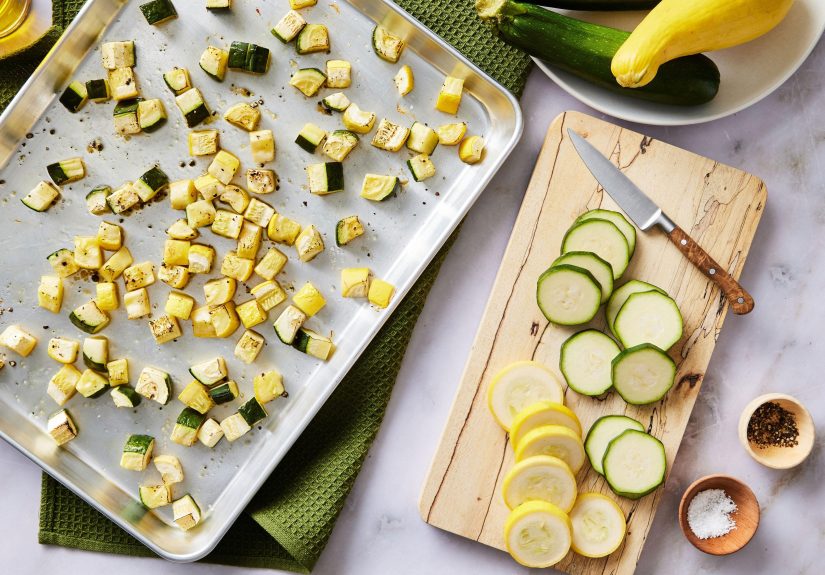
If you want reliable flavor with minimal babysitting, roast it. Roasting coaxes out sweetness, creates caramelized edges, and gives summer squash a little more personality than its mild flavor suggests. Heat the oven to 425°F to 450°F, cut the squash into chunks, spears, or thick half-moons, and toss with olive oil, salt, pepper, and any seasoning blend you like.
Spread the squash out on a sheet pan in a single layer and roast until just tender and lightly browned, usually about 15 minutes depending on the cut. Stir once if needed. This method is especially good with Parmesan, lemon zest, garlic, or red pepper flakes. Roasted summer squash is ideal as a side dish, tossed into pasta, folded into grain bowls, or slid into a sandwich where it can show off a bit.
2. Grilled Summer Squash
Grilling is one of the best ways to cook summer squash because direct heat adds smoky flavor and attractive char while keeping the vegetable crisp-tender. Slice zucchini or yellow squash into 1/4-inch planks for quick grilling or 1/2- to 1-inch rounds if you want sturdier pieces. Brush lightly with oil, season simply, and grill over medium to medium-high heat.
Planks usually need just a few minutes per side. Thicker rounds or skewered pieces may take closer to 8 to 10 minutes total. The trick is to cook until grill marks appear and the squash is tender, but not collapsing. Serve grilled squash with chimichurri, yogurt sauce, fresh herbs, feta, or just lemon juice and flaky salt. It tastes like summer and effort, even when it was barely any effort at all.
3. Sautéed Summer Squash
Sautéing is your weeknight hero. Heat a large skillet over medium-high heat, add a small amount of oil or a mix of oil and butter, then add sliced squash in a fairly even layer. You can cook it plain, or start with onion and garlic for extra flavor. The key is to let the squash brown a bit instead of stirring every three seconds like you are afraid it might get lonely.
Most sautéed squash takes about 8 to 10 minutes. It should be tender with browned spots, not pale and watery. Italian seasoning, basil, thyme, chili flakes, cherry tomatoes, or Parmesan all work well here. If you want a faster finish, use thin rounds. If you want more drama and caramelization, cut thicker half-moons or sear planks cut-side down first.
4. Broiled Summer Squash
Broiling is like grilling’s indoor cousin: hot, fast, and very effective. Arrange squash slices or spears on a lightly oiled pan, season them, and place them a few inches from the heat. Broil for about 3 to 5 minutes, watching closely. Yes, “watch closely” is boring advice, but broilers are not known for their patience.
This is a great method when you want golden edges fast or when the weather says no to outdoor cooking. Broiled squash is especially good finished with breadcrumbs, Parmesan, lemon, or a swipe of pesto. Think of it as a shortcut to roasted flavor without the longer oven time.
5. Air-Fried Summer Squash
Air-fried summer squash is the move when you want crisp edges without deep frying. Preheat the air fryer to 400°F, then add seasoned squash slices in a single layer. For a simple version, toss with a little oil, salt, pepper, garlic powder, and maybe some Parmesan. Cook for about 8 to 12 minutes, flipping or shaking halfway through.
If you want more crunch, bread the slices lightly with cornstarch, buttermilk or egg, and panko. That version cooks even faster, often around 6 to 8 minutes per batch. Do not overcrowd the basket. Air needs to circulate, or your “crispy” squash turns into steamed disappointment. Air-fried squash is excellent as a snack, appetizer, taco filling, or side dish with a dipping sauce.
6. Steamed Summer Squash
Steaming is gentle, quick, and useful when you want the squash tender without browning. It is not the flashiest method, but it works. Slice the squash into coins, place in a steamer basket over boiling water, cover, and steam for about 3 to 5 minutes until just tender.
Because steaming is mild, seasoning matters. Add butter or olive oil after cooking, then salt, pepper, herbs, lemon juice, or a spoonful of vinaigrette. Steamed squash is a good option for simple side dishes, purées, and soft vegetable mixes for grain bowls or omelets. Just do not overcook it, or it loses its pleasant bite.
7. Microwave-Steamed Summer Squash
When time is short and the skillet still needs washing from last night, the microwave can absolutely help. Put sliced squash in a microwave-safe bowl, cover, and cook on high for about 4 to 6 minutes, stirring once halfway through. That is it. No preheating, no drama, no pretending this is a rustic countryside technique passed down for generations.
This method is best for ultra-fast side dishes, meal prep, or recipes where the squash will be mixed into something else later. Season after cooking, not before, so you can better control the final texture and salt level. If the squash seems wet, drain it briefly before serving.
8. Boiled or Blanched Summer Squash
Boiling is not usually the most exciting way to cook summer squash, but it does have its place. A quick boil or blanch works well when the squash will be added to soups, pasta, casseroles, or chilled salads. Bring salted water to a boil, add sliced squash, and cook for about 3 to 6 minutes until just tender. Drain well.
The important phrase here is “just tender.” Boil summer squash too long and it gives up on life. If you are using it for pasta, a quick blanch can soften it enough to finish in sauce. For cold salads, shock it briefly in ice water after cooking to hold texture and color.
9. Baked Summer Squash in Gratins, Casseroles, and Quick Breads
Summer squash can also be baked into something bigger and cozier. In savory dishes, layer slices into gratins or casseroles with cheese, herbs, breadcrumbs, tomatoes, or cream. In sweet baking, shredded zucchini or yellow squash adds moisture to muffins, breads, cakes, and bars without shouting, “Hello, I am a vegetable dessert now.”
If you are baking with shredded squash, squeeze out excess moisture first unless the recipe says otherwise. That keeps your loaf from becoming a damp sponge with ambitions. Zucchini bread, chocolate zucchini cake, squash bars, and savory baked squash casseroles all prove that this humble ingredient has range.
Best Flavor Pairings for Summer Squash
Summer squash is mild, which means it plays well with bold flavors. Some of the best pairings include garlic, basil, dill, mint, thyme, oregano, lemon, Parmesan, feta, goat cheese, butter, chili flakes, toasted almonds, cherry tomatoes, onions, and breadcrumbs. It also works beautifully with smoky flavors from the grill, fresh acidity from vinegar or citrus, and creamy elements like yogurt or ricotta.
If your cooked squash tastes flat, it usually needs one of three things: more salt, more acid, or a textural contrast. A squeeze of lemon and a shower of herbs can rescue an awful lot.
Common Summer Squash Mistakes
The biggest mistake is overcooking. The second biggest is overcrowding. The third is probably buying a giant baseball-bat zucchini and expecting it to behave like a tidy young squash with tender flesh. Keep the cuts even, cook quickly, and stop when the squash is tender but still structured.
Another mistake is washing and storing squash too early. Keep it dry until you are ready to use it, then refrigerate it in a perforated bag and try to cook it within a few days. Fresh squash cooks better, tastes better, and is much less likely to turn into a watery mess.
Final Thoughts
Learning how to cook summer squash is mostly about understanding its personality. It is tender, quick-cooking, and packed with water, which means it rewards high heat, light handling, and good timing. Roast it when you want sweetness, grill it when you want smoke, sauté it for speed, broil it for fast browning, air-fry it for crispness, and bake it when you want to stretch it into something comforting. Once you know how each method behaves, summer squash stops being a backup vegetable and starts acting like the star of the plate.
Kitchen Experience: What Summer Squash Actually Teaches You
After cooking summer squash every possible way over a long stretch of warm-weather dinners, one lesson becomes obvious: this vegetable rewards attention, but not fussiness. It does not need a complex marinade, twelve spices, or a dramatic backstory. It needs heat, space, and the kind of confidence that says, “I am going to let this brown before I poke it again.” That sounds small, but it changes everything.
The first time many people cook zucchini or yellow squash, they treat it gently, thinking that tenderness is the whole goal. Then they wind up with pale slices that slump around the pan like they have had a very long week. The better experience comes when you cook it a little more boldly. Roast it hot. Grill it over real flame. Sauté it in a skillet that is already properly heated. Suddenly, summer squash stops tasting watery and starts tasting nutty, sweet, and savory all at once.
There is also something oddly satisfying about how adaptable it is. One night, roasted squash cubes can land in a grain bowl with lemon and herbs. The next night, grilled planks can slide into sandwiches with mozzarella and pesto. On a busier evening, microwave-steamed squash with butter and black pepper is enough to get vegetables on the table without creating a sink full of dishes. Summer squash is not precious. It meets you where you are.
Air-fried squash brings a different kind of joy. It feels snacky, a little crunchy, and far more fun than a vegetable sometimes has any right to be. Put a plate of crisp air-fried zucchini rounds on the table with a tangy dip, and people magically forget they were planning to ignore the vegetables. The same thing happens with broiled squash finished with Parmesan. It disappears fast, usually while someone is still saying, “I’m just going to have one more.”
Then there is the baking side of summer squash, which feels like a small kitchen miracle. Shredded zucchini vanishes into breads and cakes, leaving behind moisture and tenderness but not a loud vegetable flavor. It is the culinary equivalent of someone quietly doing all the work and asking for none of the credit. That is probably why zucchini bread has survived every food trend, every low-carb phase, and every summer produce overload known to humankind.
Perhaps the best part of cooking summer squash, though, is that it teaches restraint. You learn not to over-oil. Not to over-stir. Not to overcook. You learn that vegetables can taste more like themselves when you stop trying to smother them into submission. A little char, a little salt, a little acid, maybe some herbs, and dinner suddenly feels brighter. Summer squash is humble, but it is not boring. Cooked well, it tastes like the season itself: easygoing, fresh, and just a little bit golden.