Table of Contents >> Show >> Hide
- Cleaning vs. disinfecting: the difference actually matters
- When toys need only cleaning, and when they need disinfecting
- Your basic toy-cleaning kit
- How to clean and disinfect different kinds of toys
- Pro tips that make toy cleaning much easier
- Mistakes to avoid
- What real-life toy cleaning teaches you: of hard-earned experience
- Final thoughts
Toys live a busy life. One minute they are in the bathtub, the next they are under the couch, and five minutes later someone is chewing on a plastic dinosaur like it owes them money. So yes, toys get gross. But cleaning them does not need to feel like a science fair project gone wrong.
The trick is knowing when a toy needs a simple clean and when it actually needs disinfecting. Those are not the same thing, and treating every stuffed bear like it came from a biohazard lab is a fast way to waste time, wear out toys, and make your house smell like a swimming pool.
In most homes, a regular cleaning routine with soap and water is enough for many toys. Disinfecting becomes more important when someone in the house is sick, when toys are shared often, when a toy has been in a child’s mouth, or when it has come into contact with body fluids. Once you know the difference, toy cleaning gets a whole lot easier.
Cleaning vs. disinfecting: the difference actually matters
Cleaning removes dirt, sticky mystery residue, dust, and a good number of germs. It usually involves soap, water, and some basic scrubbing or wiping.
Disinfecting uses a product designed to kill germs on a surface. That sounds dramatic, because it is. But it is also something you should do with intention, not out of panic.
Here is the big takeaway: clean first, then disinfect if needed. Dirt, dried milk, snack crumbs, and toddler glitter-grease can block a disinfectant from doing its job. In other words, if a toy is still visibly dirty, the disinfectant is basically showing up late to a party it cannot enter.
When toys need only cleaning, and when they need disinfecting
A lot of parents and caregivers overdo the disinfecting part. That is understandable. Germs are invisible, and invisible things make people weird. But everyday play does not always call for a heavy-duty chemical response.
Usually, cleaning is enough when:
- The toy just looks dusty, sticky, or generally lived-in.
- It was used by healthy kids during normal play.
- It was dropped on the floor, dragged through the yard, or decorated with cracker crumbs.
- You are doing regular weekly toy maintenance.
Disinfecting is worth doing when:
- Someone in the home has a cold, stomach bug, flu-like illness, or another contagious infection.
- The toy was mouthed, sneezed on, drooled on, or otherwise given the full toddler treatment.
- The toy came into contact with vomit, stool, blood, or a lot of mucus.
- The toy is shared often in a daycare-style setup, playroom, classroom, or therapy space.
- The surface is hard and nonporous, so a disinfectant can work effectively.
That balance matters. A toy box is not an operating room. But when illness is making the rounds, cleaning and disinfecting the right items can help reduce the chance of spreading germs through shared surfaces.
Your basic toy-cleaning kit
You do not need a rolling janitor cart and a dramatic soundtrack. A simple setup works well:
- Mild dish soap
- Warm water
- Microfiber cloths or soft sponges
- A soft brush or old toothbrush for crevices
- EPA-registered disinfecting wipes or spray for hard, nonporous toys
- Gloves if you are using disinfectants
- A mesh laundry bag or pillowcase for washable plush toys
- Clean towels or a drying rack for air-drying
If you use bleach, follow the product label or trusted official directions exactly. Do not guess. Do not eyeball. Do not turn it into “a generous splash.” Bleach solutions lose strength over time, and mixing them too strong or too weak is not smart or effective.
How to clean and disinfect different kinds of toys
Plastic, rubber, and metal toys
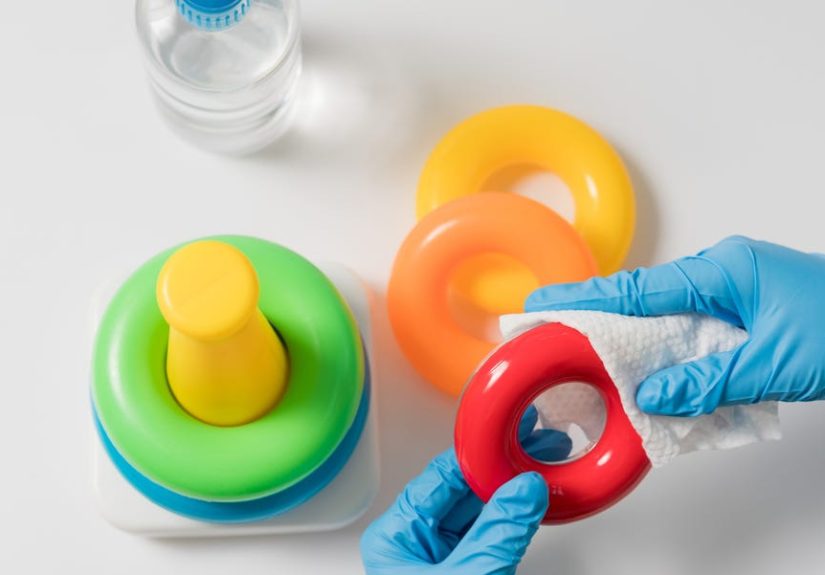
These are usually the easiest. Think rattles, stacking cups, toy cars, figurines, building blocks, and plastic food. Start by washing with soap and warm water to remove grime. Rinse well.
If the toy needs disinfecting, use a disinfectant that is meant for hard, nonporous surfaces and follow the label directions carefully. The surface typically needs to stay visibly wet for a certain amount of time, called the contact time. If you wipe it dry too soon, you are basically canceling the disinfecting step halfway through.
If the toy may go back into a child’s mouth, rinse it after disinfecting if the label says to do so, or wipe it with a clean damp cloth and let it dry completely before reuse.
Some hard toys are also dishwasher-safe. If the manufacturer allows it, that can be one of the easiest ways to clean or sanitize small durable items.
Bath toys
Bath toys deserve their own chapter because they are tiny mold condos with cute faces. Water gets trapped inside many squeeze toys, and once that happens, the interior can become a breeding ground for slime and mold.
After every bath, squeeze out as much water as possible and let the toys dry in a well-ventilated area. If a toy stays damp all day, it is not “drying naturally.” It is marinating.
Clean bath toys regularly, inspect them for black spots, bad smells, or interior slime, and toss them if you cannot clean the inside well. If you are shopping for new ones, sealed or hole-free bath toys are often a smarter pick.
Stuffed animals and cloth toys
Plush toys collect dust, drool, snack grease, and the emotional weight of childhood. Many are machine washable, but always check the care label first.
If washable, place the item in a mesh bag or pillowcase, use a gentle cycle, and wash according to the label. Then dry it thoroughly. The “thoroughly” part matters. A damp teddy bear is not clean. It is just wet and suspicious.
For delicate plush toys that cannot be machine washed, spot-clean with mild soap and water and allow them to dry fully. If a child is sick and the plush toy is heavily used, it should either be laundered more often or temporarily set aside if it cannot be cleaned well.
Wooden toys and painted blocks
Wood does not love soaking. Too much water can warp the material, loosen glue, or damage the finish. Use a damp cloth with a little mild soap, wipe the toy down, and follow with a clean damp cloth to remove residue. Dry right away.
If you need to disinfect a wooden toy, use a compatible product sparingly and avoid saturating the surface. Always check manufacturer care instructions first. For many wooden toys, a careful clean is the safest regular approach.
Books, cardboard puzzles, and paper-based toys
These items are hard to disinfect well because they do not respond kindly to moisture. Wipe glossy covers gently if needed, but do not soak or spray paper items heavily.
During an illness in the home, it may be best to limit sharing of these toys, clean hands often, and focus your real disinfecting efforts on hard surfaces instead. Sometimes the smartest cleaning strategy is simply knowing what not to drench.
Electronic toys
Anything with batteries, charging ports, speakers, or buttons needs a lighter touch. Power the toy off, remove batteries if practical, and wipe the exterior with a barely damp cloth or a manufacturer-approved wipe. Avoid getting liquid into openings.
For items with a hard plastic exterior, you can often use a disinfecting wipe on the outer surface, as long as you do not oversaturate it. Let the toy dry fully before turning it back on.
Teethers and toys that go in mouths
These need more frequent attention because they are basically on a direct express route from floor to mouth. Follow the manufacturer’s care instructions. Some can be sanitized by boiling, steaming, using a dishwasher sanitizing cycle, or another approved method.
If you use a disinfectant or bleach-based method, make sure it is appropriate for the item, rinse if required, and let the toy air-dry completely. Mouth toys are not the place for “close enough.”
Pro tips that make toy cleaning much easier
1. Sort toys by material before cleaning
Plastic with plastic, plush with plush, bath toys with bath toys. This cuts down on confusion and helps you avoid the classic mistake of washing something electronic like it is a rubber duck.
2. Clean on a schedule instead of waiting for disaster
A weekly or biweekly routine is easier than an all-day scrub marathon after a cold tears through the house. High-use toys deserve the most attention.
3. Focus on high-touch favorites
That one truck your child carries everywhere, the chew toy, the bath toy squad, the pretend kitchen utensils, and the plush animal that goes to bed every night matter more than the puzzle in the closet nobody has touched since February.
4. Drying is part of cleaning
Moisture left behind can encourage mold or mildew, especially in plush and bath toys. Good airflow is not optional. It is part of the job.
5. Replace toys that are too damaged to clean well
If a toy is cracked, peeling, moldy inside, or impossible to clean thoroughly, retirement may be the best option. Not every toy is meant for a long and honorable service career.
Mistakes to avoid
- Using disinfectant on dirty toys first. Clean first.
- Ignoring the label. Contact time, rinsing instructions, and surface compatibility matter.
- Mixing cleaners. Never mix bleach with ammonia, vinegar, or other cleaners.
- Using too much product. More is not better. It is just more.
- Forgetting ventilation. Open a window or increase airflow when using strong products.
- Leaving chemicals where kids can reach them. This is a hard no.
- Skipping mouth-contact toys. Teethers and drool magnets need frequent care.
- Trying to save every moldy bath toy. Sometimes the move is the trash can.
What real-life toy cleaning teaches you: of hard-earned experience
If you spend enough time around kids, you learn quickly that toy cleaning is less about perfection and more about patterns. The families and caregivers who stay sane are usually not the ones disinfecting every crayon after snack time. They are the ones who develop a rhythm. They know which toys are handled constantly, which ones are safe to wash in batches, and which ones need to disappear for a while when someone gets sick.
One common experience is discovering that the grossest toys are not always the obvious ones. Yes, bath toys can be horrifying. But so can toy shopping carts, pretend food, remote-control cars, and plastic animals that travel from the playroom to the kitchen to the dog bed. Hard toys may look fine from across the room and still feel sticky up close. That is often the moment when a quick wipe-down turns into a full cleaning session and a quiet personal speech about why jam should never be this far from a sandwich.
Another reality is that stuffed animals are emotional support creatures first and laundry items second. Kids often have one beloved plush toy that goes everywhere: the car, the bed, the couch, the doctor’s office, and somehow the bathroom floor. Washing that toy is sometimes easy. Other times, it requires negotiation worthy of international diplomacy. Experienced parents learn to rotate similar comfort items, wash beloved plush toys during school hours or naptime, and dry them fully before reintroducing them to the population.
Illness changes the whole cleaning strategy. During a stomach bug or a nasty cold, people stop thinking in broad categories and start thinking in hot zones. Which toys were mouthed? What was touched during the peak of the mess? Which items can actually be cleaned well, and which ones should just be set aside until life becomes less dramatic? That mindset helps a lot. Instead of trying to disinfect an entire home in one burst of panic, it is more useful to target the toys and surfaces most likely to spread germs.
There is also a practical lesson in choosing better toys from the start. Caregivers who have scrubbed mold out of a rubber bath toy exactly once usually become passionate about sealed bath toys forever. People who have hand-washed plush animals with glitter tutus and built-in sound boxes tend to become devoted fans of machine-washable toys with simple construction. Cleaning experience changes shopping habits. Suddenly, “easy to wipe down” becomes just as attractive as “educational.”
Perhaps the biggest lesson is this: cleaner toys matter, but obsessive cleaning is not the goal. Kids play, explore, and make messes. That is their whole brand. A smart routine works better than constant overcorrection. Clean toys regularly, disinfect strategically, dry everything well, and use common sense when illness hits the house. That approach protects kids, saves time, and keeps you from spending your entire weekend washing plastic bananas and interrogating a toy xylophone.
Final thoughts
The best way to clean and disinfect toys is not to treat every item the same. Start with the material. Think about how the toy is used. Ask whether it truly needs disinfecting or just a good wash. Clean first, disinfect only when appropriate, follow product directions carefully, and keep safety front and center.
When done well, toy cleaning is not about chasing a perfectly germ-free childhood. It is about making everyday play healthier, safer, and a little less sticky. And honestly, reducing the number of mystery smudges in your living room is a pretty solid bonus.