Table of Contents >> Show >> Hide
- At-a-Glance: Safe Storage Times for Raw Chicken
- What “Going Bad” Means (Safety vs. Spoilage)
- How Long Raw Chicken Lasts in the Fridge (and Why It’s Short)
- How Long Raw Chicken Lasts in the Freezer
- The Temperature Rules That Actually Matter
- Best Practices for Storing Raw Chicken in the Fridge
- Best Practices for Freezing Raw Chicken (Avoiding Freezer Burn Like a Pro)
- Thawing Chicken Safely (Because the Countertop Is Not a Method)
- Can You Refreeze Chicken After Thawing?
- How to Tell if Raw Chicken Is Bad (Practical Checklist)
- Common Questions People Google at 11:47 PM
- Food Safety Habits That Make This Easy
- Extra: Real-World Experiences and Lessons (About )
- Conclusion
Raw chicken is a little bit like a houseguest who shows up unannounced: you can make it work, but only if you act fast.
Store it correctly and cook it on time, and you’ll be eating happily. Push your luck, and you’re playing “Is that smell
chicken… or regret?”
This guide breaks down exactly how long raw chicken can stay in the refrigerator or freezer, what “going bad” really means,
and the practical, real-life tricks that keep your kitchen safe (and your dinner plans intact).
At-a-Glance: Safe Storage Times for Raw Chicken
These timeframes assume your refrigerator is kept at 40°F (4°C) or below and your freezer is at
0°F (-18°C) or below. If your fridge runs warm (or gets opened every 11 seconds like a snack-themed
revolving door), shorten the timeline.
| Raw Chicken Type | Fridge (40°F or below) | Freezer (0°F or below) Best Quality |
|---|---|---|
| Whole chicken | 1–2 days | Up to 1 year |
| Chicken pieces (breasts, thighs, wings, drumsticks) | 1–2 days | Up to 9 months |
| Ground chicken | 1–2 days | 3–4 months |
| Giblets | 1–2 days | 3–4 months |
Important nuance: frozen chicken kept consistently at 0°F stays safe for a very long time, but the
quality slowly declines. That’s why you’ll see “best quality” timelines even though freezing is a powerful pause
button for food safety.
What “Going Bad” Means (Safety vs. Spoilage)
Spoilage: the obvious “nope” signals
Spoilage bacteria can make chicken smell off, feel slimy, or look discolored. If you open the package and your brain says,
“This is not a food, this is a warning,” trust yourself. When in doubt, throw it out.
Safety: the tricky part
Foodborne germs don’t always announce themselves with a dramatic smell. Raw chicken can be risky even if it looks “fine,”
which is why time and temperature matter more than confidence.
How Long Raw Chicken Lasts in the Fridge (and Why It’s Short)
In a properly cold refrigerator, raw chicken should be cooked within 1–2 days. That’s true for whole birds,
parts, and even ground chicken. The clock starts when you bring it homebecause you don’t know how long it spent chilling in
transit before you got it.
“But the package says sell-by is five days from now…”
This is one of the most common points of confusion. A “sell-by” date helps stores rotate inventory. It’s not a guarantee
that your chicken is meant to hang out in your fridge until then. A safer approach: plan to cook within 1–2 days of purchase,
or freeze it if your schedule is laughing at that idea.
Real-life example
You buy chicken on Sunday afternoon. You won’t cook until Wednesday night. The best move is to freeze it on Sunday (or Monday
at the latest). Future-you will be grateful and slightly impressed.
How Long Raw Chicken Lasts in the Freezer
Freezing stops bacteria from growing, which is why frozen chicken can stay safe for a long time when kept at 0°F. But it
doesn’t freeze time for taste. Over months, chicken can lose moisture and pick up “freezer flavor,” especially if it’s not
well wrapped.
Best-quality freezer timelines
- Whole chicken: up to 1 year
- Chicken pieces: up to 9 months
- Ground chicken or giblets: 3–4 months
Why ground chicken has a shorter freezer life
Ground meat has more surface area exposed to air, which makes texture and flavor degrade faster. It’s still useful after the
“best quality” mark, but you’re more likely to notice dryness or weird freezer vibes.
The Temperature Rules That Actually Matter
Your fridge should be 40°F or below
If you’ve never checked, you’re not alone. Many refrigerators drift warmer than people thinkespecially if they’re packed full
or opened frequently. A cheap appliance thermometer can keep you out of the danger zone (and out of “mystery stomach” territory).
The 2-hour rule (and the 1-hour hot-day upgrade)
Raw chicken should not sit at room temperature for more than 2 hours. If it’s a hot environment (above 90°F),
that drops to 1 hour. So if the chicken rode around in your car while you “just did one more errand,” it may
be time to say goodbye.
Best Practices for Storing Raw Chicken in the Fridge
1) Put it in the coldest part of the fridge
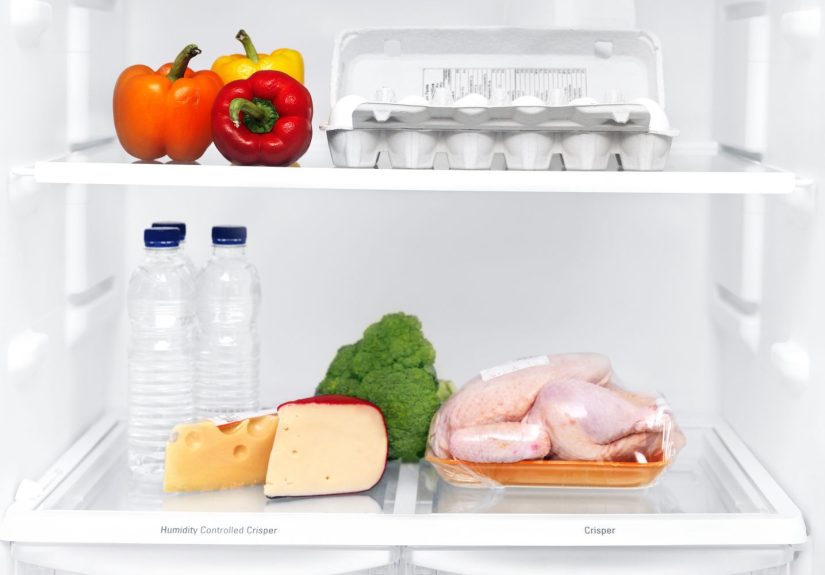
The back of the fridge is typically colder than the door. Store raw chicken on the bottom shelf so juices can’t drip onto
ready-to-eat foods.
2) Use a tray or container under the package
Even well-sealed packaging can leak. A rimmed plate, shallow pan, or container prevents cross-contamination and makes cleanup
way less dramatic.
3) Keep it sealed, and don’t “air it out”
Air exposure speeds up quality loss and can spread raw juices. If the original packaging seems flimsy, place it in a clean,
leak-proof bag or container.
Best Practices for Freezing Raw Chicken (Avoiding Freezer Burn Like a Pro)
Freeze it ASAP if you won’t cook in 1–2 days
The sooner you freeze, the better the texture later. Waiting until day two at midnight and then freezing is better than
letting it linger, but freezing earlier usually wins.
Overwrap for longer storage
If you’re freezing chicken in its store packaging for more than a couple months, add an extra barrier: freezer bag, heavy-duty
foil, freezer paper, or wrap. Less air contact means better quality.
Portion before you freeze
Freeze chicken in meal-sized portions so you can thaw only what you need. This saves time, reduces waste, and prevents the
“I thawed five pounds for tacos” situation.
Label it like you like yourself
Write the date and cut (e.g., “thighs, Jan 27”). Future-you will not accurately identify “mystery bag #4” by vibes alone.
Thawing Chicken Safely (Because the Countertop Is Not a Method)
Safe thawing is about keeping chicken out of the temperature danger zonewhere bacteria grow fastest.
Method 1: Thaw in the refrigerator (best for safety and quality)
Place frozen chicken in a container on the bottom shelf. Small packs may thaw overnight; larger pieces or whole chickens can
take longer. Once thawed, cook within 1–2 days.
Method 2: Cold water thaw (faster, but requires attention)
Seal chicken in a leak-proof bag, submerge in cold water, and change the water every 30 minutes. Cook immediately after thawing.
Method 3: Microwave thaw (fastest, but cook immediately)
Microwave thawing can warm parts of the chicken unevenly, which is why it should go straight to cooking right after thawing.
Can You Refreeze Chicken After Thawing?
If you thawed chicken in the refrigerator and it stayed cold the whole time, it can usually be refrozen (quality may take a hit,
but safety is the priority). If you thawed it with cold water or the microwave, cook it first before freezing again.
How to Tell if Raw Chicken Is Bad (Practical Checklist)
- Time: It’s been more than 1–2 days in the fridge → safest choice is to discard.
- Texture: Slimy or tacky surface that doesn’t rinse away → discard.
- Smell: Sour, ammonia-like, or just “wrong” → discard.
- Color: Some color variation can happen, but gray-green tones or a dramatic shift plus odor/slime → discard.
- Packaging: Bloated or leaking packages are a red flag (and a cleanup task).
A reminder: “Looks okay” is not a food safety strategy. Use the storage timeline first, and the sensory clues as backup.
Common Questions People Google at 11:47 PM
Does marinating extend fridge life?
Not really. Marinating is flavor, not a magic shield. If you marinate raw chicken, do it in the refrigerator and still follow
the 1–2 day timeline.
What if I cooked itdoes the timeline change?
Yes. Cooked chicken typically lasts longer than raw chicken in the fridge when stored properly. But this article is focused on
raw storage, so treat “cooked vs. raw” as two different calendars on your fridge door.
Is frozen chicken safe forever?
If it stays continuously frozen at 0°F, it remains safe, but quality declines. You might get dry texture, freezer burn, or
flavor changes over timeso the “best quality” timelines are your friend.
Food Safety Habits That Make This Easy
- Plan the week: If you won’t cook chicken in 1–2 days, freeze it the day you buy it.
- Use a thermometer: The only reliable way to know chicken is cooked safely is temperature, not guesswork.
- Prevent cross-contamination: Keep raw chicken and its juices away from ready-to-eat foods.
- Skip washing raw chicken: It can spread germs around the sink and countertops. Cooking does the job.
Extra: Real-World Experiences and Lessons (About )
Most people don’t learn chicken storage by reading chartsthey learn it by living through a few chaotic kitchen moments.
Like the time you bought a family pack on Sunday with big “meal prep energy,” then found it on Tuesday behind the yogurt like
a forgotten sitcom character. Or the time you froze chicken with the best intentions, only to discover later that “best intentions”
don’t prevent freezer burn.
One common experience is the sell-by date trap. You look at the package and think, “I’m good until Friday.”
Then you read a food safety guideline that says “cook within 1–2 days,” and suddenly your dinner plans feel like a pop quiz.
What helps here is adopting a simple personal rule: treat chicken like it has a short attention span. If it’s not getting cooked
soon, freeze it. That rule works even when life doesn’t.
Another real-life pattern: people assume the fridge is a perfectly cold, consistent place. In reality, the fridge door is the
warmest zone and the back is colder, and the temperature changes depending on how full it is and how often it’s opened.
If your household does frequent “fridge fly-bys” (open door, stare, close door, repeat), your chicken may be living a warmer
lifestyle than you think. Many home cooks find that placing chicken in a sealed container on the bottom back shelf
is the easiest upgradeless leaking, less odor transfer, and less chance of drips onto produce.
Freezer experiences tend to fall into two categories: “I forgot I had this” and “Why is it so dry?”
The first is solved with labeling. The second is often solved with better wrapping and portioning. People who freeze chicken in
thin store trays for months often report a noticeable texture change later. But when they switch to freezer bags, press out the
air, and freeze in flatter shapes (so it freezes faster), the quality improves. It’s not fancyit’s just reducing air and time.
There’s also the classic “I thawed too much” moment. The best comeback is portioning before freezing: freeze two breasts together,
or single thighs in separate bags, so you’re not forced into cooking a mountain of chicken at once. When that still fails (because
life), many cooks salvage quality by choosing forgiving recipessoups, stews, curries, shredded chicken, or stir-frieswhere a
slightly drier piece isn’t the star of the show.
Finally, experienced cooks often say the biggest stress reducer is this mindset shift: don’t debate chicken for half an hour.
If it’s past the safe fridge window, or it smells off, it’s not a moral failing to toss it. It’s you being the responsible adult
in the relationship. Chicken is replaceable. Your week is not.
Conclusion
If you remember only one thing, make it this: raw chicken is a short-term fridge guest and a long-term freezer resident.
Keep it cold, keep it contained, cook it within 1–2 days (or freeze it), and you’ll stay safely on the tasty side of food safety.